
The Invisible Infrastructure of Truth: How AI Watermarking and C2PA Actually Work
As AI-generated media becomes indistinguishable from reality, a new global standard combining cryptographic metadata and invisible watermarking is quietly rebuilding trust on the internet.
By Mateo Ramos

For years, the internet relied on a fragile honor system. If a photograph looked real, we assumed it was. When generative AI first arrived, we adapted by looking for telltale flaws: six-fingered hands, garbled background text, or unnatural lighting. But by 2026, those visual artifacts have vanished. AI-generated media is now structurally indistinguishable from reality to the naked eye. In response, the technology industry and global regulators have quietly built a massive, invisible infrastructure to protect digital truth.[3]
The old methods of tracking a file's origins were woefully inadequate for the AI era. Traditional EXIF metadata—the hidden text in a photo that records the camera model and GPS coordinates—was never designed for security. It can be easily edited by anyone with basic software, and social media platforms routinely strip it out entirely to save space and protect user privacy. If a deepfake was downloaded and re-uploaded, its history was wiped clean.[3]
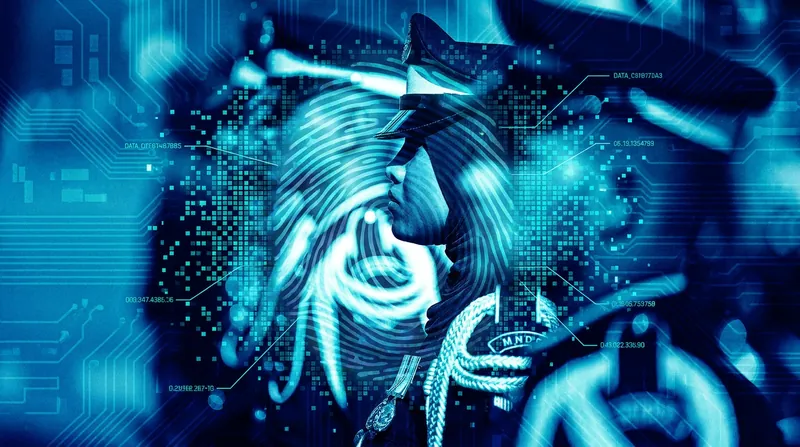
To solve this, the industry converged on a two-pronged approach: cryptographic "nutrition labels" that travel alongside the file, and invisible watermarks baked directly into the content itself. Together, these technologies form a multilayered defense that doesn't just detect fakes after the fact, but proves authenticity at the moment of creation.[3]
The first pillar is the Coalition for Content Provenance and Authenticity, universally known as C2PA. Founded in 2021 by a consortium including Adobe, Microsoft, Intel, and the BBC, C2PA is an open technical standard that acts as a tamper-evident seal for digital media. By 2026, the coalition has grown to over 6,000 members, making it the global reference for content authenticity.
C2PA works by embedding a cryptographically signed "manifest" into a media file. When a photographer takes a picture with a C2PA-compliant camera, or an artist exports a file from Photoshop, the software records the "who, what, and how" of the file's creation. It then signs this data using an X.509 digital certificate—the exact same cryptographic standard that secures HTTPS web traffic and online banking.[3]
Crucially, this manifest includes a cryptographic hash of the image's actual pixels. If someone tries to alter the image or tamper with the metadata, the hash breaks, and any compliant viewer will immediately flag the file as modified. This allows newsrooms and creators to prove, mathematically, that a photograph is an unaltered original.
However, C2PA has a structural limitation by design: it is fragile. If a user takes a screenshot of a C2PA-signed image, or if a non-compliant platform compresses it aggressively, the cryptographic manifest is lost. C2PA proves authenticity when it is present, but its absence does not automatically prove a file is a deepfake. It is a tool for transparency, not an absolute lie detector.
This fragility necessitated the second pillar of digital provenance: invisible watermarking. Unlike C2PA, which wraps the file in metadata, invisible watermarking alters the fundamental structure of the content itself. The most widely deployed system in 2026 is Google DeepMind's SynthID, which has been used to watermark more than 10 billion pieces of AI-generated content across text, images, audio, and video.[1][3]
For images, SynthID operates on the principles of steganography. During the AI generation process, the system makes subtle modifications to specific frequency components or color channels. To a human observer, these changes look like natural, imperceptible sensor noise. But to a specialized detection algorithm, they form a clear, undeniable cryptographic signature.[1]
Because the watermark is woven into the pixels rather than appended as metadata, it is incredibly robust. A SynthID-watermarked image can be cropped, resized, heavily compressed into a JPEG, or run through aggressive color filters, and the detection model will still recognize the signature. It survives the exact real-world transformations that destroy traditional metadata.[1]
Watermarking text, however, presented a much harder engineering challenge. You cannot hide noise in plain text without creating typos. To solve this, DeepMind developed a technique called "tournament sampling." When a Large Language Model generates text, it predicts the next word by assigning probability scores to thousands of potential options.[2]
SynthID Text uses a pseudo-random mathematical function to subtly bias this selection process. It creates a "tournament" where certain words are slightly favored over others based on a cryptographic seed. Over the course of a few sentences, this statistical bias becomes a detectable pattern to a trained classifier, all without degrading the quality or fluency of the AI's writing. Even if the text is copied, pasted, or lightly paraphrased, the mathematical fingerprint remains.[2]
While the technology matured rapidly, it was sweeping global regulation that forced its universal adoption. The European Union's AI Act, specifically Article 50, mandated that all AI systems generating synthetic content must implement machine-readable markings. With the enforcement deadline hitting in August 2026, the industry had to move from voluntary adoption to strict compliance.
The EU's Code of Practice explicitly rejected the idea of a silver bullet. Regulators recognized that metadata can be stripped and watermarks can theoretically be attacked. Therefore, the law requires a "multilayered approach." Companies must embed provenance metadata (like C2PA), apply imperceptible watermarks (like SynthID), and provide public detection capabilities. Point solutions are no longer legally sufficient in European markets.
The United States followed suit, albeit with a more fragmented approach. California's SB 942, the AI Transparency Act, took effect in January 2026, requiring visible labeling, invisible watermarking, and free detection tools for any AI system used by state residents. Because of California's market size, this effectively became the default standard for American tech companies.
Despite these massive strides, the system is not flawless. Security researchers frequently point to the "first-mile" problem. C2PA can cryptographically prove that a specific camera signed a file at a specific time, but it cannot prove that the camera wasn't simply pointed at a high-resolution 4K monitor displaying an AI-generated deepfake. Provenance establishes that a claim was made by a device, not that the claim reflects objective reality.[3]
There is also ongoing tension in the open-source community. While tools like SynthID Text have been integrated into open platforms like Hugging Face, highly motivated malicious actors can still download open-weight models and manually strip out the watermarking code before generating disinformation. Watermarking works best when the generation happens on a centralized server.[2][3]
Nevertheless, the landscape of digital trust has fundamentally shifted. We are transitioning from an internet of "default trust" to one of "cryptographic verification." Major social networks and web browsers now natively display "Content Credentials" badges, allowing users to click and instantly view a file's history.[3]
The arms race between those who create synthetic media and those who detect it will undoubtedly continue. But the establishment of C2PA and robust invisible watermarking means that for the first time in the generative AI era, the defenders have a structural advantage. We finally have the tools to know where our digital reality comes from.[3]
Key terms
- C2PA
- The Coalition for Content Provenance and Authenticity, an open standard that binds cryptographically signed metadata to digital files to track their origin and edit history.
- Content Credentials
- The consumer-facing name and user interface for C2PA manifests, often displayed as a small 'cr' badge on supported images and platforms.
- Steganography
- The practice of concealing a secret message or signature within an ordinary, non-secret file or image, used heavily in invisible watermarking.
- Tournament Sampling
- A text watermarking technique that subtly biases an AI model's word selection process to create a statistically detectable pattern without changing the meaning of the text.
- X.509 Certificate
- A standard format for public key certificates used to cryptographically verify identity, utilized by C2PA to prove exactly who or what created a digital file.
Frequently asked
Does C2PA prevent deepfakes from being made?
No. C2PA is a transparency tool, not a preventative one. It proves the origin and edit history of a file when the metadata is present, but it cannot stop someone from generating a deepfake using open-source tools.
Can invisible watermarks like SynthID be removed?
While highly robust against common edits like cropping, compression, and color filtering, no watermark is perfectly invincible. However, removing a structural watermark usually requires degrading the media quality so severely that the file becomes unusable.
Does watermarking make AI-generated text worse?
No. Techniques like tournament sampling are mathematically designed to operate within the model's natural distribution of high-quality outputs, ensuring the watermark remains imperceptible and does not negatively impact the fluency or accuracy of the text.
What happens if a platform strips C2PA metadata?
If a platform strips the C2PA manifest (often done to save server space), the file loses its cryptographic proof of authenticity. This is why regulators mandate a multilayered approach combining fragile metadata with robust invisible watermarks.
Viewpoints in depth
Commercial AI Providers
Support standardized, multilayered watermarking to build enterprise trust and comply with global regulations.
Major technology companies view robust provenance as an existential requirement for the continued commercialization of generative AI. Without reliable ways to distinguish synthetic content from reality, enterprise clients—particularly in media, finance, and healthcare—cannot safely deploy these models. Providers advocate for a multilayered approach, combining C2PA metadata with proprietary invisible watermarking like SynthID, arguing that this redundancy is the only way to satisfy strict regulatory frameworks like the EU AI Act while maintaining public trust in their platforms.
Open-Source Advocates
Value transparency but warn that strict, hardware-level watermarking mandates could centralize AI power and hinder independent research.
The open-source community generally supports the ethical goals of content provenance but raises practical and structural concerns. They point out that while tools like SynthID Text can be integrated into open libraries, malicious actors can simply modify the open-source code to remove the watermarking generation steps. Furthermore, advocates warn that overly prescriptive government mandates requiring hardware-level watermarking could inadvertently create a regulatory moat, locking out independent researchers and small startups who cannot afford the compliance overhead required to build certified, tamper-proof generation pipelines.
Regulators & Compliance Experts
View technical standards as necessary baselines to enforce public safety, combat election interference, and ensure market accountability.
For policymakers, the focus is entirely on enforceability and public harm reduction. Regulators in the EU and California recognize that no single technical solution is perfect, which is why laws like Article 50 mandate a "multilayered" approach. They view C2PA and invisible watermarking not as infallible shields, but as necessary compliance baselines—similar to seatbelts in cars. By forcing the largest AI providers to embed these signals by default, regulators aim to drastically reduce the volume of low-effort disinformation and create clear legal liability for platforms that fail to provide transparency to their users.
Digital Rights Organizations
Emphasize that provenance tools must protect user privacy and not become a vehicle for mass surveillance or deanonymization.
Privacy advocates approach digital provenance with cautious optimism mixed with deep concern. While they acknowledge the necessity of fighting deepfakes, they warn that the infrastructure built to track the origin of every digital file could easily be weaponized. If C2PA manifests require strict identity verification to issue a certificate, it could effectively end anonymous speech online, endangering whistleblowers, activists, and journalists operating under oppressive regimes. These organizations lobby heavily to ensure that provenance standards allow for "pseudonymous" or organizational signing, proving a file is real without exposing the exact identity of the human who captured it.
- Commercial AI Providers
- Support standardized, multilayered watermarking to build enterprise trust and comply with global regulations.
- Open-Source Advocates
- Value transparency but warn that strict, hardware-level watermarking mandates could centralize AI power and hinder independent research.
- Regulators & Compliance Experts
- View technical standards as necessary baselines to enforce public safety, combat election interference, and ensure market accountability.
- Digital Rights Organizations
- Emphasize that provenance tools must protect user privacy and not become a vehicle for mass surveillance or deanonymization.
Perspectives this story doesn't cover
- Independent visual artists
- Hardware camera manufacturers
Sources
Source coverage
3 outlets
4 viewpoints surfaced



- [1]Google DeepMindCommercial AI Providers
SynthID: Identifying AI-generated content
Read on Google DeepMind → - [2]Hugging FaceOpen-Source Advocates
Identifying AI-generated text with SynthID Text
Read on Hugging Face → - [3]Factlen Editorial Team
Synthesis by Factlen editorial team
Read on Factlen Editorial Team →
More in Artificial Intelligence
See all →Machine Unlearning
How to Make an AI Forget: The Breakthrough Science of Machine Unlearning
3 sources

AI Plagiarism Tools
Are AI Detection Tools Accurate Enough for Academic Discipline?
5 sources

Algorithmic Recourse
How Counterfactual Explanations Provide Algorithmic Recourse Without Exposing AI Model Weights
4 sources

AI Accountability
How the 'Moral Crumple Zone' Shifts Blame from Autonomous AI to Human Operators
5 sources

Comments
Every angle. Every day.
Get Artificial Intelligence stories with full source coverage and perspective breakdowns, free every day.