
The Infinite Canvas: How Vertical Scrolling Comics Democratized Publishing and Built a $14 Billion Industry
Digital comics optimized for smartphones have transformed the publishing landscape, empowering independent creators and providing Hollywood with its next major intellectual property pipeline.
By Factlen Editorial Team
- Digital-First Creators
- Value the low barriers to entry, direct audience engagement, and diverse monetization tools that allow them to bypass traditional gatekeepers.
- Media & Entertainment Executives
- View the massive readership of digital comics as a pre-validated intellectual property pipeline for lucrative film and television adaptations.
- Traditional Publishers
- Focus on adapting to digital trends by incorporating vertical layouts and finding hybrid web-to-print models without cannibalizing legacy sales.
What's not represented
- · Local comic book shop owners
- · Print-only traditional comic artists
Why this matters
The shift toward mobile-first digital comics has drastically lowered the barrier to entry for artists worldwide, allowing diverse creators to bypass traditional gatekeepers and build lucrative careers directly supported by their fans.
Key points
- The global webtoons market is projected to surpass $14 billion in 2026, driven by mobile-first reading habits.
- The 'infinite canvas' vertical scroll format allows for continuous reading and innovative pacing on smartphones.
- Creators monetize their work through ad-revenue sharing, direct fan tipping, and paid early access to chapters.
- Traditional publishers are adapting by incorporating vertical layouts and printing physical graphic novels of digital hits.
- Streaming giants are increasingly using webtoons as a pre-validated intellectual property pipeline for film and TV adaptations.
The traditional comic book industry, long defined by Wednesday print releases and specialized local shops, is undergoing a profound structural shift. The catalyst is not a new superhero universe, but a change in the physical act of reading itself: the vertical scroll. Originating in South Korea in the early 2000s, "webtoons"—digital comics optimized for smartphones—have evolved from a niche format into a dominant global entertainment engine.[4][7]
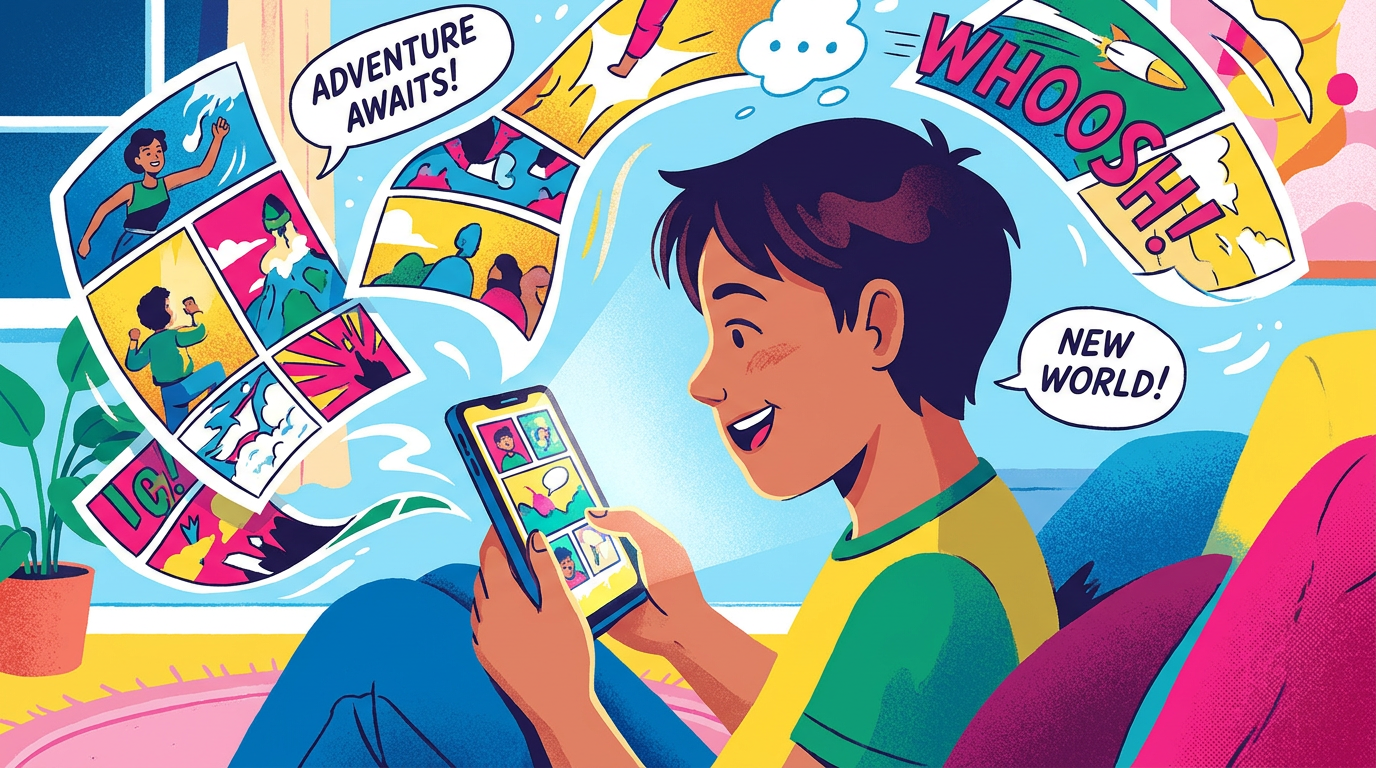
By discarding the constraints of the printed page, the vertical format aligns perfectly with modern mobile consumption habits. Readers no longer flip pages; they scroll continuously downward. This "infinite canvas" allows creators to manipulate pacing, use negative space to build suspense, and integrate multimedia elements like sound effects and subtle animations that are impossible in print.[4][7]
The financial scale of this shift is staggering. Industry analysts project the global webtoons market to surpass $14 billion in 2026, driven by a compound annual growth rate exceeding 26%. Asia-Pacific remains the epicenter, holding roughly 60% of the market share, but North American and European audiences are adopting the format at an accelerating pace.[1][2]

For creators, the platform represents a democratization of the publishing process. Historically, breaking into the comic industry required navigating gatekeepers at major publishing houses, often surrendering intellectual property rights in the process. Today, platforms like Webtoon and Tapas allow artists to upload their work directly to a global audience, bypassing traditional distribution bottlenecks entirely.[6][7]
This direct-to-consumer model is underpinned by a multi-tiered monetization ecosystem that empowers artists to earn a living from their bedrooms. Creators on open platforms can earn money through ad-revenue sharing programs, which typically split ad earnings 50/50 once a series hits specific global viewership thresholds.[3]
Beyond advertising, direct fan support has become a vital income stream. Features like "Super Likes" allow readers to tip creators directly, with artists retaining a 70% share of the net revenue. Additionally, "Fast Pass" systems let eager fans pay micro-transactions to unlock advanced chapters before their free public release, creating a steady cash flow for consistent uploaders.[3]
For top-tier creators who sign exclusive "Originals" contracts, the financial rewards can be substantial, including guaranteed minimum earnings and generous advances. In South Korea, the highest-earning creators have reported annual incomes exceeding $9 million, demonstrating the massive ceiling for successful digital intellectual property.[7]
The explosive growth of vertical comics has forced traditional print publishers to adapt their strategies. Rather than viewing webtoons purely as competition, legacy houses are increasingly treating them as talent incubators and testing grounds for new storytelling techniques.[4][6]

The explosive growth of vertical comics has forced traditional print publishers to adapt their strategies.
Publishers like Image Comics and Skybound Entertainment have begun incorporating vertical scrolling layouts and episodic storytelling into their digital offerings. Furthermore, the industry is witnessing a "web-to-print" convergence, where highly successful digital series are reformatted and published as physical graphic novels.[5][6]
Webtoon itself launched a U.S.-based print imprint, Webtoon Unscrolled, to bring its most popular English-language series to physical bookstores. The strategy has proven highly effective; the imprint's initial slate of titles, including hits like "True Beauty" and "Tower of God," sold over 200,000 copies in their first six months.[5]
Adapting a vertical scroll into a traditional page layout presents unique design challenges. Editors and creators must carefully reformat continuous panels into discrete pages without losing the original pacing or visual impact. Despite these hurdles, the insatiable demand for graphic novels among young adult readers makes the effort highly lucrative.[5]

Perhaps the most significant impact of the webtoon revolution is its role as a pre-validated pipeline for film and television adaptations. Streaming giants and production studios are increasingly turning to digital comics for their next blockbuster franchises, treating high subscriber counts as proof of audience demand.[2][7]
This trend was underscored in April 2025 by a landmark $420 million strategic IP agreement between Naver Webtoon and Netflix. The deal highlights how streaming platforms view top-tier webtoons as foundational intellectual property, capable of anchoring major live-action and animated series with built-in global fanbases.[2]
The synergy between digital comics and streaming is mutually beneficial. When a webtoon is adapted into a series, the original comic often experiences a massive resurgence in readership. Industry data shows that trailer drops for adaptations can routinely triple a webtoon's readership within eight weeks, creating a powerful cross-promotional loop.[2]

Despite the overwhelming optimism surrounding the industry, there are inherent uncertainties and challenges. The reliance on algorithmic discovery means that creators are often at the mercy of platform changes, and the pressure to maintain frequent, full-color update schedules can lead to severe creator burnout.[7]
Furthermore, as traditional publishers navigate this hybrid landscape, they must carefully balance the demand for digital content without cannibalizing their legacy print sales. Administering rights and licensing agreements in an increasingly globalized and cross-media marketplace adds another layer of complexity.[4]
Ultimately, the rise of vertical scrolling comics represents a fundamental expansion of the comic book medium. By lowering the barrier to entry for diverse voices and aligning with mobile-first consumption, webtoons have introduced millions of new readers to sequential art.[6][7]
As the lines between digital and print continue to blur, the future of comics publishing will likely be defined by hybrid models. The platforms that succeed will be those that can seamlessly integrate the accessibility of the vertical scroll with the enduring tactile appeal of the printed page, all while ensuring sustainable careers for the creators at the center of the ecosystem.[4][7]
How we got here
Early 2000s
South Korean tech companies pioneer the webtoon format to optimize comic reading for early mobile phones and web browsers.
2014
LINE Webtoon launches globally, introducing the vertical scrolling format to a massive international audience.
2019
Major platforms introduce localized creator monetization programs, allowing independent artists to earn ad revenue and tips.
2022
Webtoon Unscrolled is launched, signaling a major industry shift toward bringing digital-first vertical comics into physical print.
April 2025
Naver Webtoon and Netflix sign a $420 million strategic IP agreement, cementing digital comics as a primary source for Hollywood adaptations.
Viewpoints in depth
Digital-First Creators
Advocates for the democratization of the comic industry through direct-to-consumer platforms.
For independent artists, the vertical scrolling format represents a liberation from traditional publishing bottlenecks. Without the need to pitch editors or secure print distribution, creators can build global audiences directly from their drawing tablets. They argue that the diverse monetization tools—from ad-revenue sharing to direct fan tipping—provide a more sustainable and transparent path to making a living in the arts, even if it comes with the pressure of maintaining relentless weekly update schedules.
Traditional Publishers
Legacy houses navigating the transition from print to digital-first consumption.
Legacy comic book publishers view the webtoon explosion as both a competitive threat and a massive opportunity. Their primary challenge is adapting a century-old business model to mobile-first reading habits without destroying their existing direct market of local comic shops. By launching their own vertical reading apps and aggressively licensing popular digital titles for physical print runs, they aim to capture the younger demographic that webtoons have successfully cultivated.
Media & Entertainment Executives
Studios utilizing digital comics as a risk-mitigated pipeline for film and TV franchises.
For Hollywood and global streaming platforms, webtoons are essentially massive, publicly visible focus groups. Executives argue that adapting a comic with millions of weekly readers significantly reduces the financial risk of producing expensive live-action or animated series. The data-rich environment of digital platforms allows studios to see exactly which characters, genres, and plot points resonate with audiences before greenlighting a multi-million dollar production.
What we don't know
- Whether the rapid growth of the digital comic market will eventually plateau as screen fatigue increases among younger demographics.
- How the integration of generative AI tools might disrupt the current creator economy and platform compensation models.
- The long-term physical health impacts on creators who maintain grueling weekly update schedules to satisfy platform algorithms.
Key terms
- Infinite Canvas
- A digital design concept where the reading space is not constrained by physical page dimensions, allowing for continuous vertical scrolling.
- Fast Pass
- A monetization feature that allows readers to pay micro-transactions to unlock and read advanced comic chapters before they are released for free.
- Web-to-Print
- The industry practice of taking a successful digital-first comic and reformatting it for publication as a physical graphic novel.
- Originals Contract
- An exclusive publishing agreement between a platform and a creator, typically offering guaranteed minimum earnings and dedicated marketing support.
Frequently asked
What exactly is a webtoon?
A webtoon is a digital comic designed specifically for mobile devices, featuring a continuous vertical scroll rather than traditional page turns.
How do webtoon creators make money?
Creators earn revenue through ad-sharing programs, direct fan tipping (like Super Likes), paid early access to chapters, and exclusive platform contracts.
Are traditional comic publishers adopting this format?
Yes, major publishers are incorporating vertical scrolling layouts into their digital apps and printing physical graphic novels based on popular webtoons.
Why are streaming services interested in webtoons?
Platforms like Netflix use webtoons as a testing ground for new intellectual property, adapting series that already have millions of dedicated readers to reduce financial risk.
Sources
Source coverage
7 outlets
3 viewpoints surfaced







[1]The Business Research CompanyMedia & Entertainment Executives
Webtoons Global Market Report 2026
Read on The Business Research Company →[2]Mordor IntelligenceMedia & Entertainment Executives
Webtoons Market Size & Share Analysis - Growth Trends and Forecast
Read on Mordor Intelligence →[3]WEBTOONDigital-First Creators
Creators 101: Making Money
Read on WEBTOON →[4]UtoonTraditional Publishers
The Impact of Vertical Scrolling Comics on Traditional Publishing
Read on Utoon →[5]Scraps from the LoftTraditional Publishers
The Digital Revolution in the Literary World as Webcomics Redefine Storytelling
Read on Scraps from the Loft →[6]Zap In SpaceTraditional Publishers
What is the Influence of Webcomics on Traditional Comic Magazines?
Read on Zap In Space →[7]Factlen Editorial Team
Synthesis by Factlen editorial team
Read on Factlen Editorial Team →

Every angle. Every day.
Get entertainment stories with full source coverage and perspective breakdowns delivered to your inbox.