
How Zero-Waste Restaurants Are Engineering the Circular Dining Movement
A new wave of restaurants is abandoning the traditional 'take-make-dispose' model in favor of closed-loop systems that eliminate waste entirely. By rethinking supply chains, upcycling ingredients, and composting scraps, these pioneers are proving that circular dining is both ecologically necessary and economically viable.
By Factlen Editorial Team
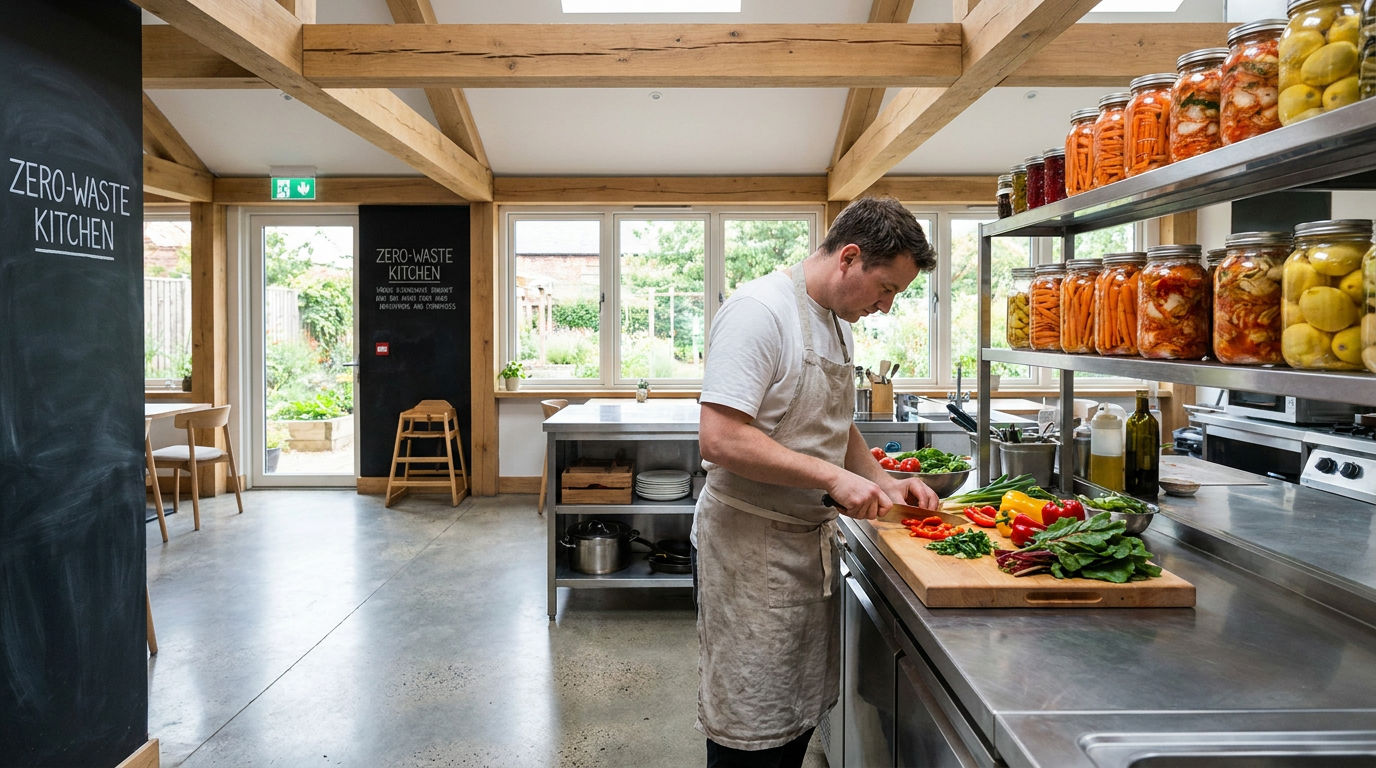
- Zero-Waste Pioneers
- Advocate for a complete systemic overhaul of the hospitality industry, arguing that waste is simply a failure of imagination and design.
- Regenerative Agriculture Advocates
- Focus on the environmental impact of food production, emphasizing that restaurants must actively heal the soil rather than just sustain it.
- Pragmatic Operators
- Support sustainability but highlight the severe logistical, spatial, and financial hurdles of implementing closed-loop systems in conventional or urban settings.
What's not represented
- · Corporate Franchise Operators
- · Waste Management Companies
Why this matters
The global food system is responsible for massive environmental degradation, with up to 40% of all food produced ending up in landfills. Understanding how circular dining works offers a blueprint not just for the hospitality industry, but for how consumers can rethink resource management and sustainability in their own kitchens.
Key points
- Circular dining replaces the traditional "take-make-dispose" restaurant model with a closed-loop ecosystem.
- Zero-waste kitchens eliminate single-use packaging by mandating reusable vessels from direct-trade suppliers.
- Chefs utilize "whole-food preparation" and fermentation to turn perceived waste into high-value ingredients.
- On-site composting systems process remaining organic matter into soil amendments that are returned to local farms.
- Beyond environmental benefits, the model can reduce operating costs by eliminating waste management fees.
The traditional restaurant model operates on a linear trajectory: ingredients are shipped in single-use packaging, prime cuts are served to diners, and the trimmings, along with the packaging, are thrown into the bin. This "take-make-dispose" pipeline contributes to a staggering global crisis, where an estimated one-third to 40% of all food produced worldwide is wasted every year. The environmental toll of this inefficiency is massive, squandering the land, water, and energy required to cultivate the food in the first place.[1][7]
But a growing movement within the hospitality industry is actively dismantling this linear model. Enter "circular dining," a systemic redesign of how a restaurant operates, from the moment a seed is planted to the disposal of the final crumb. Rather than accepting waste as an inevitable byproduct of doing business, these establishments view it as a design flaw. By rethinking every operational step, they are proving that gastronomic excellence does not have to come at the expense of the planet.[2][7]
At its core, a zero-waste restaurant functions as a closed-loop ecosystem. The goal is not merely to recycle what is left over, but to prevent waste from entering the building in the first place. This requires a radical reimagining of the supply chain, menu design, and kitchen operations. It is a holistic approach that demands intense collaboration between chefs, farmers, and even the diners themselves, ensuring that materials are kept in continuous circulation rather than being discarded into the environment.[2][5]

The transformation begins at the loading dock, long before a chef picks up a knife. In a circular restaurant, operators bypass traditional wholesale distributors who rely heavily on plastic wrapping and cardboard boxes. Instead, they establish direct trade relationships with local farmers, foragers, and cultivators. This localized supply chain not only reduces the carbon footprint associated with long-distance transportation but also fosters a deeper connection between the kitchen and the agricultural realities of their specific region, allowing menus to reflect the true micro-seasons.[3][4]
To eliminate packaging waste, these direct suppliers deliver their produce, dairy, and proteins in reusable, returnable vessels—such as heavy-duty plastic crates, glass jars, or stainless steel pails. By mandating that absolutely no single-use packaging crosses the threshold, restaurants immediately eliminate the mountains of cardboard and plastic wrap that choke conventional commercial kitchens. When the delivery is complete, the empty vessels from the previous order are washed and returned to the farmer, creating an infinite loop of utility.[1][3]
Once the ingredients are inside the kitchen, the culinary philosophy shifts entirely to "whole-food preparation." Chefs working in zero-waste environments are trained to utilize every conceivable part of an ingredient, a practice often referred to as root-to-stem or nose-to-tail cooking. This requires a profound understanding of food anatomy and a willingness to experiment with textures and flavors that traditional culinary schools might have historically ignored or discarded as undesirable. By maximizing the yield of every single carrot, fish, or fowl that enters the kitchen, these chefs honor the resources required to grow the food while simultaneously driving down their overall purchasing costs.[3][5]
What a traditional kitchen might consider refuse—vegetable peelings, herb stems, or offcuts of meat—a zero-waste kitchen views as a valuable asset. These byproducts are creatively integrated into the menu, transforming perceived waste into high-value culinary components. Potato skins might be roasted and infused into cream for a savory dessert, while fish bones are slowly roasted and reduced into deeply savory glazes. The constraint of having no trash can forces a level of culinary innovation that elevates the entire dining experience.[1][5]
What a traditional kitchen might consider refuse—vegetable peelings, herb stems, or offcuts of meat—a zero-waste kitchen views as a valuable asset.
Fermentation plays a crucial, almost magical role in this zero-waste alchemy. By employing ancient preservation techniques, chefs can convert highly perishable fresh scraps into long-lasting, flavor-packed pantry staples. Leftover bread from the dining room might be fermented into a rich miso paste or brewed into a house beer. Meanwhile, vegetable trimmings and fruit cores are transformed into complex vinegars, kombuchas, and garums that drive the foundational flavor profiles of future dishes, ensuring nothing is lost to spoilage.[1][3]

To maintain this level of hyper-efficiency, many zero-waste establishments eschew sprawling, unpredictable à la carte menus in favor of rigid set tasting menus. This structural choice allows for meticulous logistical planning, ensuring that the kitchen only orders exactly what it needs for a known number of covers. By removing the unpredictability of diner choice, the restaurant drastically reduces the risk of over-ordering and subsequent spoilage, which is one of the primary drivers of food waste in the traditional hospitality sector.[1]
Despite these rigorous practices and creative interventions, some organic matter inevitably remains—such as eggshells, coffee grounds, or the fibrous stalks of certain vegetables. This is where the "closed loop" is physically finalized. Instead of sending these food scraps to a municipal landfill—where they would decompose anaerobically and release potent methane gas—circular restaurants utilize advanced on-site composting systems to process their own organic output. These machines can often process hundreds of pounds of organic material in a matter of hours, turning a waste liability into an ecological asset.[3][5]
These industrial composters rapidly break down organic waste into nutrient-dense soil amendments, mimicking the natural decomposition process at an accelerated rate. In the truest expression of the circular economy, this rich compost is then packaged up and returned to the very farmers who supplied the restaurant in the first place. The farmers use this compost to enrich their soil, which in turn grows the next season's crops, completely closing the loop between the dining table and the earth.[1][3]
This agricultural connection ties into the broader, rapidly growing trend of regenerative dining. Rather than simply sustaining the current status quo, regenerative agriculture actively seeks to restore soil health, increase local biodiversity, and sequester atmospheric carbon. By sourcing exclusively from regenerative farms and providing them with high-quality compost, circular restaurants ensure that their economic footprint actively heals the environment rather than depleting it, offering a climate-positive approach to food consumption. Consumers are increasingly seeking out these dining experiences, recognizing that their purchasing power can directly support farming practices that combat climate change.[4][6]
The ethos of circularity often extends far beyond the plate and into the physical design of the dining room itself. Pioneer establishments, such as London's Silo—widely recognized as the world's first zero-waste restaurant—feature interiors crafted entirely from upcycled and repurposed materials. Dining tables are forged from reclaimed wood, while bar tops, light fixtures, and even the plates themselves are molded from melted single-use plastics or crushed glass, proving that waste can be transformed into beautiful, functional art.[1][3]

While the environmental benefits of this approach are profound and necessary, the model also presents a highly compelling economic case for restaurateurs. By eliminating municipal waste collection fees, maximizing the edible yield of every purchased ingredient, and avoiding the premium costs associated with single-use packaging, circular restaurants can significantly reduce their baseline operating expenses. In an industry notorious for razor-thin profit margins, these operational efficiencies offer a vital pathway to long-term financial sustainability. Many operators find that the initial investment in composting technology and reusable infrastructure pays for itself within the first few years of operation.[1][5]
However, scaling this model across the broader industry presents distinct and formidable challenges. Operating a closed-loop system requires intense logistical coordination, specialized staff training, and a willingness to embrace a constantly fluctuating menu dictated by the micro-seasons. Urban restaurants, in particular, face severe spatial constraints when attempting to house industrial composting machines, and finding local farmers willing to navigate city traffic to deliver in reusable vessels can be a significant hurdle for establishments located in dense metropolitan centers.[5]

Yet, as the global climate crisis intensifies, the hospitality industry is increasingly recognizing that the traditional linear model is no longer tenable. Circular dining proves that with systemic design, rigorous commitment, and culinary imagination, restaurants can successfully decouple gastronomic excellence from environmental degradation. By transforming waste from an inevitable burden into a valuable resource, these pioneer establishments are offering a regenerative, hopeful blueprint for the future of the global food system. As consumer awareness grows and the technology for on-site waste processing becomes more accessible, the closed-loop kitchen is poised to transition from a radical niche into the new industry standard.[2][4][7]
How we got here
Early 2010s
The concept of zero-waste dining begins to emerge as a fringe movement in response to the massive scale of hospitality waste.
2014
Silo opens in the UK, widely recognized as the world's first fully zero-waste restaurant, proving the concept's viability.
2020
The Michelin Guide introduces the Green Star to highlight restaurants at the forefront of sustainable gastronomy.
2020–2023
Pandemic-era disruptions to global supply chains accelerate industry interest in hyper-local sourcing and direct trade.
2026
Regenerative agriculture and closed-loop systems become central pillars of mainstream global food trends.
Viewpoints in depth
Zero-Waste Chefs
Culinary professionals who view the elimination of waste as a driver of innovation rather than a restriction.
For chefs operating in a zero-waste environment, the absence of a trash can is not a limitation, but a catalyst for creativity. They argue that traditional culinary education has historically prioritized prime cuts and perfect aesthetics, leading to massive inefficiencies. By embracing whole-food preparation and ancient techniques like fermentation, these chefs discover entirely new flavor profiles hidden in the stems, peels, and offcuts that conventional kitchens throw away. They view every ingredient as a puzzle to be fully utilized, proving that constraint breeds culinary excellence.
Regenerative Farmers
Agricultural producers who partner with circular restaurants to restore soil health and biodiversity.
Farmers engaged in regenerative agriculture see circular dining as a vital economic partnership. They argue that the traditional food system treats soil as an infinite resource to be extracted from, leading to widespread degradation. By supplying restaurants directly in reusable vessels and, crucially, receiving nutrient-dense compost back from those same restaurants, these farmers can actively rebuild their topsoil. This closed-loop relationship allows them to sequester carbon, reduce their reliance on synthetic fertilizers, and cultivate more resilient crops.
Urban Restaurateurs
City-based operators who face unique infrastructural challenges when attempting to implement closed-loop systems.
While deeply supportive of the circular dining ethos, operators in dense metropolitan areas highlight the severe practical hurdles of the model. Urban real estate is notoriously expensive, making it difficult to dedicate precious square footage to industrial composting machines or extensive fermentation labs. Furthermore, navigating city traffic to coordinate direct-trade deliveries in reusable crates requires immense logistical effort. These operators argue that for circular dining to scale globally, cities must invest in better municipal infrastructure, such as localized commercial composting networks and green logistics hubs.
What we don't know
- How easily the zero-waste model can be adopted by large-scale, corporate restaurant chains that rely on standardized global supply chains.
- Whether urban infrastructure will evolve quickly enough to support city-wide commercial composting networks for restaurants lacking physical space.
- The long-term impact of climate change on the hyper-local agricultural supply chains that circular restaurants depend upon.
Key terms
- Circular Economy
- An economic system aimed at eliminating waste and the continual use of resources, contrasting with a linear "take-make-dispose" model.
- Closed-Loop System
- A process where the waste or byproduct of one operation becomes the raw material or input for another, ensuring nothing is discarded.
- Regenerative Agriculture
- Farming practices that actively restore soil health, increase biodiversity, and capture carbon, going beyond mere sustainability.
- Upcycling
- The process of transforming byproducts, waste materials, or unwanted products into new materials or products of better quality or environmental value.
- Garum
- A fermented sauce historically made from fish, now widely adapted by zero-waste chefs using vegetable scraps or leftover bread to create umami-rich flavor profiles.
Frequently asked
What makes a restaurant officially zero-waste?
A restaurant is generally considered zero-waste when it successfully diverts at least 90% of its waste away from landfills through reduction, reuse, upcycling, and composting.
Is eating at a zero-waste restaurant more expensive?
Not necessarily. While high-quality, locally sourced ingredients can cost more, these restaurants offset expenses by eliminating waste disposal fees and maximizing the yield of every product they buy.
How do zero-waste restaurants handle health and safety regulations?
They adhere to the same strict health codes as traditional restaurants. Reusable delivery vessels are rigorously sanitized, and fermentation processes are carefully monitored to ensure absolute food safety.
Sources
Source coverage
7 outlets
3 viewpoints surfaced







[1]World Bio Market InsightsZero-Waste Pioneers
Restaurant waste as feedstock: Silo's zero-tolerance waste policy
Read on World Bio Market Insights →[2]MDPIPragmatic Operators
A circular restaurant can be defined as a restaurant based on a systemic design
Read on MDPI →[3]Circle EconomyZero-Waste Pioneers
Silo: The World's First Zero Waste Restaurant
Read on Circle Economy →[4]KM Zero HubRegenerative Agriculture Advocates
Zero Waste Restaurants: Transforming Gastronomy Towards Sustainability and Regeneration
Read on KM Zero Hub →[5]Join StoredPragmatic Operators
Implementing Closed-Loop Systems in Restaurants
Read on Join Stored →[6]Kitchen RebelRegenerative Agriculture Advocates
Gastro Trends 2025: Regenerative Food
Read on Kitchen Rebel →[7]Factlen Editorial TeamZero-Waste Pioneers
Synthesis by Factlen editorial team
Read on Factlen Editorial Team →
Every angle. Every day.
Get lifestyle stories with full source coverage and perspective breakdowns delivered to your inbox.