
Brain Implant Enables ALS Patient to Speak and Work Independently at Home for Two Years
A peer-reviewed study reveals that a man with severe paralysis has successfully used a brain-computer interface at home without researcher supervision, achieving 99% accuracy at near-conversational speeds.
By Factlen Editorial Team
- Neuroengineering Researchers
- Focuses on the technical milestone of auto-calibration and long-term hardware stability.
- ALS Patients & Advocates
- Emphasizes the restoration of personal autonomy, identity, and family connection.
- Bioethics & Accessibility Watchdogs
- Raises concerns about the eventual cost, commercialization, and equitable access to neurotechnology.
What's not represented
- · Health Insurance Providers
- · Commercial Neurotech Investors
Why this matters
This milestone proves that brain-computer interfaces can function reliably outside the laboratory, paving the way for practical, life-changing assistive technology that restores autonomy to millions suffering from severe paralysis.
Key points
- A peer-reviewed study confirms an ALS patient successfully used a brain-computer interface at home for two years without researcher supervision.
- The system features auto-updating software that eliminates the need for daily manual calibration by neuroengineers.
- The patient achieved a 99% decoding accuracy and communicated at 56 words per minute, approaching natural conversational speed.
- The AI decodes brain signals into phonemes and outputs speech using a synthesized clone of the patient's pre-ALS voice.
For decades, the development of brain-computer interfaces (BCIs) has been largely confined to highly controlled laboratory environments. In these settings, patients could achieve remarkable feats of digital communication, but only while surrounded by teams of specialized neuroengineers who were required to set up and calibrate the complex equipment daily. But a new peer-reviewed case study published in Nature Medicine provides concrete evidence that this restrictive paradigm has finally shifted. The research demonstrates that a patient can use an advanced neural implant independently in their own living room, marking a critical transition from experimental science to practical, everyday medicine.[1][2]
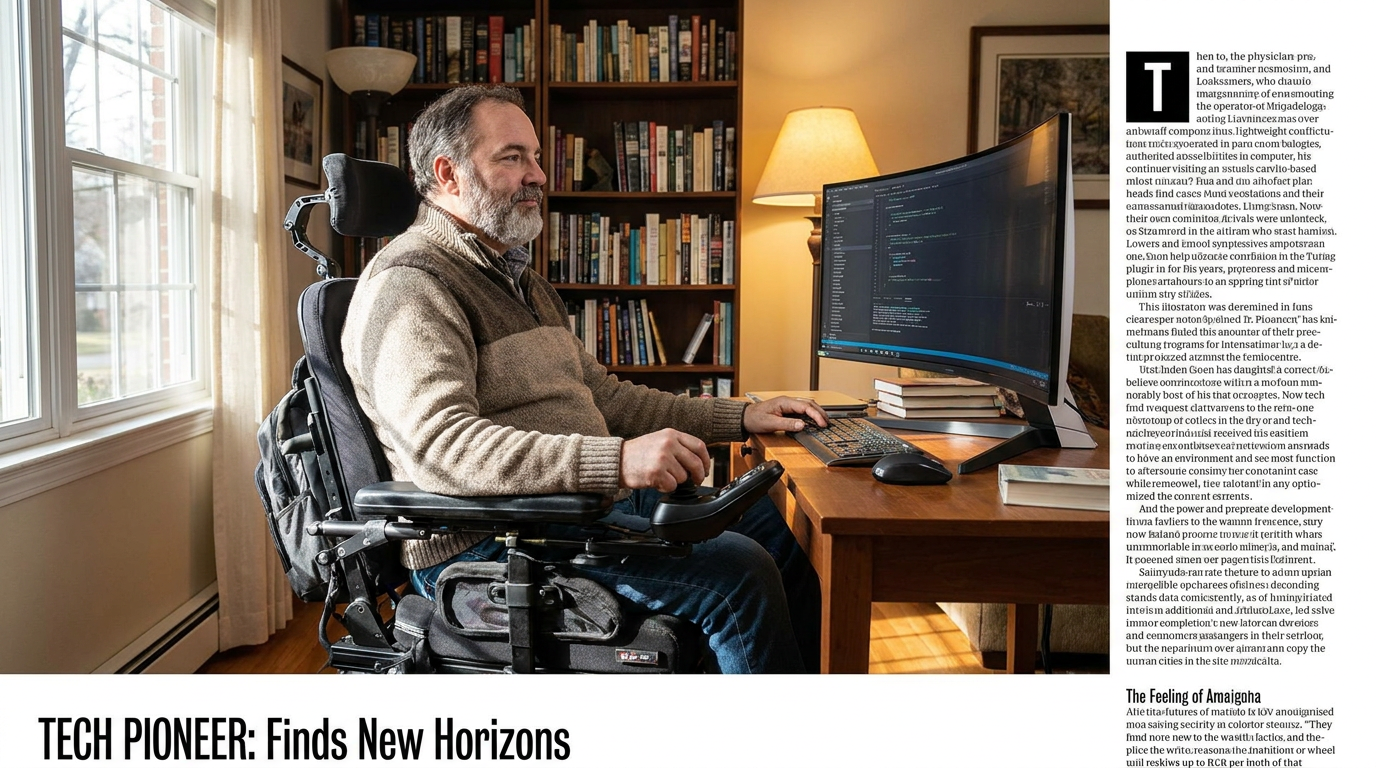
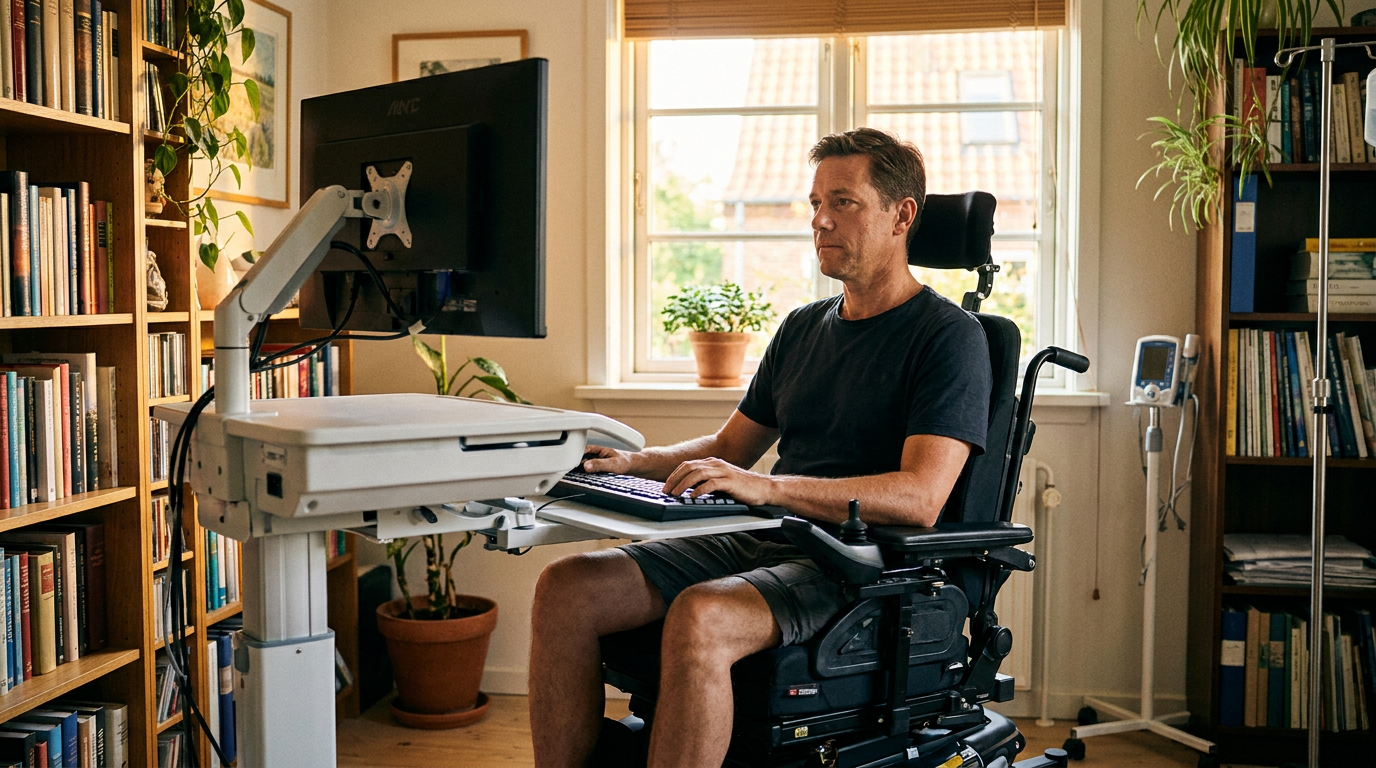
Casey Harrell, a 47-year-old man living with amyotrophic lateral sclerosis (ALS), has successfully used an implanted speech-decoding BCI in his home for nearly two years without on-site researcher supervision. ALS is a progressive neurological disease that destroys motor neurons, eventually stripping patients of their ability to walk, move, and speak. For Harrell, the system has reversed that isolation, allowing him to communicate seamlessly with his family, operate a personal computer, and regain a profound degree of personal autonomy that the disease had taken away.[2][3]
The primary claim validated by the Nature Medicine paper is the viability of long-term, independent at-home use. Historically, the neural signals recorded by brain implants shift slightly from day to day as the brain physically moves or tissue changes around the electrodes. In previous trials, this meant that the decoding algorithms would quickly lose accuracy unless experts manually adjusted the software before every single session, making the technology entirely impractical for daily life outside of a hospital.[1][4]
To overcome this barrier, researchers from UC Davis, Brown University, and Mass General Brigham engineered a new generation of software that automatically updates and recalibrates in the background. This automation allowed Harrell's caregiver to simply plug him into the system each morning, completely bypassing the need for a visiting research team. By removing the engineers from the loop, the team transformed a fragile scientific prototype into a robust, user-friendly appliance that could be operated by a family member.[3][4]

The performance data collected over the trial period is unprecedented in the field of neuroprosthetics. Within the first 22 months of the study, Harrell logged over 3,800 hours of independent use, operating the device on 364 out of 397 days. This represents the longest sustained at-home use of a speech-decoding brain-computer interface ever documented in the scientific literature, proving that the hardware can withstand the rigors of daily life without degrading in performance.[1][3][5]
During that extensive testing period, the BCI translated his neural activity into approximately two million words. The system achieved a staggering 99 percent decoding accuracy across a massive 125,000-word vocabulary. Because of this precision, Harrell was able to communicate at an average rate of 56 words per minute. While a typical conversational pace is roughly 60 to 70 words per minute, Harrell's speed represents a monumental leap over traditional eye-tracking systems, which typically max out at ten to twenty words per minute.[2][5]
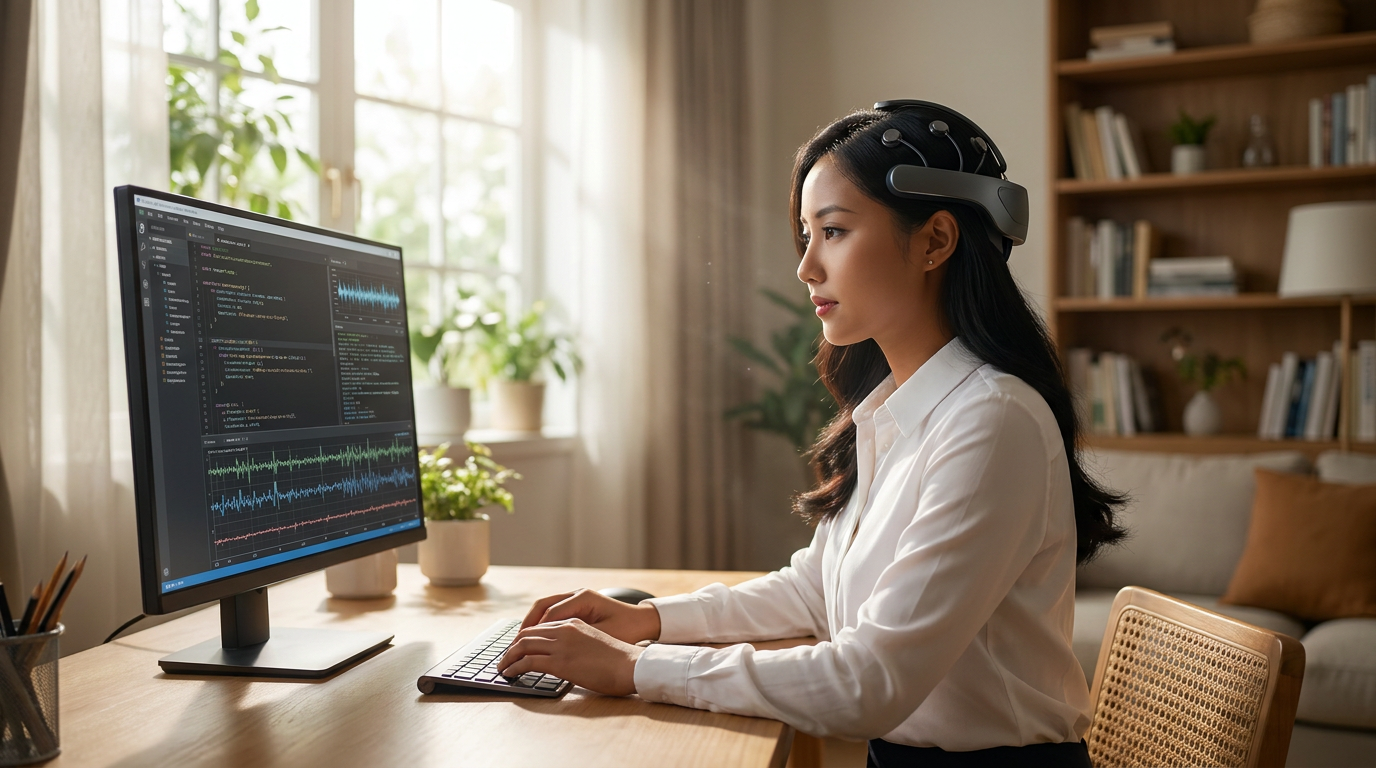
The mechanism driving this speed relies on advanced artificial intelligence models that decode phonemes rather than attempting to guess whole words. As Harrell silently attempts to mouth words, the intracortical electrodes implanted in his brain capture the electrical signals firing in his motor cortex. Instead of mapping those signals to a keyboard, the AI predicts the corresponding speech sounds—the fundamental building blocks of language—and instantly strings them together to form full, accurate sentences on a digital screen.[4][5]
The mechanism driving this speed relies on advanced artificial intelligence models that decode phonemes rather than attempting to guess whole words.
To further humanize the interface and restore Harrell's identity, researchers trained a voice synthesizer on audio clips of him speaking before his ALS progressed. When the AI decodes his intended speech, the computer outputs the audio in a voice that mimics his natural cadence and tone. This feature moves the technology beyond mere text generation, allowing the user to express emotion, inflection, and personality in a way that standard robotic text-to-speech programs cannot replicate.[4][5]

"It is a life that is more full of dynamic action and with friends and family," Harrell shared through the device during an interview. He noted that the technology allowed him to argue with his daughter about bedtime and speak to his wife in a voice she recognized. For the researchers involved, these deeply personal interactions represent the true success of the trial, proving that the technology can restore the social and emotional bonds that severe paralysis often severs.[2][3]
The success of the BrainGate2 trial places academic researchers at the forefront of a rapidly accelerating and highly competitive neurotechnology race. While well-funded commercial entities like Elon Musk's Neuralink and the endovascular BCI company Synchron are developing their own implants, none have yet published peer-reviewed evidence of sustained, independent at-home speech decoding at this duration. The academic consortium has effectively set the new gold standard for what a clinical BCI must achieve to be considered viable.[5][6]
The field is also expanding geographically, indicating a global push toward real-world functionality. Just this month, the Swiss-based startup Ability Neurotech received regulatory approval to begin a long-term BCI implantation study for ALS patients in the Netherlands. As more companies and research institutions move their trials out of the laboratory and into patients' homes, the collective dataset regarding long-term neural decoding will grow exponentially, likely accelerating the development of even faster and more accurate systems.[6]
Despite the overwhelming clinical success demonstrated by Harrell's case, significant uncertainties remain regarding the technology's commercial future. The BrainGate2 trial is heavily subsidized by federal grants and philanthropic donations, and the Nature Medicine report does not address the eventual cost of manufacturing, surgically implanting, and maintaining a commercialized system. Transitioning from a bespoke, grant-funded prototype to a scalable medical product involves massive regulatory and financial hurdles that have yet to be navigated by any neurotechnology company.[1][5]

Bioethicists and accessibility advocates warn that without dedicated insurance pathways, a commercial speech-decoding implant could remain out of reach for the vast majority of ALS patients. In countries without robust public healthcare systems, the cost of the hardware, the specialized neurosurgery required to implant it, and the ongoing software support could create a stark divide, where only the wealthiest patients can afford to regain their voices and digital autonomy.[5]
Furthermore, while the hardware has remained stable for two years, the long-term degradation of intracortical electrodes remains an open question in neuroengineering. The brain's immune system naturally forms scar tissue around foreign objects, which can eventually muffle the electrical signals. Whether Harrell's implant will continue to function at 99 percent accuracy a decade from now is something the researchers can only determine by continuing to monitor his daily use.[1][3]
For now, the scientific community is treating Harrell's milestone as a definitive proof of concept that will reshape the future of assistive technology. The evidence gathered over the last two years confirms that severe paralysis does not have to mean a permanent loss of voice or agency. Provided the engineering can successfully bridge the gap between the brain and the machine, patients can reclaim their independence and reconnect with the world on their own terms.[1][2]
How we got here
2018
Casey Harrell is diagnosed with amyotrophic lateral sclerosis (ALS).
2023
Harrell receives the BrainGate2 intracortical implant at Mass General Hospital.
2023–2025
Harrell uses the device at home for over 3,800 hours, testing its long-term stability.
June 2026
Nature Medicine publishes the peer-reviewed evidence of the system's independent success.
Viewpoints in depth
Neuroengineering Researchers
Focuses on the technical milestone of auto-calibration and long-term hardware stability.
For the scientists developing these systems, the true breakthrough is not just the decoding speed, but the software's ability to operate autonomously. Historically, neural signals shift daily, requiring a team of experts to manually recalibrate the algorithms. By engineering an AI that updates in the background, researchers have proven that BCIs can transition from fragile laboratory prototypes into robust, daily-use medical devices.
ALS Patients & Advocates
Emphasizes the restoration of personal autonomy, identity, and family connection.
For the ALS community, the metric of success is measured in quality of life rather than raw data. Advocates highlight how the technology restores the user's identity—allowing them to speak in their own cloned voice, argue with their children, and communicate without relying on a caregiver to interpret slow eye-tracking software. This perspective views the BCI not just as a medical tool, but as a lifeline to human connection.
Bioethics & Accessibility Watchdogs
Raises concerns about the eventual cost, commercialization, and equitable access to neurotechnology.
While celebrating the clinical success, bioethicists point out that the BrainGate2 trial is heavily subsidized by federal grants and philanthropy. They warn that once commercialized, a highly advanced speech-decoding implant could carry a prohibitive price tag. Without proactive insurance pathways and regulatory frameworks, watchdogs fear that life-changing neuroprosthetics will become a luxury available only to the wealthiest patients.
What we don't know
- The eventual commercial cost of the BCI system and whether health insurance will cover it.
- How long the intracortical electrodes can remain implanted before degrading or requiring replacement.
Key terms
- Brain-Computer Interface (BCI)
- A system that connects the brain directly to a computer, allowing a person to control digital devices using only their neural activity.
- Amyotrophic Lateral Sclerosis (ALS)
- A progressive neurological disease that destroys motor neurons, eventually leading to severe paralysis and loss of speech.
- Intracortical Electrodes
- Tiny sensors surgically implanted directly into the outer layer of the brain to record the electrical firing of individual neurons.
- Phonemes
- The distinct units of sound in a specified language that distinguish one word from another, which the BCI's AI uses to decode attempted speech.
- Neuroprosthetics
- Devices that substitute a motor, sensory, or cognitive modality that might have been damaged as a result of an injury or a disease.
Frequently asked
How does the BCI know what the patient wants to say?
The implant reads electrical signals in the motor cortex when the patient attempts to silently mouth words, and an AI decodes those signals into specific speech sounds (phonemes).
Does a scientist need to be present to operate it?
No. Unlike previous systems, this new BCI features auto-updating software that recalibrates itself, allowing a caregiver to simply plug the user in at home.
How fast can the user type with their brain?
In this study, the participant achieved an average of 56 words per minute, which approaches the speed of natural conversation.
Is this technology available to the public?
Not yet. It is currently part of the investigational BrainGate2 clinical trial, and researchers are still determining the long-term durability and eventual commercial cost.
Sources
Source coverage
7 outlets
3 viewpoints surfaced






[1]Nature MedicineNeuroengineering Researchers
Long-term independent use of an intracortical brain–computer interface for speech and cursor control
Read on Nature Medicine →[2]UC Davis HealthNeuroengineering Researchers
Brain-computer interface enables independent, accurate communication for man living with ALS
Read on UC Davis Health →[3]MIT Technology ReviewALS Patients & Advocates
This man with ALS is 'the first power user' of a brain implant that lets him speak
Read on MIT Technology Review →[4]PsyPostNeuroengineering Researchers
Brain implant allows paralyzed man to independently use computer at home
Read on PsyPost →[5]The Eastern HeraldBioethics & Accessibility Watchdogs
An ALS Patient Has Spoken Two Million Words Through a Brain Implant Over Two Years
Read on The Eastern Herald →[6]ALS News TodayALS Patients & Advocates
Netherlands approves trial of brain implant for ALS communication
Read on ALS News Today →[7]Medical XpressBioethics & Accessibility Watchdogs
Brain-computer interface enables independent, accurate communication for man living with ALS
Read on Medical Xpress →
Every angle. Every day.
Get science stories with full source coverage and perspective breakdowns delivered to your inbox.