
Deanna Stellato-Dudek Makes Historic Olympic Debut at 42 After Terrifying Head Injury
Canadian pairs skater Deanna Stellato-Dudek realized a 26-year Olympic dream in Milan, taking the ice just two weeks after a severe training accident threatened her career.
By Jackson Reed

When 42-year-old Deanna Stellato-Dudek stepped onto the ice at the Milano Ice Skating Arena, she made history before her music even began. The Canadian pairs skater became the oldest woman to compete in Olympic figure skating in nearly a century, defying a sport that typically demands youth.
But the most remarkable part of her debut alongside partner Maxime Deschamps was not her age, nor the unprecedented 16-year hiatus she took from the sport. It was the fact that she was skating at all, just two weeks after a terrifying head injury threatened to extinguish her Olympic dream entirely.[1][2]
On January 30, during a routine training session in Quebec, Stellato-Dudek suffered a severe fall, striking her head on the ice. The timing could not have been worse. The 2024 World Champions were in their final preparations for the 2026 Milano Cortina Winter Games.
The accident immediately forced the duo to withdraw from the Olympic team event, leaving Canada to compete without their top pairs team. For ten agonizing days, Stellato-Dudek was grounded in Montreal, undergoing daily medical evaluations while Deschamps trained alone, hoping his partner would be cleared to fly.[1]
Stellato-Dudek described the waiting period as a "living nightmare" that she would not wish on anyone. Yet, her focus remained absolute. "From the moment the accident occurred, the only focus was tunnel vision on, 'How can I get here?'" she told reporters in Milan. While she firmly clarified that the injury was not a concussion—noting that a concussion would have been nearly impossible to recover from so quickly—she declined to elaborate on the specific diagnosis, citing medical privacy laws.
The turning point arrived on February 10, when the Canadian Olympic Committee announced that Stellato-Dudek had passed all required medical protocols. Doctors overseeing her case described her rapid healing as a "remarkable recovery." Cleared for takeoff, the pair arrived in Italy just days before the individual pairs competition. Deschamps, who had kept his faith alive during the solo training sessions, expressed profound relief at seeing their shared dream salvaged at the eleventh hour.[1]
Returning to the ice required both physical courage and strategic compromises. To protect Stellato-Dudek's health, the team made the difficult decision to remove a signature crowd-pleasing element from their short program: an assisted backflip. Though the acrobatic move had been a staple of their routine throughout the season, the pair agreed that the non-scoring element carried an unnecessary risk following a head trauma. "Obviously, we don't want to do anything that's going to hinder the rest of my life in terms of my health," she explained.[2]
The emotional weight of the journey was palpable during their first official practice in Milan on February 13. Stellato-Dudek was visibly moved as she spoke about the global outpouring of support, noting that thousands of messages from fans lighting candles and praying for her recovery helped carry her through the darkest days of her rehabilitation. Quoting Eleanor Roosevelt, she remarked that people should do something every day that scares them, admitting that stepping back onto the ice after such a severe fall easily checked that box.
When the pair finally competed in the short program on February 15, the performance was a testament to survival rather than perfection. Skating to Carl Orff's "Carmina Burana," they executed a throw triple loop and a triple twist, but a costly error occurred when Stellato-Dudek caught Deschamps' blade and fell during the exit of their reverse lasso lift. The mistake dropped them to 14th place with a score of 66.04, forcing them to recalibrate their expectations for the free skate.[1]
Yet, in the broader context of her life, the placement on the leaderboard felt secondary. Stellato-Dudek had originally retired from singles skating in 2000 at the age of 17 due to chronic hip injuries. She spent the next decade and a half building a successful career as a medical aesthetics director in Chicago. It was only a team-building exercise at a work retreat—where she was asked what she would do if she knew she could not fail—that prompted her to dust off her skates in 2016.[2]
Her subsequent rise through the pairs ranks, her relocation to Montreal, and her expedited Canadian citizenship in late 2024 all culminated in this singular Olympic appearance. By taking the ice in Milan, she became the oldest female Olympic figure skater since Finland's Ludowika Jakobsson competed at age 43 in 1928. For Stellato-Dudek, the ultimate victory was simply refusing to surrender. "I hope that people learn to never limit themselves," she said. "The only limits are the ones that you put on yourself."[1][2]
The essentials
- Deanna Stellato-Dudek suffered a severe head injury in training just weeks before the 2026 Winter Olympics.
- The injury forced her and partner Maxime Deschamps to withdraw from the Olympic team event.
- Following a 10-day medical evaluation, doctors cleared her to compete, citing a 'remarkable recovery.'
- The pair removed a signature backflip from their routine to prioritize her long-term health.
- At 42, Stellato-Dudek became the oldest female Olympic figure skater since 1928.
Timeline
2000
Stellato-Dudek retires from singles figure skating at age 17 due to chronic hip injuries.
2016
After a 16-year career in medical aesthetics, she returns to the ice to pursue pairs skating.
March 2024
Stellato-Dudek and Maxime Deschamps win the World Figure Skating Championship.
January 30, 2026
Stellato-Dudek suffers a severe head injury during a training session in Quebec.
February 2, 2026
The pair officially withdraws from the Olympic team event as she awaits medical clearance.
February 10, 2026
The Canadian Olympic Committee medically clears her to compete in the individual pairs event.
February 15, 2026
At 42, she makes her historic Olympic debut in the pairs short program in Milan.
- The Athletes
- Focused on resilience, overcoming the trauma of the injury, and achieving the lifelong Olympic dream despite setbacks.
- Medical & Team Officials
- Focused on athlete safety, the cautious day-by-day evaluation, and the remarkable recovery that allowed clearance.
- The Figure Skating Community
- Inspired by the unprecedented age-defying comeback and viewing her presence on the ice as a historic victory.
Perspectives this story doesn't cover
- Athletes who have been forced into permanent retirement by similar head injuries.
- The alternate Canadian pairs team who remained on standby during the 10-day medical evaluation.
Sources
Source coverage
2 outlets
3 viewpoints surfaced


- [1]Olympics.comThe Figure Skating Community
Winter Olympics 2026: After injury scare, Deanna Stellato-Dudek set to compete in pairs figure skating event
Read on Olympics.com → - [2]ReutersThe Athletes
Olympics-figure skating-Stellato-Dudek bounces back from accident to prepare for Olympic debut at 42
Read on Reuters →
More in Sports
See all →Standings
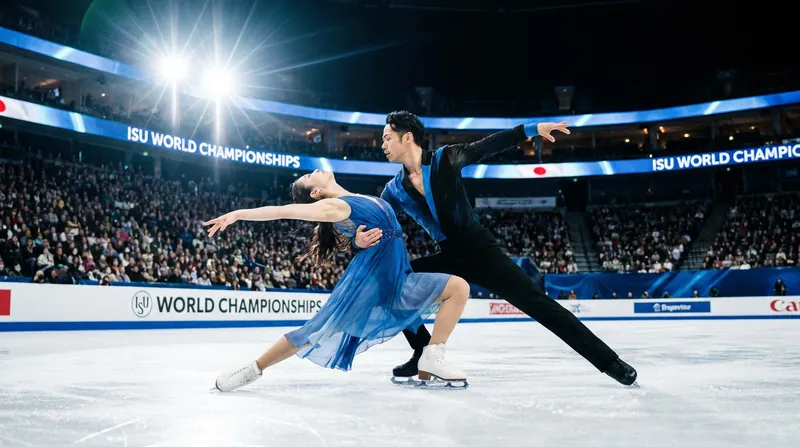
The Grand Prix Bubble: Karhunen, Matsuike, and Sumiyoshi Battle for the Top 24 in the ISU Women's World Standings
4 sources
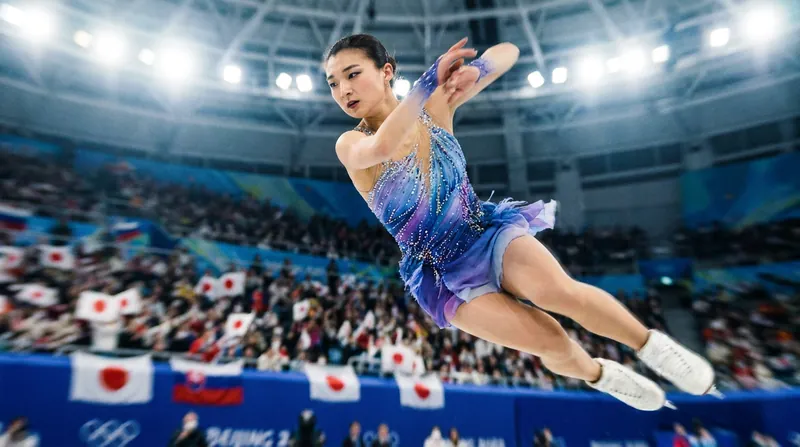
Figure Skating
Olympic Champion Alysa Liu Wins Best Breakthrough Athlete at 2026 ESPY Awards
6 sources
Standings
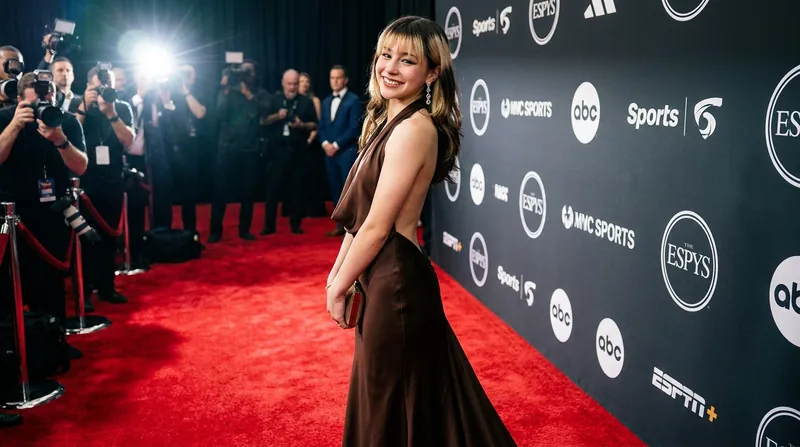
The Bubble Race: Davis and Smolkin, Turkkila and Versluis, and Taschlerova and Taschler Battle for the Top 10 in ISU Ice Dance World Standings
5 sources
Injury
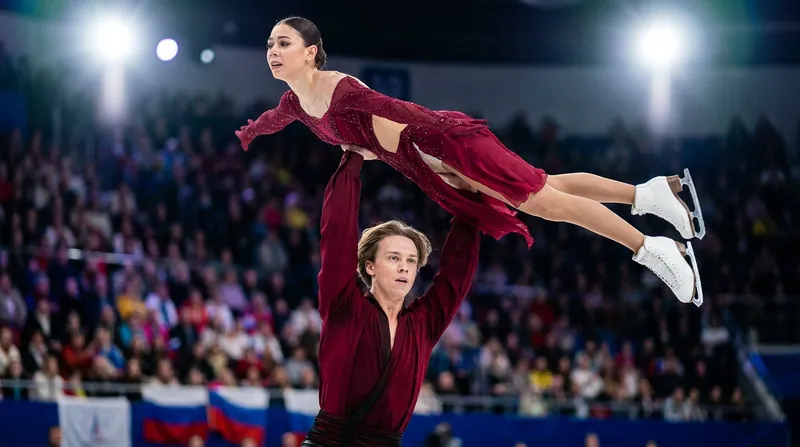
Gabrielle Daleman and Marin Honda Headline Figure Skating's Season of Resilience Following Major Surgeries
6 sources
Comments
Every angle. Every day.
Get Sports stories with full source coverage and perspective breakdowns, free every day.