
The Fast-Food Industry Is Replacing 'Forever Chemicals' With Seaweed Packaging
Facing strict bans on PFAS and single-use plastics, major fast-food chains are rolling out home-compostable, grease-resistant wrappers made from regenerative marine algae.
By Factlen Editorial Team
- Material Innovators
- Argue that regenerative marine biomass can match the performance of synthetic plastics without the toxic legacy.
- Foodservice Operators
- Focus on finding scalable, cost-effective packaging that complies with incoming bans on PFAS and single-use plastics.
- Environmental Advocates
- Emphasize the urgent need to eliminate forever chemicals and microplastics from the global waste stream.
What's not represented
- · Traditional Plastic Manufacturers
- · Industrial Composting Facilities
Why this matters
Traditional fast-food wrappers rely on toxic 'forever chemicals' and microplastics that contaminate water supplies and human bloodstreams. The shift to seaweed proves that massive global industries can adopt regenerative, zero-waste materials without sacrificing convenience or performance.
Key points
- Fast-food chains are replacing toxic PFAS and plastic wrappers with natural seaweed coatings.
- Seaweed biopolymers create a grease and moisture barrier that matches synthetic plastics.
- Unlike corn-based bioplastics, seaweed requires no fresh water, land, or fertilizers to grow.
- Seaweed packaging is fully home-compostable and leaves zero microplastics behind.
- Major rollouts are already underway in Europe, driven by strict new single-use plastic bans.
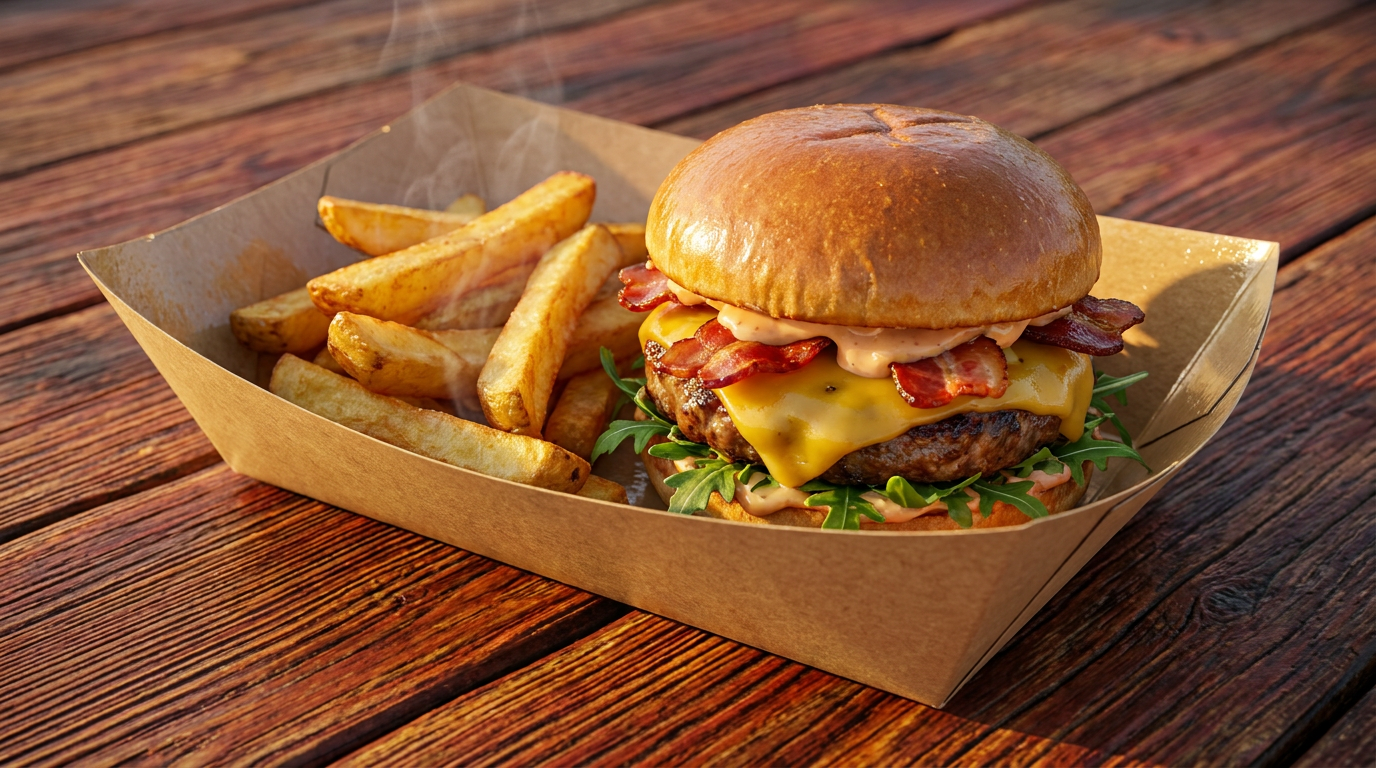
For decades, the fast-food industry’s most persistent environmental problem hasn't been the food itself, but what it comes wrapped in. To keep a burger’s grease from soaking through the paper, or a serving of fries from turning a cardboard tray into mush, manufacturers have historically relied on a hidden layer of synthetic protection.[8]
That protection usually takes the form of thin petroleum-based plastic films or per- and polyfluoroalkyl substances (PFAS)—widely known as "forever chemicals." While highly effective at repelling oil and water, these materials are practically indestructible in nature, lingering in landfills, shedding microplastics into oceans, and contaminating groundwater.[3][8]
Now, facing a wave of strict new regulations, the packaging industry is undergoing a radical transformation. With the European Union enforcing its Single-Use Plastics Directive and several U.S. states banning PFAS in food contact materials, major restaurant chains are scrambling for compliant alternatives.[1][7]
The most promising breakthrough is emerging not from a chemical laboratory, but from the ocean. A new generation of material science startups is successfully replacing toxic coatings with biopolymers extracted from seaweed, offering a grease-resistant barrier that is entirely natural and home-compostable.[4][8]

The mechanism relies on the unique biology of marine algae. Seaweed contains natural polymers, such as sodium alginate, which have a molecular structure remarkably similar to the natural fibers found in paper.[3]
When these seaweed extracts are processed and applied as a coating to standard paperboard, they form a dense, flexible shield. This shield easily repels hot oil, mayonnaise, and condensation, matching the performance of synthetic plastics without leaving a toxic legacy behind.[3][6]
This technology is rapidly moving from pilot testing to commercial scale. In early 2026, the London-based startup Notpla partnered with the Dutch fast-food chain Kwalitaria to roll out seaweed-coated, plastic-free food trays across 160 restaurants in the Netherlands.[1]
This technology is rapidly moving from pilot testing to commercial scale.
The Notpla trays are certified to contain zero plastic and shed no microplastics, making them fully exempt from the EU's stringent single-use plastics taxes. For Kwalitaria alone, the switch is projected to eliminate 6.9 tonnes of plastic waste and over 100 tonnes of carbon emissions annually.[1]

A similar scale-up is happening through Zerocircle, an Indian material science company founded by former tech executive Neha Jain. Zerocircle transforms seaweed harvested from the coasts of Gujarat and Tamil Nadu into low-cost, high-performance packaging films and coatings.[5][6]
In 2025, Zerocircle partnered with the European distributor Eco-Dispo to deploy 1.5 million seaweed-coated food boxes across the Benelux region, with a target of replacing 2 million boxes by March 2026. Because the seaweed coating runs smoothly on existing factory printing and folding lines, food brands can make the switch without overhauling their supply chains.[5][8]
The environmental math heavily favors marine biomass over other popular bioplastics. Alternatives like polylactic acid (PLA), which is derived from cornstarch, require vast tracts of arable land, fresh water, and chemical fertilizers to grow.[4][8]
Seaweed, by contrast, is a regenerative crop. It requires no soil, no fresh water, and no fertilizer. As it grows, it actively de-acidifies the ocean and absorbs massive amounts of carbon—roughly 120 kilograms of CO2 for every tonne of seaweed harvested.[5]

Furthermore, the end-of-life profile of seaweed packaging solves a major headache for waste management. Many agricultural bioplastics only break down in high-heat industrial composting facilities, meaning they still act like regular plastic if they end up in a landfill or the ocean.[5][8]
Seaweed coatings, however, are genuinely home-compostable. They are designed to break down in a standard backyard compost bin within weeks, much like a piece of fruit peel. Some companies, like Indonesia's Evoware, are even producing condiment sachets and burger wraps that are entirely edible.[4][7]
The primary hurdle remaining is cost. Currently, seaweed-based packaging carries a premium over heavily subsidized fossil-fuel plastics. However, as production scales and regulatory penalties on traditional plastics increase, the price gap is closing rapidly. Innovators like Zerocircle expect to cut their production costs by 20 percent in the near term.[5]
With the global sustainable packaging market projected to reach $671 billion by 2034, the financial incentives for green chemistry have never been higher. By turning to the ocean's most abundant crop, the fast-food industry may finally be able to serve convenience without the environmental compromise.[7][8]
How we got here
2022
Researchers at Flinders University and one•five successfully develop a seaweed-based biopolymer coating for grease-resistant paper.
2024
The European Union and several US states begin enforcing strict bans on PFAS in food packaging.
2025
Zerocircle partners with Eco-Dispo to distribute 1.5 million seaweed-coated food boxes across the Benelux region.
Early 2026
UK-based Notpla rolls out its plastic-free, seaweed-coated trays across 160 Kwalitaria fast-food restaurants in the Netherlands.
Viewpoints in depth
Material Innovators
Startups and scientists focused on replacing synthetic plastics with regenerative marine biomass.
For material scientists, the appeal of seaweed lies in its regenerative properties. Unlike bioplastics derived from corn or sugarcane, seaweed requires no arable land, fresh water, or synthetic fertilizers. Innovators argue that by utilizing natural marine polymers, the packaging industry can create high-performance moisture and grease barriers that actively sequester carbon during their growth phase, rather than contributing to terrestrial agricultural runoff.
Foodservice Operators
Restaurant chains balancing sustainability goals with operational costs and regulatory compliance.
Fast-food operators are primarily driven by the need to comply with incoming legislation, such as the EU's Single-Use Plastics Directive and state-level PFAS bans in the U.S. While they acknowledge the environmental benefits of seaweed packaging, their focus is on scalability and cost parity. Operators require solutions that can run on existing manufacturing lines and withstand the heat and grease of fast food without forcing a massive price increase onto the consumer.
Environmental Advocates
Campaigners pushing for the total elimination of forever chemicals and persistent microplastics.
Environmental groups view the transition to seaweed as a critical victory in the fight against 'forever chemicals.' They point out that traditional grease-resistant wrappers have contaminated groundwater and exposed consumers to toxic substances for decades. Advocates stress that true sustainability means moving away from materials that require industrial composting facilities, favoring solutions like seaweed that can safely biodegrade in natural environments or backyard compost bins.
What we don't know
- Whether seaweed packaging can achieve full cost parity with heavily subsidized fossil-fuel plastics in the near term.
- How the global supply chain for farmed seaweed will scale to meet the massive volume demands of the entire fast-food industry.
Key terms
- PFAS
- Per- and polyfluoroalkyl substances, often called 'forever chemicals,' historically used to make food wrappers resist grease and water.
- Biopolymer
- A naturally occurring chain of molecules, such as those found in seaweed, that can be used to create plastic-like materials.
- Home-compostable
- Materials that can break down into nutrient-rich soil in a typical backyard compost bin, without needing industrial high-heat facilities.
- Regenerative agriculture
- Farming practices that actively improve the environment, such as seaweed cultivation which absorbs carbon and de-acidifies the ocean.
Frequently asked
Why is traditional fast-food packaging harmful?
Most grease-resistant wrappers are lined with thin plastic films or PFAS ('forever chemicals'), which do not biodegrade and can contaminate soil and water.
How does seaweed make paper grease-resistant?
Natural polymers extracted from seaweed, like sodium alginate, form a dense barrier when coated onto paper, preventing oil and moisture from soaking through.
Can I compost seaweed packaging at home?
Yes. Unlike many bioplastics that require high-heat industrial facilities, seaweed-coated packaging breaks down naturally in a standard backyard compost bin.
Is seaweed packaging more expensive?
Currently, it carries a premium over fossil-fuel plastics, but companies are rapidly scaling production to achieve cost parity within the next few years.
Sources
Source coverage
8 outlets
3 viewpoints surfaced







[1]Packaging EuropeFoodservice Operators
Fast food chain Kwalitaria will serve fries and snacks on Notpla's cardboard trays with a seaweed-based coating
Read on Packaging Europe →[2]Plastic Pollution CoalitionEnvironmental Advocates
Success stories from innovators forging a plastic-free future
Read on Plastic Pollution Coalition →[3]EntrepreneurMaterial Innovators
Your Fast-Food Burger May Soon Come Wrapped in Seaweed
Read on Entrepreneur →[4]YourStoryEnvironmental Advocates
Imagine a world where you can enjoy your favorite condiments without the guilt of contributing to plastic waste
Read on YourStory →[5]Marico Innovation FoundationMaterial Innovators
Zerocircle creates biodegradable packaging from seaweed
Read on Marico Innovation Foundation →[6]The Better IndiaMaterial Innovators
Seaweed Plastic Alternative: How Zerocircle Is Making Eco-Friendly Packaging From Algae
Read on The Better India →[7]FinsmesFoodservice Operators
The sustainable-packaging market is set to jump
Read on Finsmes →[8]Factlen Editorial TeamEnvironmental Advocates
Synthesis by Factlen editorial team
Read on Factlen Editorial Team →
Every angle. Every day.
Get food drink stories with full source coverage and perspective breakdowns delivered to your inbox.