
The Evidence for Active Learning: How STEM Education is Moving Beyond the Lecture
A decade of meta-analyses confirms that active learning in STEM courses significantly boosts exam scores and slashes failure rates compared to traditional lectures. Recent data reveals it also dramatically reduces achievement gaps for underrepresented students, though a persistent "perception gap" makes students feel they are learning less.
By Factlen Editorial Team
- Evidence-Based Pedagogy Advocates
- Argue that learning requires students to build their own mental models through problem-solving, not just receive transmitted information.
- Educational Equity Researchers
- View active learning as a social justice imperative that directly addresses systemic barriers in STEM degree completion.
- Learning Analytics Specialists
- Focus on tracking objective knowledge retention and identifying psychological barriers like the perception gap.
- Editorial Synthesis
- Synthesizes the empirical consensus to evaluate the broader structural shifts required in higher education.
What's not represented
- · High school educators preparing students for college
- · Corporate recruiters hiring STEM graduates
Why this matters
The way universities teach science and engineering directly impacts who graduates and enters the workforce. Shifting from passive lectures to evidence-based active learning is proven to save thousands of students from failing out of STEM degrees, democratizing access to high-paying technical careers.
Key points
- Meta-analyses of hundreds of studies confirm active learning raises STEM exam scores by roughly half a letter grade.
- Students in traditional lecture courses are 1.5 times more likely to fail than those in active learning environments.
- High-intensity active learning reduces the demographic achievement gap in STEM passing rates by up to 76 percent.
- A 'perception gap' causes students to feel they are learning less during active learning due to the higher cognitive effort required.
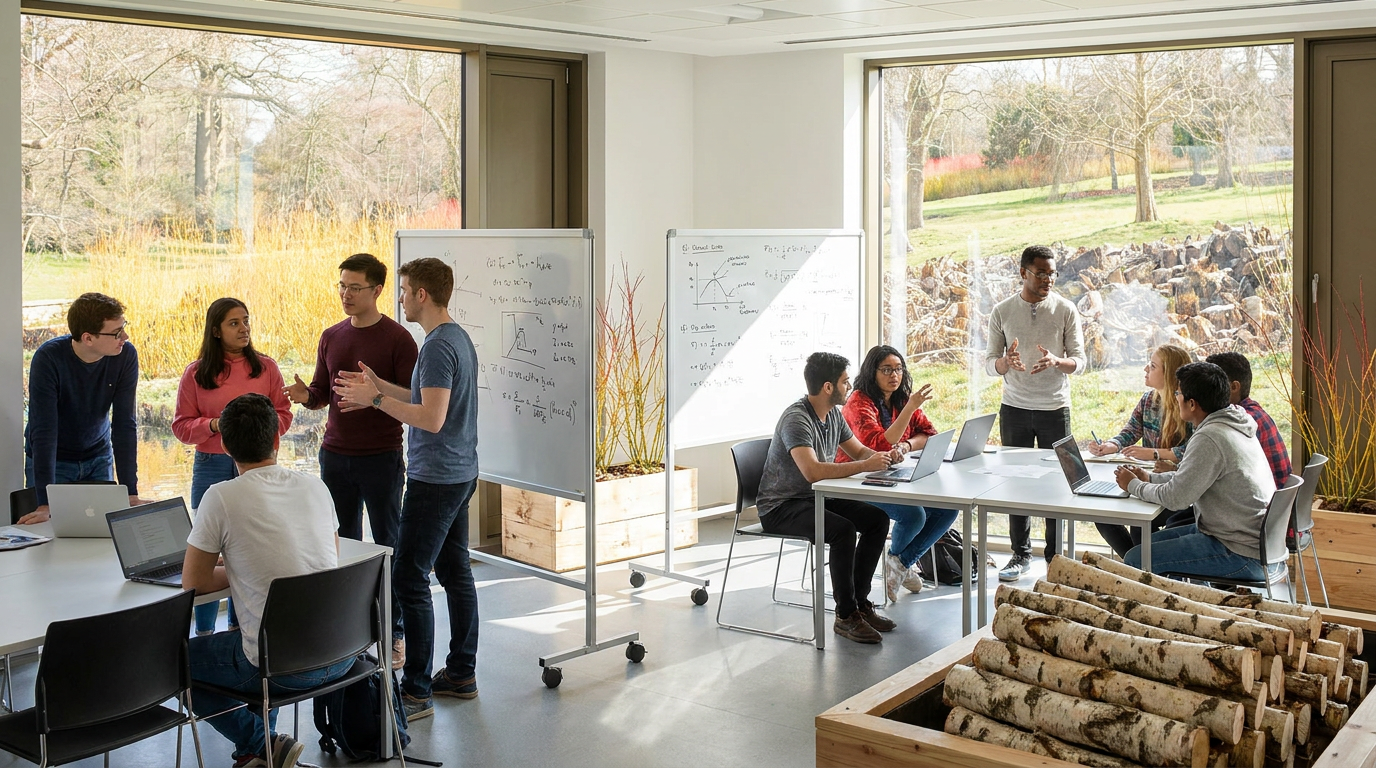
For over 900 years, the university lecture has been the undisputed cornerstone of higher education. A subject-matter expert stands at the front of a room, transmitting information to rows of silently transcribing students. But over the last decade, a quiet revolution has been sweeping through science, technology, engineering, and mathematics (STEM) departments. Armed with massive datasets and rigorous meta-analyses, educational researchers are proving that the traditional lecture is not just suboptimal—it is actively hindering student success. This shift toward "active learning," where students engage in problem-solving, peer discussion, and collaborative group work during class time, is now backed by an overwhelming body of empirical evidence. The data suggests that moving away from passive listening is one of the most effective interventions available to improve graduation rates and democratize access to STEM careers.[7]
The watershed moment for this pedagogical shift arrived with a landmark 2014 meta-analysis published in the Proceedings of the National Academy of Sciences. Researchers aggregated data from 225 independent studies comparing traditional lecturing to active learning across various undergraduate STEM courses. The scope of the analysis was unprecedented, encompassing diverse disciplines, institution types, and class sizes. The researchers sought to answer a fundamental question: does the traditional lecture actually maximize learning and course performance? The findings delivered a resounding negative, fundamentally challenging the status quo of university instruction and setting a new benchmark for evidence-based teaching practices.[1]
The numbers from that foundational study remain staggering. On average, students in active learning environments saw their examination scores increase by nearly half a standard deviation compared to their peers in traditional lectures. In practical terms, this translates to a roughly six percent boost in average exam scores, enough to raise a student's final grade by half a letter. Even more striking was the impact on failure rates. Students subjected to traditional lecturing were 1.5 times more likely to fail their STEM courses than those engaged in active learning. The raw data indicated that failure rates hovered around 34 percent under traditional lecturing, but plummeted to 22 percent when active learning techniques were introduced.[1]

The implications of these failure rates prompted the researchers to draw a provocative analogy to biomedical trials. In medical research, if a new treatment shows a massive, statistically significant reduction in mortality or severe morbidity compared to a placebo, the trial is often halted early so that the control group can ethically receive the life-saving intervention. The authors of the 2014 study argued that the educational equivalent was occurring in STEM classrooms. Given the clear evidence that traditional lecturing artificially inflates failure rates, continuing to use it as the default "control" method in universities raises serious ethical questions about educational malpractice.[1][7]
More than a decade later, contemporary research has only solidified and expanded upon these initial findings. A comprehensive 2025 meta-analysis published on bioRxiv, building on the original dataset with higher-resolution modern studies, confirmed the durability of the active learning advantage. The newer analysis found an average effect size of 0.519 standard deviations on exam scores. Crucially, this positive impact held true regardless of whether the class was an introductory biology seminar of 30 students or a massive physics auditorium of 300. The data confirmed that the benefits of active learning are not isolated to specific subjects or elite institutions, but represent a fundamental improvement in how human beings process and retain complex scientific information.[3]
More than a decade later, contemporary research has only solidified and expanded upon these initial findings.
Beyond baseline academic performance, active learning has emerged as one of the most powerful tools for advancing educational equity. Historically, STEM fields have struggled with severe demographic disparities, with students from low-income and underrepresented minority backgrounds experiencing disproportionately high attrition rates in introductory "weed-out" courses. A follow-up meta-analysis focused specifically on these demographic achievement gaps revealed that active learning does not just lift all boats—it specifically accelerates the progress of those who have been historically left behind. By shifting the focus from passive absorption to collaborative problem-solving, active learning environments dismantle some of the systemic barriers embedded in traditional academic structures.[2]
The equity data is highly specific and deeply encouraging. The research demonstrated that implementing active learning narrows the achievement gap between overrepresented and underrepresented students by 33 percent on exam scores and by 45 percent in overall course passing rates. Furthermore, the intensity of the intervention matters immensely. In "high-intensity" active learning classrooms—defined as environments where students are actively on task for at least two-thirds of the class period—the achievement gap in passing rates was reduced by an astonishing 76 percent. This suggests that the persistent disparities in STEM degree completion are not intractable facts of nature, but solvable problems rooted in outdated pedagogical design.[2][3]

Achieving these high-intensity environments requires structural changes to how courses are delivered. One highly effective model is Team-Based Learning (TBL), which has seen a surge in adoption. A 2026 systematic review of TBL in undergraduate STEM education found moderate to large positive effects on content knowledge, with effect sizes ranging from 0.55 to over 1.0. Similarly, the "flipped classroom" model—where students watch recorded lectures at home and use class time entirely for guided problem-solving—ensures that the instructor is present when students are actually doing the difficult cognitive work of applying concepts, rather than when they are merely receiving information.[3][4][6]
Despite the overwhelming empirical consensus, the transition to active learning faces a significant psychological hurdle known as the "perception gap." When students are required to actively solve problems, debate with peers, and confront their own misunderstandings in real-time, the cognitive load is substantially higher than sitting passively in a lecture hall. Because active learning feels harder and more frustrating in the moment, students frequently report feeling that they are learning less. This creates a paradoxical situation where the instructional methods that produce the highest objective learning outcomes are often the ones that students initially resist the most.[5]
Recent data from educational analytics platforms perfectly illustrates this perception gap. Studies tracking knowledge retention have found that students in active learning sessions score up to 54 percent higher on objective tests compared to those in passive lectures. Yet, when surveyed about their experience, these same high-performing students consistently rate their own learning lower than peers who simply listened to a smooth, well-rehearsed lecture. The fluency of a good lecturer tricks students into feeling a false sense of mastery, whereas the productive struggle of active learning exposes the gaps in their knowledge—a necessary step for true retention, but an uncomfortable one.[5]

This perception gap creates tangible risks for faculty members attempting to innovate. Because university promotion and tenure decisions often rely heavily on end-of-semester student evaluations, professors who switch to active learning can face a temporary dip in their ratings as students express frustration with the increased workload and cognitive demand. Overcoming this barrier requires institutional support. Administrators must redesign physical spaces—replacing bolted-down auditorium seating with modular, collaborative tables—and reform evaluation metrics to reward evidence-based teaching practices rather than merely popular ones. Transparency with students about why the course is designed this way is also critical to securing their buy-in.[6][7]
The transformation of undergraduate STEM education is no longer a question of pedagogical preference, but one of empirical evidence and institutional responsibility. The data is unequivocal: active learning increases knowledge retention, slashes failure rates, and dramatically narrows demographic achievement gaps. While the transition requires significant effort from both faculty and students, and necessitates a cultural shift away from the comfort of the traditional lecture, the stakes are too high to ignore. As the demand for highly trained scientists and engineers continues to grow, abandoning the 900-year-old lecture in favor of evidence-based active learning is the most reliable path to building a capable, diverse, and resilient STEM workforce.[1][3][7]
How we got here
June 2014
Freeman et al. publish a landmark meta-analysis in PNAS showing active learning significantly reduces failure rates.
March 2020
Theobald et al. publish follow-up research demonstrating that active learning disproportionately benefits underrepresented students.
2024-2025
New meta-analyses confirm the necessity of 'high-intensity' active learning and document the persistent perception gap among students.
June 2026
Systematic reviews of Team-Based Learning (TBL) show massive effect sizes, accelerating the shift away from traditional lectures.
Viewpoints in depth
Constructivist Educators
Focus on student-centered, active engagement over passive information delivery.
Proponents of constructivist pedagogy argue that true learning only happens when students actively build their own mental models. By forcing students to grapple with problems, make mistakes, and explain concepts to their peers, active learning ensures that knowledge is internalized rather than temporarily memorized for an exam. They view the traditional lecture as an outdated transmission model that ignores how the human brain actually acquires complex skills.
Traditional Lecturers
Value direct instruction and broad content coverage across a syllabus.
Skeptics of the active learning movement often point out the practical trade-offs. Designing high-intensity active learning modules requires a massive upfront investment of faculty time. Furthermore, because active problem-solving takes longer than simply stating facts, instructors often have to cut 10 to 20 percent of the total content from their syllabus. Many traditionalists worry that this leaves students underprepared for downstream courses that assume mastery of the omitted material.
Equity Researchers
Focus on how teaching methods impact demographic achievement gaps.
For researchers focused on educational equity, active learning is not just a pedagogical tool—it is a social justice imperative. They point to data showing that the traditional lecture disproportionately harms first-generation and minoritized students who may not have access to the same hidden curriculum or pre-college preparation as their peers. By structuring collaboration and providing immediate feedback during class, active learning levels the playing field and directly addresses systemic attrition in STEM.
Institutional Administrators
Focus on retention, cost, and scaling evidence-based practices.
University administrators view active learning through the lens of institutional health. Reducing failure rates by 55 percent translates directly into higher retention rates, which stabilizes tuition revenue and improves the university's graduation metrics. However, scaling these practices requires significant capital expenditure to remodel 500-seat auditoriums into modular, technology-enabled collaborative spaces, forcing administrators to balance the clear pedagogical benefits against tight infrastructure budgets.
What we don't know
- How to perfectly calibrate the intensity of active learning to avoid student burnout while maximizing retention.
- The long-term career trajectory differences between students taught via active learning versus traditional lectures.
- Whether the 'perception gap' can be fully eliminated through better course onboarding, or if productive struggle will always feel frustrating to students.
Key terms
- Active Learning
- Any instructional method that engages students in the learning process through problem-solving, discussion, or group work, rather than passively listening.
- Standard Deviation (SD)
- A statistical measure of variance. In education, an effect size of 0.5 SD is considered moderate-to-large and typically translates to a half-letter grade improvement.
- Constructivism
- A theory of learning suggesting that humans construct knowledge and meaning from their experiences, rather than passively absorbing information.
- Flipped Classroom
- A specific active learning model where students encounter new content outside of class (e.g., via video lectures) and use class time for applied problem-solving.
- Perception Gap
- The documented phenomenon where students in active learning environments feel they are learning less than those in lectures, despite objectively scoring higher on assessments.
Frequently asked
Does active learning mean the end of all lectures?
No. Most active learning models still use short, targeted bursts of direct instruction (10-15 minutes) interspersed with applied problem-solving and peer discussion.
Why do students sometimes resist active learning?
Active learning requires higher cognitive effort during class time. Research shows a "perception gap" where this increased effort makes students feel they are struggling and learning less, even though their test scores improve.
Does this work in large 300-person classes?
Yes. While the largest effect sizes are seen in classes of 50 or fewer, meta-analyses confirm that active learning significantly improves outcomes even in massive lecture halls, often through tools like personal response systems and structured peer-to-peer discussion.
Sources
Source coverage
7 outlets
4 viewpoints surfaced






[1]Proceedings of the National Academy of Sciences (PNAS)Educational Equity Researchers
Active learning increases student performance in science, engineering, and mathematics
Read on Proceedings of the National Academy of Sciences (PNAS) →Active learning narrows achievement gaps for underrepresented students in undergraduate science, technology, engineering, and math
Read on Proceedings of the National Academy of Sciences (PNAS) →[3]bioRxivEvidence-Based Pedagogy Advocates
Active learning's impact on student course performance in STEM varies by type and intensity
Read on bioRxiv →[4]International Journal of Educational MethodologyEvidence-Based Pedagogy Advocates
A Systematic Review of Team-Based Learning in Undergraduate STEM Education
Read on International Journal of Educational Methodology →[5]Engageli ResearchLearning Analytics Specialists
The Active Learning Impact Study: Measuring the Effects of Engagement on Knowledge Retention
Read on Engageli Research →[6]Higher Education DigestEvidence-Based Pedagogy Advocates
How Active Learning and Interdisciplinary Thinking Are Transforming STEM Education
Read on Higher Education Digest →[7]Factlen Editorial TeamEditorial Synthesis
Synthesis by Factlen editorial team
Read on Factlen Editorial Team →
Every angle. Every day.
Get education stories with full source coverage and perspective breakdowns delivered to your inbox.