
The End of the 'Bigger, Bigger, Bigger' Olympics: Inside the IOC's 'Fit for the Future' Reset
The International Olympic Committee is overhauling how it selects host cities and sports, prioritizing sustainability and cost-efficiency to end the era of ballooning budgets.
By Factlen Editorial Team
- Olympic Reformers
- Advocates for strict cost controls and sustainability to ensure the long-term survival of the Games.
- Host City Planners
- Local organizers and governments focused on economic viability and multi-generational legacy.
- Sports Federations
- Governing bodies concerned about maintaining their sports' presence and funding on the Olympic stage.
What's not represented
- · Athletes whose niche disciplines might be targeted for removal under the new cost-efficiency criteria.
- · Taxpayer advocacy groups in potential host cities who remain skeptical of the IOC's cost-saving promises.
Why this matters
For decades, hosting the Olympics meant risking billions in taxpayer money on stadiums that would eventually sit empty. The IOC's new framework ensures future Games will adapt to the host city's existing infrastructure, making the event economically viable and environmentally sustainable for generations to come.
Key points
- The IOC is proposing a shift from evaluating entire sports to evaluating individual disciplines to better manage costs.
- A new 'Strategic Dialogue' phase will be added to the host city bidding process to increase transparency and reduce financial risk.
- Los Angeles 2028 is pioneering a 'no-new-permanent-build' model, relying entirely on existing venues.
- Brisbane 2032 will be the first host city to fully implement the new discipline-based evaluation methodology.
The era of constant Olympic expansion is reaching its limit. For decades, the Olympic Games grew larger, more expensive, and more logistically daunting, placing an immense financial burden on host cities and leaving behind a trail of underutilized "white elephant" stadiums. Now, the International Olympic Committee (IOC) is officially hitting the brakes.[4]
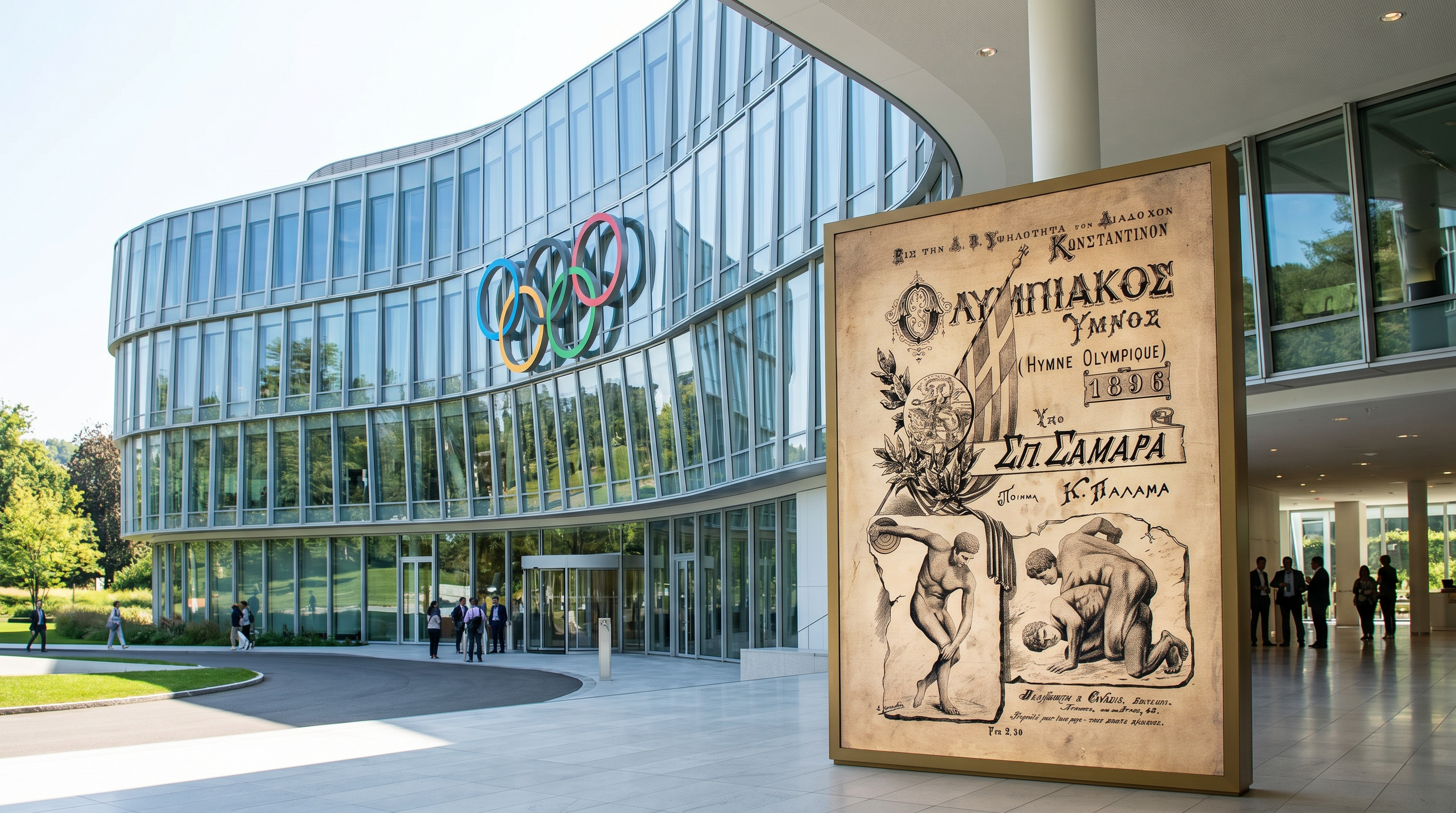
Ahead of the 146th IOC Session in Lausanne on June 24 and 25, 2026, the Executive Board has proposed sweeping reforms under an initiative dubbed "Fit for the Future."[1][2]
The proposals, spearheaded by IOC President Kirsty Coventry, aim to fundamentally change how host cities are selected and how the sports programme is constructed. The overarching goal is to make the Games more manageable, sustainable, and economically viable for future generations.[2][4]
The most immediate and structural change targets the Olympic sports programme itself. Historically, the IOC evaluated entire sports as indivisible units when deciding what to include in the Games. Under the newly proposed framework, the focus shifts to evaluating individual "disciplines."[2][3]

The IOC defines an Olympic discipline as one or more events within a sport that require a dedicated field of play or significant modifications to a shared venue. By assessing disciplines rather than whole sports, the IOC can precisely measure the true impact on venue requirements, operational complexity, and overall Games costs.[1][2]
This granular approach gives the IOC unprecedented flexibility. It allows the committee to retain, introduce, or remove specific disciplines without necessarily axing the entire sport to which they belong. The system creates a direct comparison between high-performing candidate disciplines and lower-performing incumbent ones.[1][3]
Every discipline will undergo a rigorous screening process. Beyond basic governance, integrity, and anti-doping compliance, the core evaluation criteria will focus heavily on three pillars: global appeal, athlete representation, and—crucially—cost and operational complexity.[1][2]
If approved by the IOC Session, this new methodology will apply starting with the Brisbane 2032 Olympic Games. It sends a clear signal to international sports federations that the Olympic programme is no longer a space of automatic expansion; every single event must justify its permanence and economic footprint.[1][4]
If approved by the IOC Session, this new methodology will apply starting with the Brisbane 2032 Olympic Games.
The second major pillar of the "Fit for the Future" reset addresses the host city selection process. The traditional bidding wars, which often cost candidate cities millions of dollars and ended in public embarrassment for the losers, are being further dismantled to encourage more sustainable participation.[5]

The IOC Executive Board is proposing a new transitional phase called "Strategic Dialogue." This step will sit between the existing "Continuous Dialogue"—which involves open, non-committal discussions—and "Targeted Dialogue," where detailed planning occurs with a preferred host.[1][2][5]
The Strategic Dialogue phase allows the Executive Board to shortlist interested parties with developed projects before advancing to in-depth, expensive evaluations. This provides greater predictability and transparency, giving governments the planning security they need to build public support without wasting taxpayer money on doomed bids.[1][2]
These governance changes reflect a broader mindset shift that is already underway in Olympic planning on the ground. Los Angeles 2028 is serving as the real-world blueprint for this sustainable, cost-conscious future.[7][8]

LA28 organizers are operating under a strict "no-new-permanent-build" policy. Instead of constructing billion-dollar facilities that risk becoming obsolete, Los Angeles will utilize its vast existing infrastructure, from the historic Memorial Coliseum to the state-of-the-art SoFi Stadium and Intuit Dome.[6][8]
Furthermore, LA28 has committed to reusing or recycling at least 90% of the materials used for temporary infrastructure and venue overlays. This radical reuse model proves that a city can host the world's largest sporting event without leaving a massive carbon footprint or a mountain of municipal debt.[7]
Brisbane 2032 will take this philosophy a step further by blending the new IOC discipline methodology with a hybrid infrastructure approach. While some new permanent builds are inevitable in Queensland, they are being strictly tied to existing long-term city plans, ensuring that every dollar spent serves a multi-generational legacy rather than a two-week event.[6]
Ultimately, the June 2026 IOC Session may not produce immediate headlines about specific sports being cut, but it establishes the technical and political framework for a controlled, intelligent contraction. The Olympic movement is finally prioritizing long-term sustainability and civic empowerment over short-term spectacle.[4]
How we got here
2019
The IOC begins overhauling the host selection process, moving away from traditional bidding wars to avoid creating 'losers'.
June 2023
The 'Fit for the Future' review process gains momentum under IOC President Kirsty Coventry to address ballooning Olympic costs.
June 10, 2026
The IOC Executive Board officially proposes sweeping reforms to the sports programme and host selection methodology.
June 24-25, 2026
The 146th IOC Session in Lausanne is scheduled to vote on the 'Fit for the Future' proposals.
July 2028
Los Angeles will host the Summer Olympics using a 'no-new-permanent-build' sustainability model.
2032
Brisbane will become the first host city to fully implement the new discipline-based Olympic programme methodology.
Viewpoints in depth
Olympic Reformers
Advocates for strict cost controls and sustainability to ensure the long-term survival of the Games.
Led by IOC President Kirsty Coventry and the Executive Board, this camp argues that the Olympics cannot survive if they continue to bankrupt host cities. By shifting to a discipline-based evaluation and introducing the 'Strategic Dialogue' phase, reformers aim to eliminate the bloat that characterized the Games of the early 21st century. They view the 'no-new-permanent-build' model of LA28 as the gold standard for future hosts.
Host City Planners
Local organizers and governments focused on economic viability and multi-generational legacy.
For municipal leaders and sustainability experts, the priority is ensuring that the billions spent on the Olympics translate into lasting civic benefits. They support the IOC's reforms because the new bidding process offers 'planning security' and prevents the construction of 'white elephant' stadiums. Planners in cities like Brisbane emphasize that any new infrastructure must be tied to pre-existing urban development goals, ensuring the Games serve the city rather than the city serving the Games.
International Sports Federations
Governing bodies concerned about maintaining their sports' presence and funding on the Olympic stage.
While generally supportive of sustainability, international federations face new pressures under the discipline-by-discipline evaluation model. Because the IOC can now cut specific underperforming events without dropping an entire sport, federations must constantly prove the global appeal and cost-efficiency of every discipline they oversee. This creates a highly competitive environment where traditional Olympic events must innovate to avoid being replaced by newer, more cost-effective alternatives.
What we don't know
- Which specific incumbent Olympic disciplines might be cut or replaced when the new evaluation methodology is applied to the Brisbane 2032 programme.
- How international sports federations will adapt their internal funding and development strategies if only certain disciplines within their sports are retained.
- Whether the 'Strategic Dialogue' phase will successfully attract a wider pool of future host cities, particularly from developing nations.
Key terms
- Discipline
- An Olympic event or group of events within a sport that requires a dedicated field of play or significant modifications to a shared venue.
- Strategic Dialogue
- A proposed transitional phase in the Olympic host selection process designed to shortlist qualified cities before in-depth evaluations begin.
- White Elephant
- A massive, expensive infrastructure project—such as an Olympic stadium—that becomes obsolete and costly to maintain after the event concludes.
- Continuous Dialogue
- The initial, non-committal stage of Olympic bidding where the IOC and interested cities explore the potential of hosting future Games.
- Targeted Dialogue
- The final stage of the Olympic bidding process where a preferred host city engages in detailed planning and feasibility studies with the IOC.
Frequently asked
What is the 'Fit for the Future' initiative?
It is an IOC reform program aimed at making the Olympic Games more sustainable, cost-effective, and manageable by changing how sports are selected and how host cities are chosen.
How will the Olympic sports programme change?
Instead of evaluating entire sports, the IOC will now evaluate individual 'disciplines' based on their specific cost, operational complexity, and global appeal.
What is the 'Strategic Dialogue' phase?
It is a newly proposed step in the Olympic bidding process that allows the IOC to shortlist interested host cities with developed projects, providing governments with better planning security before they commit massive resources.
Will Los Angeles build new stadiums for the 2028 Olympics?
No. LA28 is operating under a strict 'no-new-permanent-build' policy, utilizing existing world-class venues like SoFi Stadium and the Memorial Coliseum to minimize environmental and economic impact.
Sources
Source coverage
8 outlets
3 viewpoints surfaced








[1]Olympics.comOlympic Reformers
Fit for the Future: New methodology for determining Olympic programme and strengthened host selection process proposed
Read on Olympics.com →[2]NDTVOlympic Reformers
Olympic Host Selection: IOC EB Proposes Strategic Dialogue In Revamped Process
Read on NDTV →[3]Inside The GamesOlympic Reformers
IOC reshapes Olympic programme and host selection
Read on Inside The Games →[4]SportsINSports Federations
The June IOC Session could open the biggest Olympic reset in decades
Read on SportsIN →[5]GamesBids.comSports Federations
New stage set to be added to Olympic bid process designed to address stakeholder feedback and increase transparency
Read on GamesBids.com →[6]InDailyHost City Planners
Hi-tech Olympics planning 'can create lasting legacy'
Read on InDaily →[7]LA28Host City Planners
LA28 Releases Impact and Sustainability Plan
Read on LA28 →[8]Visit CaliforniaHost City Planners
Everything You Need to Know About the Los Angeles 2028 Olympics
Read on Visit California →

More in sports
See all 317 stories →NBA Finals
Knicks Erase 29-Point Deficit Against Spurs in Largest Comeback in NBA Finals History
6 sources

Climate Adaptation
How Vacuum Ice Tech and Snow Farming Are Saving the Ski Industry
7 sources
NBA Finals
Knicks Complete Largest Comeback in NBA Finals History to Take 3-1 Lead Over Spurs
6 sources
Freestyle Chess
How Freestyle Chess is Rescuing the Game from Supercomputer Memorization
6 sources
Every angle. Every day.
Get sports stories with full source coverage and perspective breakdowns delivered to your inbox.