
How Freestyle Chess is Rescuing the Game from Supercomputer Memorization
By randomizing the starting position of the pieces, Freestyle Chess has neutralized the dominance of AI opening preparation, forcing grandmasters back to raw creativity.
By Factlen Editorial Team
- Freestyle Innovators
- Argue that randomization is essential to save the game from AI memorization and restore human creativity.
- Classical Traditionalists
- Value the historical continuity, aesthetic beauty, and deep theoretical richness of the standard starting position.
- Analytical Purists
- Focus on the objective mathematical fairness of the randomized positions and advocate for curating the starting pool.
What's not represented
- · Casual amateur players who rely on opening traps
- · Chess coaches adapting their training methods
Why this matters
For centuries, chess has been the ultimate test of human intellect, but modern AI threatened to reduce it to a memory contest. This structural evolution ensures the game remains a battle of real-time human creativity rather than algorithmic recitation.
Key points
- Freestyle Chess randomizes the back rank of pieces before the game begins.
- The format completely neutralizes the advantage of computer-assisted opening memorization.
- Bishops must remain on opposite colors, and the king must sit between the rooks.
- Draw rates are significantly lower in Freestyle compared to elite classical chess.
- Former World Champion Magnus Carlsen has launched a dedicated professional circuit for the format.
- Some AI analysis suggests a few of the 960 positions give White a larger-than-normal starting advantage.
Chess is currently navigating a fascinating paradox: the game has never been more popular among the general public, yet at the elite professional level, classical chess is suffocating under the weight of its own perfection. The global boom, fueled by streaming platforms and pandemic-era digital adoption, brought millions of new players to the board. However, when these new fans tune in to watch the world's top grandmasters compete in standard time controls, they are frequently met with a sterile reality. Elite classical games often end in quiet, pre-calculated draws, leaving spectators bewildered and the players themselves visibly exhausted by the lack of creative expression.[4][6]
The primary culprit behind this stagnation is the relentless advancement of "engine preparation." Over the last decade, neural-network-driven chess engines like Stockfish and Leela Chess Zero have essentially solved the opening phase of the game. Modern grandmasters spend thousands of hours memorizing computer-generated lines that stretch 25 to 30 moves deep into the match. When two top-tier players sit down at the board, they are often not playing each other; they are simply reciting the optimal defensive sequences their supercomputers discovered weeks prior. The human element of the game—the raw calculation, the psychological pressure, the creative risk-taking—is frequently delayed until the endgame, assuming the players haven't already agreed to a draw.[1][4]
Enter Freestyle Chess, a format historically known as Fischer Random or Chess960, which has rapidly evolved from a niche exhibition format into a premium, parallel professional circuit. The core mechanism is elegantly simple yet profoundly disruptive: while the eight pawns remain in their traditional spots on the second rank, the major pieces on the first rank are shuffled randomly just minutes before the clocks start. This single structural change instantly neutralizes centuries of established opening theory and renders billions of neural-network evaluations completely useless to the players sitting at the board.[1][5]

To maintain the fundamental balance of the game, the randomization process adheres to two strict mathematical constraints. First, every starting position must place the two bishops on opposite-colored squares, ensuring they cover the entire board. Second, the king must always be placed somewhere between the two rooks, which preserves the ability to castle later in the game. When these rules are applied, there are exactly 960 valid starting configurations. Because the specific setup is revealed only moments before the match begins, players are entirely stripped of their safety nets. They cannot rely on their memory; they must rely on their pure, unassisted cognitive power.[2][6]
The immediate psychological and strategic impact on the players is a sight to behold. In classical chess, the first ten moves are often blitzed out in a matter of seconds. In Freestyle Chess, it is common to see the world's best players staring intently at the board for ten or fifteen minutes before making their very first move. They are forced to evaluate pawn structures, piece coordination, and king safety from scratch. The resulting games are chaotic, aggressive, and deeply human. Mistakes happen earlier, imbalances are created faster, and the sterile perfection of the computer era is replaced by a thrilling, high-stakes brawl.[4][5]
The immediate psychological and strategic impact on the players is a sight to behold.
The statistical shift in decisive outcomes provides undeniable proof of the format's efficacy. In major elite classical tournaments, the draw rate frequently hovers between 50 and 60 percent, a frustrating reality for broadcasters trying to sell the sport to a mainstream audience. In contrast, top-level Freestyle Chess events have consistently yielded decisive results—clear wins or losses—in over 70 percent of their games. By removing the memorized defensive fortresses, the format forces players into sharp, tactical skirmishes where superior real-time calculation is the only path to survival.[1][6]

Magnus Carlsen, widely considered the greatest chess player in history, has become the defining champion and primary catalyst for this revolution. After voluntarily abdicating his classical World Championship title—citing a severe lack of motivation to continue grinding through computer preparation—Carlsen threw his considerable influence behind the randomized format. He spearheaded the launch of the Freestyle Chess Grand Slam, a high-end commercial circuit that has attracted significant private capital, luxury sponsorships, and the participation of virtually every top-ten player in the world. The rebranding from "Fischer Random" to "Freestyle" was a deliberate move to market the format as dynamic, modern, and accessible.[4][5]
However, the transition has not been entirely without friction, and a vocal contingent of classical traditionalists remains deeply protective of the standard game. These purists argue that the traditional starting position is uniquely harmonious, having survived centuries of evolution precisely because it offers a perfect balance of tension and development. They mourn the loss of historical continuity; in Freestyle Chess, there is no Ruy Lopez, no Sicilian Defense, and no Queen's Gambit. For traditionalists, discarding the rich cultural heritage of these named openings in favor of randomized chaos feels like a tragic erasure of the game's artistic history.[2][6]
Furthermore, the analytical community has raised valid concerns regarding the objective fairness of the 960 starting positions. AI researchers utilizing massive computing clusters have evaluated every possible setup, discovering that they are not all created equal. While the standard chess starting position gives White a slight first-mover advantage (evaluated by engines at roughly +0.3 pawns), some Freestyle setups give White a much more aggressive advantage of +0.5 or even +0.6 right out of the gate. This has sparked ongoing debates within FIDE and the professional circuit about whether the pool of 960 positions should be curated to remove the most unbalanced setups for elite tournament play.[2][3]

Despite these debates, the impact on chess broadcasting and the spectator experience has been overwhelmingly positive. In classical chess, commentators often struggle to explain why a player is agonizing over a move that has been played a thousand times before in a known theoretical line. The barrier to entry for casual fans is incredibly high. In Freestyle Chess, that barrier is obliterated. Broadcasters, grandmaster commentators, and casual viewers on Twitch or YouTube are all discovering the complexities of the position at the exact same time as the players. The broadcast becomes a shared journey of real-time problem-solving.[1][6]
This democratization of discovery is trickling down to the amateur level as well. Major online platforms have seamlessly integrated the format, allowing club players to experience the same creative liberation as the professionals. For the amateur who works a full-time job and doesn't have the bandwidth to memorize twenty moves of the Najdorf variation, Freestyle Chess offers a sanctuary. It allows them to log on, skip the opening traps set by opponents who have memorized engine lines, and immediately engage in a pure battle of chess understanding.[1][6]
As the 2026 competitive calendar unfolds, it is clear that Freestyle Chess is not attempting to kill classical chess, but rather to save the players' sanity by offering a vibrant alternative. The two formats are settling into a symbiotic coexistence. Classical chess remains the ultimate test of preparation, stamina, and historical mastery, while Freestyle serves as the premier arena for raw talent, adaptability, and unscripted brilliance. By embracing a touch of randomness, the oldest of mind sports has successfully engineered a way to keep the machines at bay and put the human mind back at the center of the board.[4][5][6]

How we got here
1996
Former World Champion Bobby Fischer announces 'Fischerandom' chess in Buenos Aires.
2019
FIDE officially recognizes the format and hosts the first sanctioned World Fischer Random Chess Championship.
2023
Magnus Carlsen formally abdicates his classical World Championship title, citing frustration with opening preparation.
2024
The inaugural Freestyle Chess G.O.A.T. Challenge is held in Germany, rebranding the format for a modern audience.
2025
The Freestyle Chess Grand Slam circuit officially launches, establishing a parallel professional tour.
Viewpoints in depth
Freestyle Innovators
Advocates who believe randomization is the only way to save the sport's creative soul.
For players and analysts in this camp, classical chess has become an exercise in stenography rather than sport. They argue that when a player wins a classical game because they remembered a computer's evaluation on move 27, the victory belongs to the silicon, not the human. By embracing the 960 format, innovators believe the game is returned to its purest state: two minds solving a complex, novel puzzle in real-time under the pressure of a ticking clock. They view the loss of traditional opening names as a small price to pay for the return of genuine middle-game artistry.
Classical Traditionalists
Purists who defend the standard starting position as a perfectly balanced, historically vital artifact.
Traditionalists view the standard starting array not as a problem to be solved, but as a masterpiece of game design that has stood the test of centuries. They argue that the beauty of chess lies in its continuity—the ability for a modern player to study a game played by Paul Morphy in 1858 and understand the exact theoretical tension of the opening. For this camp, the deep, computer-assisted exploration of the Ruy Lopez or the Queen's Gambit is not a flaw, but the ultimate expression of human dedication to uncovering the objective truth of the game's starting position.
Analytical Purists
Data-driven observers focused on the objective mathematical fairness of the randomized setups.
This perspective is less concerned with the romance of the game and more focused on the cold, hard data provided by neural networks. AI researchers point out that while the standard chess position is incredibly balanced, the 960 Freestyle positions exist on a spectrum of fairness. Engine evaluations show that certain randomized setups give the player with the white pieces a significant mathematical advantage before a single move is played. Consequently, this camp advocates for a 'curated' version of Freestyle Chess, where the most imbalanced starting positions are quietly removed from the tournament rotation to ensure competitive integrity.
What we don't know
- Whether FIDE will eventually curate the 960 positions to remove those with the highest starting advantage for White.
- If the Freestyle format will eventually replace classical chess as the primary format for the World Championship.
- How the next generation of chess engines might adapt to train specifically for Freestyle positions.
Key terms
- Engine Preparation
- The practice of using supercomputers to analyze and memorize the best possible sequences of moves before a game begins.
- Chess960
- The original name for Freestyle Chess, coined by former World Champion Bobby Fischer, referencing the number of possible starting positions.
- Centipawn
- A unit of measurement used by chess engines to evaluate a position, equal to one-hundredth of a pawn's value.
- Opening Theory
- The established, historically analyzed sequences of moves at the beginning of a standard chess game.
Frequently asked
Why are there exactly 960 positions?
The math accounts for all possible permutations of the back rank, minus setups that violate the two core rules: bishops must be on opposite colors, and the king must sit between the rooks.
Can you still castle in Freestyle Chess?
Yes. The castling rules are adapted so that, regardless of where the king and rook start, they end up in the exact same final squares as they would in a classical chess castle.
Does Magnus Carlsen play this format?
Yes, Carlsen is the format's biggest advocate. After stepping back from classical World Championship matches, he launched the Freestyle Chess Grand Slam circuit.
Is classical chess going away?
No. Classical chess remains the standard for the official FIDE World Championship and historical record-keeping, while Freestyle serves as a parallel, high-action alternative.
Sources
Source coverage
6 outlets
3 viewpoints surfaced






[1]Chess.comFreestyle Innovators
Freestyle Chess: The Future of the Game?
Read on Chess.com →[2]FIDEClassical Traditionalists
FIDE Updates Regulations for Fischer Random Chess
Read on FIDE →[3]arXivAnalytical Purists
Engine Evaluation and Opening Novelties in Chess960
Read on arXiv →[4]The AtlanticFreestyle Innovators
Magnus Carlsen's Quest to Save Chess from Memorization
Read on The Atlantic →[5]New In ChessFreestyle Innovators
The Freestyle Revolution: How 960 Positions Changed Everything
Read on New In Chess →[6]Factlen Editorial Team
Synthesis by Factlen editorial team
Read on Factlen Editorial Team →
More in sports
See all 317 stories →NBA Finals
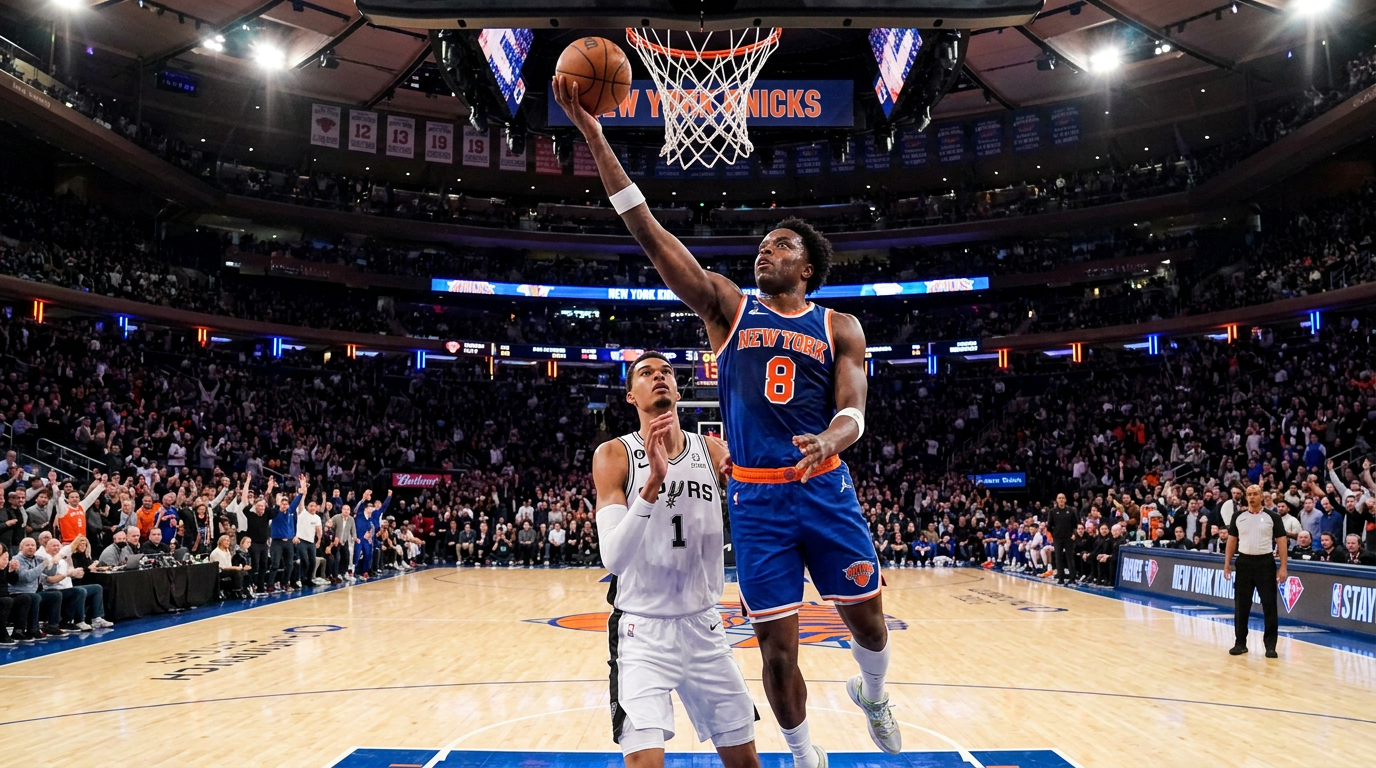
Knicks Erase 29-Point Deficit Against Spurs in Largest Comeback in NBA Finals History
6 sources
Olympic Governance
The End of the 'Bigger, Bigger, Bigger' Olympics: Inside the IOC's 'Fit for the Future' Reset
8 sources
Climate Adaptation
How Vacuum Ice Tech and Snow Farming Are Saving the Ski Industry
7 sources
NBA Finals
Knicks Complete Largest Comeback in NBA Finals History to Take 3-1 Lead Over Spurs
6 sources
Every angle. Every day.
Get sports stories with full source coverage and perspective breakdowns delivered to your inbox.