
Microsoft Lays Off Ethical AI Team, Signaling Industry Shift to 'Deploy First' Strategy
Microsoft has eliminated its dedicated Ethics and Society team as the tech industry increasingly prioritizes rapid AI deployment over proactive safety design. The move highlights a growing tension between competitive speed and the sociotechnical governance of artificial intelligence.
By Joao Marques

- Commercial AI Developers
- Argue that rapid deployment is essential for innovation and that ethical responsibility should be distributed across all engineers rather than siloed.
- AI Ethics Researchers
- Maintain that dedicated oversight teams are necessary to translate abstract safety principles into concrete product design and prevent systemic harm.
- Enterprise Adopters
- Focus on balancing the efficiency gains of AI automation with the legal and reputational risks of deploying unsupervised algorithms in business operations.
Perspectives this story doesn't cover
- End-users affected by algorithmic decisions
- Regulators drafting AI legislation
The artificial intelligence industry is undergoing a fundamental shift in how it balances rapid innovation with consumer safety, a transition crystallized by Microsoft's decision to eliminate its dedicated Ethics and Society team. The move signals a broader industry-wide pivot toward a "deploy first, regulate later" strategy, where generative models are pushed to the public rapidly to secure market dominance. As tech giants race to integrate powerful large language models into everyday consumer software, the friction of rigorous ethical review is increasingly viewed as a competitive liability rather than a necessity.[1][3]
Microsoft's Ethics and Society team, which had already been significantly downsized during previous corporate reorganizations, was uniquely responsible for ensuring that the company's high-level responsible AI principles were actively reflected in actual product design. Their complete elimination leaves a structural gap at a critical moment, just as the company is embedding OpenAI's latest generative technology into its core suite of products, including the Bing search engine, the Edge browser, and the Windows operating system. The team had recently been focused on identifying the specific societal risks posed by these deep OpenAI integrations, working to map out edge cases before the software reached billions of global users.[1][3]
According to former employees, the mandate from corporate leadership was clear: the organization needed to move swiftly to get the latest artificial intelligence models into customers' hands before rivals could capture the market. This urgency reflects a hyper-competitive landscape where tech giants view speed as an existential necessity, often prioritizing immediate deployment over the long-term, sociotechnical thinking that dedicated ethics teams provide. The pressure to ship products quickly has fundamentally altered the internal dynamics at major tech firms, shifting the focus from proactive harm reduction to reactive public relations and rapid patching after a product is already live.[1][2]
Microsoft maintains that its overarching commitment to safety and responsible development remains fully intact despite the targeted layoffs. The company still operates its Office of Responsible AI, a separate division that is tasked with establishing high-level governance rules, compliance standards, and public policy initiatives. Corporate leadership argues that rather than keeping ethical oversight siloed within a single specialized team, the responsibility for safe AI is now being distributed across hundreds of engineers and developers embedded directly within individual product divisions. From this perspective, ethical design becomes a company-wide mandate rather than the sole purview of a dedicated ethics department.[1][2][3]
However, critics and former employees argue that this distributed approach frequently devolves into a mere compliance exercise rather than proactive, thoughtful design. The eliminated Ethics and Society team previously built practical tools like "Judgment Call," an innovative role-playing framework that helped software engineers envision potential societal harms and unintended consequences before a product was ever built. Without such dedicated personnel to bridge the gap between theory and practice, abstract ethical principles can be exceedingly difficult for standard engineering teams to translate into concrete code and user interface decisions. Former team members noted that engineers would often read the guidelines produced by the Office of Responsible AI and struggle to understand how those rules applied to their specific technical workflows.[1]
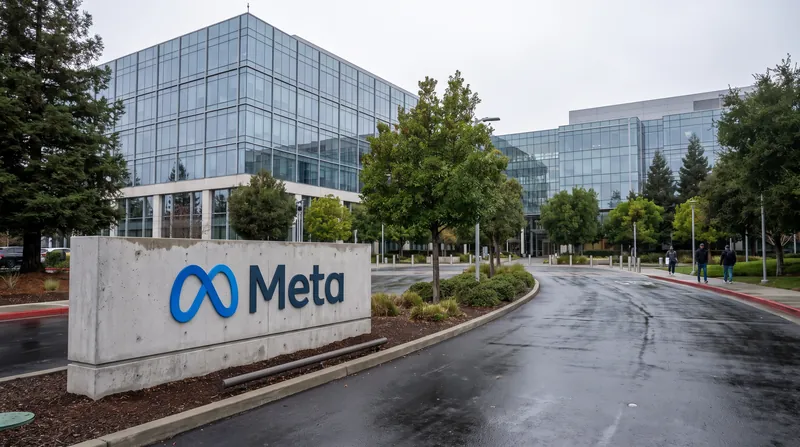
The "deploy first, audit later" paradigm is not unique to Microsoft; it represents a sweeping trend across the broader technology sector. Over the past few years, responsible AI teams have been systematically gutted or entirely disbanded at multiple major platforms. Twitch, Meta, and Twitter have all significantly reduced or eliminated their machine-learning fairness and ethics groups amid broader corporate downsizing and restructuring efforts. Even Google, which previously boasted a robust ethical AI research division, faced intense industry scrutiny after controversially ousting prominent researchers who published papers critical of the exact large language models the company was rushing to commercialize.[1][2]
The "deploy first, audit later" paradigm is not unique to Microsoft; it represents a sweeping trend across the broader technology sector.
Prominent computer scientists and researchers note that the industry is currently locked in an arms race where any internal friction—even necessary ethical review—is viewed by executives as a fatal competitive disadvantage. This dynamic creates a profound structural misalignment: companies are financially incentivized to ship products as quickly as possible, effectively leaving regulators, civil society, and end-users to manage the real-world fallout. Whether dealing with algorithmic bias, the erosion of digital privacy, or the industrial-scale generation of misinformation, the consequences of this accelerated deployment strategy are increasingly being pushed outward onto the public rather than mitigated internally.[2]
The tangible stakes of this shift toward rapid deployment are becoming highly visible as artificial intelligence permeates core enterprise operations and human resources. For example, a comprehensive 2026 industry survey revealed that nearly 60 percent of corporate managers who use AI at work are now leveraging the technology to help make critical staff layoff and firing decisions. As these tools are integrated into enterprise software suites, the theoretical risks of algorithmic bias suddenly translate into immediate, life-altering consequences for workers across the global economy. Algorithms are increasingly being asked to evaluate complex, nuanced human behaviors and distill them into binary recommendations for retention or termination.
In these high-stakes enterprise environments, managers are directing algorithms to weigh performance scores, daily attendance records, and even the frequency of medical leave to recommend which employees should be terminated. While the vast majority of managers claim they would manually override an AI recommendation they fundamentally disagreed with, a significant portion admit to letting the software run unsupervised at least occasionally. This hands-off approach to AI-driven human resources raises profound ethical and legal risks regarding wrongful termination, systemic discrimination, and the total lack of transparency in how workplace decisions are ultimately made.
Academic frameworks emphasize that raw predictive accuracy alone is fundamentally insufficient for AI systems deployed in complex social environments. True sociotechnical governance requires deliberate interventions at every single stage of the software lifecycle—from initial data collection and strategy to post-deployment monitoring and impact evaluation. Treating ethics as a post-hoc patch or a purely legal compliance hurdle fails to address the deep, structural ways that algorithms interact with human institutions. When companies dismantle the teams dedicated to this lifecycle governance, they lose the institutional capacity to foresee how their tools will behave outside the controlled environment of a laboratory.
When technology companies adopt a strict "deploy first" mentality, they often treat ethical AI as a reputational checkbox rather than a core operational function. This approach risks systemic harms, as algorithms can easily amplify existing social inequities when deployed at scale without rigorous, fairness-aware design principles. The rush to market means that critical steps—such as identifying biased training data, ensuring equitable treatment across diverse demographics, and building robust explainability features—are frequently skipped or deferred until a public relations crisis forces the company's hand. As a result, the technology industry is effectively accumulating a massive "ethical technical debt" that will eventually have to be paid down through costly retrofits or regulatory fines.
Enterprise consultants warn that deploying artificial intelligence without robust ethical frameworks is not just a societal risk, but a massive strategic vulnerability for the businesses adopting these tools. Organizations that fail to implement proactive bias audits, explainability tools, and cross-functional review boards face looming regulatory crackdowns and a catastrophic loss of consumer trust. While the initial speed of deployment might yield a temporary market advantage, the long-term viability of an AI product depends entirely on its reliability and the public's willingness to trust its outputs. Consultants advise that responsible AI should not be viewed as a constraint on innovation, but rather as a competitive differentiator that builds the necessary foundation for scaling AI safely across global markets.[4]
The core tension ultimately lies in how artificial intelligence is tested and refined. Proponents of rapid deployment argue that laboratory testing can only reveal so much; they believe that true alignment and safety guardrails can only be forged by observing how millions of real users interact with the models in the wild. From this viewpoint, the sheer complexity of large language models means that anticipating every possible misuse is impossible, making rapid iteration and live patching the only practical path forward for the industry. By releasing the tools broadly, companies can gather massive amounts of behavioral data, which they argue is essential for training the next generation of safer, more capable models.
Yet, relying on the general public as unwitting beta testers for powerful AI systems fundamentally shifts the burden of risk from the developer to the consumer. As the technology industry standardizes around this rapid-release cadence and dismantles the internal teams that once advocated for caution, the definition of "responsible AI" is being aggressively rewritten in real-time. The prioritization of speed and scale over cautious, deliberate design ensures that the next era of digital transformation will be defined by unprecedented capabilities, but also by profound, unmapped vulnerabilities. Without dedicated ethics teams to pull the emergency brake, the industry is accelerating into a future where the societal impacts of artificial intelligence will only be fully understood long after the code has been deployed.[1]
Key points
- Microsoft eliminated its dedicated Ethics and Society team to accelerate the deployment of OpenAI-powered tools across its product suite.
- The move reflects a broader tech industry trend of gutting specialized responsible AI teams in favor of a 'deploy first, audit later' strategy.
- Companies argue that ethical responsibility is now distributed across all engineers, while critics warn this turns safety into a mere compliance exercise.
- The real-world stakes are escalating, with recent data showing nearly 60% of managers who use AI rely on it to assist with layoff and firing decisions.
Viewpoints in depth
Commercial AI Developers
The argument for speed, market share, and distributed responsibility.
For major technology companies, the race to dominate the generative AI market is viewed as an existential imperative. Executives argue that keeping ethical oversight siloed in a single, specialized team creates unnecessary bottlenecks that slow down product development. Instead, they advocate for a distributed model where every engineer is responsible for adhering to high-level safety guidelines. Furthermore, developers contend that laboratory testing is fundamentally limited; true alignment and safety can only be achieved by deploying models to the public and iterating rapidly based on real-world behavioral data.
AI Ethics Researchers
The case for dedicated sociotechnical governance and proactive harm reduction.
Academics and former ethics team members argue that distributing responsibility often results in no one taking responsibility. They point out that standard software engineers frequently lack the specialized training required to translate abstract ethical principles into concrete code. Without dedicated teams to build tools like role-playing frameworks or bias audits, companies default to a 'deploy first, audit later' mentality. This reactive approach, researchers warn, treats ethics as a public relations exercise and shifts the burden of algorithmic harm—such as bias and misinformation—directly onto consumers and marginalized communities.
Enterprise Adopters
The practical challenge of deploying AI safely in high-stakes business environments.
As AI tools are integrated into corporate human resources, finance, and operations, enterprise adopters face a delicate balancing act. While the efficiency gains of automation are undeniable, deploying AI without robust governance exposes companies to severe legal and reputational risks. Consultants warn that using algorithms for high-stakes decisions—such as determining employee layoffs based on attendance or performance metrics—can lead to systemic discrimination if left unsupervised. For these organizations, responsible AI is not just a moral obligation, but a critical strategic requirement to ensure long-term viability and regulatory compliance.
Why this matters
As AI systems are increasingly integrated into daily tools and enterprise decisions—including hiring and layoffs—the removal of dedicated ethics teams means the public is effectively beta-testing powerful algorithms in real time.
Sources
Source coverage
4 outlets
3 viewpoints surfaced




- [1]PlatformerCommercial AI Developers
Microsoft just laid off one of its responsible AI teams
Read on Platformer → - [2]The Washington PostAI Ethics Researchers
Tech companies are cutting AI ethics teams
Read on The Washington Post → - [3]ComputingAI Ethics Researchers
Microsoft cuts ethical AI team
Read on Computing → - [4]StratrixEnterprise Adopters
AI Readiness Assessment and Governance
Read on Stratrix →
Comments

More in Culture
See all →AI Safeguards
Meta Ordered to Remove Deepfakes as Oversight Board Mandates Sweeping AI Policy Overhaul
7 sources
Bystander Effect
The Bystander Effect Reconsidered: Why Crowds Actually Help in an Emergency
7 sources

Lexical Diffusion
The S-Curve Model: How Lexical Diffusion Maps the Gradual Spread of Sound Change Through a Language
6 sources

Digital Wellness
The Rise of the Digital Sabbath: How Unplugging One Day a Week is Rewiring Modern Life
6 sources

Every angle. Every day.
Get Culture stories with full source coverage and perspective breakdowns delivered to your inbox.