
Housing Market Slowdown Forces Homeowners to Delay Renovations, Hitting Home Depot and Lowe's Sales
With mortgage rates keeping housing turnover at historic lows, homeowners are deferring major renovations in favor of smaller repairs, forcing major retailers to adjust their 2026 outlooks.

- Retail Executives
- Store leadership remains focused on capturing market share and expanding digital fulfillment during the downturn.
- Financial Analysts
- Market observers are prioritizing cash flow resilience and dividend safety over top-line revenue growth.
- Industry Forecasters
- Researchers emphasize that the aging housing stock will force mandatory maintenance spending even as discretionary projects stall.
Perspectives this story doesn't cover
- Independent local hardware stores
- Residential construction contractors
Unlike the 2008 housing crisis, which halted construction entirely as property values collapsed, the current real estate freeze has produced a different kind of slowdown: homeowners are sitting on record equity, but they are trading full-scale renovations for piecemeal repairs. With mortgage rates keeping potential sellers locked into their current properties, the anticipated boom in remodeling has instead become a holding pattern, forcing the nation's largest home improvement retailers to adjust their expectations for the remainder of 2026.[6]
The shift in consumer behavior was a central focus at the Goldman Sachs Global Consumer and Retail Conference on September 15, where Lowe's Chairman and CEO Marvin Ellison outlined the company's strategy for navigating a stalled market. Ellison noted that while the core Lowe's customer holds an average household income above $100,000 and roughly $400,000 in home equity, macroeconomic uncertainty and elevated interest rates have made them hesitant to finance major discretionary projects. He stated that the company does not expect a "material change in the housing backdrop during the balance of the year," as buyers opt for smaller, deliberate upgrades like replacing countertops rather than undertaking complete kitchen tear-downs.[1][5]
That hesitation is reflecting directly on the balance sheets of the industry's two dominant players. Home Depot recently reported that while its overall comparable store sales grew 1.7 percent globally in its second quarter, the volume of bigger-ticket projects—those requiring significant financing—declined by 2.1 percent. Home Depot Chief Financial Officer Richard McPhail characterized the broader housing market as frozen, noting that housing turnover has "never been lower as a percentage of the housing stock."[2]
Lowe's, which relies on do-it-yourself customers for more than 60 percent of its sales, has felt the contraction in foot traffic. The company posted a modest 0.2 percent increase in comparable sales during its most recent quarter, trailing Home Depot's performance, which was buoyed by a stronger pivot toward professional contractors. Despite the sluggish top-line growth, Lowe's management emphasized at the Goldman Sachs conference that the company has still managed five consecutive quarters of positive comparable sales, driven in part by digital sales growth exceeding 15 percent.[1][2][5]
Lowe's, which relies on do-it-yourself customers for more than 60 percent of its sales, has felt the contraction in foot traffic.
Financial analysts are closely monitoring how the two retailers manage their cash flow during the prolonged slump. Market observers note that Lowe's currently maintains a free cash flow yield of 6.93 percent, comfortably covering its 2.39 percent dividend yield. Home Depot, by contrast, generates a 4.11 percent free cash flow yield against a 2.97 percent dividend, a margin that has narrowed as its free cash flow shrank by 22 percent over the past year. Both companies have maintained their dividend payouts, signaling confidence that the current downturn is cyclical rather than structural.[2][4][6]
Industry forecasters share that long-term optimism, even if the near-term outlook remains muted. The Home Improvement Research Institute projects that the U.S. home improvement products market will still manage to grow by 2.6 percent in 2026, supported by the unavoidable necessity of home maintenance and repair. Because the U.S. housing stock is aging rapidly, essential repairs—such as roofing, plumbing, and HVAC replacements—are establishing a baseline of demand that prevents the market from contracting entirely.[3]
Retailers are adapting to this repair-first environment by reallocating their investments. Home Depot is aggressively expanding its professional ecosystem, acquiring specialty distributors to capture a larger share of complex, higher-ticket commercial and residential construction projects. Lowe's is similarly expanding its interior solutions and construction business through strategic acquisitions, aiming to diversify its revenue beyond the cautious DIY consumer.[1][4][5]
The timeline for a full recovery in discretionary remodeling depends almost entirely on the trajectory of U.S. mortgage rates. Until borrowing costs fall enough to incentivize moving—which historically triggers a wave of pre-sale and post-purchase renovations—the home improvement sector will remain dependent on smaller upgrades and mandatory maintenance. For now, both Home Depot and Lowe's are bracing for a second half of 2026 that looks identical to the first: steady, cautious, and constrained by a frozen housing market.[2][5][6]
Key points
- Lowe's and Home Depot are adjusting their 2026 strategies as high mortgage rates keep the U.S. housing market frozen.
- Homeowners are sitting on record equity but are opting for smaller, cash-funded repairs over debt-financed major renovations.
- Home Depot reported a 2.1 percent drop in big-ticket projects, while Lowe's noted a shift toward deliberate, piecemeal upgrades.
- Despite the slowdown, the U.S. home improvement market is still forecast to grow 2.6 percent in 2026 due to mandatory maintenance.
Viewpoints in depth
Retail Executives' View
Store leadership remains focused on capturing market share and expanding digital fulfillment during the downturn.
Executives at both Lowe's and Home Depot view the current housing freeze as a temporary, cyclical headwind rather than a structural decline. By investing heavily in store-based fulfillment, artificial intelligence tools, and expanded professional contractor services, leadership aims to position their brands to capture a disproportionate share of the market once mortgage rates fall and housing turnover normalizes.
Financial Analysts' View
Market observers are prioritizing cash flow resilience and dividend safety over top-line revenue growth.
With discretionary spending constrained, analysts are scrutinizing how well home improvement retailers can defend their margins. Observers note that while Home Depot has successfully leveraged its professional contractor base to maintain slight sales growth, its shrinking free cash flow has narrowed the safety cushion for its dividend. Conversely, Lowe's is viewed favorably by income investors for maintaining a wider cash flow margin, even as its heavy reliance on do-it-yourself customers suppresses immediate sales volume.
Homeowners' View
Property owners are leveraging their record home equity for piecemeal upgrades rather than debt-financed overhauls.
Locked into low mortgage rates secured before 2022, the average homeowner is choosing to stay put rather than upgrade to a new property. However, the high cost of borrowing has deterred them from taking out home equity loans for massive renovations. Instead, consumers are cash-flowing smaller, deliberate projects—such as cosmetic kitchen updates or essential appliance replacements—while deferring full-scale remodels until financing conditions improve.
Why this matters
Because housing turnover is the primary driver of large-scale remodeling, the current real estate freeze means homeowners are living in aging properties longer, shifting the broader economy's focus from major construction to essential maintenance.
Sources
Source coverage
6 outlets
3 viewpoints surfaced






- [1]Investing.comRetail Executives
Lowe's at Goldman Sachs conference: growth plans amid housing slump
Read on Investing.com → - [2]Seeking AlphaFinancial Analysts
Lowe's dividend is safer and growing faster than Home Depot's amid a slow housing market.
Read on Seeking Alpha → - [3]HIRI ReportsIndustry Forecasters
U.S. Home Improvement Products Market Forecasted to Grow 2.6% in 2026
Read on HIRI Reports → - [4]TOPONE MarketsFinancial Analysts
HD Stock: Is Home Depot a Buy After the 25% Drop?
Read on TOPONE Markets → - [5]MarketBeatRetail Executives
Lowe's Sees Steady Second Half as Cautious Homeowners Favor Smaller Projects
Read on MarketBeat → - [6]The Motley FoolFinancial Analysts
Mortgage Rates Just Hit a 1-Year High. Here's What That Means for Lowe's and Home Depot Investors.
Read on The Motley Fool →
Comments

More in Home
See all →Wood Flooring
The 1,290-lbf Baseline: How a Century-Old Steel Ball Test Predicts Your Hardwood Floor's Survival
6 sources

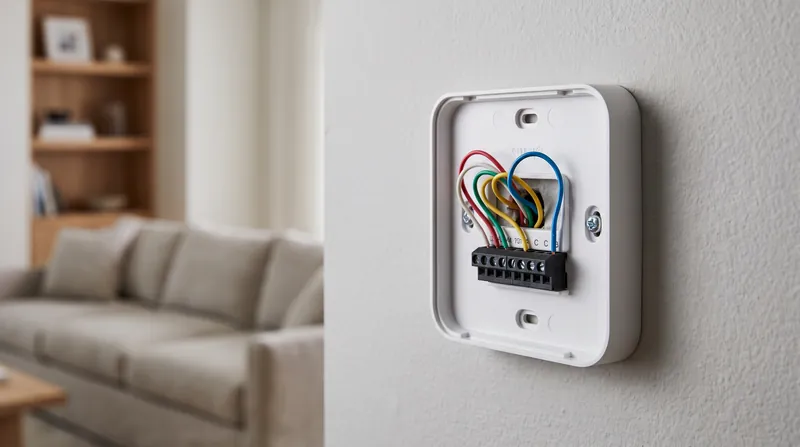
HVAC Wiring
The Continuous 24-Volt Supply: Why Wi-Fi Smart Thermostats Require a C-Wire for Constant Power
6 sources
Appliance Science
The Air Watt Measurement: How the Combination of Airflow and Suction Actually Dictates a Vacuum Cleaner's Deep-Cleaning Power
2 sources

Tornado Resilience
National Building Code Adds First-Ever Tornado Load Requirements for Critical Infrastructure
6 sources
Every angle. Every day.
Get Home stories with full source coverage and perspective breakdowns delivered to your inbox.