
KAIST Researchers Unveil AI Breakthrough That Teaches Robots Human Intent From a Handful of Videos
A new 'physical AI' framework allows robots and autonomous systems to learn complex, human-aligned behaviors from just a few video examples, drastically cutting development time and costs.
By Factlen Editorial Team
- Robotics Researchers
- Academic and institutional researchers focused on overcoming the data bottlenecks of physical AI.
- Industrial Adopters
- Manufacturers and logistics companies looking to deploy autonomous systems at scale.
- AI Infrastructure Providers
- Companies building the hardware and foundational models that power the AI ecosystem.
What's not represented
- · Labor unions concerned about accelerated automation
- · Regulators overseeing autonomous vehicle safety standards
Why this matters
Training robots to safely navigate the human world has historically required thousands of hours of manual human grading, making advanced robotics prohibitively expensive. By allowing machines to learn complex tasks just by watching a few videos, this breakthrough dramatically lowers the cost and time required to deploy autonomous systems in factories, hospitals, and on the roads.
Key points
- KAIST researchers developed a new AI framework called VOTP that teaches robots human intent from a few videos.
- The technology eliminates the need for humans to manually evaluate thousands of robot actions during training.
- By autonomously building its own reward function, the AI can generalize learned behaviors to entirely new environments.
- The research was selected for an elite oral presentation at ICML 2026, ranking in the top 0.7% of global submissions.
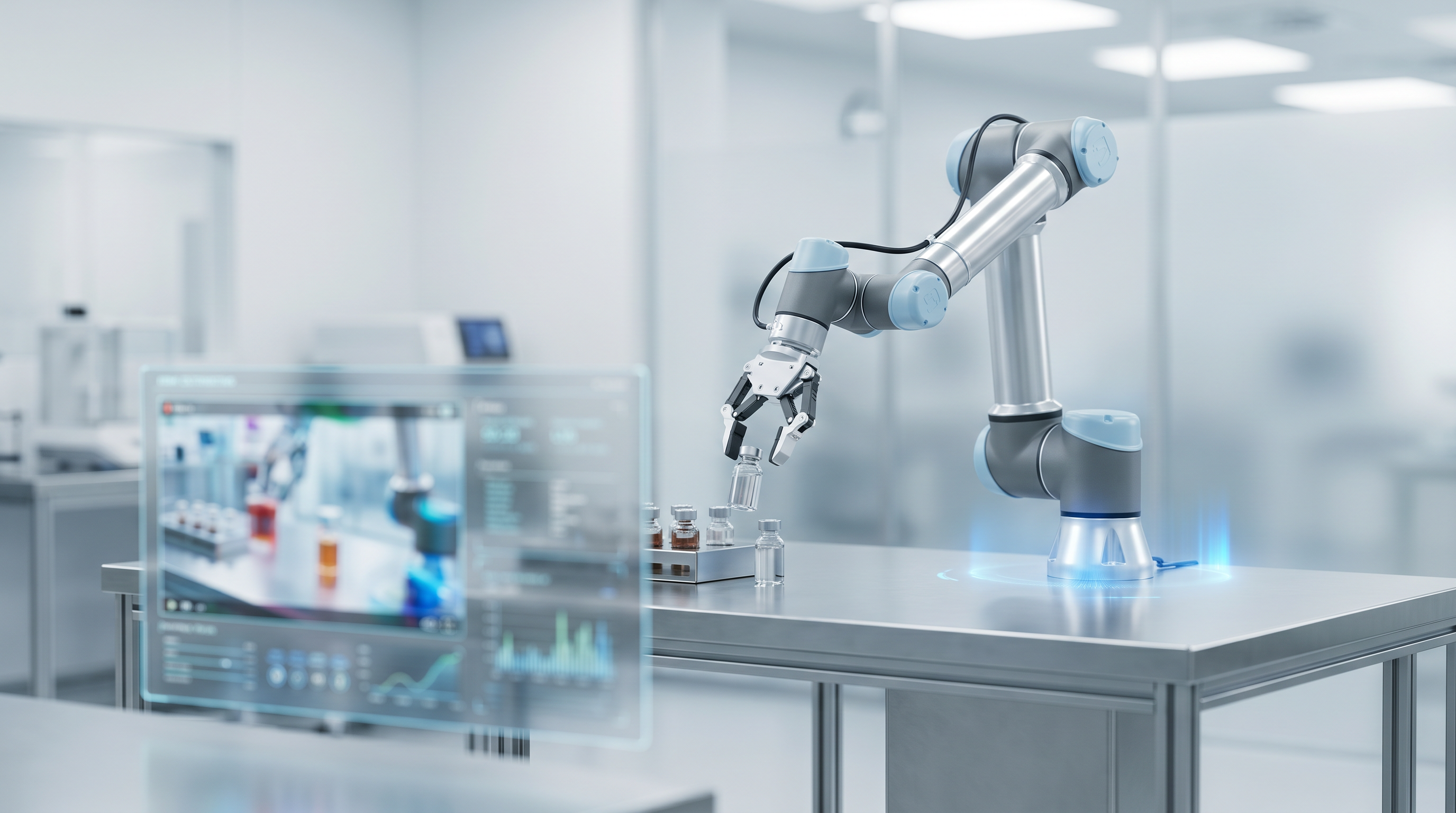
The bottleneck in the robotics industry has always been teaching machines not just how to move, but how to move correctly according to human intent. While generative AI models can instantly produce text and images, physical robots still struggle to navigate the chaotic, unpredictable real world. Now, a research team in South Korea has unveiled a major breakthrough that could drastically accelerate the deployment of physical AI across global industries. By fundamentally changing how machines learn from human examples, the new framework promises to eliminate one of the most expensive and time-consuming steps in robotics development.[1][3]
Researchers at the Korea Advanced Institute of Science and Technology (KAIST), led by Professor Yoo Chang-dong of the School of Electrical Engineering, have developed a pioneering framework called Video-based Optimal TransPort Preference (VOTP). This technology allows artificial intelligence to learn complex human judgment criteria by analyzing just a handful of video examples, entirely bypassing the need for massive datasets of human-evaluated actions. The development marks a critical milestone in the evolution of physical AI—systems designed to interact directly with the real world, such as humanoid robots, autonomous vehicles, and precision surgical arms.[1][2]
Historically, training physical AI has relied on a grueling, labor-intensive process known as reinforcement learning from human feedback (RLHF). Developers and engineers typically have to manually score thousands to tens of thousands of individual robot actions to teach the system which behaviors are safe, efficient, or desirable. If a robotic arm is learning to sort fragile objects, a human must watch endless iterations of the task, penalizing the AI when it crushes an item and rewarding it when it uses the correct grip. This granular grading process is not only prohibitively expensive but also highly specific to a single environment, meaning a robot trained for one factory floor might fail completely if moved to a slightly different layout with different lighting. This severe data bottleneck has kept advanced robotics confined to highly controlled environments and massive corporate budgets.[2][5]

The VOTP framework upends this traditional training paradigm by shifting the burden of evaluation from the human to the AI itself. Instead of requiring action-by-action grading, the system extracts the underlying human intent from a small set of "preference videos." Using advanced mathematical models based on optimal transport theory, the AI analyzes the visual flow, spatial relationships, and ultimate outcomes depicted in these videos to deduce what the human operator is trying to achieve. It then uses this deep contextual understanding to build its own internal reward function. Effectively, the AI teaches itself the overarching rules of the task—such as "move the object quickly but do not let it tilt"—without needing constant human supervision or a hard-coded set of instructions for every possible physical variable.[1][2]
Once this autonomous reward function is established, the AI gains the ability to evaluate its own behavior in entirely new, unseen environments. It learns to judge on its own which actions best align with the original human intent, generalizing the lessons from the initial videos to novel situations. If a robot encounters an obstacle that was not present in the training videos, it can use its inferred understanding of the overall goal to navigate around the problem safely, rather than freezing or requiring a human engineer to write a new line of code.[1]
Once this autonomous reward function is established, the AI gains the ability to evaluate its own behavior in entirely new, unseen environments.
The practical implications for the global economy and industrial automation are vast. When deploying a new robotic system to a modern smart factory, an industrial expert will no longer need to spend weeks programming specific joint movements or grading the robot's trial-and-error attempts. Instead, the expert can simply provide a few videos demonstrating the ideal workflow or assembly process. The AI analyzes the footage, understands the optimal behavior, and immediately adapts to the specific machinery, lighting, and layout of the factory floor. This capability drastically reduces the testing period and data-building costs, potentially cutting the deployment time for complex industrial automation from several months down to a matter of days, democratizing access to robotics for smaller manufacturers.[1][5]

Beyond industrial manufacturing, the KAIST research team notes that VOTP has direct and life-saving applications in high-stakes environments. In the medical field, surgical robots must execute incredibly precise movements while adapting to the unique anatomy of each patient. By learning from videos of successful surgeries, these robots could assist human surgeons with greater autonomy and safety. Similarly, in the autonomous driving sector, vehicles must navigate complex, unpredictable road conditions; learning human driving preferences from video could help self-driving cars make safer, more intuitive decisions in chaotic urban traffic.[1][2]
This breakthrough arrives at a critical moment, as the broader technology industry pivots heavily toward physical AI. Major infrastructure players like NVIDIA have recently shifted their focus toward agentic AI frameworks and advanced physical simulation environments, recognizing that the next trillion-dollar frontier of artificial intelligence lies in systems that can navigate the physical world. The development of efficient learning frameworks like VOTP provides the missing software link, allowing the massive compute power currently being deployed in data centers to translate directly into smarter, more capable machines in the real world.[4][5]
The technical significance of the VOTP framework has already been recognized at the highest levels of the global artificial intelligence community. The research paper, spearheaded by doctoral student Lou Minh Tung as the first author, was subjected to rigorous peer review and accepted at the International Conference on Machine Learning (ICML) 2026, held in Seoul. ICML is widely considered one of the most prestigious academic gatherings in the field of computer science, serving as a bellwether for the technologies that will define the next decade of AI development.[1][3]

The KAIST team's achievement stands out even among the elite research presented at the conference. Out of a staggering 23,918 papers submitted to ICML 2026 by researchers around the globe, the VOTP paper was selected for an oral presentation. This distinction is awarded to only 168 papers, placing the research in the top 0.7% of all submissions. This rare level of academic validation cements the framework's status as a landmark mathematical and practical development in the quest to build truly autonomous physical systems.[1][3]
As artificial intelligence transitions from generating digital content on screens to powering heavy machinery, vehicles, and medical devices in the physical world, the ability to safely and efficiently align these systems with human intent is paramount. Technologies like VOTP serve as a critical bridge, proving that machines can learn complex physical tasks without requiring an army of human graders. By making it cheaper, faster, and safer to teach robots how to behave, this breakthrough brings the promise of ubiquitous, helpful physical AI one massive step closer to reality.[4][5]
How we got here
2023–2025
Generative AI models dominate the tech landscape, but physical robotics remain bottlenecked by the high cost of human-evaluated training data.
March 2026
Major tech firms signal a massive industry shift toward 'Physical AI' and autonomous agents at global developer conferences.
June 2026
KAIST researchers unveil the VOTP framework, solving a major bottleneck in physical AI training.
July 2026
The VOTP research is presented at ICML 2026 in Seoul, recognized among the top 0.7% of global AI research papers.
Viewpoints in depth
Robotics Researchers
Academic and institutional researchers focused on overcoming the data bottlenecks of physical AI.
For years, the AI community has struggled with the 'sim-to-real' gap and the exorbitant cost of Reinforcement Learning from Human Feedback (RLHF) in robotics. Researchers view the VOTP framework as a paradigm shift because it proves that AI can infer complex reward functions from sparse, passive video data rather than requiring active, granular human grading. This mathematical breakthrough in optimal transport theory allows models to generalize intent across entirely novel physical environments without catastrophic failure.
Industrial Adopters
Manufacturers and logistics companies looking to deploy autonomous systems at scale.
From the perspective of enterprise adopters, the primary barrier to automation is the bespoke nature of robot programming. Every new factory floor or warehouse requires extensive custom tuning. Industrial leaders view video-based preference learning as a massive cost-saver. If an expert can simply record a few videos of a task being done correctly, and the robot can autonomously adapt that intent to its specific hardware and environment, the deployment time for smart factory infrastructure drops from months to days.
AI Infrastructure Providers
Companies building the hardware and foundational models that power the AI ecosystem.
Infrastructure giants see physical AI as the next massive growth vector, moving beyond text-based chatbots into the trillion-dollar industrial economy. Providers are actively building the simulation environments and compute clusters required to support these embodied agents. Frameworks like VOTP are highly anticipated by this camp, as they make physical AI more accessible to end-users, thereby driving demand for the underlying compute and orchestration platforms required to run them.
What we don't know
- How well the VOTP framework handles highly ambiguous or contradictory video examples.
- The exact computational overhead required to process the preference videos in real-time edge devices.
Key terms
- Physical AI
- Artificial intelligence systems designed to interact directly with the physical world, encompassing robotics, autonomous vehicles, and embodied agents.
- Reward Function
- A mathematical formula used in machine learning that gives an AI system a 'score' based on its actions, guiding it toward desired behaviors.
- VOTP (Video-based Optimal TransPort Preference)
- A new AI training framework developed by KAIST that extracts human judgment criteria from a small number of videos to teach robots how to behave.
- ICML
- The International Conference on Machine Learning, one of the world's most prestigious academic conferences for artificial intelligence research.
Frequently asked
What exactly is physical AI?
Physical AI refers to artificial intelligence systems designed to operate and act within the real world, such as humanoid robots, autonomous vehicles, and surgical arms, rather than just generating digital text or images.
How does VOTP differ from traditional AI training?
Traditional training requires humans to manually evaluate and score thousands of individual robot actions. VOTP allows the AI to learn the correct behavior autonomously by simply analyzing a few videos of the desired outcome.
Where will this new technology be used?
The framework has broad applications across industrial robotics, smart factories, autonomous driving, drone navigation, and precision medical surgery.
Sources
Source coverage
5 outlets
3 viewpoints surfaced




[1]Seoul Economic DailyIndustrial Adopters
KAIST Develops Physical AI Breakthrough That Learns Human Judgment From Few Videos
Read on Seoul Economic Daily →[2]Korea Advanced Institute of Science and Technology (KAIST)Robotics Researchers
VOTP: Video-based Optimal TransPort Preference for Physical AI
Read on Korea Advanced Institute of Science and Technology (KAIST) →[3]International Conference on Machine Learning (ICML)Robotics Researchers
ICML 2026 Accepted Papers: Oral Presentations
Read on International Conference on Machine Learning (ICML) →[4]NVIDIAAI Infrastructure Providers
The State of Open Source AI and Physical AI Frameworks
Read on NVIDIA →[5]Factlen Editorial TeamAI Infrastructure Providers
Synthesis by Factlen editorial team
Read on Factlen Editorial Team →
More in ai
See all 41 stories →Local AI
How Local AI is Putting Powerful Models on Your Laptop (and Why It Matters for Privacy)
8 sources

Local AI
The Rise of Local AI: Why Small Language Models Are Replacing Cloud Monopolies
7 sources

Prompt Engineering
Chain of Thought and Tree of Thoughts: How AI Learns to Reason Step-by-Step
7 sources

Local AI
The Era of Small Language Models: Why AI is Moving from the Cloud to Your Pocket
6 sources

Every angle. Every day.
Get ai stories with full source coverage and perspective breakdowns delivered to your inbox.