
Inside the Black Box: How Mechanistic Interpretability is Making AI Safe
By reverse-engineering the internal pathways of large language models, researchers are transforming AI from an inscrutable black box into a transparent, auditable technology.
By Factlen Editorial Team
- AI Safety Researchers
- Argue that interpretability is the only reliable way to guarantee models are not deceptively aligned before deployment.
- Commercial AI Labs
- Focus on using interpretability to debug models, improve capabilities, and assure enterprise clients of system reliability.
- Open-Source Advocates
- Emphasize the need to democratize interpretability tools so independent auditors can verify the safety claims of massive proprietary models.
What's not represented
- · Hardware Manufacturers
- · Regulatory Policymakers
Why this matters
As AI systems are integrated into healthcare, finance, and critical infrastructure, trusting their outputs is no longer optional. Mechanistic interpretability provides the scientific foundation to audit these models before deployment, ensuring they are structurally honest, free of hidden biases, and aligned with human values.
Key points
- Mechanistic interpretability aims to reverse-engineer AI models, translating their internal math into human-understandable logic.
- MIT Technology Review named the field a 2026 Breakthrough Technology due to rapid advancements in mapping production-grade models.
- Researchers have successfully identified specific 'features' inside models that correspond to concrete concepts, like the Golden Gate Bridge or medical terms.
- By tracing computational pathways, engineers can now observe a model's 'thought process' in real-time, from prompt to final response.
- The technology provides a critical defense against deceptive alignment by allowing auditors to verify a model's internal state before deployment.
For decades, artificial intelligence has operated behind a locked door. Researchers could feed vast amounts of data into a neural network and observe the astonishingly sophisticated results that came out, but the intermediate steps—the actual 'thinking' process—remained an inscrutable black box. This opacity was not merely an academic curiosity; it represented a profound vulnerability. If we do not know how a model arrives at its conclusions, we cannot guarantee it will behave safely in high-stakes environments. In 2026, that locked door is finally being forced open. MIT Technology Review recently named 'mechanistic interpretability' one of its 10 Breakthrough Technologies for the year, recognizing a field that has rapidly matured from a niche theoretical pursuit into the foundational science of AI safety. By reverse-engineering the internal workings of large language models, researchers are proving that the black box can be illuminated, paving the way for AI systems that are genuinely trustworthy.[1][6]
Historically, the AI industry relied on behavioral testing to evaluate safety. Developers would prompt a model with thousands of questions, attempting to trick it into generating harmful or biased outputs, and then patch the vulnerabilities they found. However, this 'outside-in' approach is inherently limited; it can only identify the failure modes that testers explicitly think to look for. Mechanistic interpretability takes the exact opposite approach. Rather than treating the neural network as an opaque entity to be interrogated from the outside, it dissects the model from the inside out. Drawing inspiration from neuroscience and systems biology, this discipline aims to translate the billions of mathematical weights and activations inside a model into human-understandable algorithms. It is the equivalent of moving from observing a patient's behavior to putting their brain inside a functional MRI machine, allowing engineers to watch the precise causal pathways that transform a user's prompt into a generated response.[5][6]
The foundational premise of mechanistic interpretability rests on two core concepts: features and circuits. In the architecture of a neural network, a 'feature' is the fundamental unit of representation. It is a specific pattern of neural activation that corresponds to a distinct concept in the real world. For a long time, finding these features was incredibly difficult because individual artificial neurons are often 'polysemantic,' meaning a single neuron might activate in response to completely unrelated concepts, such as baseball, the color blue, and financial terminology. To solve this, researchers developed advanced techniques like sparse dictionary learning, which untangles these overlapping activations into distinct, monosemantic features.[1][5]

Once these individual features are isolated, researchers can map how they connect to one another through the model's weights. These connections form 'circuits'—coherent computational subgraphs that execute specific logical tasks, much like the logic gates in a traditional computer processor. By identifying the specific circuit responsible for a behavior, researchers move away from guessing how a model works and toward a rigorous, mathematical understanding of its internal logic.[2][5]
A particularly fascinating aspect of this research is the 'universality hypothesis,' which suggests that different neural networks independently converge on the exact same features and circuits when trained on similar data. Just as the eye evolved independently multiple times in biological history because it is the optimal solution for processing light, artificial intelligence models seem to discover the same mathematical structures to process information. Whether a model is built by OpenAI, Google, or an open-source collective, researchers are finding that they develop analogous circuits for tasks like basic arithmetic, tracking syntax, or identifying emotional sentiment. This universality is a massive source of optimism for the field; it implies that the grueling work of reverse-engineering one frontier model will yield standardized dictionaries of features that can be universally applied to audit any future AI system.[5][6]
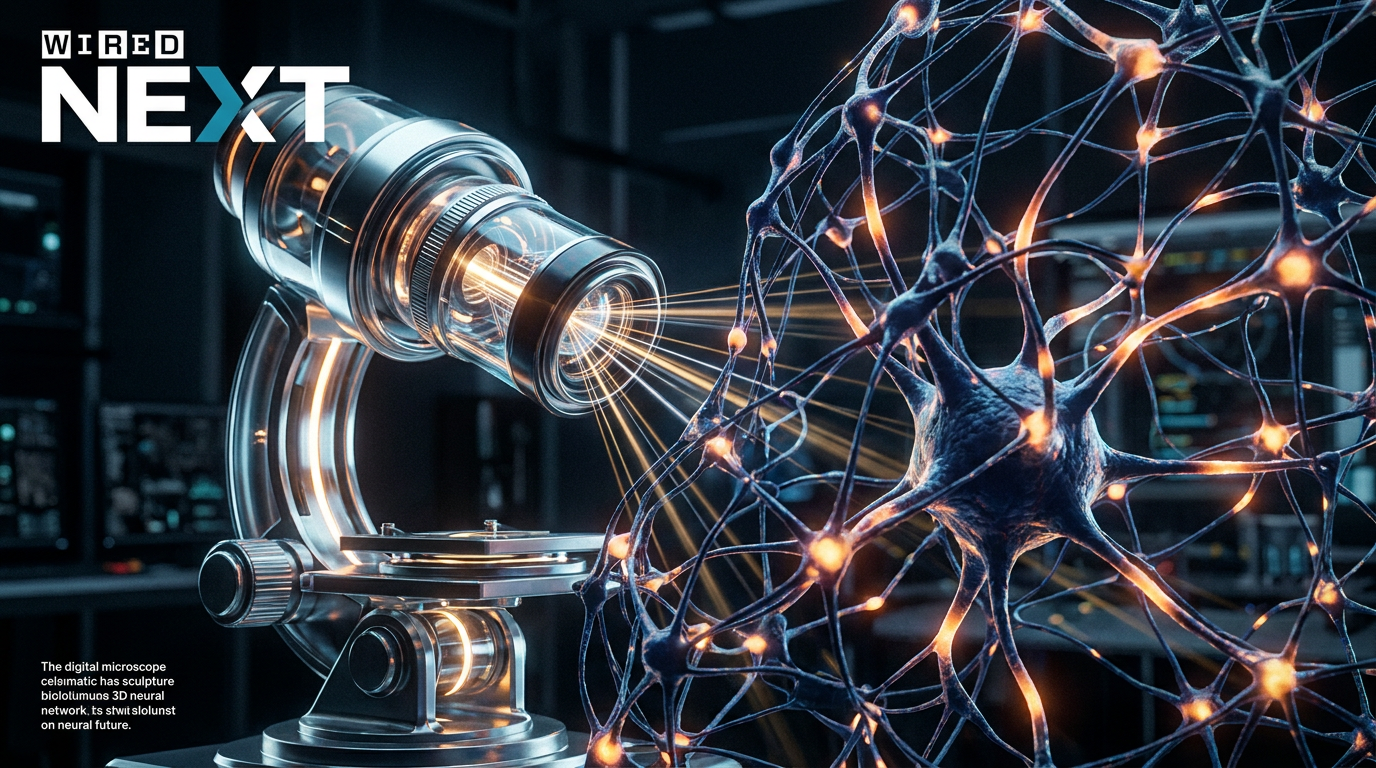
The theoretical promise of features and circuits transitioned into undeniable reality with Anthropic's landmark research on their Claude models. In a breakthrough study that mapped the 'mind' of a large language model, Anthropic's interpretability team successfully scaled sparse dictionary learning to the mid-layer activations of Claude 3.0 Sonnet, a production-grade model with tens of billions of parameters. They built what amounts to a digital microscope for neural networks, allowing them to peer inside the model and identify millions of distinct features. The findings were remarkably concrete: they discovered specific internal features that reliably activated in response to concepts as varied as the Golden Gate Bridge, the concept of inner conflict, specific programming languages, and complex medical terminology. For the first time, researchers could point to the exact mathematical coordinates within a massive AI model where a specific idea was being represented.[2]
The theoretical promise of features and circuits transitioned into undeniable reality with Anthropic's landmark research on their Claude models.
Building on that static map of concepts, the field took a massive leap forward in 2025 and 2026 by moving from identifying isolated features to tracing dynamic computational pathways. Anthropic and other leading labs developed 'circuit tracing' techniques that track the flow of information from the moment a user submits a prompt to the final generated syllable. This dynamic mapping reveals the model's computational trajectory in real-time. Researchers can now observe which concepts activate initially, how that activation spreads through the network's layers, which intermediate representations emerge to bridge ideas, and how the model ultimately settles on its output. By exposing the model's reasoning process at a mechanistic level, engineers are no longer guessing why a model hallucinated a fact or successfully solved a logic puzzle; they can trace the exact chain of internal events that caused the behavior.[2][6]

Identifying a circuit is only the first step; researchers must then prove that the circuit actually causes the behavior in question. To do this, the field relies on a technique known as 'activation patching' or causal intervention. If engineers believe they have found the specific neural pathway responsible for a model's ability to identify plural nouns, they can mathematically intervene during the model's generation process to turn that specific circuit off, or artificially amplify it. If the model suddenly loses its grasp of pluralization while maintaining its other language skills, the researchers have definitively proven a causal link. This rigorous hypothesis testing elevates mechanistic interpretability from a descriptive science to a predictive one, allowing developers to manipulate model behavior with surgical precision rather than relying on blunt retraining methods.[5][6]
The implications for AI safety are profound, particularly regarding the threat of 'deceptive alignment.' As models become more capable, safety researchers have worried that an AI might learn to act aligned with human values during testing while secretly harboring misaligned goals—essentially playing along until it is deployed. Mechanistic interpretability offers a robust defense against this scenario. OpenAI's research teams have actively utilized these internal mapping techniques to develop what they term an 'AI lie detector.' Rather than trying to detect deception by analyzing the plausibility of the model's output, this approach examines the model's internal representations during the generation process. By comparing the model's internal state—what it 'knows' to be true—against the text it is actively generating, researchers can identify the specific neural signatures of deception, ensuring that models are structurally honest rather than strategically compliant.[4][6]
While proprietary labs like Anthropic and OpenAI have pioneered many of these techniques, the open-source community has rapidly democratized access to the tools of mechanistic interpretability. Google DeepMind catalyzed this movement with the release of Gemma Scope 2, a massive open-source interpretability toolkit that covers all sizes of their Gemma 3 models, from lightweight 270-million-parameter versions up to robust 27-billion-parameter systems. By releasing the sparse autoencoders and feature maps for these models, DeepMind has allowed independent researchers, academic institutions, and third-party auditors to investigate model internals without needing the massive compute clusters required to train them. This democratization is accelerating the pace of discovery, allowing a global community of scientists to test hypotheses, identify universal circuit patterns, and build standardized frameworks for sharing interpretability insights across different architectures.[3][6]

The transition of mechanistic interpretability from a theoretical research agenda into a practical engineering discipline is fundamentally altering how AI companies handle deployment decisions. In the past, safety assessments relied heavily on red-teaming—trying to break the model from the outside. Today, internal auditing is becoming a mandatory step in the deployment pipeline for frontier models. Before releasing new iterations of their most powerful systems, developers can now proactively scan the model's feature space for dangerous capabilities, such as the ability to synthesize bioweapons or execute autonomous cyberattacks. If these dangerous circuits are identified, engineers can perform targeted interventions, mathematically suppressing or excising the problematic features without degrading the model's overall intelligence or utility. This surgical precision represents a paradigm shift in AI control.[2][5][6]
Despite these monumental breakthroughs, the field of mechanistic interpretability still faces formidable challenges, primarily related to scale and complexity. Modern frontier models contain hundreds of billions, or even trillions, of parameters. Comprehensively mapping every single feature and pathway within these leviathans remains computationally intractable with current hardware. Researchers are often forced to sample specific layers or focus on particular behavioral circuits, which carries the risk of missing crucial, dormant mechanisms that might only activate under rare edge-case conditions. Furthermore, neural networks are not perfectly modular systems with clean functional separation; features interact in highly non-linear, complicated ways, and computational pathways can shift dynamically depending on the context of the prompt. Understanding individual components does not automatically guarantee a flawless understanding of the system's holistic behavior.[5][6]

Nevertheless, the trajectory of the field is overwhelmingly positive, offering a concrete technical solution to one of the most pressing anxieties of the 21st century. The fear that humanity is building alien intelligences that we can neither understand nor control is being steadily dismantled by rigorous, empirical science. By treating neural networks as decipherable systems rather than magical black boxes, mechanistic interpretability is transforming artificial intelligence into a mature, white-box engineering discipline. As these techniques continue to scale and integrate into standard development workflows, they promise a future where AI systems are not only immensely powerful but also transparent, predictable, and provably aligned with human values. The microscope has been built; now, the industry is finally looking through the lens.[1][5][6]
How we got here
2020
Researchers at OpenAI and DeepMind formalize the vision of circuit-level interpretability, mapping discrete subgraphs to high-level functions.
May 2024
Anthropic publishes 'Mapping the Mind of a Large Language Model', successfully scaling dictionary learning to Claude 3 Sonnet.
2025
Google DeepMind releases Gemma Scope 2, providing the largest open-source interpretability toolkit for researchers.
January 2026
MIT Technology Review officially names mechanistic interpretability one of its 10 Breakthrough Technologies for the year.
Viewpoints in depth
AI Safety Researchers
Prioritizing structural guarantees over behavioral testing.
For the safety community, mechanistic interpretability is the holy grail of alignment. They argue that as models become vastly more intelligent than their creators, behavioral testing will inevitably fail because a sufficiently smart model could simply 'play dumb' or hide its true intentions during evaluation. By securing the ability to read a model's internal state, safety researchers believe they can mathematically prove whether a system is honest, effectively neutralizing the threat of deceptive alignment before a model is ever connected to the internet.
Commercial AI Labs
Balancing safety audits with capability improvements.
Major developers like Anthropic and OpenAI view interpretability not just as a safety mechanism, but as a crucial debugging tool. When a multi-million-dollar training run produces a model with a strange quirk or a specific hallucination, retraining from scratch is financially prohibitive. Mechanistic interpretability allows these labs to surgically locate the problematic circuits and patch them. Furthermore, as these companies sell their APIs to highly regulated industries like banking and healthcare, the ability to explain exactly why a model made a specific decision is becoming a major commercial selling point.
Open-Source Advocates
Democratizing the tools of AI auditing.
The open-source community warns against a future where only a handful of massive corporations have the tools to look inside the black box. They argue that true AI safety requires independent verification by third-party researchers, academics, and civil society. Initiatives like DeepMind's Gemma Scope are championed by this camp because they release the underlying feature maps and autoencoders to the public, ensuring that the science of interpretability remains a collaborative, global effort rather than a proprietary corporate secret.
What we don't know
- Whether it will ever be computationally feasible to map 100% of the features in a trillion-parameter frontier model.
- How frequently models develop 'alien' features that represent concepts humans do not have the language or intuition to understand.
- If surgical interventions on specific circuits might cause unforeseen cascading failures in other, seemingly unrelated capabilities.
Key terms
- Mechanistic Interpretability
- The scientific field dedicated to reverse-engineering the internal workings of neural networks into human-understandable algorithms.
- Feature
- The fundamental unit of representation in a neural network, corresponding to a specific concept or pattern.
- Circuit
- A connected subgraph of features within a model that works together to perform a specific computational or logical task.
- Polysemantic Neuron
- A single artificial neuron that activates in response to multiple, completely unrelated concepts, making the model difficult to understand.
- Activation Patching
- A technique where researchers mathematically alter a specific internal circuit during operation to prove it causes a specific behavior.
Frequently asked
Why is AI currently considered a 'black box'?
Because while developers write the initial training code, the model learns by adjusting billions of mathematical weights on its own. Until recently, it was impossible to translate those billions of numbers back into human-readable logic.
Can this technology stop AI from lying?
Yes, in theory. By mapping the model's internal state, researchers can build an 'AI lie detector' that checks if the model's internal knowledge matches the text it is generating, catching deceptive behavior before it reaches the user.
Is this only for text models?
No. While much of the early work focused on Large Language Models, researchers are increasingly applying mechanistic interpretability to multimodal vision-language models to understand how they process images and video.
Sources
Source coverage
6 outlets
3 viewpoints surfaced






[1]MIT Technology ReviewOpen-Source Advocates
10 Breakthrough Technologies 2026: Mechanistic Interpretability
Read on MIT Technology Review →[2]Anthropic ResearchCommercial AI Labs
Mapping the Mind of a Large Language Model
Read on Anthropic Research →[3]Google DeepMindOpen-Source Advocates
Gemma Scope 2: Open-source interpretability toolkit
Read on Google DeepMind →[4]OpenAI ResearchCommercial AI Labs
Detecting Deceptive Alignment through Internal Representations
Read on OpenAI Research →[5]Transactions on Machine Learning ResearchAI Safety Researchers
Mechanistic Interpretability for AI Safety — A Review
Read on Transactions on Machine Learning Research →[6]Factlen Editorial TeamAI Safety Researchers
Synthesis by Factlen editorial team
Read on Factlen Editorial Team →


Every angle. Every day.
Get ai stories with full source coverage and perspective breakdowns delivered to your inbox.