
How the 'Science of Reading' is Rewiring K-12 Classrooms
A massive pedagogical shift is sweeping U.S. schools as educators abandon 'balanced literacy' in favor of evidence-based methods that align with how the brain actually learns to read.
By Factlen Editorial Team

- Science of Reading Advocates
- Argue that reading requires explicit, systematic instruction in phonics and decoding based on cognitive neuroscience.
- Holistic Literacy Advocates
- Emphasize immersion in literature and meaning-making, warning that rigid phonics mandates can crowd out critical thinking.
What's not represented
- · Publishers of legacy balanced-literacy curricula
- · Parents of students with dyslexia
Why this matters
For decades, millions of students have struggled to read not because they lacked capability, but because schools used instructional methods that contradicted how the human brain learns. The nationwide shift to the Science of Reading represents one of the most significant educational reforms in a generation, promising to drastically reduce illiteracy and level the playing field for students with learning disabilities.
Key points
- Reading is not a biologically innate skill; the brain must be explicitly rewired to connect visual symbols with sounds.
- Over 40 U.S. states have passed legislation mandating evidence-based 'Science of Reading' instruction.
- The discredited 'three-cueing' method, which encouraged guessing, is being replaced by systematic phonics.
- Major university systems are overhauling their teacher preparation programs to align with cognitive science.
- The shift aims to close equity gaps and provide critical support for students with dyslexia.
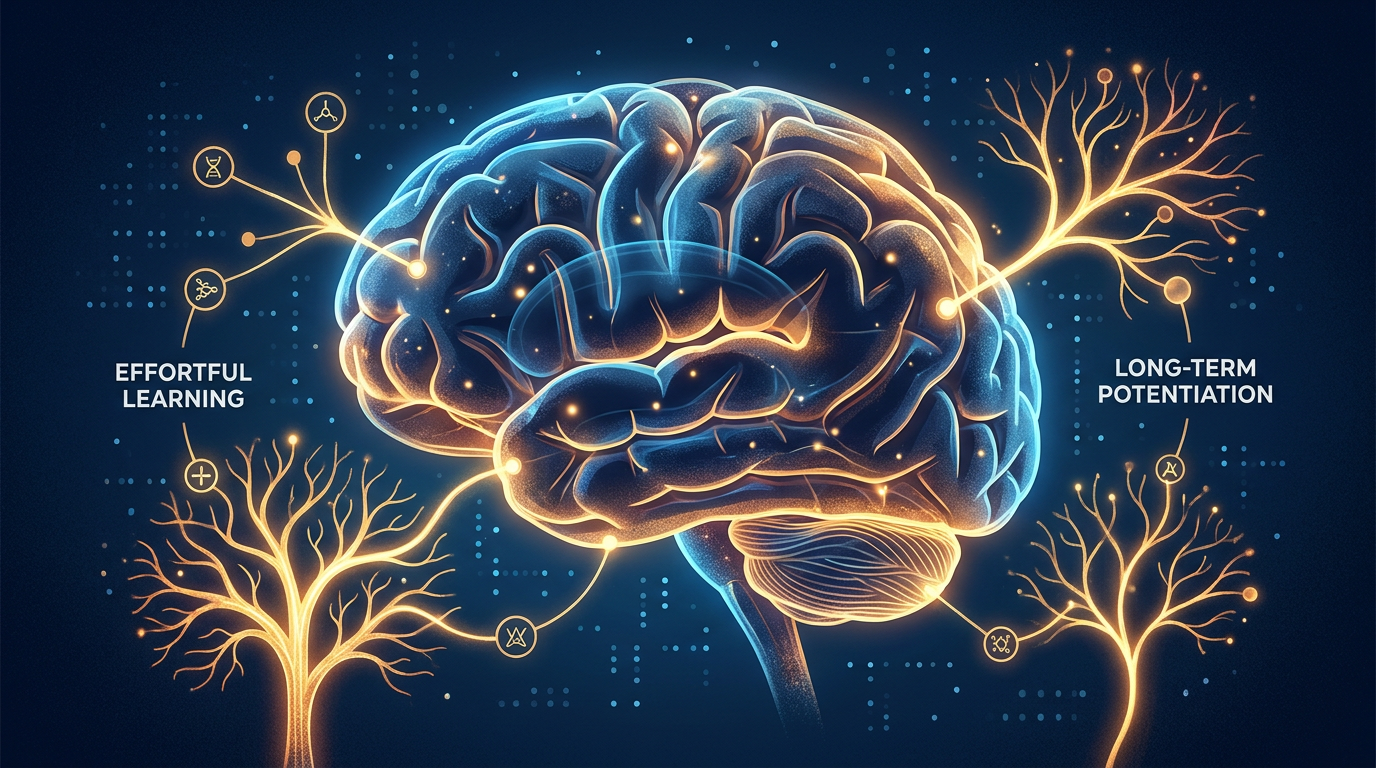
Human speech is biologically innate, evolving over hundreds of thousands of years. A child surrounded by spoken language will naturally learn to talk without formal instruction. Reading, however, is a recent human invention—only about 5,500 years old. The human brain has no dedicated "reading center" hardwired into its biology. Instead, it must be explicitly rewired to connect visual symbols with spoken sounds.[7]
For decades, the dominant philosophy in American K-12 education ignored this biological reality. An approach known as "balanced literacy" assumed that reading, much like speaking, would develop naturally if children were simply immersed in rich literature and joyful reading environments.[4]
Today, a massive, evidence-based course correction is sweeping through classrooms. Educators and policymakers are rapidly abandoning balanced literacy in favor of the "Science of Reading"—a comprehensive body of research spanning neuroscience, cognitive psychology, and linguistics that details exactly how the brain learns to decode text.[1][8]
The momentum behind this shift is unprecedented in modern education. Over the past few years, more than 40 U.S. states have passed legislation or implemented policies mandating that schools adopt evidence-based reading instruction. These laws often ban discredited teaching methods and require schools to use curricula grounded in cognitive science.[2]
At the heart of this pedagogical shift is a framework known as the "Simple View of Reading." It posits that reading comprehension is the product of two distinct, equally important skills: decoding (the ability to translate printed letters into sounds) and language comprehension (the ability to understand spoken words and sentences). If either skill is missing, reading comprehension cannot occur.[1][7]

Under the balanced literacy model, decoding was often taught haphazardly. Students were frequently taught the "three-cueing" system, an instructional practice that encouraged them to guess unknown words by looking at the picture, looking at the first letter, or thinking about what word would logically make sense in the sentence.[2][4]
Cognitive scientists have proven that guessing is exactly what struggling readers do, while proficient readers process every single letter of a word in milliseconds. When students are taught to guess based on context, they bypass the neural mechanism required to actually learn the word, creating an artificial ceiling on their reading ability.[7][8]
Cognitive scientists have proven that guessing is exactly what struggling readers do, while proficient readers process every single letter of a word in milliseconds.
The Science of Reading replaces guessing with explicit, systematic instruction in phonics and phonemic awareness. Children are taught to hear the individual sounds in spoken words (phonemes) and map them directly to written letters (graphemes).[1][7]
This explicit instruction facilitates a crucial neurological process called "orthographic mapping." As a child sounds out a word repeatedly, the brain physically bonds the spelling, pronunciation, and meaning together in long-term memory. Once a word is orthographically mapped, the reader recognizes it instantly, freeing up cognitive bandwidth to focus entirely on the meaning of the text.[7]
The shift is not just happening in elementary school classrooms; it is fundamentally changing how future teachers are trained. In New York, the State University of New York (SUNY) system recently mandated that all its educator preparation programs align with the Science of Reading, ensuring the 5,000 teachers it graduates annually are equipped with evidence-based methods.[3]
Similarly, the Kansas Blueprint for Literacy, backed by a $10 million initial legislative investment, aims to have 100% of the state's elementary teachers micro-credentialed in structured literacy by 2030. These systemic changes acknowledge that teachers cannot teach what they were never taught themselves.[6]

Despite the overwhelming scientific consensus, the transition has not been without friction. Defenders of holistic literacy approaches argue that a heavy, isolated emphasis on phonics can make reading instruction rigid and mechanical, potentially draining the joy out of literature for young learners.[4][5]
Critics also express concern that the "Science of Reading" label is sometimes weaponized by policymakers to mandate scripted, one-size-fits-all curricula. They warn that such rigid mandates can ignore the diverse cultural backgrounds of students and crowd out time for read-alouds and critical thinking.[5]
Proponents counter that there is no joy in being unable to read. While balanced literacy worked for the roughly 40% of students who easily intuit the alphabetic code, it left the majority—particularly those with dyslexia or from disadvantaged backgrounds—floundering and frustrated.[4]
Furthermore, experts emphasize that the Science of Reading is not "just phonics." The National Reading Panel identified five pillars of effective instruction: phonemic awareness, phonics, fluency, vocabulary, and comprehension. Once students can decode automatically, the instructional focus heavily shifts to building background knowledge and vocabulary.[1][8]

The transition requires a monumental effort in professional development. Hundreds of thousands of veteran teachers are currently relearning how to teach reading, often grappling with the difficult realization that the methods they used for years were actively hindering their students' progress.[8]
Ultimately, this pedagogical revolution represents one of the most significant equity initiatives in modern education. By aligning classroom practice with neurological reality, schools are ensuring that reading is no longer treated as a natural gift for the lucky few, but as a fundamental right that every child can be explicitly taught to master.[1][4]
How we got here
2000
The National Reading Panel publishes a landmark report identifying the five pillars of effective reading instruction.
2013
Mississippi passes the Literacy-Based Promotion Act, overhauling reading instruction and sparking massive gains in student scores.
2022
The 'Sold a Story' podcast exposes the flaws of balanced literacy, bringing the cognitive science of reading into mainstream public awareness.
2024–2026
A wave of legislation sweeps the U.S., with over 40 states mandating evidence-based reading instruction and banning three-cueing.
Viewpoints in depth
Cognitive Scientists & Policymakers
Reading is a biologically unnatural skill that must be explicitly taught through decoding.
This camp points to decades of fMRI brain scans and cognitive research showing that proficient readers do not guess words from context; they process letters at lightning speed. They argue that leaving reading to 'natural immersion' is educational malpractice that disproportionately harms students with dyslexia and those from low-income backgrounds. For them, mandating systematic phonics is a fundamental civil rights issue.
Holistic Literacy Advocates
Explicit phonics is necessary but insufficient, and rigid mandates risk alienating young readers.
Educators in this camp worry that the legislative pendulum is swinging too far toward mechanical decoding. They argue that while phonics is important, true literacy requires a love of reading, deep vocabulary, and critical thinking. They express concern that 'Science of Reading' mandates are forcing teachers to use scripted, one-size-fits-all curricula that crowd out read-alouds, diverse literature, and culturally responsive teaching.
What we don't know
- Whether states will provide sufficient funding and ongoing coaching to successfully retrain hundreds of thousands of veteran teachers.
- How quickly the new instructional mandates will translate into measurable gains on national reading assessments.
Key terms
- Phonemic awareness
- The ability to hear, identify, and manipulate individual sounds (phonemes) in spoken words.
- Orthographic mapping
- The cognitive process where the brain bonds the spelling, pronunciation, and meaning of a word for instant recognition.
- Three-cueing
- A discredited instructional method that encourages students to guess unknown words using pictures, context, or the first letter.
- Decoding
- The ability to translate printed letters and letter combinations into spoken sounds.
Frequently asked
What is the Science of Reading?
It is a comprehensive body of research spanning neuroscience, psychology, and linguistics that explains how the human brain learns to read, emphasizing explicit instruction in phonics, vocabulary, and comprehension.
Why is balanced literacy being replaced?
Research has shown that balanced literacy's reliance on 'three-cueing'—encouraging students to guess words based on pictures or context—fails to build the neural pathways required for fluent reading.
Does this approach only focus on phonics?
No. While phonics and phonemic awareness are critical first steps for decoding, the Science of Reading equally emphasizes language comprehension, vocabulary building, and background knowledge.
Sources
Source coverage
8 outlets
2 viewpoints surfaced








[1]Stanford Graduate School of EducationScience of Reading Advocates
How the 'science of reading' is reshaping literacy education
Read on Stanford Graduate School of Education →[2]ExcelinEdScience of Reading Advocates
Comprehensive Early Literacy Policy: State Statutes and Regulations
Read on ExcelinEd →[3]State University of New YorkScience of Reading Advocates
SUNY Policy Update Equips Future Teachers With Evidence-Based Literacy Instruction
Read on State University of New York →[4]Lexia LearningScience of Reading Advocates
Is the Science of Reading Better Than Balanced Literacy?
Read on Lexia Learning →[5]Human Restoration ProjectHolistic Literacy Advocates
The Reading Wars and the Science of Reading
Read on Human Restoration Project →[6]Kansas Legislative Research DepartmentScience of Reading Advocates
The Kansas Blueprint for Literacy
Read on Kansas Legislative Research Department →[7]EdResearchScience of Reading Advocates
The science of reading and cognitive science
Read on EdResearch →[8]Factlen Editorial TeamScience of Reading Advocates
Synthesis by Factlen editorial team
Read on Factlen Editorial Team →
Every angle. Every day.
Get education stories with full source coverage and perspective breakdowns delivered to your inbox.