
How SpaceX Executed the Largest IPO in History and Rewrote Wall Street's Playbook
SpaceX's record-breaking $75 billion public debut bypassed traditional underwriting norms, introducing a new hybrid auction model for mega-cap companies entering the public markets.
By Factlen Editorial Team
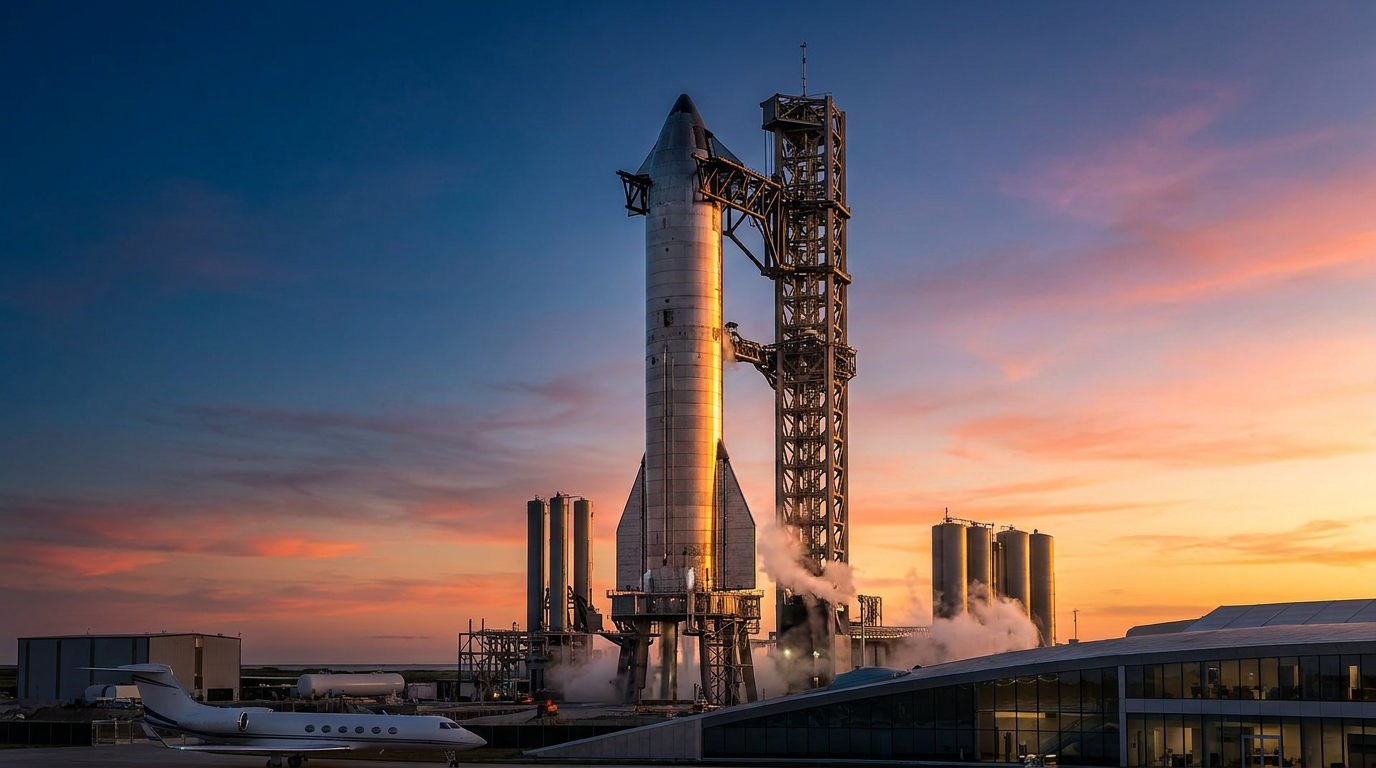
- Tech Innovators
- View the hybrid auction model as a necessary evolution that prevents Wall Street from underpricing tech assets.
- Institutional Underwriters
- Acknowledge the success of the mega-IPO but emphasize that banks still play a critical role in market liquidity and trading infrastructure.
- Market Structure Analysts
- Focus on the mechanics of the listing, analyzing how algorithmic clearing prices handle massive capital influxes.
What's not represented
- · Early private equity backers seeking liquidity
- · Legacy aerospace competitors
Why this matters
By successfully raising $75 billion while bypassing traditional Wall Street fee structures, SpaceX has established a new blueprint for how massive private companies can transition to public markets. This shift empowers retail investors with better early access and forces investment banks to rethink their traditional underwriting models.
Key points
- SpaceX raised a record-breaking $75 billion in its public market debut.
- The company bypassed traditional investment bank underwriting in favor of a hybrid auction model.
- The new structure allowed retail investors to participate in the initial price discovery phase.
- Wall Street banks are still profiting heavily from the massive trading volume generated by the listing.
- The capital will fund the rapid expansion of the Starlink network and the Starship deep-space program.
When SpaceX debuted on the public markets this week, it did more than just list a stock; it fundamentally re-engineered the mechanics of the Initial Public Offering. Raising an unprecedented $75 billion, the aerospace manufacturer shattered previous records held by Saudi Aramco and Alibaba, pulling off the largest capital raise in the history of global finance. But the sheer size of the offering is only half the story. The true breakthrough lies in how the company chose to structure its entry into the public domain, actively bucking decades of entrenched Wall Street norms.[1]
For decades, the traditional IPO process has relied heavily on investment banks acting as gatekeepers. Companies hire underwriters who travel the globe on a "roadshow" to pitch institutional investors, ultimately setting a share price the night before trading begins. This process, while reliable, often results in a "pop" on the first day of trading—a dynamic that critics argue leaves billions of dollars on the table for the company while enriching early institutional buyers who flip their allocated shares.[4]
SpaceX opted for a radically different approach, utilizing a hybrid direct-auction model that democratized access to the shares. Instead of allowing a syndicate of banks to dictate the opening price behind closed doors, the company utilized a modified Dutch auction system. This allowed both massive institutional funds and everyday retail investors to submit bids for the number of shares they wanted and the price they were willing to pay, resulting in a market-clearing price that accurately reflected true demand.[1][6]

The result was a remarkably smooth debut that avoided the chaotic volatility often associated with highly anticipated tech listings. Market analysts noted that the execution was nearly flawless, with the stock finding its equilibrium almost immediately upon the opening bell. By cutting out the traditional underwriting discount—which typically ranges from 4% to 7% of the total capital raised—SpaceX saved billions in fees, directing that capital straight into its balance sheet to fund its ambitious Starship and Mars colonization programs.[1]
Despite being sidelined from their traditional, highly lucrative underwriting roles, major Wall Street institutions are still finding massive upside in the SpaceX listing. Analysts at JPMorgan pointed out that the sheer volume of trading generated by the mega-IPO is creating a windfall for the trading desks and prime brokerage divisions of large banks. The velocity of shares changing hands, combined with the massive influx of retail trading activity, is expected to generate exceptionally strong trading income for the quarter.[2]
This dynamic highlights a broader evolution in the financial sector: as companies stay private longer and grow to "decacorn" status (valuations over $10 billion) before going public, banks are transitioning from gatekeepers to market facilitators. The infrastructure required to process a $75 billion liquidity event without breaking the exchanges requires immense technical and financial plumbing, a service for which top-tier banks are still handsomely rewarded, even if the fee structure looks different than it did in the 1990s.[2][6]
Academic research into market mechanics has long suggested that mega-IPOs require specialized pricing mechanisms to avoid market distortion. When a company attempts to absorb tens of billions of dollars in a single day, it risks draining liquidity from other sectors of the market. However, studies on recent mega-listings indicate that modern algorithmic trading and deeper global capital pools have made the market far more resilient, allowing it to digest massive offerings without triggering broader sell-offs in adjacent tech or industrial stocks.[5]

Academic research into market mechanics has long suggested that mega-IPOs require specialized pricing mechanisms to avoid market distortion.
For Silicon Valley, the success of the SpaceX offering is being viewed as a watershed moment. Leading tech investors and venture capitalists have praised the structural innovation of the listing. Prominent voices in the venture community, such as Brad Gerstner, have highlighted that the biggest upside surprise isn't just the capital raised, but the validation of a new playbook that other massive private companies—like Stripe or Databricks—can now follow when they eventually decide to tap the public markets.[3]
The implications for retail investors are particularly profound. Historically, everyday investors were locked out of the IPO pricing process, forced to buy shares on the open market after the institutional "pop" had already occurred. The hybrid auction model utilized by SpaceX allowed retail brokerages to aggregate bids from their users, giving them a seat at the table during the initial price discovery phase. This structural shift aligns with a broader trend toward financial democratization.[4][6]

Looking ahead, the $75 billion war chest fundamentally alters SpaceX's strategic timeline. The capital is earmarked for the rapid scaling of the Starlink satellite internet constellation, which is already generating significant free cash flow, and the acceleration of the Starship program. By securing this funding through public markets rather than continuous private funding rounds, the company has insulated itself against private market liquidity crunches and secured the runway needed for its most capital-intensive deep-space initiatives.[1][6]
While the debut is being celebrated as a triumph, financial economists note that the true test of this hybrid model will come in the months ahead. The expiration of insider lock-up periods—when early employees and venture backers are permitted to sell their shares—will introduce new waves of supply to the market. How the stock absorbs this secondary liquidity event will provide the final data points on whether the auction model truly achieved long-term price stability.[5]
Ultimately, the SpaceX IPO will be studied in business schools for decades not just for its size, but for its audacity. By leveraging its immense market leverage to dictate terms to Wall Street, the company proved that the traditional IPO process is not an immutable law of finance, but a legacy system ripe for disruption. In doing so, it has paved a wider, more efficient road to the public markets for the next generation of generational companies.[6]

How we got here
Pre-2026
SpaceX relies on continuous private funding rounds to scale Starlink and Starship development.
Early 2026
Rumors circulate that SpaceX will bypass traditional underwriting for a direct-access hybrid model.
June 12, 2026
SpaceX officially debuts on the public markets, raising $75 billion and setting a new global record.
June 13, 2026
Market analysts confirm the stock has found immediate equilibrium, validating the auction pricing mechanism.
Viewpoints in depth
Tech Founders and Venture Capitalists
Silicon Valley views the listing as a blueprint for bypassing Wall Street gatekeepers.
For years, tech founders have expressed frustration with the traditional IPO process, arguing that the first-day 'pop' is actually a failure of pricing that transfers wealth from the company to institutional investors. Venture capitalists see the SpaceX model as the ultimate proof of concept for a fairer system. By utilizing an auction mechanism, they argue that companies can capture the full value of their equity while democratizing access for everyday investors. This success is expected to embolden other massive private companies to demand similar terms when they go public.
Traditional Investment Banks
Financial institutions are adapting to a landscape where their role shifts from gatekeeper to facilitator.
While the loss of a 5% underwriting fee on a $75 billion raise represents a significant missed opportunity for traditional investment banks, institutional leaders are quick to point out that their infrastructure remains indispensable. The sheer plumbing required to clear millions of trades and provide liquidity for a mega-IPO relies entirely on Wall Street's prime brokerage divisions. Banks are pivoting their narratives, emphasizing that in the era of the mega-IPO, trading volume and market-making fees can be just as lucrative as traditional underwriting.
Market Structure Economists
Academics focus on the systemic risks and efficiencies of absorbing massive capital events.
Financial economists view the SpaceX listing as a real-world stress test for modern market infrastructure. The primary concern with mega-IPOs is liquidity drain—the fear that absorbing tens of billions of dollars will force investors to sell off other assets, causing broader market instability. However, economists note that the smooth execution of this hybrid auction suggests that global capital pools are now deep enough, and algorithmic clearing systems sophisticated enough, to handle unprecedented liquidity events without triggering systemic volatility.
What we don't know
- How the stock price will react when the insider lock-up period expires and early employees begin selling shares.
- Whether other major private companies will successfully replicate this hybrid auction model, or if SpaceX's unique brand power was required to pull it off.
- Exactly how the $75 billion will be divided between the Starlink satellite business and the more speculative Mars colonization efforts.
Key terms
- Initial Public Offering (IPO)
- The process by which a private company offers shares of its stock to the public for the first time, transitioning into a publicly traded entity.
- Dutch Auction
- A pricing mechanism where investors bid for the number of shares they want and the price they are willing to pay, with the final price set at the highest level that allows all shares to be sold.
- Underwriting Discount
- The fee investment banks charge for managing an IPO, typically calculated as a percentage of the total capital raised.
- Lock-up Period
- A predetermined window of time after an IPO during which early investors and company insiders are legally restricted from selling their shares.
- Decacorn
- A privately held startup company that has reached a valuation of over $10 billion.
Frequently asked
How much money did SpaceX raise?
SpaceX raised $75 billion in its initial public offering, making it the largest public market debut in history.
Why didn't SpaceX use a traditional IPO?
The company opted for a hybrid auction model to avoid the hefty underwriting fees charged by investment banks and to prevent the stock from being underpriced, which often leads to a massive first-day 'pop' that only benefits early institutional buyers.
Were retail investors able to buy shares?
Yes. Unlike traditional IPOs where retail investors are usually locked out until trading begins, the auction model allowed retail brokerages to submit bids during the price discovery phase.
How are Wall Street banks making money off this?
While they missed out on standard underwriting fees, major banks are generating significant revenue through the sheer volume of trading and prime brokerage services required to facilitate such a massive listing.
Sources
Source coverage
6 outlets
3 viewpoints surfaced




[1]MarketWatchInstitutional Underwriters
How Elon Musk nailed the SpaceX IPO: ‘I’m not sure that this could have gone much better’
Read on MarketWatch →JPMorgan says investors are overlooking the upside to Wall Street banks that comes from SpaceX and other mega IPOs
Read on MarketWatch →Here’s what could be SpaceX’s biggest upside surprise, according to a leading Silicon Valley investor
Read on MarketWatch →[4]U.S. Securities and Exchange CommissionMarket Structure Analysts
Understanding Initial Public Offerings (IPOs) and Market Mechanics
Read on U.S. Securities and Exchange Commission →[5]Journal of Financial EconomicsMarket Structure Analysts
The Mechanics and Pricing Efficiency of Mega-IPOs in the Modern Era
Read on Journal of Financial Economics →[6]Factlen Editorial TeamTech Innovators
Synthesis by Factlen editorial team
Read on Factlen Editorial Team →


Every angle. Every day.
Get finance stories with full source coverage and perspective breakdowns delivered to your inbox.