
How Parametric Insurance is Rewriting the Rules of Disaster Recovery
As climate change strains traditional indemnity policies, index-based insurance is offering a faster, data-driven alternative that pays out automatically when disaster strikes.
By Factlen Editorial Team
- Corporate Risk Managers
- Prioritize immediate liquidity and the ability to cover non-damage business interruption.
- Insurers & Actuaries
- Focus on leveraging high-resolution data to model climate risks and managing the complexities of basis risk.
- Climate Resilience Advocates
- Value parametric models for their ability to deliver rapid, bureaucratic-free financial aid to vulnerable communities and ecosystems.
What's not represented
- · Small Business Owners
- · Traditional Claims Adjusters
Why this matters
As extreme weather events become more frequent, traditional insurance is becoming slower and more expensive. Parametric insurance offers a data-driven alternative that pays out in days rather than months, fundamentally changing how businesses and communities survive climate shocks.
Key points
- Parametric insurance pays out automatically based on objective data triggers, like wind speed or earthquake magnitude.
- The model bypasses traditional claims adjusters, allowing funds to be wired in days rather than months.
- It covers 'non-damage business interruption,' protecting revenue when nearby disasters disrupt operations without damaging property.
- The primary drawback is 'basis risk,' where the data trigger might not perfectly align with the actual financial loss.
- Advancements in AI and satellite data are driving rapid market growth, projected to reach $51 billion by 2034.
Traditional property insurance is buckling under the escalating weight of climate change. When a major hurricane, flood, or earthquake strikes, the aftermath is predictably chaotic. Businesses and homeowners file claims, and then the waiting begins. Insurance companies deploy armies of claims adjusters to physically inspect properties, assess the exact dollar value of the damage, and negotiate settlements. This traditional indemnity process can take months or even years to resolve. For a business struggling to make payroll or a community trying to rebuild critical infrastructure, that delay can be fatal. The system is fundamentally reactive, designed for an era when natural catastrophes were rare and localized, rather than frequent and systemic.[7]
Furthermore, traditional policies are increasingly riddled with exclusions that leave policyholders exposed to a widening protection gap. Conventional insurance generally requires physical damage to an asset to trigger a payout. But in the modern economy, massive financial losses often occur without a single broken window. If a Category 5 hurricane threatens a coastline, local authorities might order a mandatory evacuation. A resort hotel in the area will lose millions of dollars in canceled bookings and wasted perishable inventory. If the storm veers at the last minute and the hotel sustains no physical damage, their traditional business interruption policy pays nothing. The financial devastation is real, but the coverage is nonexistent.[2][7]
To solve this liquidity crisis, the financial sector is rapidly adopting a radically different model: parametric insurance. Unlike traditional indemnity policies that reimburse actual assessed losses, parametric insurance pays out a pre-agreed sum automatically when a specific, measurable event occurs. It strips away the subjective claims adjustment process entirely. The policyholder is not buying protection against a specific dollar amount of damage; they are buying a guaranteed cash injection if a specific environmental threshold is breached.[1][2]
The mechanism rests entirely on an objective parameter or index—hence the name. This trigger must be measured and reported by an independent, trusted third party to ensure total transparency. For an earthquake policy, the trigger might be a magnitude 7.0 seismic event recorded by the United States Geological Survey within a specific 50-mile radius. For a tropical cyclone, it could be a sustained wind speed of 110 miles per hour recorded by the National Hurricane Center. For agricultural policies, the parameter is often a specific deficit in cumulative rainfall over a defined growing season, measured by local meteorological stations or satellite data.[2][3]

The primary advantage of this model is unprecedented speed. Because the trigger is binary—the event either demonstrably happened or it didn't—there is nothing to investigate or debate. Once the independent agency confirms the data, the insurer wires the funds. Payouts that would traditionally take six to twelve months are routinely settled within 10 to 14 days. This provides immediate emergency liquidity, allowing a municipality to clear roads, a hospital to buy emergency generators, or a corporation to reroute its global supply chain before the financial shock sets in.[3][4]
In the agricultural sector, parametric policies are revolutionizing how farmers manage the existential threat of drought. Historically, crop insurance required inspectors to visit individual farms at the end of a season to verify yield losses—a slow, expensive process prone to dispute. Today, a parametric drought policy simply monitors rainfall data from space. If the precipitation in a specific GPS grid falls below the critical threshold required for the crop to survive, the policy pays out automatically. The farmer receives the funds in time to buy alternative feed for livestock or plant a late-season cover crop, rather than waiting until the farm is already bankrupt.[5]
In the agricultural sector, parametric policies are revolutionizing how farmers manage the existential threat of drought.
For the hospitality, retail, and logistics sectors, parametric coverage elegantly fills the non-damage business interruption gap. Returning to the example of the evacuated resort hotel: a parametric policy tied to the proximity and intensity of a hurricane would trigger a payout the moment the storm entered a predefined geographic box at a certain wind speed. The hotel receives a multi-million dollar cash injection to cover payroll, refund guests, and manage the lost season, completely bypassing the fact that their physical buildings were spared.[2][3]
Beyond corporate risk management, international organizations are increasingly leveraging parametric models for social good and climate justice. The World Economic Forum highlights how these instruments are being deployed to protect vulnerable populations who have never had access to traditional insurance. In India, parametric microinsurance policies are being used to replace the daily wages of female outdoor workers when temperatures exceed dangerous heatwave thresholds. In the Caribbean and Central America, parametric policies are purchased by environmental trusts to fund the immediate, time-sensitive rehabilitation of coral reefs the moment a destructive hurricane passes through.[1]

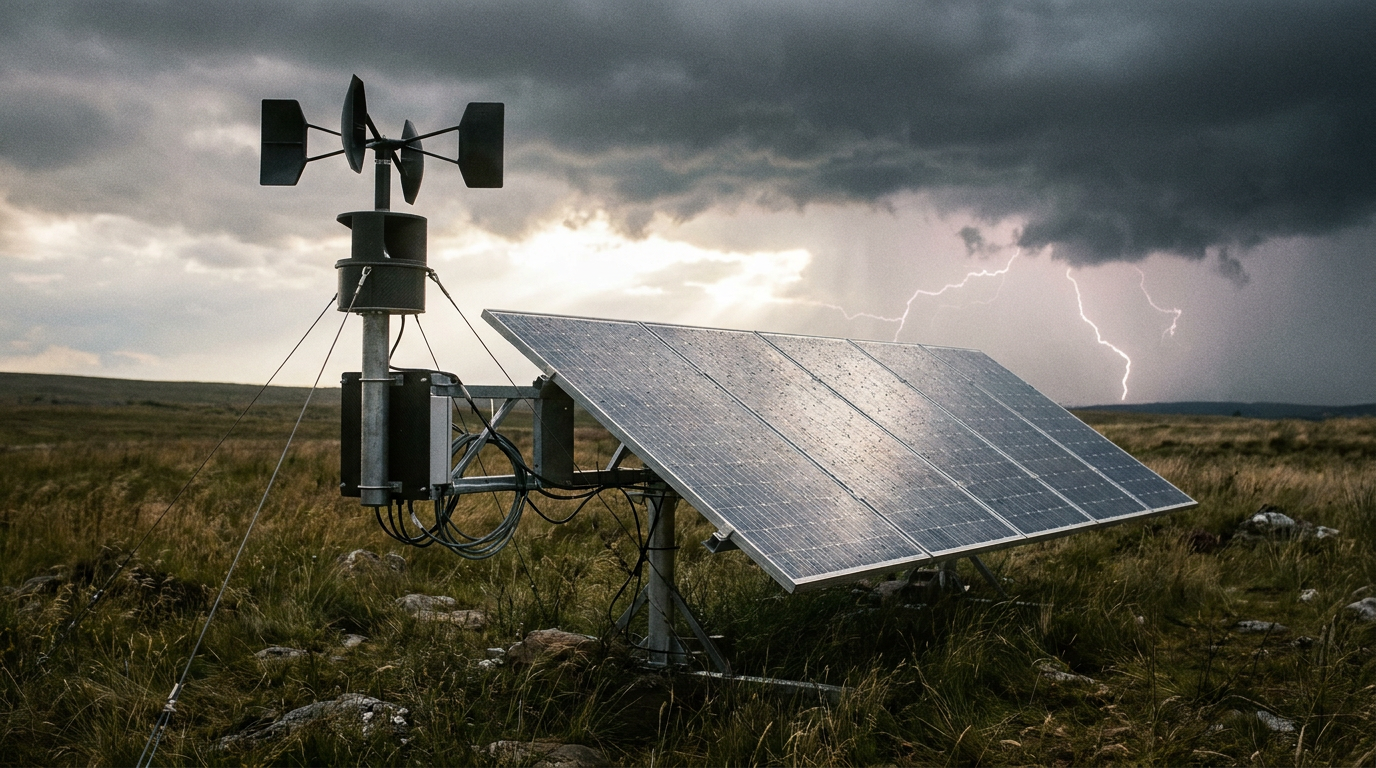
This paradigm shift is entirely dependent on recent leaps in data infrastructure and technology. A decade ago, the lack of reliable, high-resolution environmental data made pricing these policies a guessing game. Today, the proliferation of low-earth orbit satellites, interconnected IoT weather sensors, and advanced artificial intelligence allows actuaries to model climate risks with granular precision. Insurers can now confidently price the probability of a specific weather event occurring in a specific square mile, transforming unpredictable climate chaos into a quantifiable, tradable financial instrument.[4][6]
However, the parametric model is not a flawless silver bullet. Its primary vulnerability is a concept known as basis risk. Basis risk is the potential mismatch between the index-triggered payout and the actual financial loss experienced by the policyholder. Because the policy pays out based on the event rather than the damage, the correlation is never perfect. A business might suffer catastrophic flooding from a slow-moving storm that only registers wind speeds of 70 mph. If their parametric policy required an 80 mph trigger, they receive absolutely nothing, despite being financially ruined.[6][7]
Conversely, positive basis risk occurs when a policyholder receives a massive payout for an event that ultimately caused them very little actual damage. While this sounds like a windfall for the insured, it represents an inefficiency in the market that drives up premiums for everyone. Regulators also watch positive basis risk closely, as insurance is legally meant to indemnify against loss, not serve as a speculative lottery ticket on the weather.[2][6]
To mitigate basis risk, the industry is moving away from simple, single-trigger contracts toward highly sophisticated, multi-variable models. A modern parametric hurricane policy might require a combination of a specific wind speed, a specific barometric pressure drop, and a specific storm surge depth to trigger a full payout. Alternatively, insurers use sliding scales: a magnitude 6.5 earthquake might pay 25% of the policy limit, a 7.0 pays 50%, and an 8.0 pays 100%. This nuanced approach attempts to mirror actual damage curves more accurately while preserving the speed of an index-based settlement.[2][3]
Driven by these technological refinements and the increasingly hostile market for traditional property insurance, the parametric sector is experiencing explosive growth. The Society of Actuaries notes that the global parametric market, estimated at roughly $16.2 billion in 2024, is projected to surge past $51 billion by 2034. As climate change continues to redraw the map of global risk, corporate boards and government planners are realizing that waiting months for a claims adjuster is no longer a viable survival strategy.[5]

Ultimately, parametric insurance is not designed to replace traditional indemnity coverage, but rather to serve as a high-speed complement. By stripping away the friction of human claims adjustment and leveraging objective, real-time data, it offers a highly efficient financial shock absorber. In an increasingly volatile world, the ability to secure guaranteed, immediate liquidity based on the undeniable physics of a storm is becoming the ultimate form of climate resilience.[1][7]
How we got here
1990s
The first parametric catastrophe bonds are introduced to help major insurers manage massive hurricane and earthquake exposures.
Early 2000s
Parametric weather derivatives gain traction in the agriculture and energy sectors to hedge against seasonal temperature and rainfall anomalies.
2014
The African Risk Capacity (ARC) agency launches, utilizing parametric models to provide rapid sovereign drought relief to participating African nations.
Early 2020s
Corporate adoption accelerates rapidly as climate change drives up traditional property insurance premiums and introduces strict coverage exclusions.
2026
Advancements in AI risk modeling and low-earth orbit satellite data push the global parametric market toward mainstream commercial adoption.
Viewpoints in depth
Corporate Risk Managers
Prioritize immediate liquidity and the ability to cover non-damage business interruption.
For corporate risk managers, traditional property insurance is increasingly viewed as inadequate for modern, interconnected supply chains. Their primary concern is liquidity: when a disaster strikes, they need cash immediately to secure alternative suppliers, pay idle staff, or relocate operations. They champion parametric insurance because it fills the 'non-damage business interruption' gap, ensuring that even if their physical factories are spared, they are financially protected against the chaotic ripple effects of a regional catastrophe.
Insurers & Actuaries
Focus on leveraging high-resolution data to model climate risks and managing the complexities of basis risk.
The actuarial community views parametric insurance as a necessary evolution to keep climate risks insurable. By removing the subjective, labor-intensive claims adjustment process, insurers drastically reduce their administrative overhead. However, their primary focus is refining the models to minimize 'basis risk.' They are actively developing multi-trigger policies—combining wind speed, storm surge, and barometric pressure—to ensure that the automated payouts more accurately reflect the true financial devastation experienced by the policyholder.
Climate Resilience Advocates
Value parametric models for their ability to deliver rapid, bureaucratic-free financial aid to vulnerable communities and ecosystems.
International development organizations and environmental trusts see parametric insurance as a tool for climate justice. They argue that traditional insurance is too slow and expensive for the developing world. By utilizing satellite data to trigger automatic payouts, these advocates are deploying microinsurance to replace the wages of outdoor workers during extreme heatwaves and funding the immediate, time-sensitive restoration of coral reefs the moment a hurricane passes, bypassing government bureaucracy entirely.
What we don't know
- How regulators will respond if multi-trigger parametric policies begin to consistently overpay policyholders relative to their actual losses.
- Whether the cost of high-resolution parametric coverage will eventually become affordable for small-to-medium enterprises, or remain a tool primarily for large corporations and governments.
Key terms
- Parametric Trigger
- A predefined, objective metric (such as wind speed, rainfall, or earthquake magnitude) that automatically initiates an insurance payout when reached.
- Indemnity Insurance
- Traditional insurance that reimburses the policyholder only for the actual, assessed value of the physical damage or loss incurred.
- Basis Risk
- The potential mismatch between the payout triggered by a parametric policy and the actual financial loss experienced by the insured.
- Protection Gap
- The difference between the total economic losses caused by a catastrophic event and the amount actually covered by insurance.
- Non-Damage Business Interruption
- Financial losses a business suffers due to an external event (like a storm warning closing a port) even when their own physical property is unharmed.
Frequently asked
Can I buy parametric insurance for my home?
Currently, parametric insurance is primarily used by corporations, governments, and the agricultural sector. However, specialized retail products, such as earthquake 'shake vouchers' that pay out a few thousand dollars for immediate post-quake expenses, are beginning to emerge for individual consumers.
What happens if I suffer damage but the trigger isn't met?
This is known as 'basis risk.' If the specific parameters (e.g., a wind speed of 110 mph) are not reached, the policy will not pay out, regardless of the actual physical damage your property sustained.
Does parametric insurance replace traditional property insurance?
No. It is designed to complement traditional insurance by covering immediate liquidity needs, high deductibles, or specific exclusions like non-damage business interruption.
Sources
Source coverage
7 outlets
3 viewpoints surfaced







[1]World Economic ForumClimate Resilience Advocates
How parametric insurance is building climate resilience
Read on World Economic Forum →[2]Swiss ReCorporate Risk Managers
Comprehensive Guide to Parametric Insurance
Read on Swiss Re →[3]AonCorporate Risk Managers
Using Parametric Insurance to Close the Protection Gap
Read on Aon →[4]MapfreInsurers & Actuaries
Parametric insurance: an ally against climate risk
Read on Mapfre →[5]Society of ActuariesInsurers & Actuaries
Parametric Insurance: A Growing Market
Read on Society of Actuaries →[6]The Geneva AssociationClimate Resilience Advocates
Advancing climate risk modelling and forecasting
Read on The Geneva Association →[7]Factlen Editorial Team
Synthesis by Factlen editorial team
Read on Factlen Editorial Team →

Every angle. Every day.
Get finance stories with full source coverage and perspective breakdowns delivered to your inbox.