
How Next-Generation Geothermal Energy is Unlocking 24/7 Clean Power
By borrowing drilling techniques from the oil and gas industry, enhanced geothermal systems are turning the Earth's deep, dry heat into a limitless source of carbon-free baseload electricity.
By Factlen Editorial Team
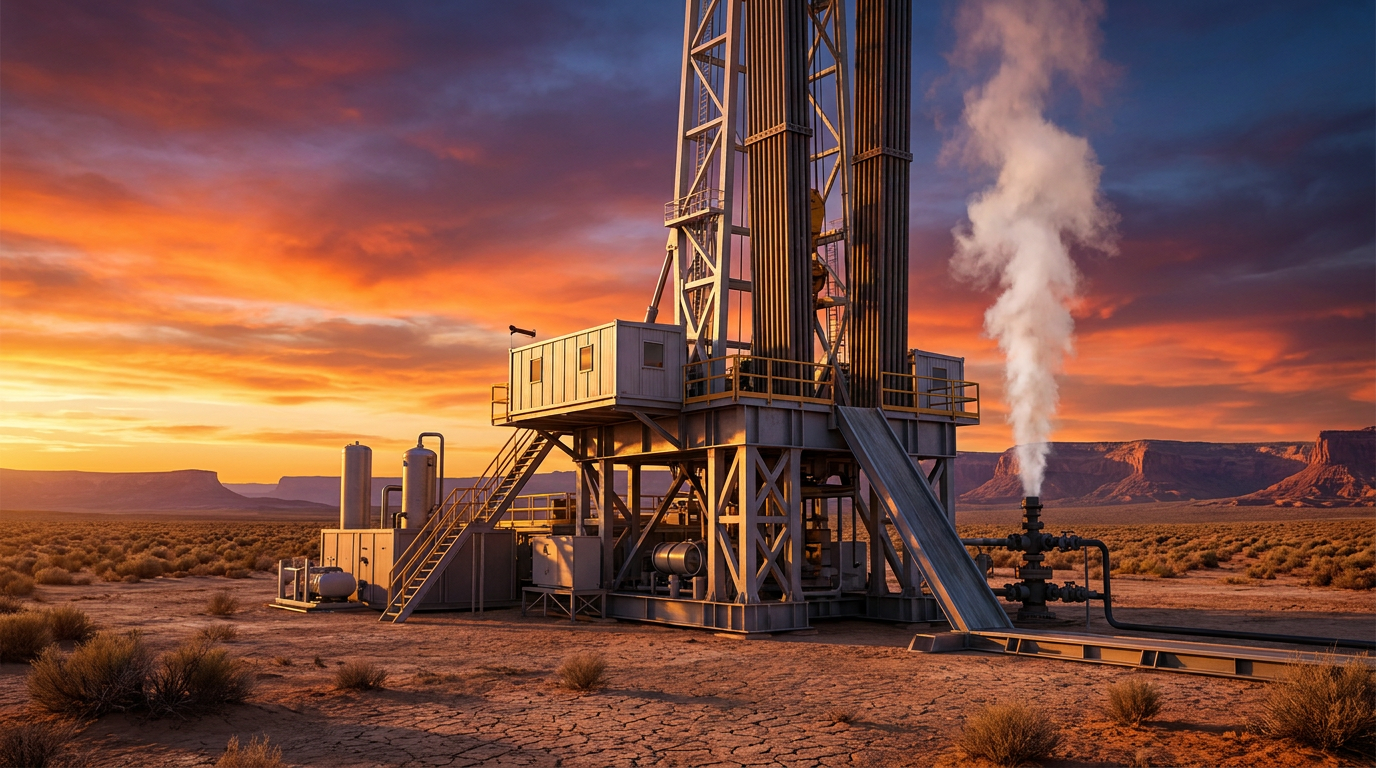
- Clean Energy Developers
- Focused on scaling geothermal rapidly to provide the 24/7 baseload power needed to decarbonize the grid.
- Oil & Gas Industry
- Views geothermal as a highly profitable pivot that utilizes their existing workforce, drilling technology, and subsurface expertise.
- Energy Policymakers
- Prioritizes energy security and grid stability, heavily subsidizing geothermal to reduce reliance on fossil fuels.
- Neutral Analysts
- Provides objective synthesis of the technological progress and economic viability of next-generation geothermal.
What's not represented
- · Local communities near drilling sites concerned about construction noise and water usage
- · Traditional nuclear energy advocates who view geothermal as an unproven competitor for baseload funding
Why this matters
As artificial intelligence and electrification drive a massive surge in electricity demand, wind and solar alone cannot provide round-the-clock power. Next-generation geothermal offers a viable, carbon-free alternative to fossil fuels that can be deployed almost anywhere on the planet.
Key points
- Next-generation geothermal taps into hot, dry rock deep underground, removing the need for natural hot springs.
- Enhanced Geothermal Systems (EGS) use horizontal drilling and hydro-shearing to create artificial reservoirs.
- Advanced Geothermal Systems (AGS) use closed-loop pipes to absorb heat without fracturing rock.
- Fervo Energy's Project Red proved EGS viability with over 600 days of stable, continuous operation.
- The Department of Energy projects U.S. geothermal capacity could grow from 4 GW to 90 GW by 2050.
- Drilling costs have plummeted as the industry adapts technology and expertise from the oil and gas sector.
The global transition to clean energy has long faced a fundamental physics problem: the sun sets and the wind stops blowing. While solar and wind power have become remarkably cheap, their intermittency requires massive battery storage or backup fossil fuel plants to keep the grid stable. As artificial intelligence data centers and widespread electrification drive a historic surge in electricity demand, the search for "baseload" power—energy that runs 24/7 without carbon emissions—has become the holy grail of the energy sector.[1][7]
For decades, the answer to baseload power was either nuclear energy or natural gas. Geothermal energy, which harnesses the immense heat radiating from the Earth's core, was largely treated as a geographic novelty. Traditional geothermal plants only work in rare locations where three elements naturally occur near the surface: extreme heat, underground water, and highly permeable rock. If you didn't live near a volcanic fault line in places like Iceland or California, geothermal was simply out of reach.[1][5]
That geographic lottery is officially ending. A suite of technological breakthroughs, collectively known as "next-generation geothermal," is unlocking the ability to harvest the heat beneath our feet virtually anywhere on Earth. By engineering artificial reservoirs deep underground, energy companies are transforming hot, dry rock into a limitless source of clean electricity.[1][7]
The most prominent of these breakthroughs is the Enhanced Geothermal System (EGS). Instead of hunting for natural underground aquifers, EGS developers create their own. The process begins by drilling three to ten kilometers straight down into the Earth's crust, reaching crystalline basement rock where temperatures exceed 150°C (300°F).[1][5]
Once the vertical depth is reached, the drill turns horizontally, carving a path through the hot rock. This is where the geothermal industry has explicitly borrowed from the shale oil and gas boom. Using advanced directional drilling techniques, engineers can navigate complex geological formations with pinpoint accuracy.[2][5]
To create the necessary permeability, operators pump high-pressure water into the horizontal well. This process, known as "hydro-shearing," forces open existing, microscopic fractures in the rock. Unlike traditional oilfield fracking, which aggressively shatters rock to extract hydrocarbons, hydro-shearing gently stimulates the natural fault lines, creating a vast, highly permeable artificial reservoir.[1][5]

The power generation cycle is elegantly simple. Cold water is pumped down an injection well and forced through the newly created fracture network. As the water travels through the hot rock, it acts like fluid in a giant underground radiator, absorbing massive amounts of thermal energy. The superheated water is then pushed up a separate production well to the surface, where its heat is transferred to a working fluid that spins a turbine to generate electricity. The cooled water is then injected back down, creating a closed, continuous loop.[5][7]
The evidence that EGS works at a commercial scale has shifted from theoretical models to real-world data. Fervo Energy, the leading developer in the EGS space, recently published the results from "Project Red" in Nevada. The facility completed over 600 days of continuous, stable operation, proving that the artificial fracture networks do not suffer from rapid thermal decline and can reliably deliver baseload power.[2][4]
The evidence that EGS works at a commercial scale has shifted from theoretical models to real-world data.
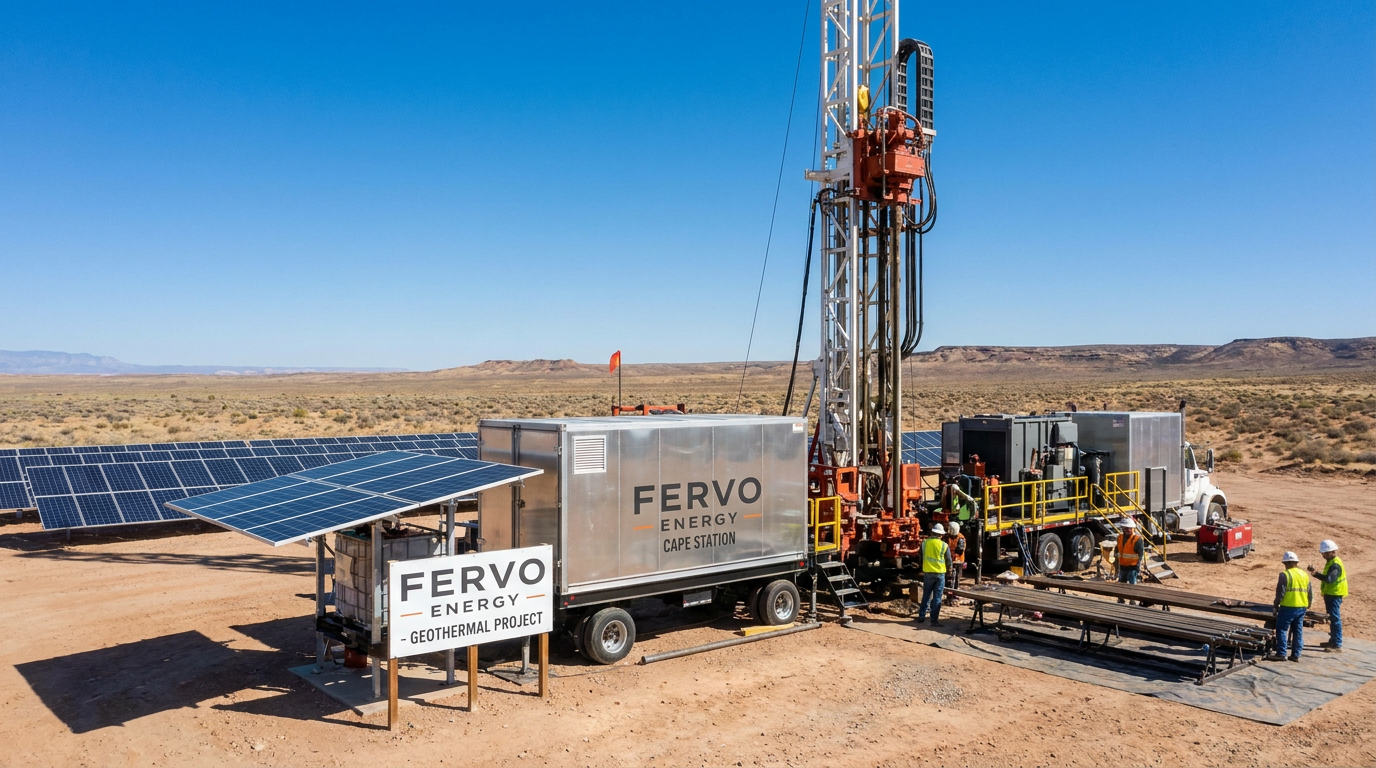
Armed with that operational data, the industry is now scaling up rapidly. In Beaver County, Utah, Fervo is constructing Cape Station, a massive 500-megawatt EGS facility. Phase one of the project is slated to connect to the commercial grid in late 2026. The project has already secured long-term power purchase agreements from major technology companies desperate to power their data centers with firm, carbon-free electricity.[2][6]
But EGS is not the only next-generation approach. A parallel technology known as Advanced Geothermal Systems (AGS) takes a different route, completely eliminating the need for hydro-shearing. Championed by companies like Eavor, AGS relies on a purely closed-loop architecture.[3][5]
Instead of fracturing the rock and letting water flow through it, AGS involves drilling a massive underground network of sealed, interconnected pipes. A proprietary working fluid circulates continuously within this closed loop, absorbing heat from the surrounding rock purely through conduction. Because no fluid is exchanged with the rock itself, AGS carries virtually zero risk of induced seismicity and requires no continuous water supply.[3][7]

In December 2025, Eavor achieved a major milestone by successfully delivering electricity to the commercial grid from its Geretsried facility in Bavaria, Germany. The project involved boring sealed pipes nearly 4.5 kilometers into the earth and connecting over 300 kilometers of boreholes underground, proving the closed-loop concept at scale.[3]
The economic tailwinds behind these technologies are massive. A landmark "Liftoff" report by the U.S. Department of Energy projects that next-generation geothermal could expand U.S. capacity twentyfold, reaching 90 gigawatts by 2050. This would represent a foundational shift in the national energy mix, providing enough firm power to stabilize a grid dominated by wind and solar.[1][7]

This rapid acceleration is largely due to an unprecedented technology transfer. The International Energy Agency estimates that up to 75% of the skills and equipment used in next-generation geothermal overlap directly with the oil and gas industry. Geothermal developers are actively hiring former fossil fuel engineers and partnering with oilfield service giants like Halliburton to optimize well construction and cement chemistry.[5][6]
As a result, the historical barrier to geothermal—exorbitant drilling costs—is plummeting. Fervo reported cutting its drilling times by 70% and reducing costs by nearly half in just a two-year span. By utilizing advanced drill bits and high-temperature telemetry developed for deep-water oil rigs, geothermal developers are turning a bespoke, high-risk construction process into a repeatable manufacturing operation.[2][5]

Despite the immense optimism, the industry still faces hurdles. EGS requires significant water resources for the initial reservoir stimulation. In the arid American West, where much of the most accessible hot rock is located, securing water rights and managing consumption remains a logistical and political challenge.[4][7]
Additionally, induced seismicity—small earthquakes triggered by fluid injection—requires rigorous monitoring and community transparency. While modern hydro-shearing is far gentler than traditional fracking, and AGS eliminates the risk entirely, public perception and strict regulatory permitting timelines continue to dictate the pace of deployment.[4][5]
Ultimately, next-generation geothermal represents a rare and poetic convergence in the climate fight. It is taking the exact tools, workforce, and capital that built the fossil fuel era and pivoting them to construct a carbon-free future. By unlocking the heat beneath our feet, the energy sector may have finally found the missing puzzle piece for a fully decarbonized grid.[1][7]
How we got here
March 2023
The Department of Energy launches its 'Liftoff' series, highlighting the massive potential of next-generation geothermal.
Late 2023
Fervo Energy brings Project Red online in Nevada, establishing the world's first commercial horizontal EGS system.
December 2025
Eavor successfully delivers electricity to the commercial grid from its closed-loop AGS facility in Bavaria.
April 2026
Fervo releases data showing over 600 days of stable, decline-free operation at Project Red.
Late 2026
Phase I of Fervo's 500 MW Cape Station in Utah is scheduled to begin delivering power to the grid.
Viewpoints in depth
Geothermal Developers & Tech Companies
Advocates for rapid scaling to meet the 24/7 power demands of artificial intelligence.
For clean energy developers and major technology firms, next-generation geothermal is the ultimate solution to the grid's intermittency problem. As AI data centers demand massive, uninterrupted power streams, wind and solar paired with batteries remain too expensive and space-intensive to scale infinitely. This camp argues that EGS and AGS are the only carbon-free technologies capable of providing reliable baseload power anywhere in the world, justifying aggressive upfront capital investments and streamlined permitting to accelerate deployment.
The Oil & Gas Workforce
Views geothermal as a seamless transition for fossil fuel expertise and equipment.
Industry veterans and oilfield service companies view next-generation geothermal as a lifeline and a natural evolution. Because the core mechanics—deep directional drilling, high-temperature cement, and hydraulic stimulation—are nearly identical to shale extraction, this camp sees geothermal as a way to repurpose billions of dollars of existing equipment and retain hundreds of thousands of specialized jobs. They argue that the fossil fuel industry's century of subsurface engineering experience is the exact catalyst needed to make geothermal economically viable.
Environmental Conservationists
Supportive of the clean energy potential but cautious about water usage and seismic risks.
While broadly supportive of decarbonizing the grid, environmental watchdogs urge caution regarding the localized impacts of Enhanced Geothermal Systems. Their primary concern is the millions of gallons of water required to stimulate the initial fracture networks, particularly in drought-prone regions like the American West. Additionally, they advocate for strict, transparent monitoring of induced seismicity, ensuring that the high-pressure fluid injection does not trigger damaging earthquakes near populated areas.
What we don't know
- How quickly regulatory bodies will update permitting processes to accommodate the rapid deployment of EGS facilities.
- Whether the water requirements for EGS stimulation will limit development in severely drought-stricken regions.
- How the long-term maintenance costs of deep, high-temperature artificial reservoirs will compare to traditional energy plants over a 30-year lifespan.
Key terms
- Enhanced Geothermal System (EGS)
- A human-made underground reservoir created by injecting fluid into hot, dry rock to open fractures, allowing water to circulate and absorb heat.
- Advanced Geothermal System (AGS)
- A closed-loop system where fluid circulates through a sealed network of underground pipes to absorb heat without interacting directly with the rock.
- Baseload Power
- The minimum amount of electric power needed to be supplied to the electrical grid at any given time, requiring energy sources that can run 24/7.
- Hydro-shearing
- The process of pumping high-pressure water underground to gently force open existing microscopic fractures in rock, increasing its permeability.
- Permeability
- The ability of a material, such as rock, to allow fluids to pass through its pores and fractures.
Frequently asked
How is next-generation geothermal different from traditional geothermal?
Traditional geothermal requires naturally occurring underground hot water and permeable rock. Next-generation geothermal creates its own artificial reservoirs in hot, dry rock using advanced drilling techniques.
Does Enhanced Geothermal use fracking?
It uses a similar technique called hydro-shearing. However, instead of aggressively shattering rock to extract oil or gas, it gently opens existing fractures to let water circulate and absorb heat.
Can these geothermal plants be built anywhere?
Theoretically, yes, because the Earth's crust is hot everywhere if you drill deep enough. However, current projects target areas where the hot rock is relatively close to the surface to keep drilling costs down.
Why are tech companies investing in geothermal?
Tech companies need massive amounts of reliable, 24/7 electricity to power artificial intelligence data centers, and geothermal provides this without the carbon emissions of fossil fuels.
Sources
Source coverage
7 outlets
4 viewpoints surfaced







[1]Department of EnergyEnergy Policymakers
Pathways to Commercial Liftoff: Next-Generation Geothermal Power
Read on Department of Energy →[2]Fervo EnergyClean Energy Developers
Cape Station: A landmark next generation geothermal development
Read on Fervo Energy →[3]Corporate KnightsClean Energy Developers
A breakthrough geothermal project in Bavaria
Read on Corporate Knights →[4]ThinkGeoEnergyClean Energy Developers
Geothermal in 2025: Progress, Pressure, and Perspective
Read on ThinkGeoEnergy →[5]Information Technology and Innovation FoundationEnergy Policymakers
Advanced Geothermal Energy Is Widely Available, Clean, and Maybe Cheap Enough to Make a Big Impact
Read on Information Technology and Innovation Foundation →[6]HalliburtonOil & Gas Industry
Scientific approach to well design powers Fervo Energy's Cape Station
Read on Halliburton →[7]Factlen Editorial TeamNeutral Analysts
Synthesis by Factlen editorial team
Read on Factlen Editorial Team →
More in guides
See all 39 stories →E-Ink Productivity
Top E-Ink Tablets of 2026: Comparing reMarkable, Boox, and Kindle Scribe
6 sources

Home Electrification
The 2026 Guide to Home Heat Pumps: Air-Source vs. Ground-Source vs. Dual-Fuel
6 sources
Digital Security
How to Transition to Passkeys and Eliminate Passwords
7 sources

Next-Gen Geothermal
How Enhanced Geothermal Systems Are Unlocking 24/7 Clean Power
9 sources
Every angle. Every day.
Get guides stories with full source coverage and perspective breakdowns delivered to your inbox.