
The 2026 Guide to Home Heat Pumps: Air-Source vs. Ground-Source vs. Dual-Fuel
As home electrification accelerates, choosing the right heat pump architecture is critical. We break down the trade-offs between air-source, ground-source, and dual-fuel systems to help you maximize efficiency and savings.
By Factlen Editorial Team
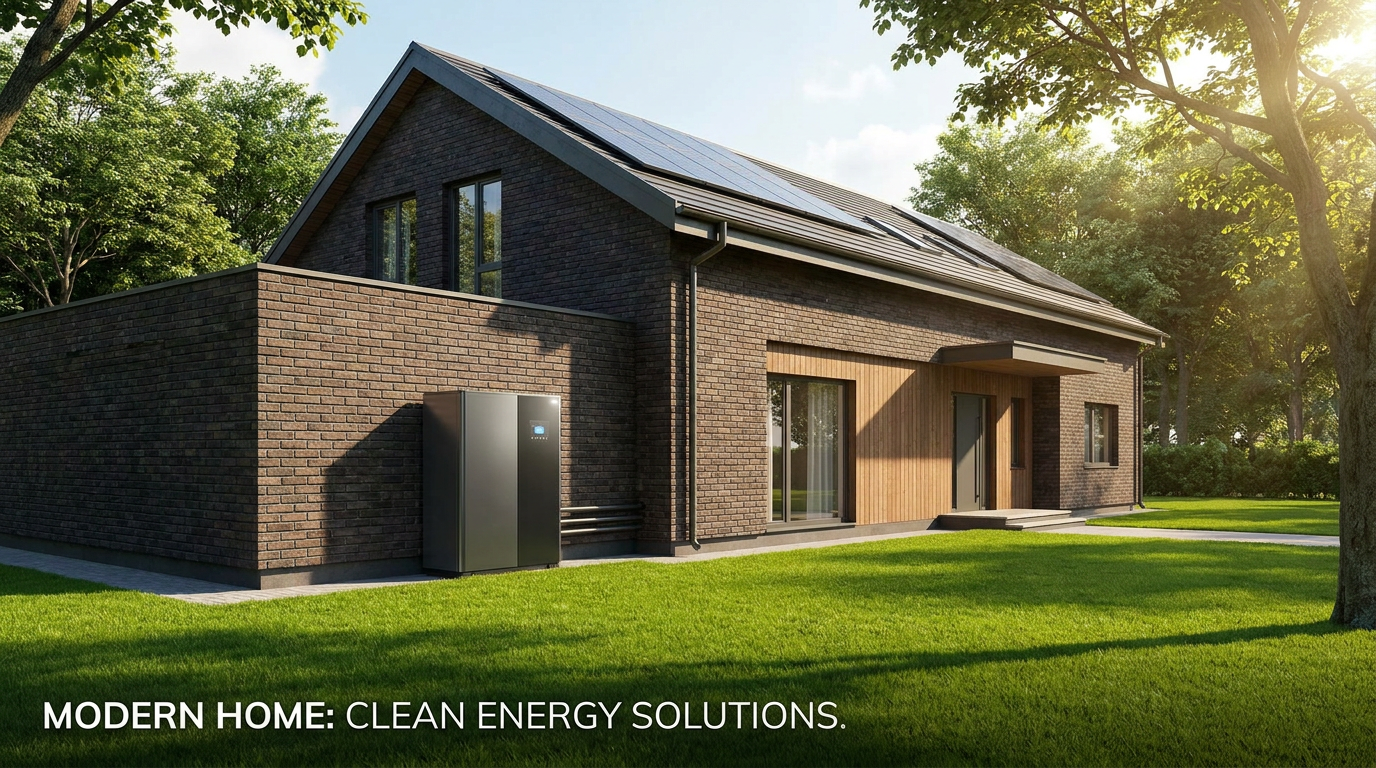
- Electrification Advocates
- Prioritizing the complete removal of fossil fuels from residential heating.
- Pragmatic Upgraders
- Balancing environmental goals with upfront costs and extreme-weather reliability.
- Energy Policymakers
- Managing the macroeconomic and grid-level impacts of mass electrification.
- Analytical Synthesizers
- Evaluating the trade-offs across all available heating architectures.
What's not represented
- · HVAC Installers
- · Natural Gas Utility Companies
Why this matters
Heating and cooling account for the majority of a home's energy use. Choosing the right heat pump architecture dictates not only your household's carbon footprint for the next two decades, but also your vulnerability to fluctuating utility rates and extreme winter weather.
Key points
- Heat pumps move heat rather than generate it, achieving efficiencies of 300% to 400%.
- Air-source systems offer the most accessible upfront cost and fit most suburban homes.
- Ground-source systems provide unparalleled efficiency but require massive upfront excavation costs.
- Dual-fuel systems pair a heat pump with a gas furnace, offering a compromise for extreme climates.
- Government incentives like the Inflation Reduction Act significantly lower the barrier to entry.
The transition toward residential electrification has positioned heat pumps as the premier upgrade for homeowners in 2026, replacing traditional gas furnaces and standalone air conditioners with a single, highly efficient appliance. Unlike conventional heating systems that burn fossil fuels to generate warmth, heat pumps operate by moving existing heat from one place to another. During the winter, they extract ambient thermal energy from the outdoors and compress it to warm the home; in the summer, the cycle reverses, pulling heat out of the house to provide cooling. This mechanism allows them to achieve efficiencies of three hundred to four hundred percent, meaning they deliver three to four units of heat for every one unit of electricity consumed. As energy costs fluctuate and government incentives lower the barrier to entry, the decision for most homeowners is no longer whether to adopt the technology, but which specific architecture to install. The market is currently dominated by three primary configurations: air-source, ground-source, and dual-fuel systems, each carrying distinct trade-offs regarding upfront costs, climate suitability, and long-term savings.[1][3]
Air-source heat pumps represent the most common and accessible entry point into the market, utilizing an outdoor compressor unit that resembles a traditional air conditioner. The argument for air-source systems centers on their relatively low upfront installation cost and their adaptability to almost any property, whether through existing ductwork or ductless mini-split configurations. Against this, critics point to their vulnerability to extreme weather; because they extract heat from the ambient air, their efficiency naturally declines as the outdoor temperature plummets. However, the evidence from the Department of Energy and independent testing organizations demonstrates that modern cold-climate models have largely mitigated this issue, successfully operating in temperatures as low as negative twenty-two degrees Fahrenheit. While they must work harder and consume more electricity during severe cold snaps, they still outperform the efficiency of traditional combustion furnaces.[1][2]
When evaluating the air-source configuration, the trade-off analysis reveals a clear profile of ideal use cases. This technology fits well when homeowners are looking for a cost-effective replacement for an aging central air conditioner, when the property lacks the vast outdoor space required for excavation, or when the local climate experiences moderate winters. It also serves as an excellent solution for older homes without existing ductwork, as ductless mini-split heads can be installed directly into individual rooms. Conversely, an air-source system does not fit well when a home is poorly insulated and located in a region that experiences prolonged, brutal subzero winters, as the system will run continuously at its lowest efficiency point, potentially driving up monthly electricity bills. For the vast majority of suburban and urban residences, however, the air-source model provides the most pragmatic balance of performance and price.[4][5]

Ground-source, or geothermal, heat pumps operate on the exact same thermodynamic principles but draw their thermal energy from a completely different reservoir. Instead of relying on fluctuating air temperatures, these systems utilize a network of fluid-filled pipes buried deep underground, where the earth maintains a constant temperature of roughly fifty degrees Fahrenheit year-round. The argument for ground-source systems is rooted in their unparalleled, unwavering efficiency; because the underground temperature never drops below freezing, the compressor never has to strain to extract heat, resulting in a coefficient of performance that consistently hovers around four or five. Against this immense operational advantage is the staggering upfront cost and logistical disruption of installation. Burying the necessary pipe loops requires heavy excavation equipment, large amounts of accessible land, and specialized contractors, often pushing the initial price tag beyond twenty-five thousand dollars.[1][3]
Ground-source, or geothermal, heat pumps operate on the exact same thermodynamic principles but draw their thermal energy from a completely different reservoir.
The evidence surrounding ground-source systems confirms that they offer the lowest possible operating costs and the longest equipment lifespan, as the underground loops can last for more than fifty years while the indoor components are protected from the harsh outdoor elements. This premium technology fits well when a homeowner is constructing a new build on a large plot of land, when the property owner intends to remain in the house for decades to recoup the initial investment, or when maximizing carbon reduction is the absolute highest priority. It does not fit well when a property is situated on a small urban lot, when the home is built on solid bedrock that prohibits drilling, or when the homeowner lacks the capital to absorb the massive upfront installation costs. For those who can clear the initial financial and geographical hurdles, geothermal remains the gold standard of residential climate control.[3][4]
For homeowners who remain hesitant about relying entirely on electricity during harsh winters, the dual-fuel, or hybrid, heat pump offers a transitional compromise. This setup pairs an electric air-source heat pump with a traditional natural gas or propane furnace. The argument for dual-fuel systems is based on optimized fuel switching; the system relies on the highly efficient electric heat pump during mild and moderately cold weather, but automatically switches to the combustion furnace when temperatures drop below a specific economic balance point. Against this approach, electrification advocates argue that it unnecessarily prolongs reliance on fossil fuels and requires the homeowner to maintain two entirely separate mechanical systems, doubling the potential points of failure. Furthermore, the homeowner must continue paying a monthly connection fee to the gas utility, even if the furnace only activates for a few weeks out of the year.[1][6]

The evidence regarding dual-fuel setups indicates that they can provide peace of mind and consistent warmth in the most extreme climates, particularly in older, drafty homes where a standalone air-source unit might struggle to maintain a comfortable indoor temperature. This hybrid approach fits well when a homeowner already has a relatively new, functioning gas furnace and simply wants to add a heat pump to handle the cooling and mild-weather heating duties, or when local electricity rates are exceptionally high compared to natural gas prices. It does not fit well when the goal is to completely decarbonize the household, when the home is highly insulated and capable of retaining heat efficiently, or when the existing gas furnace is at the end of its lifespan, as purchasing both a new furnace and a new heat pump simultaneously is rarely cost-effective.[5][6]
Financial incentives play a massive role in the trade-off calculus for all three configurations, fundamentally altering the return on investment. In the United States, the Inflation Reduction Act provides a federal tax credit of up to two thousand dollars for qualifying air-source and dual-fuel heat pumps, while ground-source systems are eligible for an uncapped thirty percent tax credit that significantly blunts their exorbitant installation costs. Similar programs exist globally, such as the Boiler Upgrade Scheme in the United Kingdom, which offers substantial grants to homeowners transitioning away from gas boilers. When these incentives are factored into the equation alongside the long-term energy savings, the total cost of ownership for heat pumps frequently undercuts that of traditional HVAC systems over a fifteen-year lifespan.[3][4]

Ultimately, the decision requires a holistic assessment of the property's thermal envelope, the local climate, and the household budget. Consumer Reports testing emphasizes that regardless of the chosen technology, the quality of the installation is just as critical as the hardware itself. A poorly sized unit or leaky ductwork will cripple the efficiency of even the most advanced geothermal system. Homeowners are advised to seek out contractors who perform rigorous heating load calculations rather than simply replacing old equipment with identically sized units. As the technology continues to mature and grid electricity becomes increasingly renewable, the shift toward heat pumps represents a permanent transformation in how homes are conditioned, offering a rare convergence of environmental responsibility and long-term financial benefit.[2][6]
How we got here
1970s
The energy crisis spurs initial interest in heat pump technology, though early models struggle in freezing temperatures.
2010s
Advancements in variable-speed compressors allow air-source heat pumps to operate efficiently in sub-freezing climates.
August 2022
The US passes the Inflation Reduction Act, introducing sweeping tax credits for residential heat pump installations.
2025
Federal tax credits for basic models expire, shifting focus to high-efficiency cold-climate and geothermal systems.
Viewpoints in depth
Electrification Advocates' view
Prioritizing the complete removal of fossil fuels from residential heating.
This camp argues that the climate crisis necessitates an immediate and total transition away from combustion heating. They champion pure air-source and ground-source heat pumps, pointing to data showing that even when powered by a fossil-heavy electrical grid, heat pumps emit significantly less carbon than high-efficiency gas furnaces. They view dual-fuel systems as a problematic half-measure that locks homeowners into decades of continued gas infrastructure reliance.
Pragmatic Upgraders' view
Balancing environmental goals with upfront costs and extreme-weather reliability.
For this group, the transition to heat pumps must make strict financial sense and guarantee comfort during brutal winter storms. They often favor dual-fuel systems for older, poorly insulated homes where retrofitting the thermal envelope would be prohibitively expensive. They rely heavily on independent testing and real-world owner satisfaction surveys, emphasizing that a heat pump is only a successful upgrade if it lowers monthly utility bills without requiring residents to wear winter coats indoors.
Energy Policymakers' view
Managing the macroeconomic and grid-level impacts of mass electrification.
Government agencies and grid operators view heat pumps as a critical lever for national energy security and emissions reductions. Their primary concern is managing the increased electrical load during winter peaks. By heavily subsidizing highly efficient ground-source systems and cold-climate air-source models through tax credits, they aim to flatten the demand curve, ensuring that the mass adoption of electric heating does not overwhelm regional power grids during severe cold snaps.
What we don't know
- How future electricity rate hikes might alter the long-term savings calculus compared to natural gas.
- Whether the high upfront costs of ground-source systems will ever decrease significantly through new drilling technologies.
Key terms
- Coefficient of Performance (COP)
- A metric of efficiency that measures how much heat a system produces for every unit of electricity it consumes.
- Air-Source Heat Pump (ASHP)
- A system that extracts heat from the outside air and transfers it inside a home for heating, or reverses the process for cooling.
- Ground-Source Heat Pump (GSHP)
- Also known as geothermal, this system extracts heat from the stable temperatures found underground via buried pipes.
- Dual-Fuel System
- A hybrid heating setup that pairs an electric air-source heat pump with a traditional gas or propane furnace that takes over in extreme cold.
Frequently asked
Do heat pumps work in freezing weather?
Yes. Modern cold-climate air-source heat pumps can operate efficiently in temperatures as low as negative 22 degrees Fahrenheit, though their efficiency drops compared to milder weather.
Are heat pumps noisy?
Most modern units are very quiet. Consumer Reports testing found that top models produce minimal noise from their fans and compressors, often quieter than traditional air conditioners.
What is a mini-split system?
A mini-split is a type of ductless air-source heat pump. It uses an outdoor compressor connected to one or more indoor wall units, making it ideal for homes without existing ductwork.
How much does a ground-source heat pump cost?
Ground-source systems are the most expensive upfront, often ranging from $20,000 to $30,000 due to the excavation required to bury the underground pipe loops.
Sources
Source coverage
6 outlets
4 viewpoints surfaced






[1]U.S. Department of EnergyEnergy Policymakers
Heat Pump Systems and Technology Types
Read on U.S. Department of Energy →[2]Consumer ReportsPragmatic Upgraders
Heat Pump Buying Guide: Testing and Reliability
Read on Consumer Reports →[3]Environmental Protection AgencyEnergy Policymakers
Types of Heat Pumps and Efficiency
Read on Environmental Protection Agency →[4]Energy Saving TrustElectrification Advocates
Air source vs ground source heat pumps
Read on Energy Saving Trust →[5]Northeast Energy Efficiency PartnershipsElectrification Advocates
Air-Source Heat Pump Buying Guide
Read on Northeast Energy Efficiency Partnerships →[6]Factlen Editorial TeamAnalytical Synthesizers
Synthesis by Factlen editorial team
Read on Factlen Editorial Team →

More in guides
See all 41 stories →Fitness Science
The Science of Zone 2 Cardio: Why Slowing Down is the Key to Longevity
9 sources

Next-Gen Geothermal
How Next-Generation Geothermal Energy is Unlocking 24/7 Clean Power
8 sources
E-Ink Productivity
Top E-Ink Tablets of 2026: Comparing reMarkable, Boox, and Kindle Scribe
6 sources

Digital Security
How to Transition to Passkeys and Eliminate Passwords
7 sources

Every angle. Every day.
Get guides stories with full source coverage and perspective breakdowns delivered to your inbox.