
How Enhanced Geothermal Systems Are Unlocking 24/7 Clean Power
By borrowing drilling techniques from the oil and gas industry, next-generation geothermal energy is moving from experimental pilots to commercial-scale deployment. With costs falling rapidly, enhanced geothermal systems (EGS) offer a firm, carbon-free baseload to complement wind and solar.
By Factlen Editorial Team
- Energy Policymakers & Researchers
- Focus on the strategic value of baseload reliability and grid security, emphasizing the need for continued R&D and regulatory support to scale the technology.
- Geothermal Developers
- Argue that horizontal drilling and hydraulic stimulation have fundamentally solved the geographic constraints of geothermal energy, pointing to steep cost-curves as proof of commercial readiness.
- Corporate Offtakers
- View EGS as the missing puzzle piece for the clean energy transition, providing the 24/7 firm power necessary to run AI data centers around the clock.
- Environmental Monitors
- Support the decarbonization potential of EGS but emphasize the need for strict oversight regarding induced seismicity and local water usage.
What's not represented
- · Local communities living near EGS drilling sites
- · Traditional fossil fuel workers transitioning to geothermal jobs
Why this matters
As artificial intelligence and electrification drive a massive surge in electricity demand, the grid desperately needs clean power that runs 24/7. Enhanced geothermal systems provide a carbon-free baseload alternative to fossil fuels, potentially solving the biggest vulnerability of wind and solar energy.
Key points
- Enhanced Geothermal Systems (EGS) are moving from pilot testing to commercial-scale deployment in 2026.
- The technology uses horizontal drilling and hydraulic fracturing to create artificial reservoirs in hot, dry rock.
- Drilling costs have plummeted by nearly 50%, making EGS increasingly cost-competitive with fossil fuels.
- Tech companies like Google and Meta are signing major power purchase agreements to secure 24/7 geothermal energy for data centers.
- The International Energy Agency projects next-generation geothermal could meet up to 15% of global electricity demand growth by 2050.
The energy transition has a baseload problem. While solar and wind power have become remarkably cheap, their inherent intermittency requires expensive battery storage or natural gas backups to keep the grid stable. Nuclear energy provides firm, carbon-free power, but new plants take decades to build. Geothermal energy has long been the theoretical holy grail—the Earth's subterranean heat is inexhaustible and available everywhere—but historically, it could only be tapped in rare volcanic hotspots like Iceland or California's Geysers.[3]
That geographic limitation is now breaking. In 2026, Enhanced Geothermal Systems (EGS) are crossing the threshold from experimental research to commercial-scale deployment. By adapting technologies from the oil and gas industry, engineers are unlocking the ability to generate firm, clean power almost anywhere.[5][9]
The momentum is accelerating rapidly. The U.S. Department of Energy's 2025 Geothermal Market Report, released earlier this year, confirmed that next-generation geothermal has attracted over $1.5 billion in private capital since 2021. Utilities and corporate buyers are increasingly viewing the technology as a highly bankable infrastructure asset.[1]
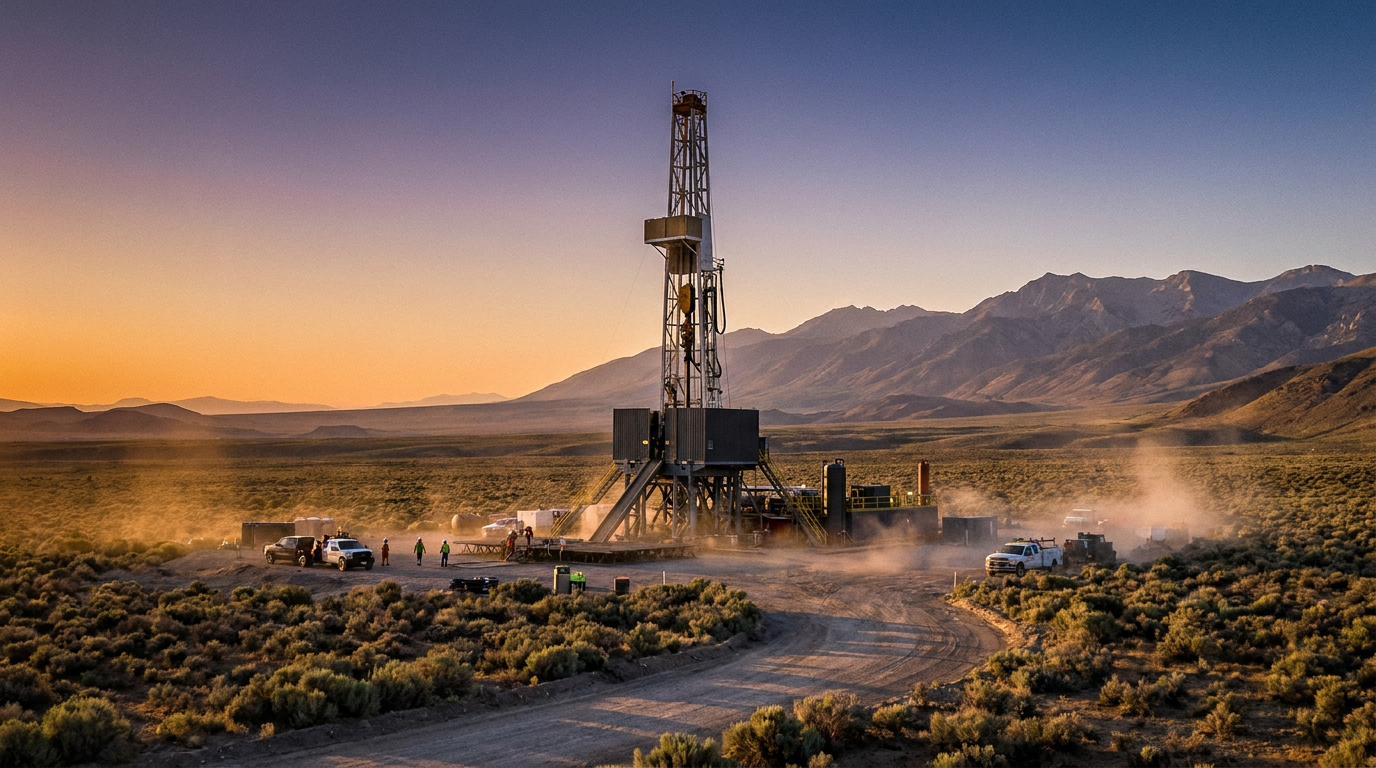
The mechanism behind EGS is a direct technology transfer from the shale boom. Traditional geothermal requires three naturally occurring elements: hot rock, fluid, and permeability—fractures that allow fluid to flow. In most of the world, the rock is hot, but it is dry and solid. EGS artificially creates the missing permeability.[3]
Engineers drill thousands of feet down into hot, dry, crystalline rock. Once they reach the target depth, they drill horizontally and use hydraulic stimulation—a technique similar to fracking—to create a vast network of micro-fractures in the rock formation.[7]

Water is then injected into these fractures, where it acts as a sponge, absorbing the intense subterranean heat. The superheated fluid is pumped back to the surface through a separate production well to drive a turbine and generate electricity, before being cooled and reinjected in a continuous closed loop.[3]
The commercial viability of this process was definitively proven by Fervo Energy's Project Red pilot in Nevada. In April 2026, the company released data from 600 days of continuous operation, demonstrating stable, predictable power generation with zero initial thermal decline, validating the long-term sustainability of engineered reservoirs.[2]
More importantly, the economics of EGS are improving at a staggering rate. By applying iterative learning to their drilling operations, Fervo reduced drilling times by 70% and cut the cost per well from $9.4 million to $4.8 million in just a few years.[7]

More importantly, the economics of EGS are improving at a staggering rate.
This rapid cost compression is making EGS increasingly competitive with fossil fuels. A February 2026 report by the energy think tank Ember calculated that the levelized cost of electricity (LCOE) for modern geothermal in Europe is now around €60 to €100 per megawatt-hour, effectively undercutting natural gas generation.[4]
The demand for this firm, clean power is surging, driven largely by the artificial intelligence boom. Tech giants operating massive data centers require massive amounts of 24/7 electricity that intermittent renewables simply cannot guarantee without prohibitive storage costs.[8]
Google recently partnered with NV Energy to structure a first-of-its-kind "Clean Transition Tariff," purchasing 115 megawatts of Fervo's geothermal output to power its Nevada data centers. Under the agreement, Google pays the premium to help scale the technology.[7]
Meta followed suit, signing an agreement with developer SAGE to secure up to 150 megawatts of geothermal power east of the Rocky Mountains, marking a significant geographic expansion for the industry.[8]
These corporate commitments are translating into massive pipeline growth. As of mid-2025, utilities had signed power purchase agreements for over 1,000 megawatts of next-generation geothermal capacity across the United States, a massive leap from previous years.[1]

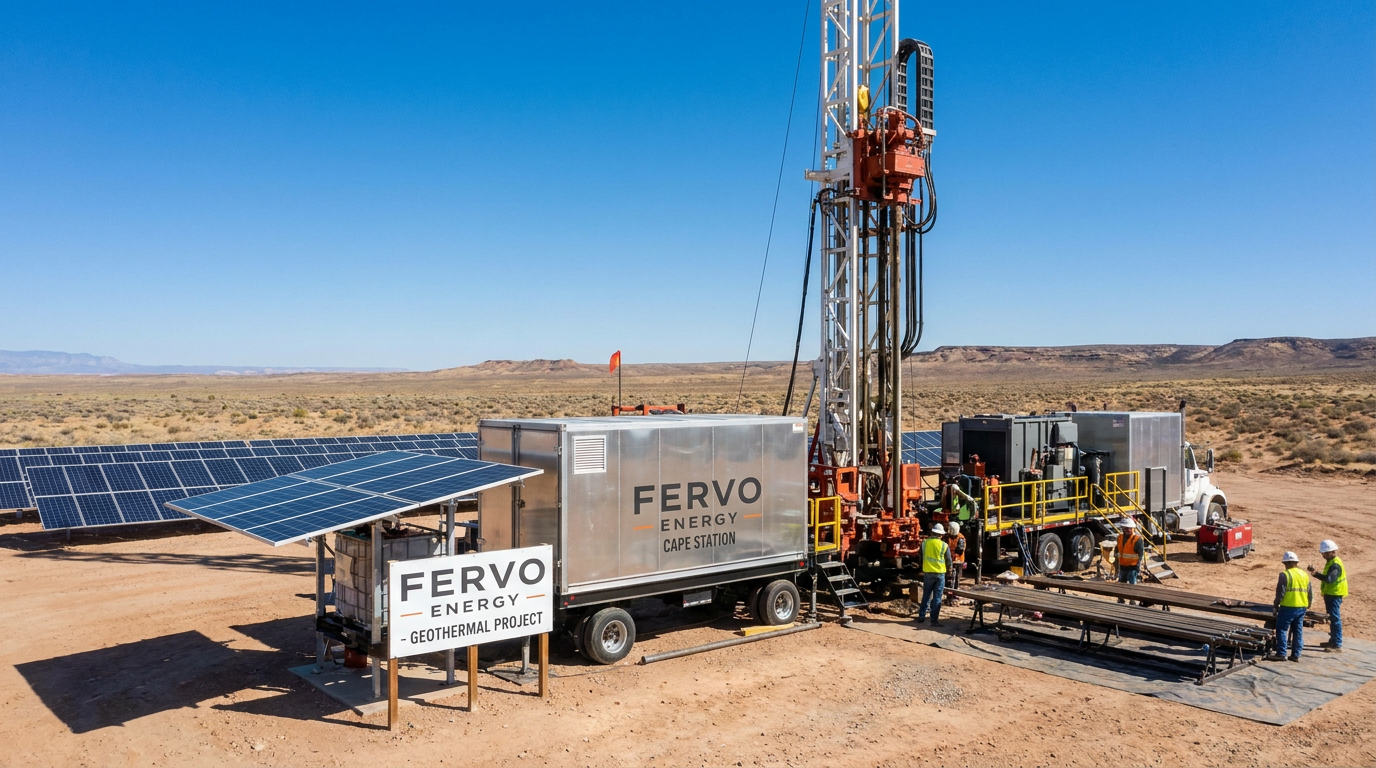
The physical footprint of this expansion is becoming highly visible. Fervo's Cape Station in Utah is currently under construction and is scheduled to bring its first large-scale commercial EGS generators online in June 2026, with plans to expand to roughly 400 megawatts by the end of the decade.[8]
Scaling the technology does come with engineering and environmental challenges. Hydraulic stimulation inherently induces microseismicity—tiny earthquakes as the rock fractures—which must be carefully managed to avoid surface disruptions.[6]
To monitor this risk, researchers from Lawrence Berkeley National Laboratory recently deployed custom high-temperature seismometers nearly 7,000 feet underground at Cape Station. The sensors successfully monitored the reservoir at 338°F for months, providing critical data to ensure fractures form safely.[6]

Water usage is another localized concern, particularly in the arid American West where early projects are concentrated. Developers are mitigating this by sourcing brackish, non-potable water for reservoir pressure maintenance, ensuring they do not compete with municipal drinking supplies or agricultural needs.[2]
If these environmental challenges are managed and permitting bottlenecks are cleared, the global potential is vast. The International Energy Agency projects that next-generation geothermal could meet up to 15% of the growth in global electricity demand by 2050.[4]
By tapping the inexhaustible heat beneath our feet, the grid of the future may finally achieve the holy grail of the energy transition: a power source that is clean, cheap, and always on.[9]
How we got here
1960
The Geysers geothermal field in California begins generating electricity at scale, utilizing rare natural hydrothermal resources.
2021
The U.S. Department of Energy launches major funding initiatives for next-generation geothermal, spurring private investment.
2023
Fervo Energy successfully completes a 30-day well test at Project Red in Nevada, proving the commercial viability of EGS.
May 2025
The Nevada Public Utilities Commission approves a first-of-its-kind Clean Transition Tariff for Google to purchase EGS power.
April 2026
Fervo releases data from 600 days of continuous operation, validating long-term reservoir stability and zero thermal decline.
June 2026
The first large-scale commercial EGS generators at Cape Station in Utah are scheduled to come online.
Viewpoints in depth
Geothermal Developers
Argue that the technology is ready to scale immediately without waiting for massive scientific breakthroughs.
Industry leaders point out that by borrowing horizontal drilling and hydraulic stimulation techniques directly from the shale boom, they have fundamentally solved the geographic constraints of geothermal energy. They highlight steep cost-curves and real-world production data—such as the 600 days of stable output at Project Red—as definitive proof that EGS is no longer an experimental science project, but a commercially viable infrastructure asset ready for massive deployment.
Grid Operators & Corporate Offtakers
View EGS as the missing puzzle piece for the clean energy transition.
While wind and solar are incredibly cheap, grid operators note that they require expensive battery storage to manage intermittency. Tech companies building AI data centers specifically value EGS because it provides the 24/7 "firm" power necessary to run servers around the clock. For these buyers, paying a slight premium for geothermal energy today is a strategic investment to guarantee grid stability and meet zero-carbon mandates tomorrow.
Environmental & Community Monitors
Strongly support the decarbonization potential of EGS, but emphasize the need for strict local oversight.
Environmental watchdogs acknowledge that geothermal energy is vastly superior to fossil fuels in terms of greenhouse gas emissions. However, they argue that hydraulic stimulation must be carefully monitored to prevent induced seismicity (earthquakes) that could affect local communities. Furthermore, they stress that developers must use non-potable or recycled water to avoid straining local aquifers, particularly since many early EGS projects are located in the drought-prone American West.
What we don't know
- How frequently induced microseismicity might disrupt operations or face regulatory pushback in densely populated areas.
- Whether the rapid cost declines seen in the American West can be replicated in regions with harder rock formations.
- How quickly federal and state permitting processes can be streamlined to match the pace of technological development.
Key terms
- Enhanced Geothermal Systems (EGS)
- A next-generation technology that generates electricity by pumping fluid into artificially created fractures in deep, hot rock.
- Baseload Power
- The minimum amount of electric power needed to be supplied to the electrical grid at any given time, requiring energy sources that can run 24/7.
- Hydraulic Stimulation
- The process of injecting high-pressure fluid into underground rock formations to create or widen fractures, increasing permeability.
- Levelized Cost of Electricity (LCOE)
- A metric that measures the lifetime costs of building and operating a power plant divided by its total energy output, used to compare different energy sources.
- Power Purchase Agreement (PPA)
- A long-term contract between an electricity generator and a buyer (like a utility or tech company) to purchase power at a set price.
Frequently asked
What is the difference between traditional geothermal and EGS?
Traditional geothermal relies on naturally occurring underground reservoirs of hot water and permeable rock. EGS artificially creates permeability in hot, dry rock by injecting fluid to open micro-fractures.
Does EGS use fracking?
Yes, EGS uses hydraulic stimulation techniques adapted from the oil and gas industry to create fractures in the rock. However, it typically uses water without the heavy chemical additives associated with fossil fuel fracking.
Can EGS be built anywhere?
In theory, yes, if you drill deep enough. However, early commercial projects are targeting regions where hot rock is relatively close to the surface, such as the western United States, to keep drilling costs manageable.
How much power can EGS generate?
The International Energy Agency estimates that next-generation geothermal could meet up to 15% of the growth in global electricity demand by 2050, providing hundreds of gigawatts of capacity.
Sources
Source coverage
9 outlets
4 viewpoints surfaced









[1]Department of EnergyEnergy Policymakers & Researchers
2025 U.S. Geothermal Market Report
Read on Department of Energy →[2]Fervo EnergyGeothermal Developers
Project Red: 600 Days of Continuous Operation
Read on Fervo Energy →[3]MIT Energy InitiativeEnergy Policymakers & Researchers
Next-generation geothermal energy: Promise, progress, and challenges
Read on MIT Energy Initiative →[4]EmberEnvironmental Monitors
Geothermal electricity already cost-competitive with fossil fuels in Europe
Read on Ember →[5]PatSnap InsightsGeothermal Developers
Enhanced Geothermal Systems Reaches Its Commercial Inflection Point
Read on PatSnap Insights →[6]Lawrence Berkeley National LaboratoryEnergy Policymakers & Researchers
Custom sensor monitors seismicity for months straight more than a mile below ground
Read on Lawrence Berkeley National Laboratory →[7]Information Technology and Innovation FoundationEnergy Policymakers & Researchers
Enhanced Geothermal Systems in Action: Fervo Case Study
Read on Information Technology and Innovation Foundation →[8]U.S. Energy Information AdministrationEnergy Policymakers & Researchers
Enhanced geothermal systems could expand geothermal power generation
Read on U.S. Energy Information Administration →[9]Factlen Editorial TeamCorporate Offtakers
Synthesis by Factlen editorial team
Read on Factlen Editorial Team →
More in guides
See all 39 stories →E-Ink Productivity
Top E-Ink Tablets of 2026: Comparing reMarkable, Boox, and Kindle Scribe
6 sources

Home Electrification
The 2026 Guide to Home Heat Pumps: Air-Source vs. Ground-Source vs. Dual-Fuel
6 sources
Digital Security
How to Transition to Passkeys and Eliminate Passwords
7 sources

Clean Energy
How Next-Generation Geothermal Energy is Unlocking 24/7 Clean Power
7 sources
Every angle. Every day.
Get guides stories with full source coverage and perspective breakdowns delivered to your inbox.