
How Millions of Parked EVs Are Becoming the Grid's Ultimate Backup Battery
Bidirectional charging has crossed from pilot programs to mainstream adoption in 2026. By networking electric vehicles into 'virtual power plants,' utilities are paying owners to stabilize the grid and prevent blackouts.
By Factlen Editorial Team
- Grid Operators & Utilities
- View EVs as vital, low-cost distributed storage to prevent blackouts and avoid building expensive peaker plants.
- EV Owners & Consumers
- Value the technology for home backup power during outages and the potential to earn passive income, though some remain cautious about hardware costs.
- Automakers & Hardware Providers
- See bidirectional charging as a major selling point that differentiates EVs from combustion vehicles and creates new recurring software revenue.
What's not represented
- · Renters without dedicated driveways
- · Rural utility cooperatives
Why this matters
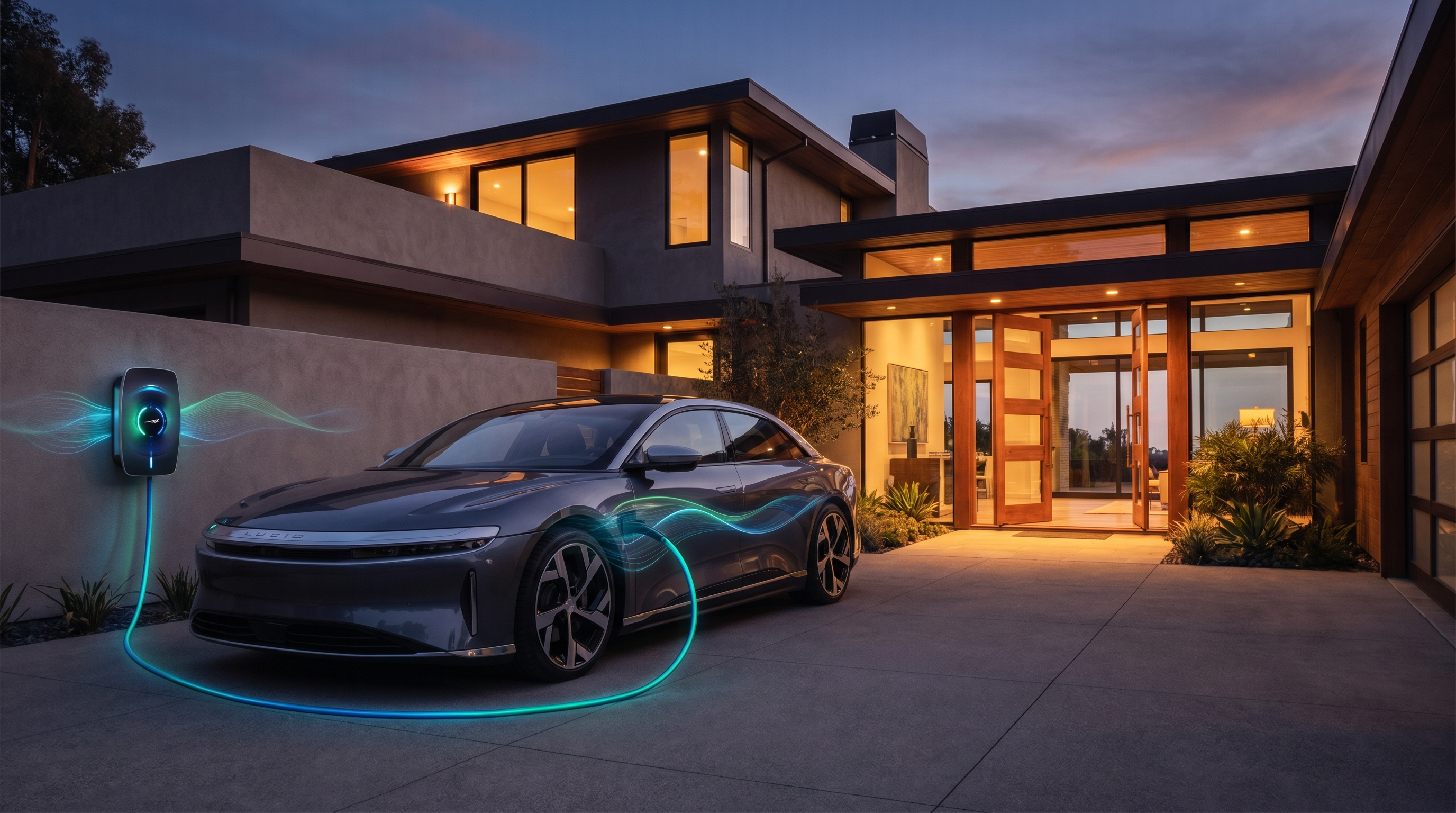
Electric vehicles are transforming from a strain on the power grid into its ultimate savior. By allowing your car to power your home during a blackout or sell energy back to the utility, bidirectional charging fundamentally changes the economics of car ownership and protects communities from power failures.
Key points
- Major automakers have made bidirectional charging a standard feature across their 2026 electric vehicle lineups.
- Virtual Power Plants (VPPs) network thousands of plugged-in EVs to act as a massive, decentralized battery for the power grid.
- EV owners can earn between $500 and $1,200 annually by allowing utilities to manage their charging during peak demand.
- New data from the International Energy Agency confirms that well-managed grid participation does not accelerate EV battery degradation.
The electric vehicle transition was supposed to break the power grid. For years, skeptics warned that millions of cars plugging in after work would overwhelm aging transformers and trigger rolling blackouts. Instead, in 2026, the exact opposite is happening. Millions of electric vehicles are transforming from passive energy drains into the world's largest, most dynamic distributed battery network. This shift represents a fundamental rewiring of how society generates, stores, and consumes electricity, turning the driveway into a critical piece of national infrastructure.[8]
The concept enabling this transformation is called bidirectional charging, and after more than a decade of limited pilot programs and experimental trials, it has officially crossed into mainstream consumer reality. Automakers including General Motors, Ford, Kia, and Tesla have made two-way power flow a standard or widely available feature across their 2026 vehicle lineups. This unlocks a capability that fundamentally alters the economics of car ownership, allowing vehicles to push electricity back out of their charging ports just as easily as they pull it in.[5][6]
To understand the sheer scale of this energy shift, one only needs to look at the math behind modern transportation. An average personal vehicle sits parked and unused for roughly 95% of its lifespan, occupying space in a garage or office lot. When that vehicle is electric, it is essentially a massive, idle battery on wheels. A modern EV holds enough stored energy to power a typical American home for three to five consecutive days without requiring a recharge, representing a staggering amount of dormant utility.[7]
In California alone, the state's rapidly growing electric vehicle fleet represented an estimated 18.5 gigawatts of potential energy storage capacity by the end of 2025. To put that into perspective, that figure officially surpasses the total capacity of all stationary, utility-scale storage batteries operating statewide. Rather than spending billions of taxpayer dollars to build vast new lithium-ion facilities in the desert, grid operators are realizing that the storage capacity they desperately need has already been purchased by consumers and parked in millions of suburban driveways.[3][8]

The mechanism unlocking this decentralized reservoir is known as the "Virtual Power Plant" (VPP). Historically, when electricity demand spiked during a severe summer heatwave, utilities were forced to fire up multi-billion-dollar fossil fuel "peaker" plants. These are inherently inefficient, highly polluting facilities that might only run for a few dozen hours a year just to prevent the grid from collapsing. Today, utilities are increasingly using advanced software platforms to network thousands of consumer devices together—including smart thermostats, home batteries, and EVs—creating a digital power plant that exists entirely in the cloud.[2]
When a severe heatwave strikes and millions of air conditioners strain the local grid, a VPP software platform can automatically signal participating electric vehicles to temporarily pause their charging sessions. In more advanced bidirectional setups, the utility can actually command those vehicles to discharge a small percentage of their stored power back into the local neighborhood network. This instantly relieves the strain on neighborhood transformers, balances the real-time supply and demand, and prevents a localized outage from cascading into a widespread blackout.[4]
For the grid operator, this distributed network acts exactly like a traditional power plant, but with several distinct advantages. It responds to demand spikes in milliseconds, requires no new land acquisition or lengthy environmental permitting, and produces zero localized emissions. The U.S. Department of Energy estimates that Virtual Power Plants can provide vital peaking capacity at roughly half the net cost of building conventional utility-scale batteries or natural gas peaker plants, making it one of the most cost-effective grid stabilization tools available today.[2]
For the grid operator, this distributed network acts exactly like a traditional power plant, but with several distinct advantages.
For the consumer, this grid stabilization translates directly into passive income and lower electricity bills. Utilities across North America and Europe are increasingly offering lucrative annual incentives—often ranging from $500 to $1,200—for EV owners who opt into these managed charging and export programs. The vehicle owner simply sets a minimum range requirement in their smartphone app, ensuring they always have enough battery to get to work the next morning. From there, the software seamlessly handles the complex energy trading in the background, monetizing the vehicle while the owner sleeps.[7][8]
The technology itself operates on three distinct levels of complexity, each offering a different degree of grid integration. The most basic and widely available tier is Vehicle-to-Load (V2L). This feature allows drivers to plug standard household appliances, camping gear, or heavy power tools directly into their car's built-in 120-volt or 240-volt outlets. It effectively turns the vehicle into a massive portable generator for off-grid use, tailgating, or running essential medical equipment during a localized power failure without needing to integrate with the home's main electrical panel.[5]
The next tier is Vehicle-to-Home (V2H), which is rapidly becoming a major selling point for suburban homeowners concerned about extreme weather. In the event of a severe storm or rolling blackout, a compatible bidirectional charger automatically isolates the house from the dead utility grid and powers the home directly from the vehicle parked in the driveway. This capability effectively replaces the need for expensive, dedicated home battery walls. Because an EV battery is typically five to ten times larger than a standard home battery system, it offers significantly more backup storage capacity at a fraction of the standalone cost.[4][7]

The final and most complex tier is Vehicle-to-Grid (V2G), where the car actively exports power back to the utility company for profit. This requires specialized bidirectional hardware, complex utility interconnection agreements, and sophisticated software orchestration to ensure safety and reliability. The ultimate goal of V2G is arbitrage: the system buys electricity when wind and solar generation are abundant and cheap, and sells it back to the grid when demand peaks and prices skyrocket. This turns the everyday commuter vehicle into an active, revenue-generating participant in the wholesale energy market.[1][5]
For years, the primary barrier to widespread V2G adoption was deep-seated consumer anxiety over battery degradation. Owners understandably feared that constantly cycling power in and out of their expensive vehicles to support the grid would prematurely wear out the delicate lithium-ion cells. The prevailing assumption was that this extra workload would rapidly degrade the battery's total driving range, potentially voiding manufacturer warranties and destroying the long-term resale value of their primary mode of transportation. This fear kept many early adopters from opting into utility pilot programs.[1]
However, comprehensive data released by the International Energy Agency in May 2026 has largely dismantled this concern, providing a massive boost of confidence to the market. The IEA's global analysis found that well-managed V2G setups do not accelerate chemical aging in modern EV batteries. In fact, because enrolled vehicles generally operate at lower, more stable average states of charge—avoiding the chemical stress of sitting at 100% capacity for days on end—they often suffer less wear than standard EVs that are simply plugged in and left alone.[1]
Despite these technological and economic breakthroughs, bureaucratic and logistical hurdles remain before the system is entirely frictionless. The global technical standards meant to enable seamless communication between cars, chargers, and the grid—specifically the ISO 15118 protocol—are still inconsistently applied by different automotive manufacturers. This fragmentation means that a bidirectional charger that works perfectly with a Ford might not yet communicate properly with a Hyundai, creating a confusing landscape for consumers trying to build a unified home energy system.[1][6]

Furthermore, the regulatory frameworks that allow consumers to sell power back to wholesale electricity markets remain highly fragmented across different states and utility jurisdictions. While progressive energy markets have eagerly embraced the Virtual Power Plant model to solve their capacity shortfalls, many traditional utility monopolies are still resistant to compensating homeowners for grid services. This patchwork of regulations is slowing the rollout of financial incentives in certain regions, leaving millions of capable vehicles locked out of the energy trading market simply because of their zip code.[6][8]
To bridge this gap, states like California are rolling out aggressive policy roadmaps to standardize interconnection rules and subsidize the upfront cost of bidirectional charging hardware. Currently, a fully installed bidirectional charger and the necessary home electrical panel upgrades can run several thousand dollars more than a standard Level 2 home charger. By offering targeted utility rebates and state subsidies, policymakers hope to offset this initial premium, making the technology accessible to middle-class homeowners rather than just early tech adopters.[3]
As these final regulatory and hardware barriers fall, the fundamental relationship between drivers, their vehicles, and the broader energy sector is being entirely rewritten. The electric vehicle is no longer just a cleaner, quieter way to commute to the office; it has evolved into the foundational building block of a decentralized, highly resilient energy future. By turning millions of suburban driveways into active, networked power plants, the global transition to electric mobility is quietly securing the power grid for everyone, proving that the solution to our energy crisis was parked in the garage all along.[8]
How we got here
2013
The Nissan Leaf becomes the first commercially available EV in the U.S. with bidirectional charging capabilities.
September 2022
California's power grid hits a record peak demand of 52 GW during a severe heatwave, accelerating interest in distributed storage.
2024-2025
Major automakers including GM, Ford, and Tesla announce plans to make bidirectional charging standard across their upcoming lineups.
Early 2026
The California Energy Commission releases a comprehensive roadmap to eliminate regulatory barriers for Vehicle-to-Grid adoption.
May 2026
The International Energy Agency publishes data debunking the myth that V2G participation accelerates EV battery degradation.
Viewpoints in depth
Grid Operators & Utilities
View EVs as vital, low-cost distributed storage to prevent blackouts and avoid building expensive peaker plants.
For utility companies, the transition to electric vehicles initially looked like a looming crisis that would require trillions of dollars in grid upgrades. However, the rise of Virtual Power Plants has flipped this narrative. Grid operators now view parked EVs as the cheapest and fastest way to build grid resilience. By paying consumers a few hundred dollars a year to access their batteries during peak hours, utilities can avoid spending billions on new natural gas peaker plants or standalone lithium-ion facilities. They argue that without leveraging the massive storage capacity already sitting in suburban driveways, achieving a 100% renewable grid is economically impossible.
EV Owners & Consumers
Value the technology for home backup power during outages and the potential to earn passive income, though some remain cautious about hardware costs.
From the consumer's perspective, bidirectional charging transforms a depreciating asset into a functional piece of home infrastructure. The primary draw for many is Vehicle-to-Home (V2H) capability, which provides peace of mind during extreme weather events by keeping the lights and refrigerator on for days. While the prospect of earning passive income through Vehicle-to-Grid (V2G) programs is appealing, consumer advocates note that the high upfront cost of bidirectional chargers—often exceeding $4,000 with installation—remains a significant barrier. Furthermore, while the IEA has debunked battery degradation concerns, many owners remain protective of their vehicle's range and demand strict software controls over how much power the utility can drain.
Automakers & Hardware Providers
See bidirectional charging as a major selling point that differentiates EVs from combustion vehicles and creates new recurring software revenue.
Automakers have realized that bidirectional charging is a killer app that internal combustion engines simply cannot replicate. By making the hardware standard, companies like Ford, GM, and Tesla are positioning their vehicles as essential energy management tools rather than just transportation. Beyond selling cars, these manufacturers are increasingly positioning themselves as energy brokers. By developing the proprietary software that connects the car to the utility grid, automakers hope to take a percentage of the energy trading revenue, creating a lucrative, recurring software-as-a-service business model that lasts for the entire lifespan of the vehicle.
What we don't know
- How quickly traditional utility monopolies will update their regulations to allow homeowners to sell power back to the grid.
- Whether the upfront cost of bidirectional home chargers will drop fast enough to encourage mass adoption without heavy government subsidies.
- How the used car market will value older EVs that lack bidirectional charging capabilities as the technology becomes a standard expectation.
Key terms
- Bidirectional Charging
- Technology that allows electricity to flow both into an electric vehicle's battery and out of it, back to a home or the power grid.
- Virtual Power Plant (VPP)
- A cloud-based network of decentralized energy resources—like EVs, home batteries, and smart thermostats—that work together to supply power or reduce demand on the grid.
- Vehicle-to-Home (V2H)
- A setup where an electric vehicle acts as a backup generator, supplying power directly to a house during an outage.
- Vehicle-to-Grid (V2G)
- A system where an electric vehicle exports stored energy back to the utility company's power grid, often in exchange for financial compensation.
- Peaker Plant
- A traditional power plant, usually powered by natural gas, that only runs during periods of exceptionally high electricity demand.
Frequently asked
Will using my EV to power the grid ruin my battery?
No. Recent data from the International Energy Agency shows that well-managed V2G programs do not accelerate battery degradation and can sometimes reduce wear by keeping the battery at optimal charge levels.
Can any electric vehicle power a home?
Not yet. While 60% of new 2026 models support bidirectional charging, older EVs and certain entry-level models lack the necessary onboard hardware.
Do I need a special charger for this?
Yes. Vehicle-to-Home and Vehicle-to-Grid require a specialized bidirectional charger, which currently costs more than a standard home EV charger and requires professional installation.
How long can an EV power a house during a blackout?
Depending on the vehicle's battery size and the home's energy usage, a fully charged EV can typically power an average American home for three to five days.
Sources
Source coverage
8 outlets
3 viewpoints surfaced







[1]International Energy AgencyAutomakers & Hardware Providers
Why Bidirectional Charging Is No Longer Just an Option
Read on International Energy Agency →[2]U.S. Department of EnergyGrid Operators & Utilities
Virtual Power Plants: Empowering Americans to Support Grid Flexibility
Read on U.S. Department of Energy →[3]California Energy CommissionGrid Operators & Utilities
California's V2G Roadmap: Accelerating Bidirectional Adoption
Read on California Energy Commission →[4]RMIGrid Operators & Utilities
Designing VPP Programs to Meet Utilities' Needs
Read on RMI →[5]DriivzEV Owners & Consumers
EV Bidirectional Charging Standard Adoption 2025-2026
Read on Driivz →[6]V2G NewsAutomakers & Hardware Providers
2026 Predictions: The Year V2G Scales
Read on V2G News →[7]Energy Solutions IntelligenceEV Owners & Consumers
V2G & V2H Explained: Technical and Regulatory Foundations
Read on Energy Solutions Intelligence →[8]Factlen Editorial TeamAutomakers & Hardware Providers
Synthesis by Factlen editorial team
Read on Factlen Editorial Team →

More in automotive
See all 21 stories →Battery Tech
Solid-State EV Batteries Move From Lab to Assembly Line in 2026
7 sources
EV Battery Health
The Science of EV Battery Health: Why Your Car Will Likely Outlast Its Power Pack
9 sources
Rail Tech
The Rise of Hydrogen Trains: How Water-Vapor Transit is Replacing Diesel
7 sources

Transit Tech
Trackless Trams: The Hybrid Technology Reshaping Mid-Tier Public Transit
6 sources
Every angle. Every day.
Get automotive stories with full source coverage and perspective breakdowns delivered to your inbox.