
How Local AI Models Are Transforming Personal Computing in 2026
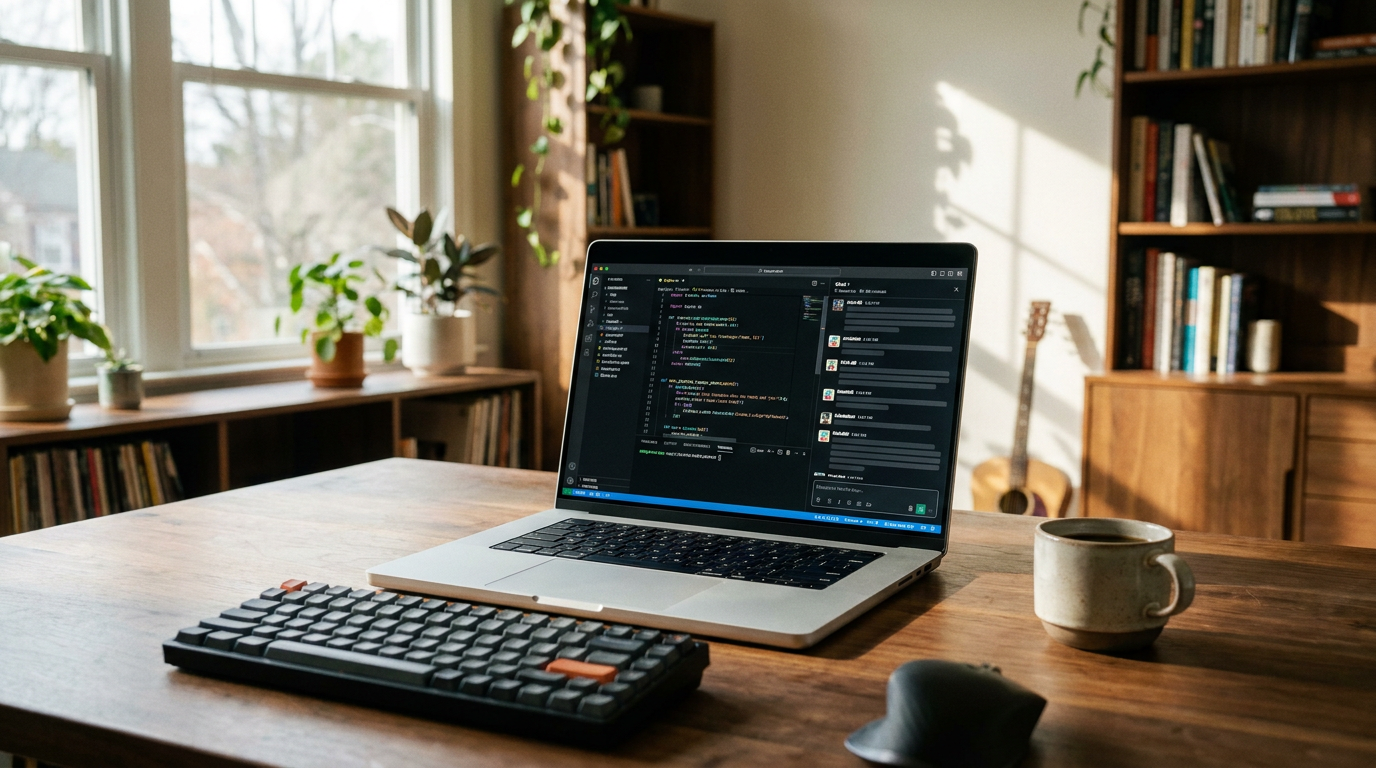
As AI PCs equipped with dedicated Neural Processing Units (NPUs) become the standard, users are shifting from cloud-based subscriptions to running powerful AI models directly on their laptops for enhanced privacy and offline access.
By Factlen Editorial Team
- Privacy & Enterprise Advocates
- Emphasize that on-device processing is essential for data security, regulatory compliance, and protecting proprietary information.
- Open-Source Developers
- Champion local AI as a way to democratize technology, avoid vendor lock-in, and build custom applications without API fees.
- Hardware & Performance Enthusiasts
- Focus on the raw compute power, TOPS metrics, and the architectural shift from GPUs to NPUs in consumer electronics.
What's not represented
- · Environmental Analysts
- · Legacy Hardware Users
Why this matters
Moving AI processing from the cloud to local hardware gives users total control over their data, eliminates monthly subscription fees, and allows sensitive documents to be analyzed without ever leaving the device.
Key points
- Local AI allows users to run Large Language Models entirely offline, ensuring complete data privacy.
- Modern 'AI PCs' feature dedicated Neural Processing Units (NPUs) that handle AI math far more efficiently than standard CPUs.
- Software tools like LM Studio and Ollama have eliminated the need for coding expertise to run local models.
- Techniques like quantization compress massive AI models to fit comfortably within standard 16GB laptop memory.
The era of renting intelligence by the month is facing a quiet rebellion. In 2026, the artificial intelligence landscape is undergoing a fundamental shift from massive, cloud-hosted data centers to the laptops sitting on our desks.[8]
For the past few years, interacting with a Large Language Model (LLM) meant sending every prompt, document, and keystroke to servers owned by tech giants. This cloud-first approach brought unprecedented capabilities but introduced significant friction regarding privacy, latency, and recurring subscription costs.[5]
Now, a convergence of specialized hardware and highly optimized open-source software is making "local AI" accessible to the general public. Users can download powerful AI models and run them entirely offline, ensuring their data never leaves their device.[4][5]
The hardware catalyst for this transition is the Neural Processing Unit, or NPU. Unlike Central Processing Units (CPUs) that handle general tasks, or Graphics Processing Units (GPUs) designed for parallel rendering, NPUs are silicon specifically architected for the matrix math that AI inference requires.[1][6]

In 2026, the NPU has transitioned from a niche premium feature to a baseline requirement. Microsoft's Copilot+ PC certification mandates an NPU capable of at least 40 Trillions of Operations Per Second (TOPS), setting a new standard for what constitutes a modern computer.[6]
Chipmakers have aggressively met this standard. Intel's Lunar Lake architecture, AMD's Ryzen AI 9000 series, and Qualcomm's Snapdragon X Elite all feature NPUs that comfortably exceed the 40 TOPS threshold. Apple's M4 Neural Engine continues to push the boundaries of on-device processing, allowing complex tasks to run seamlessly without draining the battery.[1]
This hardware evolution is driving massive market shifts. Industry projections indicate that AI-capable notebook PCs will account for 62% of total notebook shipments in 2026, a staggering increase from just 29% in 2024.[7]

But hardware is only half the equation. The software ecosystem has democratized access to these models, replacing complex Python scripts with user-friendly applications. Two tools, in particular, have emerged as the standard-bearers for local AI: Ollama and LM Studio.[4][5]
The software ecosystem has democratized access to these models, replacing complex Python scripts with user-friendly applications.
Ollama operates as a lightweight, command-line-first tool designed for developers. It acts as a model manager and runtime, allowing users to pull open-weight models like Meta's Llama 3 or Google's Gemma with a single terminal command and expose them as a local API.[4]
For users who prefer a graphical interface, LM Studio has become the gateway to local AI. Operating much like an app store for language models, it allows users to browse the Hugging Face repository, download models, and interact with them through a familiar chat window—no coding required.[4]
The secret to fitting these massive models onto consumer laptops is a technique called quantization. By compressing the mathematical precision of the model's parameters—often using formats like GGUF—developers can shrink a model that would normally require massive server GPUs down to a size that runs comfortably on 16GB of standard laptop memory.[4][5]

The implications for privacy are profound. Enterprises, healthcare providers, and legal professionals can now use AI to summarize sensitive documents or analyze proprietary data without violating compliance regulations or risking data leaks.[5]
Tech giants are also pivoting to this privacy-first model. Apple's "Apple Intelligence" relies heavily on on-device processing, reportedly using a distilled version of Google's Gemini model to handle queries locally, framing it as a secure alternative to cloud dependency.[2]
Researchers are pushing the boundaries of what edge devices can do even further. A recent breakthrough from the Massachusetts Institute of Technology demonstrated a new federated learning method that reduces on-device memory overhead by 80%, allowing even resource-constrained devices like smartwatches to train shared AI models securely.[3]

Despite these advancements, local AI is not a complete replacement for the cloud. Massive, trillion-parameter models housed in data centers still hold a significant edge in complex reasoning, advanced coding, and broad knowledge retrieval.[8]
However, for daily tasks—drafting emails, summarizing PDFs, generating code snippets, and basic brainstorming—a quantized 8-billion parameter model running locally is often indistinguishable from its cloud-based counterparts, with the added benefits of zero latency and offline availability.[5][8]
The transition mirrors the adoption of the smartphone touchscreen: what starts as a novel hardware feature quickly becomes an indispensable foundation for modern computing. As the software gap closes and more applications natively tap into the NPU, the value proposition of the AI PC will only grow.[7][8]
Ultimately, the rise of local AI represents a shift in ownership. By moving the intelligence from the server farm to the laptop, users are reclaiming control over their data, their workflows, and their digital privacy.[8]
How we got here
Late 2023
Open-source models like Llama and Mistral begin rivaling proprietary cloud models in benchmark tests.
Early 2024
Tools like Ollama and LM Studio launch, making it easy for non-engineers to run models locally.
Mid 2024
Microsoft announces the Copilot+ PC standard, mandating 40 TOPS NPUs for next-generation Windows laptops.
Early 2026
AI-capable laptops cross the threshold into mainstream adoption, driven by Intel Lunar Lake and AMD Ryzen AI 9000 chips.
Viewpoints in depth
Privacy & Enterprise Advocates
Focusing on data sovereignty and secure computing.
For corporate IT departments, healthcare providers, and legal professionals, the cloud has always presented a fundamental security risk. Sending proprietary code, patient records, or unreleased financial data to a third-party server—even an encrypted one—often violates strict compliance frameworks. This camp views local AI not just as a convenience, but as a mandatory evolution. By keeping inference entirely on-device, organizations can leverage the productivity boosts of generative AI without exposing their intellectual property to external vulnerabilities or using their data to train a vendor's future models.
Open-Source Developers
Prioritizing accessibility, customization, and freedom from vendor lock-in.
The developer community sees local AI as a democratizing force. Relying on cloud APIs means being tethered to a tech giant's pricing model, rate limits, and acceptable use policies—which can change overnight. By utilizing tools like Ollama and open-weight models, developers can build, test, and deploy AI-integrated applications entirely offline. This camp argues that the future of AI shouldn't be controlled by a few massive data centers, but distributed across millions of personal machines where users have the ultimate authority over how the software behaves.
Hardware & Performance Enthusiasts
Tracking the silicon advancements that make edge computing possible.
For hardware analysts and PC enthusiasts, the story is all about silicon architecture. They track the rapid escalation of NPU capabilities—from the early 10 TOPS chips to the current 40+ TOPS Copilot+ standard—as a generational leap in computing. This group emphasizes that while cloud models are powerful, the latency of sending a voice command to a server and waiting for a response breaks the illusion of a seamless digital assistant. They argue that true ambient computing requires the instantaneous, zero-ping response times that only local NPUs can provide.
What we don't know
- How quickly independent software vendors will update legacy applications to natively utilize the NPU instead of the CPU.
- Whether the performance gap between local quantized models and massive cloud models will narrow or widen as architectures evolve.
- How the battery life of ultra-thin laptops will hold up under sustained, heavy local AI inference over multi-year lifespans.
Key terms
- NPU (Neural Processing Unit)
- A specialized computer chip designed specifically to handle the complex math required for artificial intelligence tasks efficiently.
- TOPS (Trillions of Operations Per Second)
- A measurement used to gauge how fast an NPU can process artificial intelligence workloads.
- Quantization
- A compression technique that reduces the precision of an AI model's parameters, allowing massive models to run on standard laptop memory.
- Open-weight Models
- AI models where the core architecture and trained parameters are publicly available for anyone to download and use.
- GGUF
- A popular file format specifically designed for running quantized language models efficiently on local hardware.
Frequently asked
Can my older laptop run local AI models?
Yes, if it has a powerful dedicated graphics card (GPU) and at least 16GB of RAM, though it will consume more power than a modern AI PC with a dedicated NPU.
Are local AI models completely free to use?
Yes. Once you download an open-weight model to your device, you can run it endlessly without any API costs or monthly subscription fees.
What is the difference between Ollama and LM Studio?
Ollama is a lightweight, command-line tool favored by developers for building apps, while LM Studio offers a user-friendly desktop interface for browsing and chatting with models.
Are local models as smart as ChatGPT?
For everyday tasks like summarizing text and drafting emails, they are highly capable. However, massive cloud models still hold an advantage in complex reasoning and advanced coding.
Sources
Source coverage
8 outlets
3 viewpoints surfaced








[1]Tom's GuideHardware & Performance Enthusiasts
The best AI laptops in 2026: Tested and reviewed
Read on Tom's Guide →[2]MacRumorsPrivacy & Enterprise Advocates
Apple Expected to Emphasize On-Device AI Processing at WWDC
Read on MacRumors →[3]MIT NewsPrivacy & Enterprise Advocates
Enabling privacy-preserving AI training on everyday devices
Read on MIT News →[4]Dev.toOpen-Source Developers
Ollama vs. LM Studio: Choosing Your Local LLM Champion
Read on Dev.to →[5]MediumPrivacy & Enterprise Advocates
The Complete Guide to Running LLMs Locally in 2026
Read on Medium →[6]HPHardware & Performance Enthusiasts
What is an AI PC? Everything You Need to Know
Read on HP →[7]Laptop OutletHardware & Performance Enthusiasts
The Numbers Speak: AI Laptop Growth in 2026
Read on Laptop Outlet →[8]Factlen Editorial TeamOpen-Source Developers
Synthesis by Factlen editorial team
Read on Factlen Editorial Team →

More in ai
See all 6 stories →Local AI
How Local AI and Small Language Models Are Freeing Users from the Cloud
0 sources
Local AI
The 2026 Guide to Running Open-Source AI Locally
0 sources
Mechanistic Interpretability
Inside the Black Box: How Mechanistic Interpretability is Making AI Safe
0 sources
On-Device AI
How Small Language Models Are Bringing Private, Zero-Latency AI to Your Phone
0 sources

Every angle. Every day.
Get ai stories with full source coverage and perspective breakdowns delivered to your inbox.