
How Invisible AI Cameras Are Solving Baseball's Pitching Injury Epidemic
Markerless motion capture technology is utilizing stadium cameras and artificial intelligence to track pitchers' 3D biomechanics in real-time, helping teams prevent torn ligaments and engineer unhittable pitches.
By Xia Wu

The human arm was not engineered to throw a five-ounce sphere at 100 miles per hour, yet modern baseball demands exactly that on a nightly basis. As velocity has skyrocketed across the sport, so too has the epidemic of catastrophic elbow and shoulder injuries.
For decades, the sport's brightest minds were largely guessing at the root causes of these breakdowns, relying on the naked eye and intuition to protect their most valuable assets. When a pitcher's ulnar collateral ligament finally snapped, it was often viewed as an unavoidable cost of doing business rather than a preventable mechanical failure.[4]
Historically, the only way to truly understand the forces acting on a pitcher's arm was to send them to a specialized biomechanics laboratory. Athletes would strip down, have dozens of reflective markers taped to their joints, and throw off an indoor mound surrounded by optical cameras. While these marker-based systems provided the gold standard for accuracy, they lacked ecological validity. Throwing in a sterile lab wearing a spandex suit simply does not replicate the adrenaline, fatigue, and precise mechanics of pitching in a live stadium with the bases loaded.[2][4]
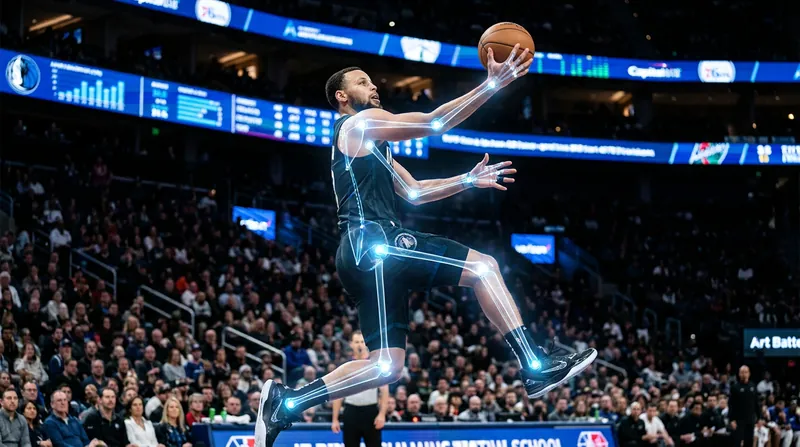
That fundamental limitation has been shattered by the arrival of markerless motion capture. In 2026, the technology has officially moved out of the laboratory and into the ballpark. Systems developed by companies like KinaTrax and Sony's Hawk-Eye Innovations now utilize arrays of high-speed cameras mounted strategically around the stadium to capture three-dimensional kinematics in real-time. These systems operate invisibly, requiring zero wearable sensors or reflective markers on the athlete.[1]
The sheer volume of data collected by these in-stadium networks is staggering. The camera arrays record the action at over 300 frames per second, capturing every microscopic movement of the pitcher's delivery. From the moment the pitcher begins their windup to the instant the ball leaves their fingertips, the system is recording a continuous stream of high-fidelity video from multiple synchronized angles.[1]
The true breakthrough, however, lies in the software. Advanced computer vision algorithms and deep learning models instantly process this massive video feed, identifying key joint centers and bone segments. Through massive parallel processing, the artificial intelligence reconstructs a precise 3D skeleton of the athlete frame by frame, measuring the exact angles of elbow flexion, shoulder external rotation, and pelvic tilt without a single physical sensor.[1][4]
This invisible web of data is primarily being weaponized as a shield against the sport's injury epidemic. By tracking the exact kinematics of every pitch thrown in a season, biomechanists can calculate the "elbow valgus torque"—the sheer twisting stress placed on the vulnerable ulnar collateral ligament. Rather than waiting for a player to report soreness, teams can now monitor the invisible forces accumulating in the arm pitch by pitch.[2]
Researchers have discovered that specific mechanical flaws are highly predictive of this dangerous torque. For example, the precise timing of peak elbow flexion relative to ball release can significantly alter the stress placed on the joint. When a pitcher begins to fatigue late in a game, their mechanics often degrade in subtle ways invisible to the human eye. The markerless system flags these anomalies instantly, allowing a manager to pull a pitcher before the ligament reaches its breaking point.[2][4]
But injury prevention is only half of the equation; the same data is being used as a sword to optimize performance. Elite player development facilities, most notably Driveline Baseball, have built entire enterprise services around processing this markerless data to engineer better athletes. They utilize proprietary performance models to quantify abstract concepts like deception, expected velocity, and mechanical efficiency.
By amassing a database of over 100,000 motion-captured pitches, these analysts can compare a pitcher's mechanics against the most successful arms in the sport. The data reveals exactly how elite pitchers generate power from their lower half and transfer it efficiently through their kinetic chain. Athletes who apply these biomechanical insights have been shown to significantly outperform their baseline projections, adding measurable value to their teams.
This granular understanding of human movement has also birthed the modern era of "pitch design." Instead of throwing blindly in the bullpen and hoping a breaking ball moves correctly, a pitcher can receive instant feedback from a computer vision model. The AI analyzes the exact orientation of the wrist and fingers at release, recommending micro-adjustments to the grip to create entirely new pitch shapes, such as sliders that dart in unconventional directions.[4]
The speed of this feedback loop is what makes it so revolutionary. In the past, analyzing biomechanical data took days of manual processing. Today, artificial intelligence engines can generate comprehensive kinematics reports by the next morning, or even within seconds during a bullpen session. This allows coaches to make data-driven adjustments between pitches, keeping the practice environment fluid and game-like.
Despite these massive leaps forward, markerless motion capture is not entirely flawless. Validation studies comparing these new systems to traditional marker-based optical capture have found some notable discrepancies. While the AI is incredibly adept at tracking large, linear movements, it occasionally struggles with the complex, high-speed rotational forces inherent to a baseball pitch.[2]
For instance, researchers at the American Baseball Biomechanics Society have noted an 8 to 10-degree offset in measuring peak trunk rotation during the arm-cocking phase when comparing markerless systems to traditional labs. There is also a slight bias in measuring transverse plane motions, such as shoulder internal and external rotation, which are critical variables for both velocity and injury risk.[3]
These margins of error mean that while markerless systems are exceptional for tracking a player's trends over time, they may not yet possess the absolute pinpoint accuracy of a sterile laboratory. However, the industry consensus is that the ecological validity of capturing data during a live, high-stakes game far outweighs the slight reduction in millimeter-level precision.[3][4]
Furthermore, the sudden influx of millions of data points presents a profound human challenge. The most accurate biomechanical report in the world is useless if a coach cannot translate it into a language the athlete understands. The art of modern coaching lies in distilling complex kinematic sequences into simple, actionable physical cues that a pitcher can actually execute on the mound.[4]
There is a genuine risk of overloading a player with too much information, leading to "paralysis by analysis." Pitching is ultimately a fluid, athletic movement that relies heavily on rhythm and proprioception. If a pitcher is standing on the mound thinking about their exact degree of pelvic tilt, they have already lost the natural athleticism required to compete at the highest level.[4]
Ultimately, the organizations that thrive in this new era will be those that successfully bridge the gap between artificial intelligence and human intuition. The data must inform the coaching, but it cannot replace the coach. The numbers provide the map, but the athlete still has to navigate the terrain.[4]
Ultimately, the organizations that thrive in this new era will be those that successfully bridge the gap between artificial intelligence and human intuition.
As markerless motion capture becomes ubiquitous across every collegiate and professional stadium, baseball is fundamentally changing. The invisible forces of human movement have finally been brought to light, offering a path to not only throw harder and nastier pitches, but to ensure the athletes throwing them can stay on the field for years to come.[4]
Key points
- Markerless motion capture uses stadium cameras to track 3D biomechanics without wearable sensors.
- AI algorithms reconstruct a pitcher's skeleton to measure joint angles and rotational velocities.
- The data calculates elbow stress, allowing teams to flag fatigue before a ligament tears.
- Player development facilities use the same data to engineer new pitches and optimize mechanics.
- While slightly less precise than traditional labs, the in-game data provides unmatched ecological validity.
How we got here
Early 2010s
Teams rely on traditional biomechanics labs where pitchers wear reflective markers, limiting in-game analysis.
2022
Driveline Baseball launches an enterprise biomechanics service to process markerless data from stadium cameras.
2024
Major League Baseball standardizes the use of Hawk-Eye markerless tracking across all stadiums.
2026
Markerless systems achieve sub-second processing speeds, allowing for real-time mechanical adjustments in the bullpen.
- Player Development Analysts
- Prioritizes using rapid kinematic feedback to optimize mechanics, design new pitches, and increase on-field performance.
- Biomechanics Researchers
- Focuses on the scientific validation of markerless systems and their ability to accurately predict joint stress to prevent injuries.
- Traditionalist Coaches
- Warns against data overload and emphasizes the importance of translating complex analytics into simple, athletic cues.
Perspectives this story doesn't cover
- Orthopedic Surgeons
- Players' Union Representatives
Sources
Source coverage
4 outlets
3 viewpoints surfaced




- [1]KinaTraxPlayer Development Analysts
Pioneering markerless motion capture technology
Read on KinaTrax → - [2]National Institutes of HealthBiomechanics Researchers
Validation of a single camera markerless motion capture system for baseball pitching kinematics
Read on National Institutes of Health → - [3]American Baseball Biomechanics SocietyBiomechanics Researchers
Assessing the Accuracy of In-Stadium and Portable Multi-Camera Markerless Motion Capture
Read on American Baseball Biomechanics Society → - [4]Factlen Editorial TeamTraditionalist Coaches
Synthesis by Factlen editorial team
Read on Factlen Editorial Team →

More in Sports
See all →Sports Business
Leagues Abandon Traditional Media Rights Model for Equity Partnerships to Control Data and Distribution
4 sources

Sports Biomechanics
How AI and Markerless Motion Capture Are Engineering Injuries Out of Sports
3 sources
Amateur Athletics
How Smartphone AI is Democratizing Sports Analytics for Amateur Athletes
7 sources

Soccer Analytics
Beyond Expected Goals: How 'Expected Threat' is Rewiring Soccer Analytics
3 sources

Comments
Every angle. Every day.
Get Sports stories with full source coverage and perspective breakdowns, free every day.