
2026 FIS World Cup Standings: Odermatt and Shiffrin Reign Supreme as Skiers Pivot to Southern Hemisphere Campaigns
Marco Odermatt and Mikaela Shiffrin sit atop the global alpine standings after historic 2026 campaigns, while a new generation of snowboarders claimed crystal globes. As the Northern Hemisphere rests, athletes are now preparing for crucial points races in South America and New Zealand.
By Xia Wu
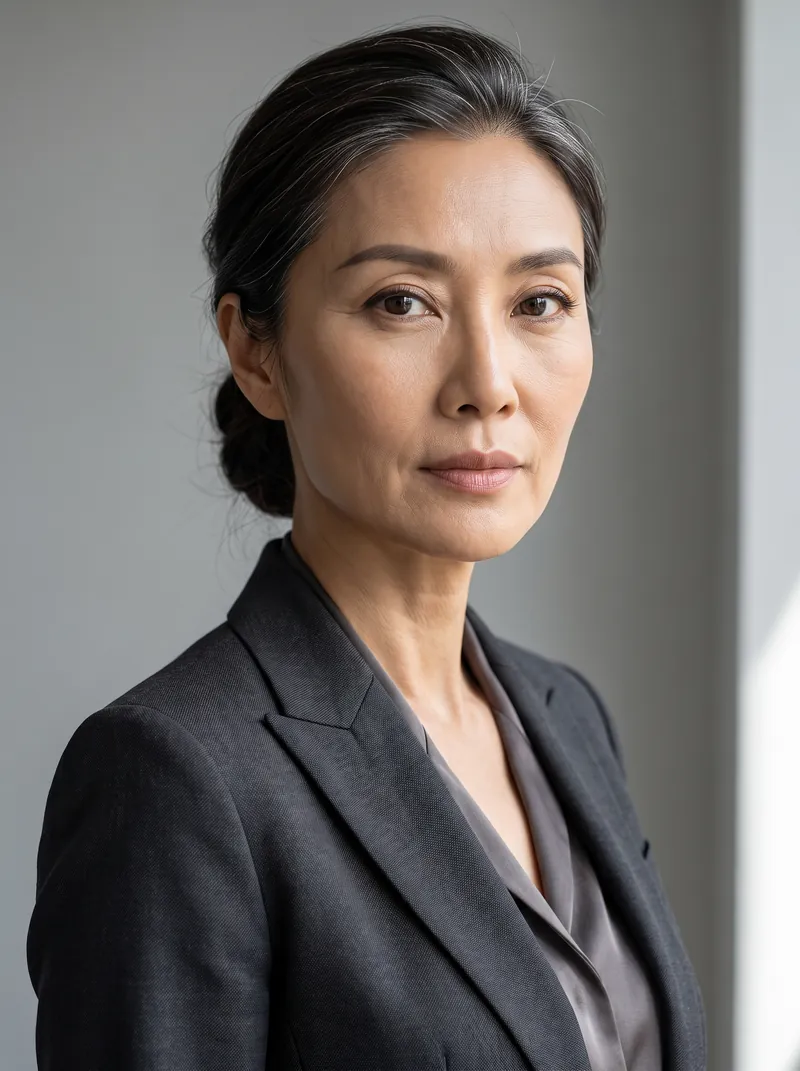
The 2025–2026 FIS World Cup season concluded in late March, cementing a historic set of global standings that will dictate the hierarchy of snow sports until the Northern Hemisphere winter returns. As athletes transition to summer dryland training and glacier camps, the final points tallies represent both the culmination of a grueling 85-race calendar and the starting line for the upcoming Southern Hemisphere campaigns.
For the world's elite skiers and snowboarders, these off-season rankings are far more than a historical record; they are the mathematical foundation that determines who gets the best starting positions when the snow flies again.[2]
In the men's alpine circuit, the final standings reflect an era of absolute, undeniable dominance. Switzerland's Marco Odermatt finished the season with 1,626 points, securing his fifth consecutive Overall Crystal Globe. Odermatt's staggering 568-point margin over second-place Lucas Pinheiro Braathen of Brazil highlights a massive performance gap that the rest of the men's field is desperately trying to close during the off-season. He did not merely edge out the competition; he redefined the standard of consistency required to compete at the highest level of the sport.[1]
Odermatt's campaign was not limited to the overall title; he also claimed the downhill and super-G discipline globes, proving his extraordinary versatility across high-speed events. With 16 career crystal globes now to his name, he has firmly established himself as the benchmark of modern alpine skiing. This leaves fierce competitors like Norway's Atle Lie McGrath—who took third overall and won the slalom globe—searching for tactical advantages and equipment upgrades in the summer months to mount a viable challenge next season.[2]
The women's alpine standings tell the story of a much tighter, high-stakes battle that went down to the final weekend. American Mikaela Shiffrin captured her record-tying sixth Overall Crystal Globe with 1,386 points, fending off a relentless late-season challenge from Germany's rising star, Emma Aicher. Aicher, who finished with 1,301 points, deployed a grueling strategy, becoming the only competitor to score top-20 finishes in every single discipline during the 2026 season.[2]
Ultimately, Shiffrin's unmatched precision in technical events secured her position at the top of the leaderboard. She won nine out of ten slalom races during the campaign, claiming her ninth career slalom globe and her 17th crystal globe overall. Her ability to execute flawlessly on rutted, demanding tracks allowed her to maintain her points lead even as Aicher relentlessly accumulated top finishes across the speed and technical spectrum.
Beyond the alpine racing circuit, the FIS Snowboard World Cup standings highlight a surging new generation of park and pipe athletes who are pushing the boundaries of the sport. In men's slopestyle, China's Su Yiming edged out American Justus Henkes by a single point—140 to 139—to win the crystal globe, while also capturing the big air season trophy in a display of aerial mastery.[1]
The women's snowboard slopestyle standings were topped by 16-year-old American Lily Dhawornvej, who claimed the globe with 169 points, narrowly defeating Japan's Milano Cortina 2026 champion Murase Kokomo. In the halfpipe discipline, Japanese veteran Yuto Totsuka and 17-year-old South Korean phenom Choi Ga-on dominated their respective fields, taking the overall Park & Pipe titles and signaling a strong Asian presence at the top of the freestyle rankings.[1]
While the Northern Hemisphere rests and ski resorts transition to summer mountain biking, the stakes for these athletes remain incredibly high. The current standings dictate the crucial start-list rankings for the 2026–2027 season opener in Sölden, Austria, this coming October. In alpine skiing, starting with a low bib number means racing on a pristine, un-rutted course—a massive physical advantage that can easily make or break a race.
To improve their standing, athletes hovering just outside the top 30 in the world rankings are now pivoting their focus to the Southern Hemisphere. The upcoming Australia New Zealand Cup (ANC) and South American Cup (SAC) races in July and August offer vital FIS points. Strong performances in places like Coronet Peak in New Zealand or Valle Nevado in Chile can lower an athlete's FIS point profile, vaulting them up the start list before the European winter begins.[2]
For the reigning champions, the summer months are dedicated to equipment refinement and maintaining physical peaks rather than chasing points. Odermatt and Shiffrin are already testing new ski setups to defend their titles, while challengers like Aicher and Braathen are analyzing video and biomechanics to find the fractions of a second needed to unseat them.
The 2026 standings reflect a global sport balancing historic legacy with surging youth. As the snow begins to fall in the Andes and the Southern Alps, the race to rewrite these rankings has already begun, proving that in the world of elite snow sports, the chase for the crystal globe never truly stops.[2]
Key points
- Marco Odermatt secured his fifth consecutive men's overall alpine title with 1,626 points.
- Mikaela Shiffrin tied the women's record with her sixth overall globe, fending off Emma Aicher.
- China's Su Yiming and the USA's Lily Dhawornvej captured the snowboard slopestyle crystal globes.
- With the Northern Hemisphere season concluded, athletes are shifting focus to summer training.
- Competitors outside the top 30 will race in South America and New Zealand to improve their FIS points.
How we got here
October 2025
The 2025-2026 FIS World Cup season opens with giant slalom races in Sölden, Austria.
February 2026
The World Cup circuit pauses for the Milano Cortina 2026 Winter Olympics in Italy.
March 24, 2026
Mikaela Shiffrin secures her record-tying sixth Overall Crystal Globe at the World Cup finals in Hafjell, Norway.
March 25, 2026
Marco Odermatt officially wraps up his fifth consecutive men's overall title as the alpine season concludes.
March 29, 2026
The FIS Snowboard World Cup season ends in Silvaplana, Switzerland, crowning Su Yiming and Lily Dhawornvej as slopestyle champions.
July 2026
The Southern Hemisphere racing season begins, offering athletes a chance to improve their FIS points ahead of the next World Cup cycle.
- Reigning Champions
- Focused on maintaining dominance, refining technique, and defending their historic crystal globe collections.
- All-Discipline Challengers
- Focused on accumulating points across multiple events to close the overall gap.
- Next-Gen Park Riders
- Focused on pushing the boundaries of progression and trick difficulty in snowboard slopestyle and big air.
- Start-List Climbers
- Focused on the upcoming Southern Hemisphere races to lower their FIS points and secure better bib numbers.
Perspectives this story doesn't cover
- Ski Equipment Manufacturers
- Southern Hemisphere Resort Operators
Sources
Source coverage
2 outlets
4 viewpoints surfaced


- [1]Olympics.comNext-Gen Park Riders
2025/2026 FIS Alpine Ski World Cup: Overall Standings
Read on Olympics.com → - [2]WikipediaStart-List Climbers
2025–26 FIS Alpine Ski World Cup
Read on Wikipedia →
More in Sports
See all →Injury
Beyond Medical Clearance: How New 'Return to Snow' Protocols Are Revolutionizing Injury Recovery in Snow Sports
4 sources
Injury
Alpine Prodigy Lara Colturi Adds Super-G Back to World Cup Schedule in Final Phase of Injury Comeback
6 sources
Injury
Alpine Skiing Injury Report: Vonn Returns to the Gym as Kilde and Schwarz Eye 2026-27 Season
4 sources
Injury
Summer 2026 Snow Sports Injury Report: Sharpe, Milton, and Wendler Headline Off-Season Recoveries
4 sources
Comments
Every angle. Every day.
Get Sports stories with full source coverage and perspective breakdowns, free every day.