
How Heat Pumps Are Successfully Retrofitting Century-Old Homes
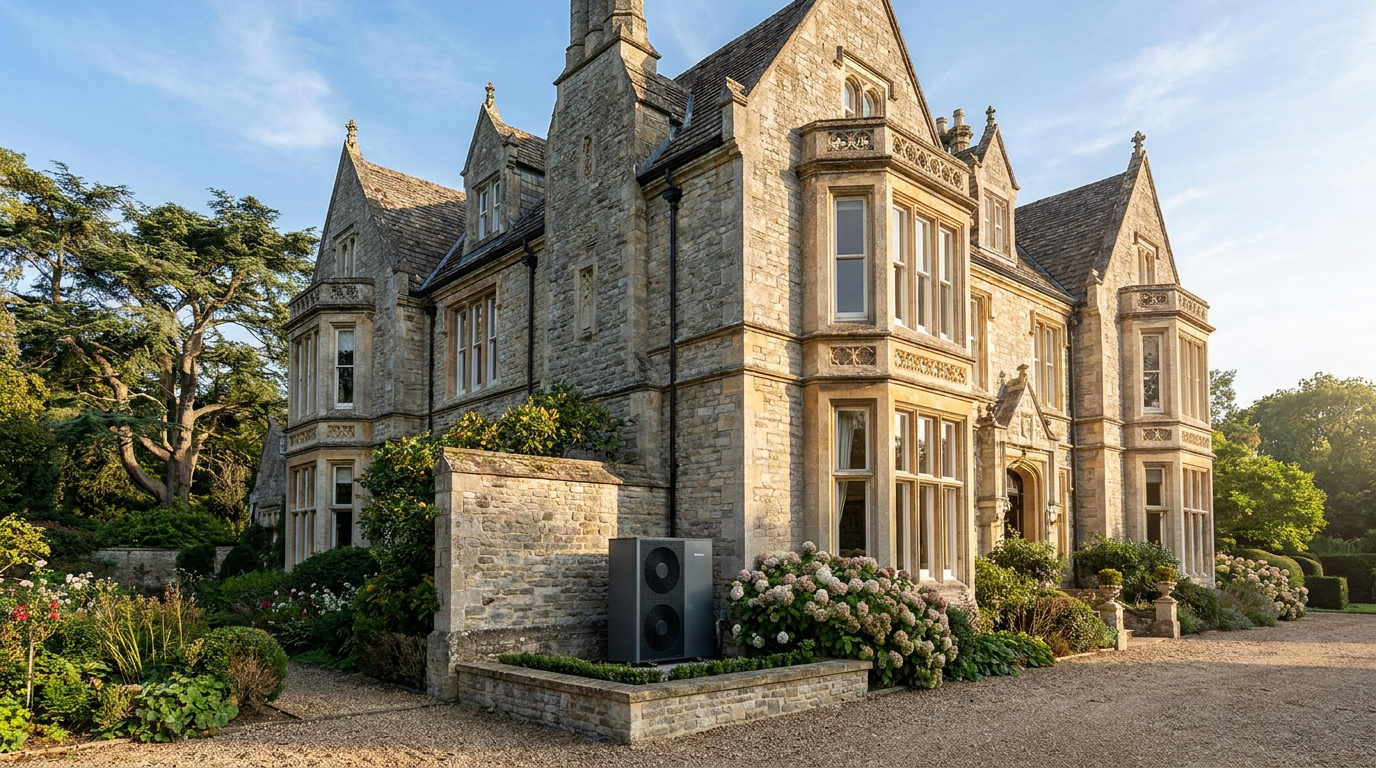
New data and technological advances in refrigerants and compressors are proving that heat pumps can efficiently warm older, unrenovated homes—even in extreme cold.
By Factlen Editorial Team
- Retrofit Advocates
- Prioritizes practical installation solutions that preserve architectural heritage.
- Building Scientists
- Focuses on the thermodynamic data proving heat pumps work in extreme cold.
- Energy Economists
- Analyzes the financial viability and long-term payback of electrification.
What's not represented
- · Traditional HVAC Installers
- · Historic Preservation Boards
Why this matters
Millions of homeowners live in older properties that rely on expensive, carbon-heavy fossil fuels. Understanding that these homes can be electrified without gut-renovations unlocks significant utility savings and accelerates the clean energy transition.
Key points
- Heat pumps operate at 300 to 400 percent efficiency, significantly outperforming traditional gas furnaces.
- Field data proves modern heat pumps maintain high efficiency even when temperatures drop to -30°C.
- Long-term studies show heat pumps successfully heat unrenovated buildings up to 150 years old.
- New low-GWP refrigerants allow heat pumps to reach higher temperatures, making them compatible with older radiators.
- Government incentives and tax credits are bridging the upfront cost gap for homeowners.
For decades, a persistent piece of conventional wisdom has governed the home renovation market: heat pumps are wonderful for modern, airtight construction, but they simply do not work in drafty, century-old homes. The assumption was that older properties, with their solid brick walls, aging insulation, and narrow pipework, required the brute-force combustion of a gas or oil boiler to stay warm.[1][7]
But as the push for residential decarbonization accelerates in 2026, a wave of real-world data and technological breakthroughs has systematically dismantled this myth. From Victorian terraces in London to century-old Craftsman homes in the American Midwest, heat pumps are proving capable of delivering reliable, cost-effective comfort without requiring a complete gut-renovation of the property.[1][2]
To understand why older homes are suddenly viable candidates, it helps to understand the mechanism. Unlike a traditional furnace that burns fossil fuels to generate heat, a heat pump acts as an energy transporter. It uses a refrigerant cycle to absorb ambient thermal energy from the outside air—even when that air feels freezing to the human touch—compresses it to increase the temperature, and transfers it indoors.[5][7]
Because moving heat requires significantly less energy than creating it from scratch, the efficiency gains are massive. The thermal efficiency of a modern, high-end gas furnace peaks at around 92 percent. In contrast, a standard air-source heat pump operates at 300 to 400 percent efficiency, meaning it outputs three to four units of heat for every one unit of electricity it consumes.[5]

This efficiency is measured by the Coefficient of Performance (CoP). A CoP of 3.0 means the system is operating at 300 percent efficiency. For years, skeptics argued that a heat pump's CoP would collapse the moment winter temperatures dropped below freezing, leaving older, poorly insulated homes shivering.[3][5]
Recent academic research has definitively put that concern to rest. A landmark study published in the scientific journal Joule by researchers at Oxford University and the Regulatory Assistance Project analyzed field data from across North America and Europe. They found that even in mild cold climates, standard air-source heat pumps maintained an average CoP between 2.0 and 3.0.[3]
More remarkably, the Oxford study evaluated specially engineered cold-climate heat pumps in extreme environments. Even as temperatures approached a bitter -30°C (-22°F), these advanced units maintained a CoP above 1.5. This means that in the most punishing winter conditions, a heat pump still operates at up to double the efficiency of traditional electric resistive heating.[3]

More remarkably, the Oxford study evaluated specially engineered cold-climate heat pumps in extreme environments.
But surviving the cold is only half the battle for an older home; the other half is distributing that heat. Historic properties often feature cast-iron radiators or microbore pipework designed for the high water temperatures produced by gas boilers. Early heat pumps struggled to push enough heat through these existing systems, leading to the belief that retrofitting required tearing open walls to install new, massive radiators.[2][7]
Long-term monitoring has shown that this, too, is often unnecessary. The Fraunhofer Society, Europe's largest application-oriented research organization, tracked approximately 300 heat pumps over two decades. In a specific cohort of buildings ranging from 15 to 150 years old—many of which had only been partially refurbished—the researchers found that air-source heat pumps achieved an average seasonal CoP of 3.1.[1]
This means that even in unrenovated, century-old structures, the heat pumps were more than three times as efficient as the gas boilers they replaced. While the researchers noted that basic weatherization—such as sealing drafts and adding loft insulation—helps optimize performance, extensive deep retrofits were not a strict prerequisite for success.[1]

The success in older homes is largely driven by two major technological leaps that have become standard by 2026. The first is the widespread adoption of inverter-driven, variable-speed compressors. Older HVAC systems operated on a binary: they blasted at 100 percent capacity until the thermostat clicked off, then shut down completely.[2][4]
Inverter technology allows the heat pump to continuously modulate its output, running at lower speeds for longer periods. This steady, gentle operation not only reduces wear and tear but also maintains a much more consistent indoor temperature, eliminating the drafty cold spots that plague older homes between boiler cycles.[2][4]
The second breakthrough is the 2026 transition to low-Global Warming Potential (GWP) refrigerants, most notably R-290, or highly refined propane. Beyond its environmental benefits, R-290 possesses superior thermodynamic properties that allow modern heat pumps to safely produce much higher flow temperatures.[2]
By reaching water temperatures that mimic those of a traditional boiler, these new R-290 systems can often plug directly into an older home's existing radiator network. This bypasses the need for disruptive and expensive internal repiping, drastically lowering the barrier to entry for historic property owners.[2][7]

The financial equation has also shifted favorably. While the upfront installation cost of a heat pump generally exceeds that of a simple boiler replacement, the operational savings are substantial. The International Energy Agency calculates that European households switching to heat pumps can save up to €800 annually, while the U.S. National Renewable Energy Laboratory estimates American savings between $300 and $1,000 per year, depending on the fuel being replaced.[4][6]
To bridge the initial cost gap, aggressive government incentives have been deployed across multiple markets. In the United States, the 25C tax credit provides up to $2,000 annually for high-efficiency heat pumps, which can often be stacked with local utility rebates. Similar programs, like Canada's Oil to Heat Pump Affordability grant, are specifically targeting older homes reliant on expensive, carbon-heavy fuels.[2]
Ultimately, the electrification of older homes is no longer a question of technological feasibility, but of public awareness and installer training. As the hardware continues to evolve, millions of historic properties are discovering that they don't need to sacrifice their architectural heritage to participate in the clean energy transition.[1][7]
How we got here
1970s-1980s
Microbore pipework becomes standard in many homes, later posing a challenge for early heat pump adoption.
2018-2019
Fraunhofer Society studies confirm heat pumps operate efficiently in buildings up to 150 years old.
September 2023
Oxford University publishes landmark data proving heat pumps outperform fossil fuels even at -30°C.
January 2026
New regulations mandate low-GWP refrigerants like R-290, unlocking higher flow temperatures for older radiators.
Viewpoints in depth
Building Scientists
Focuses on the thermodynamic data proving heat pumps work in extreme cold.
Researchers in this camp rely on extensive field data to debunk the myth that heat pumps fail in freezing temperatures. By analyzing Coefficient of Performance (CoP) metrics across diverse climates, they emphasize that even at -30°C, modern systems extract enough ambient heat to outperform traditional electric resistance heating. Their primary goal is to shift the conversation from subjective comfort to empirical thermodynamic efficiency.
Retrofit Advocates
Prioritizes practical installation solutions that preserve architectural heritage.
This group, comprising green builders and decarbonization advocates, focuses on the mechanics of integrating new technology into old structures. They highlight how the shift to low-GWP refrigerants like R-290 allows heat pumps to produce higher water temperatures, making them compatible with existing cast-iron radiators. They argue that while deep insulation retrofits are ideal, they shouldn't be a mandatory barrier to entry for homeowners looking to ditch fossil fuels.
Energy Economists
Analyzes the financial viability and long-term payback of electrification.
Economists look at the transition through the lens of upfront capital versus operational savings. They point to data showing annual utility savings of $300 to $1,000, but acknowledge that the initial installation cost remains a hurdle. Consequently, this camp strongly advocates for the continuation of government tax credits and utility rebates to make the economics of retrofitting older homes pencil out for the average family.
What we don't know
- How quickly the HVAC installation workforce can be retrained to properly size and design systems for complex historic homes.
- Whether future electricity rate structures will remain favorable enough to guarantee long-term operational savings in all regions.
Key terms
- Coefficient of Performance (CoP)
- A metric of efficiency measuring how many units of heat are transferred for every unit of electrical energy consumed.
- Inverter-driven compressor
- A modern heat pump component that continuously adjusts its speed to maintain a steady temperature, rather than simply turning on and off.
- Low-GWP Refrigerants
- Cooling fluids like R-290 (propane) that have a minimal Global Warming Potential compared to older chemicals, while allowing for higher heating temperatures.
- Microbore pipework
- Narrow heating pipes common in older homes that traditionally made heat pump retrofits difficult due to restricted water flow.
Frequently asked
Do I need to completely gut and insulate my old house first?
No. While basic draft-sealing and attic insulation help maximize efficiency, studies show heat pumps can successfully heat older, unrenovated buildings.
Will a heat pump work with my existing radiators?
Often, yes. New high-temperature heat pumps using advanced refrigerants can match the water temperatures of older gas boilers, minimizing the need to replace radiators.
What happens if the temperature drops below freezing?
Cold-climate heat pumps are engineered to extract heat even in extreme cold, maintaining efficiencies higher than fossil fuels down to -30°C (-22°F).
Are heat pumps noisy?
Modern inverter-driven heat pumps are significantly quieter than older models or traditional air conditioners, typically operating around 50 decibels—similar to a quiet refrigerator.
Sources
Source coverage
7 outlets
3 viewpoints surfaced







[1]The GuardianRetrofit Advocates
Heat pumps outperform gas boilers even in buildings more than 100 years old
Read on The Guardian →[2]EcoHomeRetrofit Advocates
The 2026 Guide to Heat Pumps and Deep Energy Retrofits
Read on EcoHome →[3]JouleBuilding Scientists
Coming in from the cold: Heat pump efficiency at low temperatures
Read on Joule →[4]National Renewable Energy LaboratoryBuilding Scientists
In-Field Performance of Cold-Climate Air-Source Heat Pumps
Read on National Renewable Energy Laboratory →[5]University of IllinoisBuilding Scientists
Cold Climate Heat Pumps: Efficiency and Performance
Read on University of Illinois →[6]International Energy AgencyEnergy Economists
The Future of Heat Pumps: Energy Savings and Economics
Read on International Energy Agency →[7]Factlen Editorial TeamRetrofit Advocates
Synthesis by Factlen editorial team
Read on Factlen Editorial Team →


Every angle. Every day.
Get home stories with full source coverage and perspective breakdowns delivered to your inbox.