
How Heat Pump Dryers Compare to Traditional Vented Models in 2026
Heat pump dryers offer massive energy savings and installation flexibility, but traditional vented models still hold an edge in raw speed and upfront affordability.
By Factlen Editorial Team
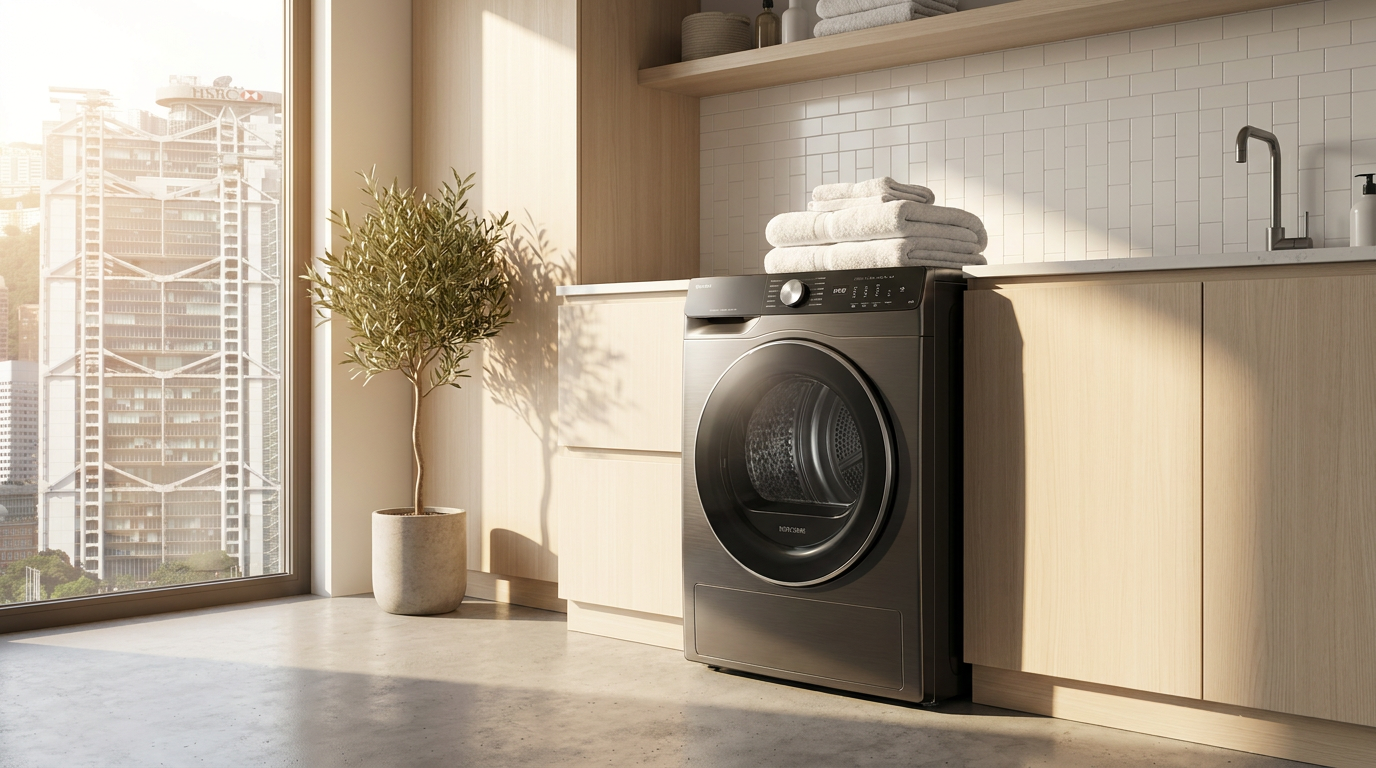
- Eco-Conscious & Efficiency Advocates
- Prioritizes long-term energy savings, reduced carbon footprint, and gentle fabric care over initial purchase price.
- Traditional & High-Volume Users
- Values rapid drying times, lower upfront costs, and the proven reliability of legacy vented systems for large families.
- Urban & Space-Constrained Dwellers
- Focuses on the installation flexibility of ventless technology and the convenience of all-in-one combo units for apartments.
What's not represented
- · Appliance Repair Technicians (regarding the long-term repair costs of complex heat pump compressors)
- · Commercial Laundromat Operators (balancing energy costs with customer turnover speed)
Why this matters
Choosing the right dryer is no longer just about matching your washing machine; it is a major financial and architectural decision. Opting for the right technology can save you over a thousand dollars in utility bills, protect your expensive clothing from heat damage, and allow you to place your laundry room anywhere in your home.
Key points
- Heat pump dryers use a closed-loop system to recycle hot air, cutting energy consumption by 50 to 70 percent.
- Traditional vented dryers dry clothes faster but expel climate-controlled indoor air outside, increasing overall home heating and cooling costs.
- While heat pump models cost roughly $650 more upfront, they can save homeowners up to $1,500 over their lifespan in utility bills.
- The lower operating temperatures of heat pump dryers prevent shrinkage and extend the life of delicate fabrics.
- Because they are ventless, heat pump dryers can be installed in closets, apartments, and interior rooms without exterior wall access.
For decades, the laundry room has harbored one of the most power-hungry appliances in the modern home. The traditional clothes dryer routinely draws more electricity than refrigerators, dishwashers, and washing machines combined. But as energy costs fluctuate and environmental awareness grows, a fundamental shift is occurring in how households approach laundry. The appliance market is now defined by a stark choice between two entirely different technologies: the legacy vented dryer and the modern heat pump dryer. This decision is no longer just about matching a washer; it is a complex calculation involving upfront premiums, long-term utility savings, fabric preservation, and home infrastructure.[1]
To understand the trade-offs, one must first look at the baseline technology that has dominated laundry rooms for over half a century. A traditional vented dryer operates on a remarkably simple premise, functioning essentially like a giant hair dryer. It pulls in ambient air from the room, heats it using high-draw electric coils or a gas burner, and tumbles the wet clothes through this scorching environment. The resulting hot, moisture-laden air is then forcefully expelled from the house through an external wall duct. While this brute-force method is highly effective at rapidly evaporating water, it is inherently wasteful, as the machine constantly requires new air to heat rather than reusing the thermal energy it has already generated.[4][7]
In stark contrast, the heat pump dryer represents a complete mechanical reimagining of the drying process. Instead of expelling air, it utilizes a closed-loop system that continuously recycles it. The machine pushes warm air through the tumbling clothes to absorb moisture, but rather than venting that damp air outside, it routes it through an internal evaporator. This component, functioning much like a household refrigerator or air conditioner in reverse, extracts the water—which is then drained or collected in a tank—while retaining the thermal energy. The dry air is then reheated by the system's compressor and sent back into the drum, creating a highly efficient circular economy of heat.[9][11]

The most compelling argument for heat pump technology lies in its quantified energy efficiency. Because they recycle heat rather than constantly generating it from scratch, heat pump dryers consume between fifty and seventy percent less electricity than their vented counterparts. In regions with high electricity rates, such as Massachusetts where power can cost upwards of twenty-eight cents per kilowatt-hour, this efficiency translates into dramatic utility bill reductions. Industry analysts calculate that a household running a heat pump dryer can save approximately one hundred and seventy-five dollars annually on electricity alone, fundamentally altering the total cost of ownership over the appliance's lifespan.[5][8]
However, this long-term financial benefit is counterbalanced by a significant upfront cost barrier. When comparing purchase prices, consumers will typically find that a heat pump dryer commands a premium of roughly six hundred and fifty dollars over a standard vented model. Traditional electric dryers often range from eight hundred to twelve hundred dollars, whereas heat pump variants generally start well above the twelve-hundred-dollar mark. Buyers must weigh this initial sticker shock against the projected lifetime savings, which energy experts estimate can reach between five hundred and fifteen hundred dollars over a typical ten-to-fifteen-year operational lifespan, eventually paying for the technological upgrade.[5][8]

Beyond the utility bill, the operational differences between the two machines have a profound impact on fabric care. Vented dryers rely on high, aggressive heat to achieve their rapid drying times, a process that inherently stresses textile fibers, degrades elastics, and exacerbates garment shrinkage. Heat pump dryers, conversely, operate at significantly lower temperatures. By relying on the continuous extraction of moisture rather than the brute force of extreme heat, they provide a much gentler environment for laundry. This lower-temperature approach preserves the structural integrity of delicate fabrics, meaning wardrobes last longer and suffer less wear and tear over years of washing cycles.[2][10]
Beyond the utility bill, the operational differences between the two machines have a profound impact on fabric care.
The architectural requirements of the two systems also present a major point of divergence. Vented dryers absolutely require an external exhaust duct, which severely limits where they can be installed within a floor plan. They must be placed against or near an exterior wall, and the ductwork itself introduces a vulnerability to the home's thermal envelope. Furthermore, every time a vented dryer runs, it acts as an exhaust fan, sucking climate-controlled air—which the homeowner has already paid to heat or cool—out of the living space and blowing it outdoors, forcing the home's HVAC system to work harder to compensate for the lost volume.[4][7]
Heat pump dryers eliminate this architectural constraint entirely. Because they are ventless, they offer unparalleled installation flexibility. They can be placed in interior hallway closets, under kitchen counters, or in high-rise apartment bathrooms—anywhere with a standard electrical outlet and a way to manage the extracted water. This water can either be routed directly into the washing machine's drain pipe or collected in an integrated tank that the user empties manually. For urban dwellers, condominium owners, or those looking to move their laundry room to the center of the house without tearing open walls, this ventless capability is often the deciding factor.[9][10]

Yet, the heat pump's gentle, closed-loop efficiency comes with a notable compromise: speed. If rapid turnaround is the primary metric of success, the traditional vented dryer remains the undisputed champion. Because heat pump models operate at lower temperatures, they generally take longer to complete a cycle—often adding thirty to forty-five minutes to the drying time compared to a vented machine. For large, busy households that need to power through multiple loads of heavy towels or athletic uniforms in a single evening, the slower pace of a heat pump dryer can create a logistical bottleneck in the laundry routine.[2][4]
Maintenance routines also differ significantly between the two technologies. Vented dryers require regular, professional cleaning of the external wall duct to prevent lint buildup. Neglecting this chore not only plummets the machine's efficiency but also creates a severe fire hazard; thousands of domestic fires are sparked annually by ignited lint in clogged dryer vents. Heat pump dryers eliminate the wall duct fire risk but introduce their own upkeep requirements. Users must diligently clean a secondary condenser filter—often located at the bottom of the machine—every few weeks to maintain the system's airflow and efficiency, alongside the standard lint trap cleaning required after every load.[5][7]
It is also crucial to distinguish heat pump technology from older condenser dryers, which are another form of ventless machine. Condenser dryers use a traditional heating element to warm the air and a heat exchanger to cool it and extract moisture, but they do not recycle the heat efficiently. Instead, they often radiate significant amounts of thermal energy into the surrounding room, making the laundry area uncomfortably hot. Appliance experts widely advise consumers to skip traditional condenser models today, as they combine the slower drying times of ventless systems with the high energy consumption of legacy machines, offering the worst of both worlds.[3][11]
The heat pump revolution has also enabled the rise of the all-in-one washer-dryer combo, a format that is rapidly gaining traction. Because heat pump drying modules are compact and operate on standard 110-volt household electricity rather than the dedicated 220-volt circuits required by traditional electric dryers, manufacturers have successfully integrated them directly into washing machines. These combo units allow users to put dirty clothes in before work and return to clean, dry laundry without ever transferring the load. While these cycles are lengthy, the sheer convenience and space-saving nature of a single-drum solution are reshaping expectations for modern laundry.[5][9]

Ultimately, the choice between these technologies requires a clear-eyed assessment of a household's specific conditions. A heat pump dryer fits well when a buyer prioritizes long-term utility savings, wants to reduce their carbon footprint, or needs to install laundry facilities in a space without exterior wall access. It is the superior choice for those who invest in high-quality clothing and want to minimize heat damage, and for homeowners willing to absorb a higher initial purchase price in exchange for a machine that will eventually pay for itself through drastically reduced electricity consumption.[5][8]
Conversely, a traditional vented dryer remains the better choice when a home already has clean, functional ductwork in place and the buyer is strictly constrained by a tight upfront appliance budget. It does not fit well in airtight, energy-efficient modern builds, but it excels in scenarios where raw speed is non-negotiable—such as large families that must process massive volumes of laundry in narrow timeframes. For those who prioritize simplicity, immediate turnaround, and low initial capital outlay, the legacy vented dryer continues to hold its ground as a reliable, heavy-duty workhorse.[4][5]
How we got here
1938
J. Ross Moore develops the first automatic electric clothes dryer, establishing the vented heating element design.
1997
The first heat pump tumble dryers are introduced to the European market, prioritizing energy efficiency.
2023
Major manufacturers release high-capacity, 110-volt heat pump washer-dryer combos, revolutionizing the North American market.
2026
Rising electricity costs and local energy rebates accelerate the mass adoption of heat pump models over legacy vented units.
Viewpoints in depth
Efficiency Advocates' view
Focusing on the long-term financial and environmental benefits of closed-loop drying.
This camp argues that the legacy vented dryer is an architectural flaw in modern homes. By expelling conditioned indoor air outside, vented dryers force HVAC systems to work overtime, compounding their already high energy draw. Efficiency advocates point to the 50-70% reduction in electricity usage as proof that heat pump technology is the only responsible choice for the future, arguing that the higher upfront cost is merely an advance payment on years of guaranteed utility savings.
High-Volume Households' view
Prioritizing speed and throughput for demanding laundry routines.
For large families processing multiple loads of heavy towels and athletic gear daily, the primary metric of a dryer is turnaround time. This perspective emphasizes that the 30-to-45-minute penalty of a heat pump cycle creates unacceptable bottlenecks. They argue that if a home already has safe, clean ductwork, the raw evaporative power of a traditional vented dryer remains unmatched, making the cheaper, faster legacy machines the more practical choice despite their higher running costs.
Urban Dwellers' view
Valuing the architectural freedom of ventless, 110-volt appliances.
Apartment owners and condo residents view heat pump technology primarily as a spatial liberator. Without the need to punch a hole in an exterior wall for a duct, laundry facilities can be moved out of dark basements and into hallway closets or under kitchen counters. This camp heavily favors the new wave of 110-volt all-in-one washer-dryer combos, celebrating the ability to start a load before work and return to dry clothes without needing a dedicated 220-volt laundry room.
What we don't know
- How quickly the upfront purchase price of heat pump dryers will reach parity with traditional vented models as manufacturing scales.
- Whether future building codes will eventually ban new installations of vented dryers entirely to meet municipal emission targets.
Key terms
- Heat Pump Technology
- A system that uses a compressor and refrigerant to extract moisture and recycle warm air, rather than generating new heat continuously.
- Closed-Loop System
- An internal air circulation method where air is continuously reused within the machine rather than being expelled outside.
- Vented Dryer
- A traditional dryer that pulls in room air, heats it, and exhausts the hot, moisture-laden air through an external wall duct.
- Condenser Dryer
- An older style of ventless dryer that extracts moisture using a heat exchanger but does not efficiently recycle the heat, often warming the surrounding room.
- Thermal Envelope
- The physical separator between the conditioned and unconditioned environment of a building, which is compromised by traditional dryer vents.
Frequently asked
Do heat pump dryers need an external wall vent?
No. Heat pump dryers are entirely ventless. They extract moisture from the air and either drain it directly into your plumbing or collect it in a removable tank.
Why do heat pump dryers take longer to dry clothes?
They operate at significantly lower temperatures than traditional dryers. While this takes 30 to 45 minutes longer, it uses far less energy and is much gentler on fabrics.
Can I plug a heat pump dryer into a standard outlet?
Many heat pump dryers, especially the newer all-in-one combo units, run on standard 110-volt household outlets, eliminating the need for a dedicated 220-volt circuit.
Where does the water go if there is no vent?
The machine's evaporator condenses the moisture from your clothes into liquid water. This water is then pumped out through a standard drain hose or collected in a pull-out tray that you empty manually.
Sources
Source coverage
11 outlets
3 viewpoints surfaced









[1]Factlen Editorial TeamEco-Conscious & Efficiency Advocates
Synthesis by Factlen editorial team
Read on Factlen Editorial Team →[2]ElectroluxUrban & Space-Constrained Dwellers
Vented vs Heat Pump vs Condenser Dryer: Which is Better?
Read on Electrolux →[3]RACVTraditional & High-Volume Users
Which type of clothes dryer is best for you?
Read on RACV →[4]Town ApplianceTraditional & High-Volume Users
Vented vs Ventless Dryers: Which is Best for Your Home?
Read on Town Appliance →[5]Yale ApplianceUrban & Space-Constrained Dwellers
Vented vs Condenser vs Heat Pump Dryers (2026): Real Costs, Pros & Trade-Offs
Read on Yale Appliance →[6]Appliances OnlineUrban & Space-Constrained Dwellers
Heat Pump vs Vented Dryers: Lifetime Cost Comparison
Read on Appliances Online →[7]Green Building CanadaEco-Conscious & Efficiency Advocates
Are Heat Pump Clothes Dryers Worth It?
Read on Green Building Canada →[8]Urner'sEco-Conscious & Efficiency Advocates
Why Pay More Upfront? The Long-Term Payoff of Heat Pump Dryers
Read on Urner's →[9]East Coast ApplianceUrban & Space-Constrained Dwellers
Discover the Benefits of a Heat Pump Dryer
Read on East Coast Appliance →[10]BekoUrban & Space-Constrained Dwellers
What is a Heat Pump Tumble Dryer?
Read on Beko →[11]SaveMoneyCutCarbonEco-Conscious & Efficiency Advocates
Heat Pump Tumble Dryers Explained: The Circular Economy of Air
Read on SaveMoneyCutCarbon →

More in shopping
See all 5 stories →


Every angle. Every day.
Get shopping stories with full source coverage and perspective breakdowns delivered to your inbox.