
How Green-Collar Apprenticeships Are Reshaping Vocational Education
As the clean energy sector faces a widening skills gap, debt-free apprenticeships and vocational programs are rapidly scaling to train the next generation of wind and solar technicians.
By Factlen Editorial Team
- Labor Economists
- Focuses on the structural shift in the labor market and the widening skills gap.
- Vocational Educators
- Advocates for the expansion of debt-free, hands-on training models like apprenticeships.
- Clean Energy Employers
- Prioritizes rapid talent acquisition, safety, and operational competence.
What's not represented
- · Traditional Four-Year Universities
- · Fossil Fuel Workers in Transition
Why this matters
The transition to clean energy is creating millions of high-paying, secure jobs that do not require a four-year college degree. For young workers and career-switchers, these vocational pathways offer a debt-free route to middle-class stability while directly addressing the global climate challenge.
Key points
- Wind turbine technicians are projected to see 50% job growth over the next decade, making it one of the fastest-growing careers.
- Global employment in the renewable energy sector reached a record 16.6 million jobs in 2024.
- The industry is relying heavily on registered apprenticeships, allowing workers to earn a paycheck while receiving hands-on training.
- Green hiring is currently outpacing the rate at which workers are acquiring green skills, creating a critical labor bottleneck.
- Federal and state policies are increasingly tying clean energy tax incentives to mandatory workforce development and apprenticeship standards.
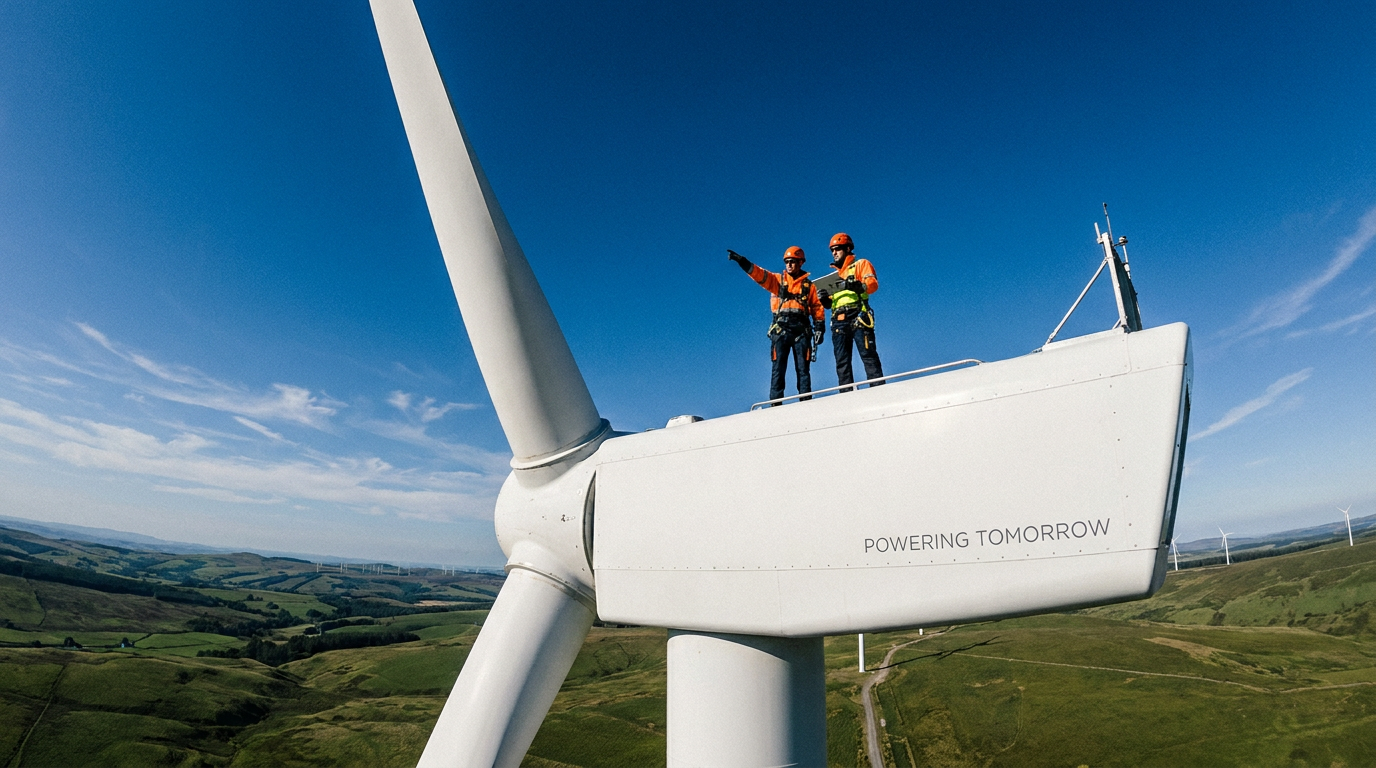
The fastest-growing career in the United States does not require a four-year university degree, a cubicle, or a student loan mountain. Instead, it requires a safety harness, a tolerance for heights, and a willingness to work with high-voltage equipment. According to the Bureau of Labor Statistics, wind turbine service technicians are projected to see a staggering 50 percent employment growth over the next decade, tying with solar photovoltaic installers for the top spot across all occupations. This surge represents a fundamental shift in the vocational education landscape, birthing a new era of "green-collar" jobs that blend manual trades with advanced climate technology.[1][3][6]
The sheer scale of this workforce transformation is becoming clear on a global level. The International Renewable Energy Agency (IRENA) recently reported that 16.6 million people were employed in the renewable energy sector worldwide in 2024, the highest figure ever recorded. Solar photovoltaic roles alone account for 7.3 million of those positions. As nations race to meet ambitious decarbonization targets, the physical infrastructure required to power the grid is driving an unprecedented demand for skilled labor, turning the clean energy transition into one of the largest job-creation engines of the twenty-first century.[2][3][6]
But building a workforce capable of erecting, wiring, and maintaining millions of solar panels and wind turbines requires a massive educational pivot. Traditional four-year universities are largely unsuited to produce the specific, hands-on technical skills required for these roles, as their curricula lean heavily toward theoretical engineering rather than applied mechanics. Instead, the clean energy industry is relying heavily on vocational training, community colleges, and, most prominently, registered apprenticeships. These alternative pathways offer a direct, pragmatic route into the middle class, bypassing the traditional academic track and its associated student debt in favor of targeted, immediately applicable competency.[4][7]

The apprenticeship model, long the backbone of traditional construction trades like plumbing, electrical work, and carpentry, is being rapidly adapted for the clean energy sector. An apprenticeship is fundamentally an 'earn while you learn' mechanism that flips the traditional educational financial model on its head. Participants are hired by an employer and receive a consistent paycheck from day one, splitting their time between supervised on-the-job training and related classroom instruction. This dual approach ensures that workers are not just learning abstract theory in a vacuum, but are actively applying electrical, mechanical, and hydraulic principles on active job sites under the watchful eye of seasoned professionals.[4][7]
Upon completing a rigorous program—which typically takes between one and four years depending on the specific trade and specialty—the apprentice graduates to 'journeyworker' status. This nationally recognized credential signals full professional competence and commands a significant wage premium in the open market. For wind turbine technicians, the median annual salary in 2024 sat at $62,580, with the top ten percent of highly experienced earners making over $88,000. This compensation significantly outpaces the national average for all occupations, making green-collar trades highly attractive to young workers entering the labor force and older career-switchers seeking a more lucrative and stable path.[1][3][4][7]
The urgency to scale these vocational programs is driven by a looming demographic and educational bottleneck widely known as the 'green skills gap.' While corporate commitments and government mandates for clean energy have accelerated at a breakneck pace, the pipeline of qualified workers has struggled to keep up with the demand. Recent labor market data indicates that global green hiring grew at 7.7 percent between 2021 and 2025, while the acquisition of green skills among the broader workforce grew by only 4.3 percent. Employers across the sector are increasingly finding that financial capital is far easier to secure than competent, fully trained technicians.[3][6]

Employers across the sector are increasingly finding that financial capital is far easier to secure than competent, fully trained technicians.
To bridge this widening gap, federal and state governments are deploying massive financial incentives to stimulate vocational training and workforce development. In the United States, the landmark Inflation Reduction Act tied lucrative clean energy tax credits directly to stringent labor standards, requiring project developers to employ a specific percentage of registered apprentices on large-scale utility projects. This powerful policy mechanism effectively forces the renewable energy industry to become a primary engine for workforce development, ensuring that billions of dollars in public subsidies translate directly into local, high-quality jobs rather than just corporate profits.[6][7]
State-level initiatives are also fundamentally reshaping the community college landscape to support this rapid transition. Illinois, for example, passed the ambitious Climate and Equitable Jobs Act, distributing tens of millions of dollars directly to community colleges to build out comprehensive green workforce development programs. These state funds are being utilized to purchase specialized training equipment, hire expert instructors from the field, and design curricula that align perfectly with the immediate needs of local solar and wind employers. The ultimate goal is to create a seamless, highly efficient pipeline from the community college classroom directly to the active job site.[6]
Industry intermediaries are stepping in to help employers navigate the bureaucratic complexities of establishing these training pipelines. Organizations like the Apprenticeships in Clean Energy Network provide free technical assistance to companies looking to register new apprenticeship programs with the Department of Labor. By standardizing training curricula, navigating compliance paperwork, and sharing best practices across the industry, these networks significantly lower the barrier to entry for smaller clean energy contractors who might otherwise lack the administrative capacity or financial resources to run a formal, federally recognized apprenticeship program on their own.[7]
Beyond mere employment numbers, there is a concerted, industry-wide effort to ensure that the green-collar boom is vastly more inclusive than the historical construction trades of the twentieth century. The clean energy sector is actively recruiting from historically underrepresented demographics, recognizing that meeting unprecedented labor demands requires tapping into absolutely every available talent pool. Targeted initiatives are currently underway to bring significantly more women, people of color, and individuals from marginalized communities into renewable energy apprenticeships, fundamentally changing the face of the blue-collar workforce.[2][5]

Researchers have highlighted the specific potential for inclusive apprenticeships to profoundly benefit people with disabilities, a demographic that represents a highly valuable but frequently overlooked talent pool in the industrial sector. By designing training programs with accessibility and reasonable accommodations in mind from the very outset, employers can secure dedicated, long-term workers while providing life-changing career stability. Similarly, international labor organizations emphasize that making equity a lived reality is not just a moral imperative, but an absolute operational necessity for the sector to access the vast talent required for the global energy transition.[2][5]
The nature of the daily work itself is also evolving rapidly, requiring a unique blend of traditional physical grit and modern digital literacy. A modern wind turbine is essentially a flying data center, packed with sensitive fiber optic sensors, predictive maintenance algorithms, and highly complex power electronics. Technicians must certainly be comfortable turning a heavy wrench at three hundred feet in the air, but they must also be equally adept at reading diagnostic software and troubleshooting digital control systems on a laptop. This hybrid skill set elevates the role far beyond simple manual labor, placing it firmly in the realm of advanced technical operations.[1][4][6]

Looking ahead, labor economists project that the demand for green-collar workers will not be a temporary construction spike, but rather a sustained, structural shift in the global economy. Earlier economic models had suggested that job growth might be heavily 'front-loaded' during the initial build-out phase of the energy transition. However, updated analyses indicate that the ongoing need for routine maintenance, continuous grid upgrades, and eventual infrastructure decommissioning will provide highly durable, multi-decade career stability for those choosing to enter the clean energy trades today.[2][6]
The meteoric rise of green-collar apprenticeships represents a rare and powerful alignment of economic opportunity, educational pragmatism, and environmental necessity. By offering debt-free pathways to middle-class stability, these vocational programs are quietly but effectively rebuilding the technical workforce from the ground up. For a new generation of workers seeking both long-term financial security and a tangible sense of purpose, the clean energy transition is proving that the most impactful climate action might just involve putting on a hard hat, strapping into a harness, and getting to work.[3][6][7]
How we got here
2021
Illinois passes the Climate and Equitable Jobs Act, directing millions to community college green workforce programs.
2022
The U.S. Inflation Reduction Act ties major clean energy tax incentives to the use of registered apprentices.
2024
Global renewable energy employment hits a record 16.6 million jobs.
2025
Industry data reveals that global green hiring is growing at nearly twice the rate of green skills acquisition.
2026
The Bureau of Labor Statistics projects wind turbine technicians will grow by 50% over the coming decade.
Viewpoints in depth
Labor Economists
Focuses on the structural shift in the labor market and the widening skills gap.
Labor economists and researchers emphasize that the clean energy transition is fundamentally constrained by human capital, not just financial capital. Organizations tracking global employment note that while hiring demand is surging, the rate at which workers are acquiring 'green skills' is lagging significantly. This camp argues that without massive, systemic investments in vocational training and credentialing, the ambitious decarbonization targets set by governments will be impossible to meet due to a sheer lack of qualified hands to build the infrastructure.
Vocational Educators
Advocates for the expansion of debt-free, hands-on training models like apprenticeships.
Educators within community colleges and trade networks view the green-collar boom as a validation of the vocational education model. They argue that traditional four-year degrees are misaligned with the immediate, practical needs of the renewable energy sector. By championing the 'earn while you learn' apprenticeship model, this group focuses on standardizing curricula, securing state and federal funding for training facilities, and ensuring that programs provide direct pathways to high-paying, unionized or prevailing-wage careers.
Clean Energy Employers
Prioritizes rapid talent acquisition, safety, and operational competence.
For wind and solar companies, the perspective is driven by urgent operational needs. Employers are facing a tight labor market where poaching experienced technicians is common and costly. Consequently, they are increasingly willing to invest in in-house training and registered apprenticeships to build their own talent pipelines. This camp emphasizes the need for workers who not only possess mechanical and electrical aptitude but also a strong commitment to safety protocols, given the high-risk environments of high-voltage systems and elevated workspaces.
What we don't know
- How quickly the traditional education system can pivot to offer standardized green-collar credentials at scale.
- The long-term impact of artificial intelligence and robotics on manual installation and maintenance roles within the renewable sector.
- Whether the current surge in state and federal funding for green workforce development will be sustained across different political administrations.
Key terms
- Green-collar worker
- A professional employed in the environmental sectors of the economy, particularly in renewable energy, energy efficiency, and climate adaptation.
- Registered Apprenticeship
- A formal, industry-vetted training program validated by the Department of Labor that combines paid on-the-job learning with classroom instruction.
- Journeyworker
- A worker who has successfully completed an official apprenticeship program and is recognized as fully qualified in their specific trade.
- Green skills gap
- The economic disparity between the high demand for workers with sustainability expertise and the low supply of adequately trained candidates.
Frequently asked
Do I need a college degree to work in renewable energy?
No. Many of the fastest-growing roles, such as wind turbine technicians and solar installers, require a postsecondary certificate or an apprenticeship rather than a four-year degree.
How much do wind turbine technicians make?
As of 2024, the median annual salary for a wind turbine technician was $62,580, with the top 10 percent earning over $88,000.
What is the 'earn while you learn' model?
It is the core structure of an apprenticeship where participants are hired and paid by an employer from day one, receiving wages while they complete their hands-on training and classroom education.
Are these jobs physically demanding?
Yes. Roles like wind turbine technician require climbing tall structures, working with heavy equipment, and operating in various weather conditions, though safety protocols are strictly enforced.
Sources
Source coverage
7 outlets
3 viewpoints surfaced





[1]Bureau of Labor StatisticsLabor Economists
Fastest Growing Occupations: 2024-2034
Read on Bureau of Labor Statistics →[2]IRENALabor Economists
Renewable Energy and Jobs: Annual Review 2025
Read on IRENA →[3]Sustainability JobsClean Energy Employers
Green Jobs Trends for 2026: The Careers Reshaping Our Economy
Read on Sustainability Jobs →[4]Trade Schools DirectoryVocational Educators
Wind Turbine Tech Career 2026: Salary, Training, Outlook
Read on Trade Schools Directory →[5]Urban InstituteLabor Economists
Clean Energy Apprenticeships and People with Disabilities
Read on Urban Institute →[6]Factlen Editorial TeamLabor Economists
Synthesis by Factlen editorial team
Read on Factlen Editorial Team →[7]Apprenticeships in Clean Energy NetworkVocational Educators
Apprenticeships in Clean Energy Network
Read on Apprenticeships in Clean Energy Network →



Every angle. Every day.
Get education stories with full source coverage and perspective breakdowns delivered to your inbox.