
How AI and Virtual Try-Ons Are Finally Solving the E-Commerce Returns Crisis
Retailers are deploying advanced virtual try-on technology and AI-driven sizing models to drastically reduce online return rates, boosting profitability while cutting millions of tons of shipping waste.

In short
- E-commerce returns cost the retail industry roughly $380 billion annually in reverse logistics.
- AI sizing models now predict fit by cross-referencing past purchases with specific brand dimensions.
- Advanced AR try-ons use neural radiance fields to accurately simulate fabric drape on a user's body.
For years, the Achilles heel of the digital retail revolution has been a simple, costly reality: people send things back. In the apparel sector, the ease of clicking "add to cart" created a culture of bracketing—buying three sizes of the same item with the explicit intention of returning two.
By the early 2020s, the average return rate for online clothing purchases hovered around 24.5%, creating a logistical nightmare that quietly eroded profit margins and generated massive environmental waste. Retailers absorbed the cost, treating it as the unavoidable price of doing business on the internet.
But in 2026, the e-commerce industry is experiencing a quiet revolution. A maturation of artificial intelligence sizing models and augmented reality (AR) virtual try-ons is finally bending the curve on returns, transforming how consumers interact with digital storefronts and saving billions in reverse logistics.[1][2]
The mechanism driving this shift is twofold. First, predictive AI sizing has moved far beyond static measurement charts. Modern algorithms analyze a shopper's past purchase history, cross-referencing it with the specific dimensional quirks of thousands of brands and individual garments.[1]
If a customer frequently returns medium shirts from one brand but keeps mediums from another, the AI learns the exact fit profile of that individual. It then dynamically recommends the correct size for a new item, effectively eliminating the guesswork that leads to bracketing.
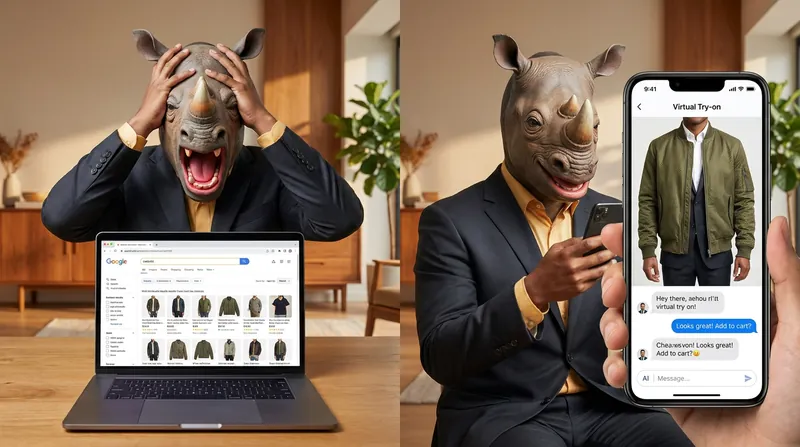
The second, more visually striking mechanism is the deployment of high-fidelity virtual try-ons. Early iterations of this technology were clunky, pasting rigid 2D images of clothing over user photos. Today's systems utilize neural radiance fields (NeRFs) and advanced physics engines to simulate how fabric actually drapes, stretches, and moves on a specific body type.
Shoppers can use their smartphone cameras to create a secure, localized 3D avatar. When they select a garment, the AR interface renders the item in real-time, showing exactly where a hem will fall, how a shoulder seam will sit, or where a fabric might pull.
The financial impact of getting the fit right the first time is staggering. Reverse logistics—the complex process of shipping, inspecting, cleaning, and restocking a returned item—costs the global retail industry an estimated $380 billion annually.
When an item is returned, it loses value rapidly. Many seasonal items are out of style by the time they make it back to a distribution center, forcing retailers to liquidate them at steep discounts or sell them for pennies on the dollar to off-price liquidators.
Brands that have fully integrated AR sizing and virtual try-ons are reporting dramatic improvements. Some early adopters have seen their return rates plummet from the industry average down to near 12%, a reduction that effectively doubles their net margins on digital sales.[1]
Beyond the balance sheet, the environmental implications of solving the returns crisis are profound. The EPA previously estimated that returned inventory generated over 9.5 billion pounds of landfill waste annually in the United States alone, as it was often cheaper for brands to trash returned goods than to process them.
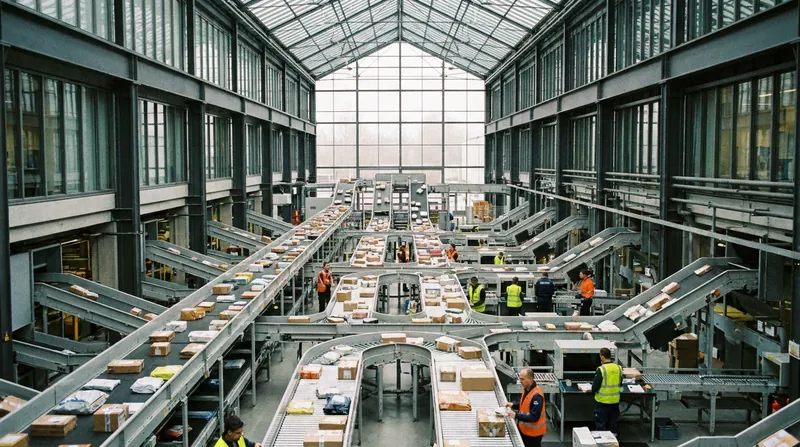
Furthermore, the carbon footprint of reverse logistics is massive. Every returned package requires a truck trip back to a sorting facility, followed by cross-country freight to a centralized warehouse, and potentially another trip to a liquidator.[2]
By preventing the return before the purchase is even made, AI sizing acts as a powerful sustainability tool. Retailers are increasingly highlighting their reduced return rates in their corporate social responsibility reports, framing accurate sizing as a core climate initiative.[1][2]
However, the technology is not without its uncertainties and friction points. The primary hurdle is consumer privacy. To generate an accurate 3D avatar, shoppers must allow applications to scan their bodies, raising valid concerns about biometric data storage and security.[2]
While leading platforms process this data locally on the device to ensure privacy, educating consumers about these safeguards remains a challenge. A significant subset of shoppers remains hesitant to engage with body-scanning features, opting instead for traditional, less accurate size charts.
Additionally, better sizing does not solve all return behaviors. The phenomenon of "wardrobing"—buying an outfit for a specific event, wearing it once with the tags tucked in, and returning it—remains a persistent issue that technology cannot fix.
Despite these edge cases, the trajectory is clear. The era of blind online purchasing is ending. As the technology becomes cheaper to implement, even mid-tier and boutique brands are integrating AR try-ons into their storefronts, democratizing access to perfect fits.[2]
Ultimately, the success of these tools represents a rare win-win in the modern economy. Consumers enjoy a more confident, frictionless shopping experience, retailers recover billions in lost margins, and the environmental toll of e-commerce is meaningfully reduced.[2]
Jargon, explained
- Bracketing
- The practice of buying multiple sizes or colors of the same item with the intention of returning the ones that don't fit.
- Reverse Logistics
- The supply chain process of moving goods from their typical final destination back to the retailer or manufacturer.
- Neural Radiance Fields (NeRFs)
- An AI technique that generates novel views of complex 3D scenes from a partial set of 2D images, used to simulate clothing drape.
- Wardrobing
- The fraudulent practice of buying an item, using it for a specific occasion, and then returning it for a full refund.
Common questions
Does virtual try-on require special equipment?
No, modern virtual try-on systems use the standard cameras and depth sensors already built into most contemporary smartphones.
Is my body scan data stored by the retailer?
Most leading platforms process biometric data locally on your device, meaning the actual scan never leaves your phone, though privacy policies vary by brand.
Will this make clothes cheaper?
While it may not immediately lower prices, reducing the massive cost of returns helps retailers avoid passing those logistical losses onto consumers through price hikes.
Competing readings
Retail Operations Managers
Focused on margin recovery and reducing the logistical nightmare of reverse logistics.
For retail operators, returns are a margin-destroying black hole. Every returned item incurs costs for shipping, inspection, cleaning, and restocking. Often, seasonal items lose their value entirely by the time they are processed. Operations managers view AI sizing not as a marketing gimmick, but as a critical infrastructure upgrade necessary to maintain profitability in an era of rising shipping costs. Their primary metric of success is the 'keep rate,' and they argue that investing in AR tech yields a faster return on investment than almost any other supply chain optimization.
Sustainability Advocates
View accurate sizing technology primarily as a tool to reduce carbon emissions and landfill waste.
Environmental groups point out that the convenience of online shopping hides a massive ecological toll. Millions of tons of returned clothing end up in landfills each year because it is cheaper for brands to throw items away than to process them. Furthermore, the reverse logistics supply chain requires countless truck trips, generating significant carbon emissions. Sustainability advocates argue that solving the sizing problem is one of the most effective ways to instantly shrink the fashion industry's carbon footprint, turning a business optimization into a climate victory.
Privacy Watchdogs
Raise concerns about the collection, storage, and potential misuse of biometric body-scan data.
While acknowledging the benefits of better sizing, privacy advocates warn about the normalization of biometric data collection. Creating an accurate 3D avatar requires highly detailed body measurements. Watchdogs argue that if this data is stored on corporate servers rather than locally on the user's device, it creates a massive vulnerability. They caution that without strict regulatory frameworks, body-scan data could be monetized, shared with third parties, or exposed in data breaches, urging consumers to read the fine print before utilizing virtual try-on features.
- Retail Operations Managers
- Focused on margin recovery, reducing the logistical nightmare of reverse logistics, and improving inventory turnover.
- Sustainability Advocates
- View accurate sizing technology primarily as a tool to reduce carbon emissions from shipping and prevent clothing from entering landfills.
- Privacy Watchdogs
- Raise concerns about the collection, storage, and potential misuse of biometric body-scan data by e-commerce platforms.
Perspectives this story doesn't cover
- Off-price liquidators who rely on returned inventory
- Warehouse workers in reverse logistics
Sources
Source coverage
2 outlets
3 viewpoints surfaced


- [1]McKinsey & CompanyRetail Operations Managers
Navigating the Future of Retail: AI and the Supply Chain
Read on McKinsey & Company → - [2]Factlen Editorial TeamSustainability Advocates
Synthesis by Factlen editorial team
Read on Factlen Editorial Team →
More in Business
See all →Trade Policy
EU Ends E-Commerce Tax Exemption, Imposing New €3 Duty on Small Parcels to Counter China Trade Imbalance
4 sources
AI Marketplaces
How AI is Fixing the Used Car Market as Carro Targets a $3 Billion US IPO
5 sources

Agentic AI
The Rise of Agentic AI: How Autonomous Assistants Are Rewriting E-Commerce
2 sources

Agentic AI
The Rise of Agentic Commerce: How AI is Autonomously Executing Purchases
5 sources

Comments
Every angle. Every day.
Get Business stories with full source coverage and perspective breakdowns, free every day.