
Halting Deforestation Dramatically Increases the Amazon's Ability to Survive Global Warming
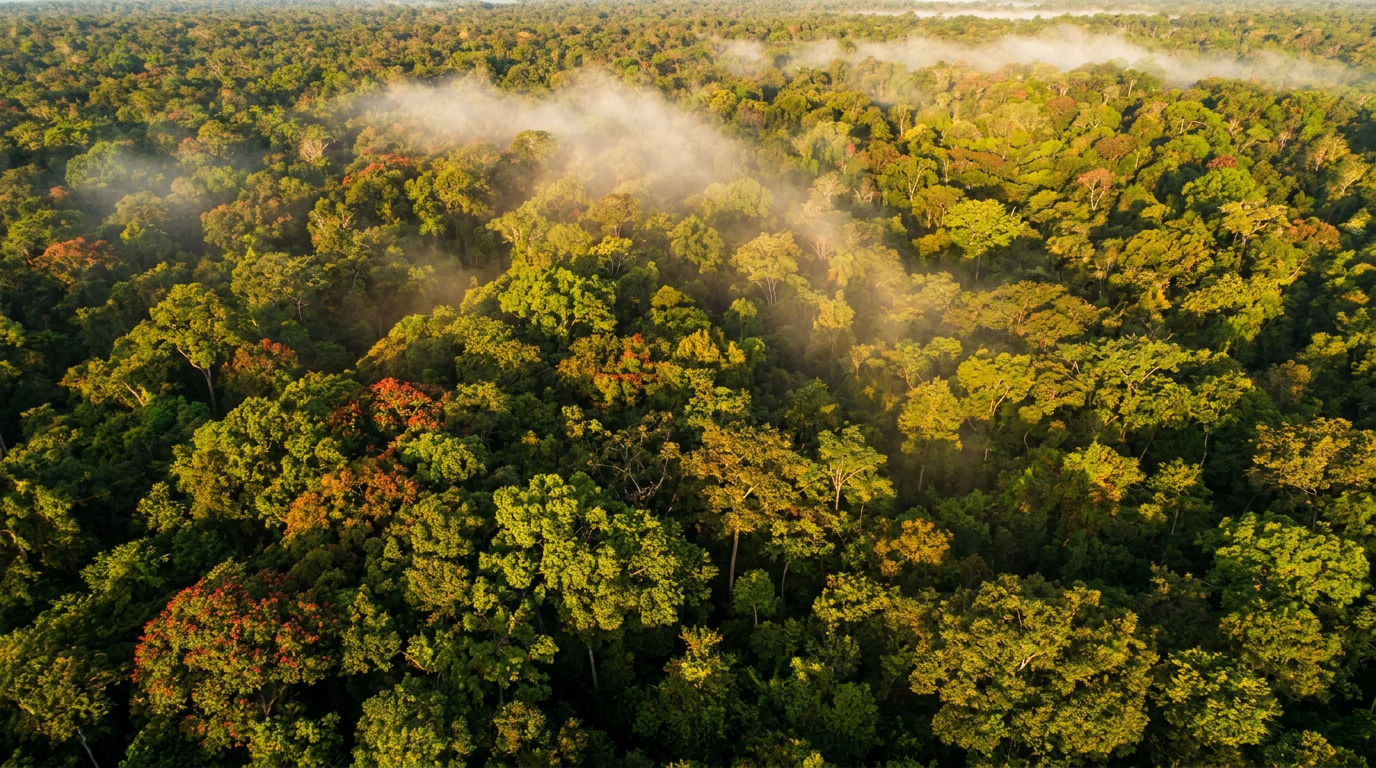
New scientific modeling and satellite data reveal that if local clear-cutting is stopped, the Amazon rainforest can withstand significantly higher global temperatures than previously thought.
By Factlen Editorial Team
- Climate Modelers & Ecologists
- Argue that the Amazon's survival depends heavily on local land-use decisions, not just global emissions.
- Conservation Monitors
- Focus on empirical satellite data and enforcement metrics to track the reality on the ground.
- Policy & Governance Observers
- Highlight the political and economic levers required to sustain reductions in clear-cutting.
What's not represented
- · Indigenous communities living within the Amazon who manage protected territories.
- · Agricultural conglomerates and local farmers whose livelihoods depend on land expansion.
Why this matters
For years, the narrative has been that global warming alone would inevitably destroy the Amazon. This new scientific consensus flips the script, proving that if local governments and global markets can stop intentional deforestation, the rainforest is resilient enough to survive climate change—giving humanity a concrete, actionable path to save it.
Key points
- Deforestation in the Brazilian Amazon has dropped to its lowest levels in over a decade, with May 2026 seeing a 61% year-over-year decline.
- A landmark study reveals that if deforestation is halted, the Amazon can withstand up to 4.0°C of global warming without collapsing.
- If deforestation reaches 22–28%, the forest could cross a tipping point into a degraded savanna at just 1.5°C of warming.
- Over half of the rainfall decline in the southern Amazon is caused by local clear-cutting, not just global climate change.
- While degraded forests show high resilience and can recover from fires, they often suffer long-term losses in biodiversity.
The Amazon rainforest is at a critical juncture, but a wave of mid-2026 scientific data offers a surprisingly hopeful consensus: the forest can survive global warming, provided local deforestation is halted.[1]
The core of this optimism stems from a convergence of satellite monitoring and new climate modeling, which reframes the biome's vulnerability. Rather than being doomed by global emissions alone, the evidence strongly suggests that local land management dictates the forest's fate.[1][2]
The first major claim in this emerging consensus is that deforestation rates are plummeting. The evidence for this is robust, verified by multiple independent tracking systems monitoring the Brazilian Amazon.[5][6]
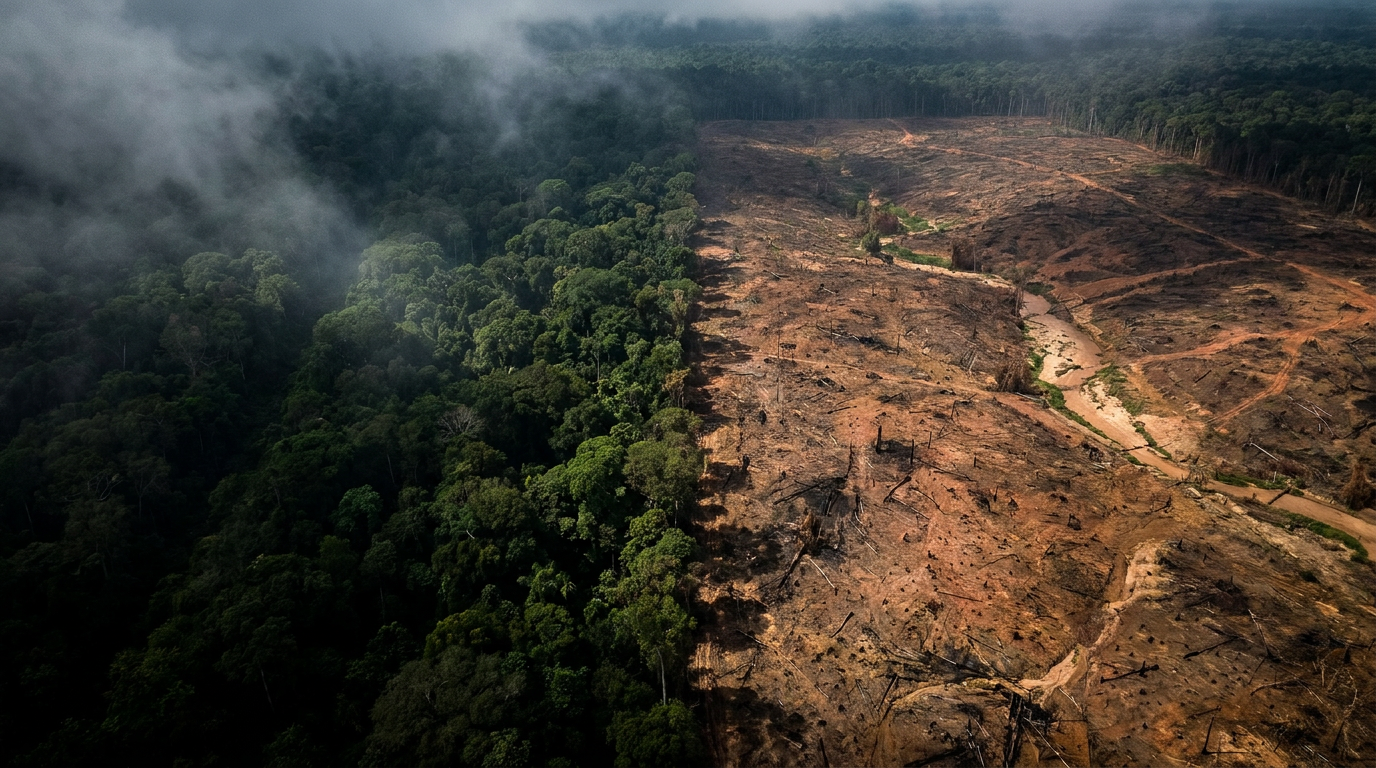
Data from Brazil's National Institute for Space Research (INPE) DETER system recorded a 61 percent year-over-year drop in clear-cutting for May 2026. Over the preceding 12 months, the system registered the lowest total deforestation since its current iteration launched in 2014.[5][7]

Independent monitoring by the research institute Imazon corroborates this trend. Their data shows a 36 percent decline in deforestation between August 2025 and March 2026, marking the smallest area destroyed during that period since 2017.[6][8]
The second major claim is that halting deforestation drastically increases the forest's climate resilience. This is perhaps the most significant scientific development of the year, shifting the focus from global temperature targets to immediate local conservation.[1][2]
A landmark May 2026 study published in Nature by the Potsdam Institute for Climate Impact Research (PIK) modeled the complex interplay between global warming and forest loss.[2]
The PIK researchers found strong evidence that if deforestation reaches 22 to 28 percent of the basin, the Amazon could collapse into a degraded savanna at just 1.5°C to 1.9°C of global warming. Currently, roughly 17 to 18 percent of the forest has been lost.[2][8]
Currently, roughly 17 to 18 percent of the forest has been lost.
However, the models also revealed a massive resilience dividend: if deforestation is halted at current levels, the intact forest can withstand global warming of up to 3.7°C to 4.0°C before large-scale dieback occurs.[2]

The third claim is that local deforestation drives drought more than global climate change. Evidence is strengthening that the severe dry seasons plaguing South America are largely self-inflicted by land-use changes.[3]
A study in Nature Communications tracked atmospheric moisture across the continent over four decades. The researchers concluded that 52 to 72 percent of the rainfall decline in the southern Amazon is directly attributable to large-scale deforestation.[3][7]
By disrupting the canopy's ability to recycle water vapor into the atmosphere—a process known as evapotranspiration—clear-cutting dries out regions hundreds of miles downwind. The study notes that standard climate models have historically underestimated this local deforestation effect by up to 50 percent.[3]

The final claim is that degraded forests can recover, though biodiversity lags. The evidence for long-term ecological recovery is nuanced, showing that while the biome is resilient, scars remain.[4]
A two-decade field experiment published in the Proceedings of the National Academy of Sciences observed forest plots in Mato Grosso recovering from severe fires and droughts.[4][7]
The researchers found high ecological resilience, noting that the forests did not transition to savanna. However, species diversity at the forest edges was halved, as fast-growing generalist trees permanently replaced fire-resistant specialist species.[4]

While the baseline data for recovery and resilience is strong, the immediate future holds transparent uncertainty regarding extreme weather anomalies.[7]
Climate forecasters warn that a strong El Niño pattern could trigger severe droughts and understory fires later in 2026. This will test the forest's resilience in real-time, threatening to degrade standing forests even if intentional clear-cutting remains at record lows.[7]
How we got here
2004–2012
Brazil successfully reduces Amazon deforestation by roughly 80% through strict enforcement and monitoring.
2019–2022
Deforestation surges again due to weakened environmental protections and increased agricultural expansion.
2023–2024
A new political administration reinstates aggressive environmental enforcement, beginning a downward trend in clear-cutting.
May 2026
Landmark studies confirm that halting deforestation dramatically increases the forest's ability to survive global warming, as clear-cutting drops to an 11-year low.
Viewpoints in depth
Climate Modelers & Ecologists
Argue that the Amazon's survival is not solely dependent on global carbon emissions, but on local land-use decisions.
Researchers in this camp emphasize that the forest's ability to recycle its own water makes it highly resilient to heat, provided the canopy remains intact to drive evapotranspiration. They point to modeling that shows halting deforestation pushes the biome's tipping point from a fragile 1.5°C of warming up to a robust 4.0°C, proving that local conservation is a globally significant climate strategy.
Conservation Monitors
Focus on the empirical data, noting that while clear-cutting has plummeted, forest degradation remains a critical threat.
Organizations tracking satellite data celebrate the steep drop in primary deforestation but caution that the fight is not over. They stress that satellite vigilance must continue to track 'degradation'—damage from selective logging and edge-effects that weakens the forest without clearing it entirely. They warn that extreme weather events like El Niño threaten to spark wildfires in these degraded areas.
Policy & Governance Observers
Highlight that the recent drop in deforestation is the result of renewed federal enforcement and international pressure.
This perspective argues that the positive environmental data is a direct result of political will, including crackdowns on illegal mining and logging. However, they note that sustaining these gains requires long-term economic alternatives for local communities. Without viable financial incentives to keep the forest standing, punitive measures alone may fail during future political transitions.
What we don't know
- Whether the current reduction in deforestation can be sustained through future political transitions in Brazil.
- Exactly how severe the upcoming El Niño dry season will be, and whether it will trigger uncontrollable understory fires in degraded areas.
Key terms
- Tipping Point
- A critical threshold where an ecosystem undergoes a sudden, irreversible shift into a different state, such as a rainforest becoming a dry savanna.
- DETER
- Brazil's real-time satellite alert system used to detect and map deforestation and forest degradation as it happens.
- Evapotranspiration
- The process by which water is transferred from the land to the atmosphere by evaporation from the soil and transpiration from plants.
- Forest Degradation
- Damage to a forest—such as from logging or understory fires—that weakens the ecosystem and reduces biodiversity without entirely clearing the canopy.
Frequently asked
Is the Amazon still approaching a tipping point?
Yes, but the threshold depends heavily on land use. If deforestation reaches 22-28%, the forest could collapse at just 1.5°C of warming. If cutting stops now, it can survive up to 4.0°C of warming.
Why does deforestation cause drought?
The Amazon generates up to half of its own rainfall through a process where trees release water vapor into the atmosphere. Cutting down trees breaks this moisture-recycling engine, causing droughts hundreds of miles downwind.
Are Brazil's efforts to stop deforestation working?
Current data strongly suggests they are. Satellite monitoring shows deforestation rates dropped by roughly 36% to 61% in recent tracking periods, reaching their lowest levels in over a decade.
Sources
Source coverage
8 outlets
3 viewpoints surfaced





[1]NatureClimate Modelers & Ecologists
The Amazon can be saved — with concerted action inside and outside Brazil
Read on Nature →Deforestation-induced drying lowers Amazon climate threshold
Read on Nature →Large-scale deforestation drives rainfall decline in southern Amazon
Read on Nature Communications →[4]PNASClimate Modelers & Ecologists
Forest recovery pathways after fire, drought, and windstorms in southeastern Amazonia
Read on PNAS →[5]INPEConservation Monitors
DETER Alert System: Amazon Deforestation Data May 2026
Read on INPE →[6]ImazonConservation Monitors
Amazon deforestation falls 36% between August 2025 and March 2026
Read on Imazon →[7]MongabayConservation Monitors
Amazon deforestation continues to fall, boosting climate resilience
Read on Mongabay →[8]Inside Climate NewsPolicy & Governance Observers
Deforestation in the Brazilian Amazon Falls to Lowest Level Since 2018
Read on Inside Climate News →
More in science
See all 5 stories →


Every angle. Every day.
Get science stories with full source coverage and perspective breakdowns delivered to your inbox.