
Fact-Checking the Evidence: Does the 'Right to Repair' Actually Save Consumers Money and Reduce E-Waste?
As right-to-repair laws take effect across multiple US states and the EU in 2026, advocates claim massive consumer savings and environmental benefits. We examine the data behind the movement to see where the evidence is strong and where it remains contested.
By Factlen Editorial Team
- Consumer and Environmental Advocates
- This camp views repair as a fundamental property right that protects wallets and the planet.
- Environmental Researchers
- This camp focuses on the lifecycle of electronics, emphasizing that extending product life is critical to reducing toxic waste.
- Independent Repair Industry
- This camp argues that access to diagnostic data and parts is essential for small businesses to survive.
- Free Market Skeptics
- This camp argues that savings are vastly overstated and mandates could compromise consumer surplus.
- Neutral Policy Analysts
- This camp synthesizes the competing claims to evaluate the overall efficacy of the legislation.
What's not represented
- · Original Equipment Manufacturers (OEMs) and Tech Conglomerates
- · Authorized Dealership Networks
Why this matters
As right-to-repair laws activate across the country in 2026, the outcome will directly dictate whether you can affordably fix your own smartphone, car, and appliances, or if you will be forced to pay premium prices to authorized dealers. Beyond your wallet, these policies are the primary defense against a mounting global crisis of toxic electronic waste.
Key points
- Multiple U.S. states have enacted right-to-repair laws in 2026, forcing manufacturers to release parts and manuals.
- Advocates claim these laws save households $382 annually, though free-market skeptics argue the true figure is closer to $55.
- E-waste is the fastest-growing waste stream globally, with only 22% of discarded electronics formally collected and recycled.
- Peer-reviewed modeling shows that extending device lifespans by just one year drastically reduces landfilled toxic waste.
- Federal right-to-repair legislation for vehicles enjoys massive bipartisan support, backed by 85% of Americans.
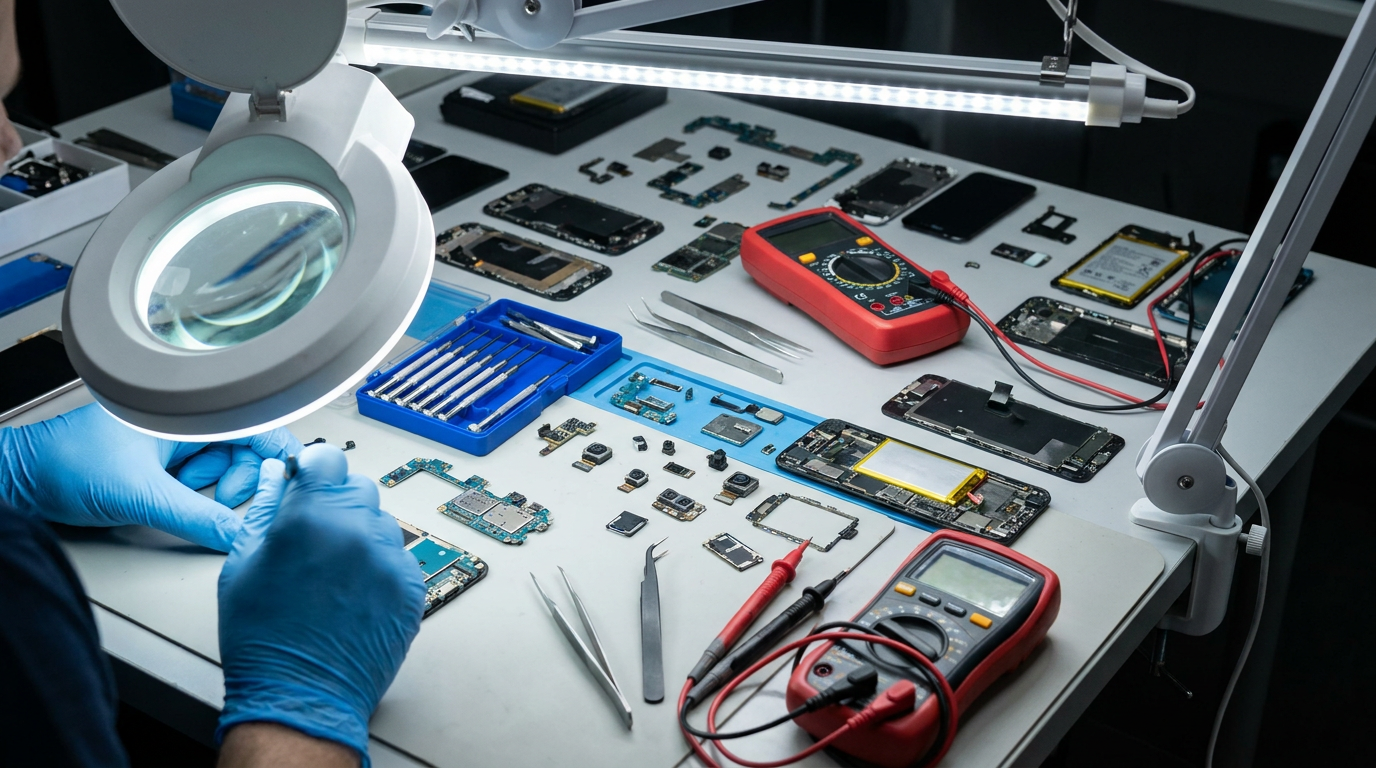
In 2026, the "right to repair" movement has officially transitioned from a niche grievance held by hardware hackers and independent mechanics into a mainstream legislative reality. Across the United States, a wave of state-level legislation has fundamentally altered the consumer electronics and appliance markets. States including California, New York, Colorado, Minnesota, and Oregon have enacted sweeping laws that require manufacturers to make diagnostic tools, repair manuals, and replacement parts available to the general public on fair and reasonable terms. This legislative momentum represents a significant shift in consumer rights, challenging the long-held industry standard where manufacturers maintained strict, exclusive control over the lifecycle of their products. As these laws take effect, they are setting up a massive real-world test of the movement's two central promises: that democratizing repair will save consumers billions of dollars and significantly curb the escalating global crisis of electronic waste.[7]
At the heart of this policy shift is a battle over ownership and the modern definition of property rights. For years, manufacturers of everything from flagship smartphones and home appliances to agricultural tractors and medical devices have utilized a combination of digital locks, proprietary screws, and restrictive warranties to dictate who can fix their products. One of the most controversial tactics is "parts pairing," a software restriction that ties a specific hardware component to a device's motherboard, ensuring that even if a consumer harvests a perfectly good screen from an identical broken phone, the device will reject the unauthorized part. Advocates argue these barriers are monopolistic strategies designed to force consumers into expensive authorized repair networks or, more frequently, into abandoning the broken device entirely to purchase a brand-new upgrade.[7]
The legislative push aims to dismantle these monopolies by legally mandating that companies sell replacement parts and provide diagnostic software to independent shops and everyday consumers. By leveling the playing field, proponents believe the market will naturally correct itself, fostering a robust aftermarket of local repair businesses that can compete on price and convenience. However, as these mandates move from theory to practice, both advocates and free-market skeptics are fiercely debating the actual empirical impact. The central claims of the movement are currently being stress-tested against economic models, consumer behavior surveys, and environmental data to determine where the evidence is strong and where the projected benefits might be overstated.[1][7]
On the financial front, the most prominent claims of consumer savings originate from the U.S. Public Interest Research Group (PIRG), a leading advocacy organization in the right-to-repair space. PIRG has published extensive research asserting that removing repair restrictions can save the average American household approximately $382 per year. Their calculations are based on the premise that consumers are currently forced to replace expensive electronics and appliances prematurely due to artificially inflated repair costs. By extending the lifespan of these products through affordable, independent fixes, PIRG argues that families can drastically reduce their annual expenditure on consumer goods, keeping devices in their hands and out of the landfill for years longer than the current average.[1]

When extrapolated across the entire nation, PIRG estimates that these household savings could leave over $40 billion in consumers' pockets annually. In an era marked by persistent inflation and economic anxiety, this statistic has become a powerful rallying cry for lawmakers pushing repair legislation. The narrative is highly appealing: at a time when the cost of living is squeezing the middle class, right-to-repair laws offer a concrete, legislative mechanism to lower household expenses without requiring government subsidies or tax cuts. It frames the issue not just as an environmental crusade, but as a fundamental matter of economic fairness and anti-trust enforcement against massive technology conglomerates.[1]
However, these financial projections have been heavily scrutinized and challenged by free-market think tanks and industry economists. The Competitive Enterprise Institute (CEI) has published rebuttals arguing that the $382 annual savings estimate is vastly inflated due to deeply flawed baseline calculations. According to CEI's analysis, the PIRG report misconstrues data from the Bureau of Labor Statistics by including non-electronic "miscellaneous housewares"—such as ceramic plates, glass cups, and silverware—in its baseline for small appliance expenditures. Because right-to-repair laws do not apply to inert household items, CEI argues that including them artificially inflates the potential savings by over 140 percent right out of the gate.[2]
Furthermore, CEI points out that the optimistic models assume a nearly 100 percent success rate for consumer repairs and fail to account for repairs that are already covered under existing warranties or insurance plans. When adjusting for these factors, CEI forecasts that the actual savings are much more modest, landing closer to $55 per household annually. Skeptics argue that lawmakers must weigh this nominal financial benefit against the potential negative consequences of the legislation, such as disruptions to manufacturer supply chains, compromised intellectual property, and the possibility that companies might raise the upfront retail prices of devices to offset the loss of lucrative authorized repair revenue.[2]
When adjusting for these factors, CEI forecasts that the actual savings are much more modest, landing closer to $55 per household annually.
Yet, regardless of whether the true savings figure is $55 or $382, consumer behavior surveys indicate that the demand for accessible repair is immense and driven by genuine market frustration. A nationally representative survey conducted by Consumer Reports found that 58 percent of Americans who experienced a large appliance breakdown in the past five years ultimately replaced the item entirely. Crucially, among those who opted for replacement, 26 percent reported that they actively tried to repair the appliance first but were thwarted. They cited exorbitant costs quoted by authorized technicians, a complete lack of available replacement parts, or the sheer logistical impossibility of getting a service appointment in a reasonable timeframe.[5]

This data highlights a clear market failure that right-to-repair legislation aims to correct. When a quarter of consumers who want to fix their appliances are structurally prevented from doing so, the resulting financial burden is undeniable, even if it is difficult to quantify perfectly on a macroeconomic scale. For independent repair shops, the stakes are even higher. These small businesses report turning away customers daily because they cannot bypass manufacturer software locks or source official components. For them, right-to-repair is not just about consumer savings; it is an existential fight for survival against digital enclosures that threaten to render their entire profession obsolete.[5][7]
Beyond the debates over household budgets and small business revenue, the environmental evidence supporting the right to repair is far less contested and significantly more alarming. Electronic waste, or e-waste, is currently the fastest-growing municipal waste stream on the planet, driven by a culture of rapid consumption and planned obsolescence. The United States alone generates over seven million tons of e-waste annually, a staggering volume of discarded smartphones, laptops, televisions, and smart appliances. This waste stream is uniquely hazardous; modern electronics contain toxic heavy metals like lead, mercury, and cadmium, which can leach into groundwater and contaminate soil when they are improperly disposed of in standard landfills.[3]
The global picture is even more dire, highlighting a massive failure in resource management. The 2024 Global E-Waste Monitor revealed that a staggering 78 percent of the world's electronic waste is never formally collected, documented, or recycled. This means that only 22 percent of discarded devices are processed through proper channels that can safely extract and reuse their materials. The remaining vast majority ends up incinerated, landfilled, or exported to developing nations with weaker environmental protections. This linear consumption model not only creates toxic pollution but also represents a massive loss of critical minerals, driving further environmentally destructive mining operations to source materials for new devices.[3]

Academic modeling strongly supports the efficacy of repair mandates as the most viable solution to this crisis. A 2024 peer-reviewed study published in the Waste Management Journal analyzed the flow of electrical and electronic equipment to determine the best interventions for reducing waste. The researchers found that while recycling is frequently touted by manufacturers as the ultimate green solution, it is vastly inferior to simply keeping products in use. The study concluded that extending the lifespan of electronic devices by just one additional year, combined with a modest 10 percent increase in collection rates, drastically reduces the volume of landfilled electronics, far outpacing the environmental benefits of recycling alone.[4]
This convergence of environmental urgency and consumer economic frustration has resulted in overwhelming, cross-partisan popularity for repair mandates. A March 2026 national poll commissioned by the CAR Coalition examined public sentiment regarding the federal REPAIR Act, a bill specifically targeting vehicle data access. The polling revealed that 85 percent of Americans support the legislation, demonstrating a rare consensus in an otherwise deeply fractured political era. The support crosses all traditional demographic and ideological divides, with 82 percent of Republicans and 80 percent of Democrats agreeing that consumers and their chosen independent mechanics should have unrestricted access to the diagnostic data generated by their own vehicles.[6]

The automotive sector perfectly illustrates the escalating stakes of the repair debate. Modern vehicles are essentially rolling computers, generating terabytes of diagnostic data and relying on complex software to manage everything from engine timing to windshield wipers. Automakers have increasingly restricted access to this telematics data, forcing consumers to rely on affiliated dealerships for repairs that independent mechanics could easily perform if they had the digital keys. The REPAIR Act aims to close this gap, ensuring that the aftermarket parts industry—which often provides components at up to 50 percent less cost than original equipment manufacturer (OEM) parts—can continue to function in the digital age.[6]
Despite the overwhelming public support and mounting environmental evidence, the transition to a repairable economy remains geographically fragmented. While the European Union has taken a unified, aggressive approach—implementing Directive 2024/1799, which forces producers to supply spare parts and repair information across all member states by 2027—the United States remains reliant on a patchwork of state-by-state laws. Without a cohesive federal framework for consumer electronics, Americans are left navigating a confusing landscape where their ability to fix a broken laptop or appliance depends entirely on their zip code, leaving millions still subject to industry restrictions that drive premature disposal.[3][7]
Ultimately, the evidence pack surrounding the right to repair presents a compelling case for systemic change. While free-market economists and consumer advocates may continue to debate whether the average family saves $55 or $400 a year, the broader impacts are undeniable. Breaking the manufacturer monopoly on repair extends product lifespans, sustains local repair economies, and provides a necessary, evidence-backed brake on the escalating global e-waste crisis. As more states bring these laws online in 2026, the data will continue to refine our understanding, but the foundational premise remains solid: a society that fixes its technology is economically and environmentally healthier than one that throws it away.[7]
How we got here
2012
Massachusetts passes the first major automotive right-to-repair law, setting a precedent for independent mechanics.
2021
The FTC releases a landmark report finding 'scant evidence' for manufacturer safety claims regarding independent repair.
2022–2023
New York, Colorado, and California pass sweeping right-to-repair laws for consumer electronics and agricultural equipment.
2024
The European Union adopts Directive 2024/1799, mandating spare parts availability across member states.
2026
A patchwork of state laws takes effect in the US, while federal legislation like the REPAIR Act gains massive bipartisan momentum.
Viewpoints in depth
Consumer and Environmental Advocates
This camp views repair as a fundamental property right that protects wallets and the planet.
Advocates argue that when you buy a product, you own it completely—including the right to fix it. They point to the massive environmental toll of manufacturing new devices, noting that extending a smartphone's life by just one year significantly reduces carbon emissions and toxic e-waste. They view manufacturer restrictions, such as parts pairing and proprietary screws, as monopolistic tactics designed to force costly upgrades.
Manufacturers and Tech Companies
This camp argues that modern electronics are too complex and dangerous for unauthorized repair.
Industry groups maintain that restricting access to parts and schematics is necessary to protect intellectual property and ensure consumer safety. They argue that improperly repaired lithium-ion batteries pose severe fire risks, and that opening up diagnostic software could expose devices and vehicles to cybersecurity vulnerabilities. Some economic models also suggest that forcing companies to supply parts indefinitely could raise the upfront retail cost of devices.
Independent Repair Businesses
This camp fights for survival against software locks that threaten to put them out of business.
For independent mechanics and electronics repair shops, access to diagnostic data is an existential issue. As cars and appliances become increasingly digitized, independent shops report turning away customers daily because they cannot bypass manufacturer software locks. They argue that a healthy aftermarket keeps prices competitive and provides essential services, particularly in rural areas where authorized dealerships are scarce.
What we don't know
- It remains unclear if manufacturers will raise the upfront retail prices of devices to offset the revenue lost from their authorized repair networks.
- We do not yet know how strictly state attorneys general will enforce these new mandates against tech giants who use software locks to circumvent the rules.
- The long-term impact on device cybersecurity and intellectual property theft remains a heavily debated unknown.
Key terms
- Planned Obsolescence
- The practice of designing products to break or become unusable after a certain period, forcing consumers to buy replacements.
- E-Waste (WEEE)
- Waste Electrical and Electronic Equipment, which includes discarded devices that often contain toxic heavy metals.
- Parts Pairing
- A software restriction used by manufacturers that ties a specific component to a specific device, preventing aftermarket parts from functioning.
- Authorized Repair
- Service centers officially partnered with or owned by the manufacturer, which historically had exclusive access to official parts and diagnostics.
Frequently asked
What exactly does 'Right to Repair' mean?
It is a legislative movement requiring manufacturers to provide consumers and independent shops with access to the parts, tools, and manuals needed to fix products.
Which states have passed these laws?
As of 2026, states including California, New York, Colorado, Minnesota, Oregon, and Washington have passed various right-to-repair laws covering electronics and appliances.
Do these laws apply to cars and tractors?
State laws vary, but there is a strong push for a federal REPAIR Act specifically targeting vehicle data and diagnostic tools for independent mechanics, alongside state laws covering agricultural equipment.
Why do manufacturers oppose it?
Companies often cite concerns over consumer safety, data privacy, cybersecurity, and the protection of intellectual property and trade secrets.
Sources
Source coverage
7 outlets
5 viewpoints surfaced







[1]U.S. PIRGConsumer and Environmental Advocates
Right to Repair is notching state wins
Read on U.S. PIRG →[2]Competitive Enterprise InstituteFree Market Skeptics
Right to repair savings claims are false
Read on Competitive Enterprise Institute →[3]Princeton Journal of Public and International AffairsEnvironmental Researchers
The E-Waste Problem: A Case for Federal Action
Read on Princeton Journal of Public and International Affairs →[4]Waste Management JournalEnvironmental Researchers
System dynamics modelling of waste electrical and electronic equipment
Read on Waste Management Journal →[5]Consumer ReportsConsumer and Environmental Advocates
Right to Repair Survey: A Nationally Representative Multi-Mode Survey
Read on Consumer Reports →[6]CAR CoalitionIndependent Repair Industry
New poll finds that vast bipartisan majority of Americans want the right to choose how and where they fix their vehicles
Read on CAR Coalition →[7]Factlen Editorial TeamNeutral Policy Analysts
Synthesis by Factlen editorial team
Read on Factlen Editorial Team →

More in news politics
See all 9 stories →Border Security
Trump Signs $70 Billion 'Secure America Act' to Fund Immigration Enforcement Through 2029
0 sources
Gulf Conflict
US and Iran Near Peace Deal to End Gulf War and Reopen Strait of Hormuz
0 sources

US-Iran Conflict
U.S. and Iran Near Two-Stage Peace Deal to End War and Reopen Strait of Hormuz
0 sources

US-Iran Relations
U.S. and Iran to Sign Peace Agreement Ending Four-Month Conflict
0 sources

Every angle. Every day.
Get news politics stories with full source coverage and perspective breakdowns delivered to your inbox.