
U.S. and Iran Near Historic Peace Deal to End War and Reopen Strait of Hormuz
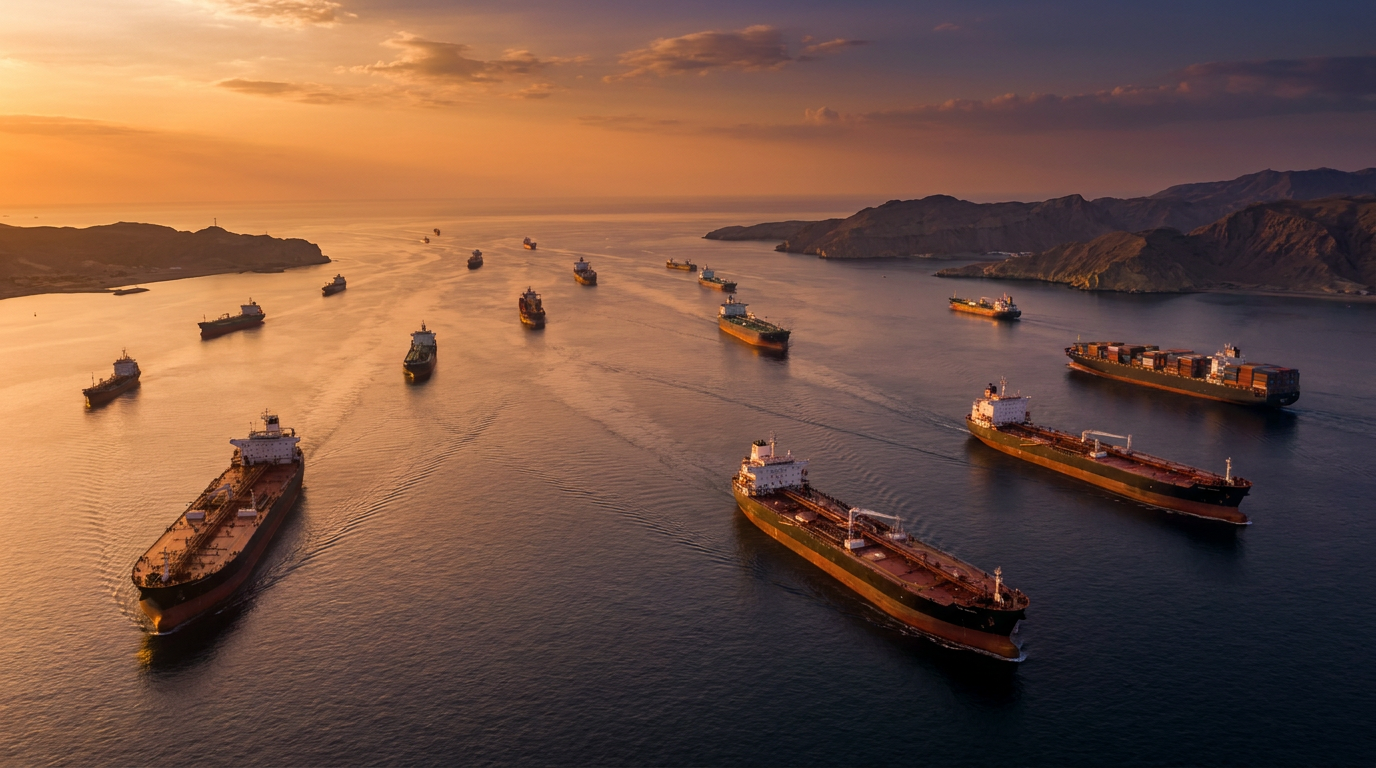
The United States and Iran are expected to sign a peace agreement mediated by Pakistan, potentially ending a devastating four-month war and reopening the critical Strait of Hormuz to global shipping.
By Factlen Editorial Team
- U.S. Administration
- Argues the deal permanently ends Iran's nuclear ambitions and secures global shipping lanes.
- Iranian Government
- Views the agreement as a victory that lifts crippling economic blockades and secures financial relief.
- Israeli Leadership
- Maintains skepticism about Iran's nuclear commitments and insists on independent military action.
- Global Energy Markets
- Focused entirely on the immediate reopening of the Strait of Hormuz to stabilize oil prices.
What's not represented
- · Lebanese civilians affected by the ongoing parallel conflict between Israel and Hezbollah.
- · Commercial shipping companies navigating the immediate logistics of the Strait's reopening.
Why this matters
The four-month conflict has severely disrupted global energy markets by choking off the Strait of Hormuz, through which a fifth of the world's oil flows. A finalized peace agreement would stabilize fuel prices, lift the U.S. naval blockade on Iran, and reshape the geopolitical balance of the Middle East.
Key points
- The U.S. and Iran are expected to electronically sign a peace deal on Sunday to end a four-month war.
- The agreement includes a 60-day ceasefire extension to negotiate the dismantling of Iran's nuclear program.
- Iran has agreed to reopen the Strait of Hormuz to commercial shipping, alleviating a global energy crisis.
- The U.S. will lift its naval blockade on Iranian ports and begin releasing frozen Iranian assets.
- Disagreements remain over Iran's intent to collect 'service fees' in the Strait and the exact status of its uranium stockpile.
The United States and Iran are on the precipice of signing a historic peace agreement to end a devastating four-month war that has reshaped the Middle East and choked global energy supplies. Mediated by Pakistan, the deal is expected to be signed electronically as early as Sunday, establishing a 60-day ceasefire extension to facilitate broader negotiations. The pending remote signing is the culmination of nearly three months of intense back-channel diplomacy aimed at halting a conflict that has drawn in multiple regional actors and severely disrupted international trade. If finalized, the pact would mark a dramatic de-escalation in a war that began with massive airstrikes and quickly spiraled into a grueling economic and military standoff.[4][6]
President Donald Trump announced the impending agreement over the weekend, declaring that the pact would permanently dismantle Iran's nuclear ambitions and immediately reopen the Strait of Hormuz to international shipping. "The Deal is scheduled to get signed tomorrow, and immediately after it is signed, the Hormuz Strait is OPEN TO ALL," Trump stated on his social media platform. The president emphasized that the new framework stands in stark contrast to previous diplomatic efforts, framing it as an impenetrable barrier against Iranian nuclear proliferation. He asserted that under the terms of the agreement, Iran has abandoned its pursuit of a nuclear weapon and will be subjected to rigorous enforcement mechanisms to ensure total compliance.[1][8]
Pakistani Prime Minister Shehbaz Sharif, whose government has served as the primary mediator alongside Qatar, confirmed that the two sides had reached a "final, agreed upon text." Sharif indicated that the initial electronic signing would pave the way for technical-level talks in the coming week to iron out the complex logistics of sanctions relief and military de-escalation. The Pakistani mediation effort has been critical in bridging the deep divide between Washington and Tehran, particularly after direct communication channels collapsed entirely during the opening weeks of the war. Sharif praised the diplomatic commitment of both nations, expressing confidence that the agreement will form a strong foundation for lasting regional stability.[4][6]
Despite the optimism radiating from Washington and Islamabad, officials in Tehran have offered a notably more cautious timeline regarding the finalization of the pact. Iranian Foreign Ministry spokesperson Esmaeil Baghaei explicitly pushed back against the Sunday signing date, stating that while an agreement is imminent, it would not be formalized over the weekend. Concurrently, Iranian Foreign Minister Abbas Araghchi acknowledged during a state television interview that a memorandum of understanding "has never been closer," but he urged the public and international media to refrain from premature speculation about the exact timing and specific concessions until the ink is officially dry.[2][8]

The current conflict erupted in late February 2026 when U.S. and Israeli forces launched a massive joint military campaign targeting Iranian military infrastructure, air defenses, and senior leadership. The opening salvos of the war resulted in the death of Iran's Supreme Leader Ali Khamenei, sending shockwaves through the Islamic Republic and fundamentally altering the power dynamics of the region. In the immediate aftermath of the strikes, Tehran retaliated by launching barrages of ballistic missiles and attack drones against Israel, U.S. military bases across the Middle East, and allied Arab states, rapidly expanding the geographic scope of the hostilities.[9]
In response to the overwhelming U.S. and Israeli offensive, Iran deployed its most potent economic weapon by effectively closing the Strait of Hormuz—a vital maritime artery that handles roughly 20 percent of the world's daily oil consumption. The closure of the strait sent global energy prices soaring, disrupted international supply chains, and triggered a severe inflationary shock across Western economies. To counter the Iranian blockade of the waterway, the United States imposed a strict naval blockade on Iranian ports, cutting off the country's remaining economic lifelines and creating a tense, high-stakes standoff in the waters of the Persian Gulf.[4][9]
The draft memorandum of understanding reportedly requires the United States to lift its naval blockade and begin the process of unfreezing billions of dollars in Iranian assets that have been locked in international accounts. In exchange for this massive economic relief, Iran must allow commercial vessels to transit the Strait of Hormuz unimpeded and commit to a strict 60-day framework for addressing the future of its nuclear program. Sources familiar with the negotiations indicate that the initial phase of the agreement is designed to build mutual trust by delivering immediate, tangible benefits to both sides before tackling the most intractable ideological disputes.[3][5]
However, significant discrepancies remain between how Washington and Tehran are publicly framing the specific terms of the deal, particularly regarding the nuclear portfolio. U.S. officials maintain that the agreement mandates the complete destruction of Iran's highly enriched uranium stockpile and the permanent dismantling of its nuclear infrastructure. The Trump administration has repeatedly assured the American public that the deal offers no loopholes for Iran to retain a latent nuclear weapons capability, portraying the agreement as a definitive end to a decades-long proliferation threat.[3][4]

Conversely, Iranian state media and government officials suggest a very different reality, claiming that Tehran will be permitted to retain its uranium stockpile in a diluted form rather than surrendering it entirely. Furthermore, Araghchi indicated that while Iran would not impose traditional transit tolls in the Strait of Hormuz, it fully intends to collect "service fees" from commercial vessels operating in the waterway. This caveat regarding maritime fees has previously been rejected by U.S. officials, who insist that international law guarantees the right of free and unencumbered transit through the strategic chokepoint.[1][5]
This caveat regarding maritime fees has previously been rejected by U.S.
The extreme fragility of the situation was underscored early Saturday morning when U.S. Central Command reported shooting down multiple Iranian one-way attack drones in the Strait of Hormuz. The drones were reportedly targeting commercial cargo ships attempting to navigate the waterway, a direct violation of the de facto ceasefire that has largely held since April. The attempted strikes prompted a sharp and immediate rebuke from President Trump, who took to social media to condemn the attacks as "totally unacceptable" and warned Tehran that any further aggression could jeopardize the entire diplomatic framework on the eve of its signing.[1][4]
Israel, which initiated the war alongside the United States in February, is notably absent from the current peace negotiations and has expressed deep reservations about the emerging consensus. Israeli Prime Minister Benjamin Netanyahu has stated unequivocally that Israel expects to retain its absolute freedom to act against regional threats, regardless of any bilateral agreement signed between Washington and Tehran. This independent posture is particularly relevant to Israel's ongoing military operations against Hezbollah in southern Lebanon, a parallel conflict that Iranian negotiators had initially hoped to resolve as part of a comprehensive, region-wide grand bargain.[3][5]
Domestic political pressures are mounting rapidly in both countries as the reality of a finalized agreement sets in. In Iran, hardline factions staged protests outside the foreign ministry offices in the northeastern city of Mashhad, accusing the diplomatic corps of making far too many concessions to Washington. The demonstrators, waving black flags and chanting anti-American slogans, argued that reopening the Strait of Hormuz surrenders Iran's primary strategic leverage in the Gulf and leaves the nation vulnerable to future economic coercion once the immediate threat of military strikes has subsided.[4]

In Washington, the political debate over the merits of the deal has been equally intense, with administration officials working overtime to sell the agreement to a skeptical Congress. Vice President JD Vance publicly defended the emerging framework against domestic critics, forcefully denying reports that the agreement heavily favored Tehran or amounted to a capitulation. Vance emphasized that the promised economic benefits and sanctions relief would only flow to Iran if the regime strictly and verifiably met its obligations, dismissing much of the criticism as "fake information" designed to derail the peace process.[7]
If the electronic signing proceeds as planned, the subsequent 60-day period will be a critical test of both nations' commitment to a lasting peace. Negotiators must transition from a temporary, fragile truce to a permanent, binding framework that addresses complex issues such as war reparations, the permanent lifting of sanctions, and the implementation of a long-term, intrusive monitoring regime for Iran's nuclear facilities. The success or failure of these technical-level talks will ultimately determine whether the Middle East is entering a new era of stability or merely pausing to rearm for the next phase of the conflict.[5][6]
For the global economy, the immediate stakes of the Sunday signing are overwhelmingly clear. A successful and sustained reopening of the Strait of Hormuz would alleviate the severe bottleneck in international shipping that has paralyzed supply chains for a third of the year. By allowing millions of barrels of oil to flow freely into the global market once again, the agreement promises to stabilize volatile fuel prices, ease the crushing inflationary pressures that have gripped consumer markets, and remove the largest single geopolitical risk hanging over the global economic outlook for 2026.[4][8]
How we got here
Feb 28, 2026
The U.S. and Israel launch military strikes, killing Iranian Supreme Leader Ali Khamenei.
March 2026
Iran retaliates with regional strikes and closes the Strait of Hormuz, prompting a U.S. naval blockade.
April 8, 2026
A temporary two-week ceasefire is brokered by Pakistan, pausing the heaviest fighting.
June 13, 2026
President Trump announces a final peace deal is scheduled to be signed.
Viewpoints in depth
U.S. Administration
Views the deal as a definitive victory that neutralizes Iran's nuclear threat.
President Trump and his administration are framing the agreement as a total success that achieves what previous diplomatic efforts could not. By securing a commitment to dismantle Iran's nuclear program and immediately reopening the Strait of Hormuz, the administration argues it has neutralized the region's primary security threat. Officials emphasize that sanctions relief and the unfreezing of assets are strictly conditional on verifiable Iranian compliance.
Iranian Leadership
Frames the agreement as a strategic win that breaks the U.S. economic blockade.
Tehran is presenting the deal to its domestic audience as a triumph of resistance. Iranian officials highlight the lifting of the U.S. naval blockade, the release of billions in frozen assets, and potential war reparations as proof that Iran withstood the military assault. Furthermore, by insisting on retaining diluted uranium and collecting 'service fees' in the Strait of Hormuz, Iranian negotiators are signaling that they have not surrendered their sovereignty or regional influence.
Israel's Security Establishment
Remains skeptical of the deal and insists on maintaining military freedom of action.
Israel, having launched the initial February strikes alongside the U.S., is not a party to the current memorandum of understanding. Israeli leadership remains deeply concerned that sanctions relief will embolden Iran and fund its proxy networks. Prime Minister Netanyahu has made it clear that Israel will not be bound by the U.S.-Iran ceasefire regarding its own operations, particularly its ongoing military campaign against Hezbollah in Lebanon.
What we don't know
- Whether hardline factions in Iran will successfully disrupt the implementation of the agreement.
- How Israel's ongoing military operations in Lebanon will impact the broader regional ceasefire.
- The exact mechanisms the U.S. will use to verify the destruction or dilution of Iran's nuclear material.
Key terms
- Strait of Hormuz
- A narrow, strategically vital waterway between the Persian Gulf and the Gulf of Oman through which a fifth of the world's oil passes.
- Naval Blockade
- A military operation in which the U.S. Navy prevented ships from entering or leaving Iranian ports.
- Highly Enriched Uranium
- Uranium that has been processed to a high concentration of the U-235 isotope, making it capable of being used in nuclear weapons.
Frequently asked
When will the Strait of Hormuz reopen?
President Trump stated the Strait will be open to all commercial shipping immediately after the deal is signed, though Iran claims it may collect 'service fees' from transiting vessels.
Is Israel part of this peace agreement?
No. Israel is not a party to the U.S.-Iran negotiations and has stated it will retain its freedom to conduct military operations against threats, including in Lebanon.
What happens to Iran's nuclear program?
The U.S. claims the deal requires the complete dismantling of the program and destruction of highly enriched uranium, while Iran suggests it will retain diluted uranium under international monitoring.
Sources
Source coverage
9 outlets
4 viewpoints surfaced









[1]Fox NewsU.S. Administration
Live Updates: US-Iran deal will be signed tomorrow, Trump says
Read on Fox News →[2]Al JazeeraIranian Government
Iran war live: Trump says deal to be signed today; Tehran urges caution
Read on Al Jazeera →[3]The GuardianIsraeli Leadership
US-Iran peace deal remains elusive as Trump and Tehran trade conflicting claims
Read on The Guardian →[4]CBS NewsU.S. Administration
Live Updates: U.S.-Iran peace deal to be signed Sunday, Trump says
Read on CBS News →[5]ReutersIranian Government
U.S. and Iran signal peace deal close as reports suggest terms appear to favour Tehran
Read on Reuters →[6]AxiosGlobal Energy Markets
U.S., Iran expected to 'electronically' sign agreement to end war Sunday
Read on Axios →[7]ForbesU.S. Administration
U.S.-Iran Peace Deal Expected To Be Signed Sunday, Trump Says
Read on Forbes →[8]The Washington PostGlobal Energy Markets
U.S. and Iran to close deal within a day, Trump says, but Tehran yet to confirm
Read on The Washington Post →[9]WikipediaGlobal Energy Markets
2026 Iran war ceasefire
Read on Wikipedia →
More in news politics
See all 9 stories →Border Security
Trump Signs $70 Billion 'Secure America Act' to Fund Immigration Enforcement Through 2029
0 sources
Gulf Conflict
US and Iran Near Peace Deal to End Gulf War and Reopen Strait of Hormuz
0 sources
US-Iran Conflict
U.S. and Iran Near Two-Stage Peace Deal to End War and Reopen Strait of Hormuz
0 sources
US-Iran Relations
U.S. and Iran to Sign Peace Agreement Ending Four-Month Conflict
0 sources
Every angle. Every day.
Get news politics stories with full source coverage and perspective breakdowns delivered to your inbox.