
The 2026 Guide to Buying a Used EV: Battery Health, Tax Credits, and Depreciation
Used electric vehicles offer massive bargains in 2026, but buyers must navigate battery health diagnostics and the expiration of federal tax credits.
By Factlen Editorial Team
- Value Buyers
- Focuses on the steep depreciation curve that makes three-year-old EVs a massive bargain compared to combustion vehicles.
- Battery Diagnostic Providers
- Argues that the 'black box' era of battery health is over, and that transparency unlocks the secondary market's true potential.
- Policy & Incentive Trackers
- Highlights the shift from federal to state-level incentives, changing the geographic math of where to buy an EV.
What's not represented
- · Independent auto mechanics adapting to EV repairs
- · Private sellers navigating battery health questions
Why this matters
The used EV market has matured, offering high-tech, low-maintenance vehicles at a fraction of their original cost. Understanding how to test battery health and navigate shifting tax incentives ensures buyers secure a reliable vehicle without overpaying.
Key points
- Used EV prices have dropped significantly, making them highly competitive with older gasoline cars.
- Modern EV batteries degrade slowly, typically losing only 1% to 2% of their capacity per year.
- Buyers should demand a State of Health (SoH) certificate from third-party diagnostic tools before purchasing.
- The $4,000 federal tax credit for used EVs expired in late 2025, shifting focus to state-level rebates.
- A federal tax credit of up to $1,000 for home charger installations remains available through June 2026.
- Federal law mandates EV batteries be warranted for at least 8 years or 100,000 miles.
The used electric vehicle market has reached a tipping point in 2026, transforming from a niche gamble into one of the smartest financial plays in the automotive world. Early adopters absorbed the steepest part of the depreciation curve, with many premium EVs losing up to half their value in the first three years. Today, buyers can secure a low-mileage, three-year-old electric vehicle equipped with modern software and safety features for the same price as an older, higher-mileage gasoline car. The supply of off-lease vehicles has surged, creating a buyer's market where the traditional anxieties of used-car shopping have been entirely rewritten.[1][5]
Entering this market requires a complete mindset shift. When evaluating a traditional combustion-engine vehicle, buyers look for oil leaks, transmission slips, and timing belt wear. With an electric vehicle, the mechanical simplicity means there are vastly fewer moving parts to break. Instead, the entire purchase hinges on a single, massive component: the high-voltage battery pack. You are essentially buying a giant battery on wheels, and the primary metric of concern is no longer the odometer reading, but the battery's State of Health.[2]
For years, the biggest deterrent to buying a used EV was the fear of catastrophic battery degradation. Early myths and high-profile anomalies—such as the first-generation Nissan Leaf, which lacked active liquid cooling—suggested that EV batteries were ticking time bombs destined to fail. Consumers worried that second-hand buyers would be left stranded with replacement bills upwards of $15,000, rendering the cars financially worthless. Because battery chemistry naturally degrades over time due to heat, repeated charging cycles, and simple calendar aging, the anxiety was that a used EV would offer only a frustrating fraction of its original utility.[1]

However, extensive real-world data has thoroughly debunked the "EV apocalypse" narrative. Diagnostic firms that track tens of thousands of electric vehicles report that modern battery packs are remarkably resilient. On average, a well-maintained EV battery loses only 1% to 2% of its total range per year. This means a five-year-old electric car typically retains between 90% and 95% of its original factory capacity. In most cases, the battery pack will easily outlast the vehicle's chassis and suspension.[1][4]
The challenge for buyers in 2026 is not that batteries fail, but that verifying their exact condition remains frustratingly opaque. Unlike consumer electronics that clearly display a battery health percentage in the settings menu, many electric vehicles operate as diagnostic "black boxes." Automakers often restrict detailed cell-level data to their authorized service networks, leaving prospective buyers staring at a dashboard range estimate—affectionately dubbed the "guess-o-meter"—which fluctuates wildly based on recent driving habits and ambient temperature rather than true battery health.[6]
The challenge for buyers in 2026 is not that batteries fail, but that verifying their exact condition remains frustratingly opaque.
To bypass this opacity, savvy buyers rely on three distinct verification methods before signing any paperwork. The simplest, though least precise, is the full-charge test. By asking the seller to charge the vehicle to 100% and comparing the dashboard's displayed range to the original EPA or WLTP estimate, buyers can spot severe degradation. If a car originally rated for 250 miles only displays 180 miles on a warm day at full charge, it is a clear red flag that the battery has suffered significant capacity loss.[2][5]

For a definitive answer, the industry has embraced third-party diagnostic tools. Companies like Recurrent offer software-based health reports—essentially a Carfax for EV batteries—that analyze charging history and fleet data to generate a reliable health score. Meanwhile, hardware solutions from firms like Aviloo allow buyers or independent mechanics to plug directly into the vehicle's OBD port, running a flash test that reads the voltage and temperature of individual battery cells to produce an independent State of Health certificate.[4][6]
Beyond the battery itself, the financial landscape of buying a used EV shifted dramatically at the end of 2025. The "One Big Beautiful Bill Act," a sweeping legislative package, officially eliminated the $4,000 federal tax credit for previously owned clean vehicles acquired after September 30, 2025. For buyers who had grown accustomed to instant point-of-sale rebates at the dealership, the sudden removal of federal support required a rapid recalibration of their budgets.[3][5]
With the federal credit gone, the focus has entirely shifted to state and local incentives, making the used EV market highly regional and dependent on local legislation. Buyers are increasingly crossing state lines to capitalize on localized rebate programs that were unaffected by the federal cuts. States like Colorado, New York, and New Mexico continue to offer thousands of dollars in direct credits for used electric vehicles, fundamentally altering the financial math for residents who are willing to navigate the logistics of out-of-state purchase regulations and registrations.[5]

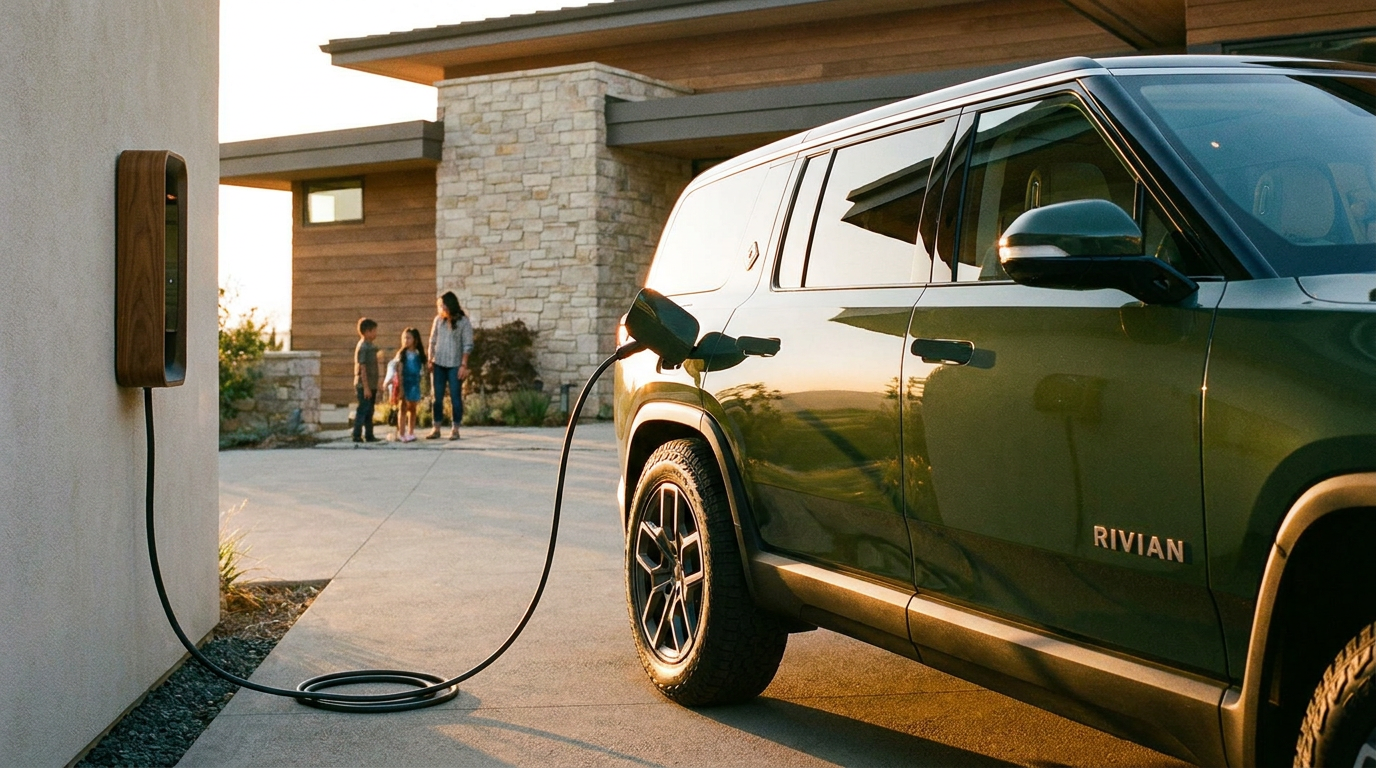
Fortunately, one crucial federal incentive survived the legislative cuts. The Alternative Fuel Vehicle Refueling Property Tax Credit, which subsidizes the installation of home charging equipment, remains active through June 30, 2026. This allows homeowners to claim a 30% credit—up to $1,000—on the hardware and electrical upgrades required to install a Level 2 charger in their garage, ensuring that buyers can still offset the infrastructure costs of transitioning to electric driving.[3][5]
When finalizing a purchase, buyers must also rigorously verify the vehicle's remaining warranty status. Federal regulations mandate that all electric vehicle batteries sold in the United States be warranted against severe degradation for at least eight years or 100,000 miles. However, the fine print of these policies matters immensely. Buyers must confirm whether the manufacturer's warranty automatically transfers to secondary owners without fees, and what specific percentage of capacity loss triggers a replacement claim—which is typically set at 70% of the original capacity.[2]
Finally, investigating the vehicle's charging history can provide vital clues about its future longevity. Batteries subjected to frequent DC fast charging degrade faster than those primarily charged on slower, Level 2 home connections. By combining a verified State of Health certificate, a clear understanding of regional tax incentives, and a transferred factory warranty, buyers in 2026 can confidently secure a high-performance electric vehicle for a fraction of its original cost.[2][4]
How we got here
2010s
Early EVs launch with unpredictable battery longevity, creating lasting consumer anxiety.
2023–2024
Used EV prices plummet as new models flood the market and early adopters trade in their vehicles.
July 2025
The One Big Beautiful Bill Act is signed, restructuring federal auto incentives.
Sept 2025
The $4,000 federal tax credit for used EVs officially expires.
June 2026
The deadline to claim the 30C home charger installation tax credit.
Viewpoints in depth
Value Buyers
Focuses on the steep depreciation curve that makes three-year-old EVs a massive bargain compared to combustion vehicles.
For value-oriented consumers, the used EV market represents an unprecedented opportunity. Because early adopters absorbed the massive initial depreciation—often losing up to 50% of the vehicle's value in the first three years—second-hand buyers are stepping into modern, low-mileage vehicles for the price of aging gasoline cars. This camp argues that the long-term savings on fuel and mechanical maintenance far outweigh the minor range loss associated with a slightly degraded battery.
Battery Diagnostic Providers
Argues that the 'black box' era of battery health is over, and that transparency unlocks the secondary market's true potential.
Companies specializing in battery diagnostics view the lack of transparency from automakers as the final hurdle to mass EV adoption. By providing independent State of Health (SoH) certificates, these providers argue they are removing the 'gamble' from buying a used EV. They emphasize that data proves the 'EV apocalypse'—the fear of mass battery failures—is a myth, and that empowering buyers with cell-level data will stabilize resale values and build consumer trust.
Policy & Incentive Trackers
Highlights the shift from federal to state-level incentives, changing the geographic math of where to buy an EV.
Policy analysts note that the expiration of the federal used EV tax credit in late 2025 fundamentally changed the buying landscape. Without a blanket national incentive, the market has fractured into regional strongholds. This perspective highlights how buyers in states with aggressive local rebates—like Colorado or New York—enjoy a massive financial advantage, while those in states without incentives must rely entirely on the vehicle's natural depreciation to find value.
What we don't know
- Whether automakers will eventually be forced by regulators to display clear battery health metrics on the dashboard.
- How the expiration of federal tax credits will impact the long-term resale value of EVs in states without local incentives.
Key terms
- State of Health (SoH)
- A percentage metric representing an EV battery's current maximum capacity compared to when it was brand new.
- DC Fast Charging (Level 3)
- High-speed public charging that can fill an EV battery in minutes, though frequent use can accelerate battery degradation.
- Guess-o-meter
- EV community slang for the dashboard's estimated range display, which fluctuates based on recent driving habits and weather.
- OBD Scan
- On-Board Diagnostics scan, a process where a technician plugs a computer into the car to read internal data, including battery health.
Frequently asked
Do used EVs still qualify for the $4,000 federal tax credit?
No. The federal used EV tax credit expired for vehicles acquired after September 30, 2025, under the One Big Beautiful Bill Act. However, many state-level rebates remain active.
How long do electric car batteries actually last?
Data shows modern EV batteries degrade by only 1% to 2% per year. Most will easily outlast the vehicle's chassis, retaining over 90% capacity after five years.
What is State of Health (SoH)?
SoH is a percentage indicating how much of the battery's original capacity remains. An SoH of 95% means the battery has lost 5% of its maximum range since it was new.
Can I still get a tax credit for installing a home charger?
Yes. The Alternative Fuel Vehicle Refueling Property Tax Credit (30C) was extended through June 30, 2026, offering up to $1,000 for home charger installations.
Sources
Source coverage
7 outlets
3 viewpoints surfaced





[1]InsideEVsBattery Diagnostic Providers
Modern EVs Barely Lose Any Range, Even After Five Years: Report
Read on InsideEVs →[2]Kelley Blue BookValue Buyers
Used Electric Car Tax Credits Explained for 2026
Read on Kelley Blue Book →[3]Internal Revenue ServicePolicy & Incentive Trackers
Clean vehicle tax credits and the One Big Beautiful Bill
Read on Internal Revenue Service →[4]EV LifeBattery Diagnostic Providers
A Solution to Used Car Battery Health Concerns
Read on EV Life →[5]CARFAXValue Buyers
Electric Vehicle Tax Credits in 2026
Read on CARFAX →[6]Tech TimesBattery Diagnostic Providers
Startups Offering EV Battery Health Tests Scramble to Help Buyers
Read on Tech Times →[7]Factlen Editorial TeamPolicy & Incentive Trackers
Synthesis by Factlen editorial team
Read on Factlen Editorial Team →


Every angle. Every day.
Get shopping stories with full source coverage and perspective breakdowns delivered to your inbox.