
The Sodium-Ion Breakthrough: How Salt is Making EVs Cheaper in 2026
After years of laboratory development, sodium-ion batteries have officially reached mass production, offering a cheaper, highly abundant, and cold-resistant alternative to lithium for affordable electric vehicles.
By Factlen Editorial Team
- Battery Innovators
- Focus on the rapid speed of commercialization, extreme cold-weather performance, and the unlocking of the truly affordable EV market.
- Market Analysts
- Highlight the geopolitical decoupling from lithium supply chains and the massive economic potential for grid-scale energy storage.
- Performance Realists
- Emphasize the physical limitations of sodium, arguing that lithium's superior energy density ensures it will remain the gold standard for long-range transport.
What's not represented
- · Lithium Mining Industry
- · Premium EV Automakers
Why this matters
By breaking the industry's total reliance on scarce lithium, sodium-ion batteries promise to drastically lower the cost of entry-level electric vehicles and stabilize the global energy grid. This shift makes sustainable transportation accessible to millions more people while eliminating the severe cold-weather range anxiety that has plagued early EV adopters.
Key points
- Sodium-ion batteries have officially entered mass production in 2026, powering the first generation of affordable passenger EVs.
- The chemistry relies on sodium, which is 1,000 times more abundant than lithium, slashing production costs by up to 50%.
- Unlike lithium, sodium-ion cells thrive in freezing temperatures, retaining up to 90% of their capacity at -40°C.
- Due to lower energy density, sodium will not replace lithium in premium EVs, but will dominate city cars and grid storage.
The electric vehicle revolution has long been tethered to a single, temperamental element: lithium. While lithium-ion batteries have successfully powered millions of vehicles and catalyzed the global transition away from fossil fuels, their reliance on scarce, geographically concentrated materials has created persistent supply chain bottlenecks and price volatility. Automakers and energy grids have spent the last decade searching for a viable chemistry that could democratize electric mobility without being held hostage by the fluctuating costs of rare earth metals and complex mining operations.[6][8]
In 2026, the industry is experiencing what analysts are officially calling the "takeoff of dual chemistry." After years of laboratory promises and incremental prototypes, sodium-ion batteries have finally reached mass production at a gigawatt-hour scale. This milestone marks a fundamental shift in how the world stores energy, offering a highly abundant, cost-effective alternative to lithium that is already beginning to reshape the automotive landscape and the broader energy grid.[4]
The breakthrough moved from theory to reality earlier this year when Chinese automakers, partnered with battery manufacturing giant CATL, rolled out the first mass-produced passenger vehicles equipped entirely with sodium-ion packs. Models like the Changan Nevo A06 have begun arriving at dealerships, proving that the technology can meet rigorous consumer demands and strict international safety standards. This launch signals that sodium is no longer a future concept, but a tangible product on the road today.[1][4][5]
To understand why this transition is so monumental, one must look at the underlying electrochemical mechanism. In a standard lithium-ion battery, lithium ions shuttle back and forth between the cathode and the anode during the charging and discharging cycles. A sodium-ion battery operates on the exact same fundamental principle, but it simply swaps the primary ion doing the work from lithium to sodium.[1][2]

However, that elemental swap is significantly more complex than it sounds on paper. Sodium ions are physically larger and heavier than lithium ions. Because of this inherent size difference, the internal architecture of the battery had to be completely redesigned from the ground up. The materials that perfectly hosted lithium for decades simply could not accommodate the bulkier sodium atoms.[1][2]
For instance, manufacturers can no longer use standard graphite anodes, as the large sodium ions cannot efficiently embed themselves within the tight graphite structure. Instead, modern sodium-ion cells utilize specialized "hard carbon" anodes. On the other side of the cell, cathodes are now built from layered transition metal oxides, polyanionic compounds, or Prussian blue analogues, creating a completely new supply chain ecosystem.[1][7]
The primary advantage driving this massive industrial pivot is sheer elemental abundance. Sodium is the sixth most abundant element in the Earth's crust—roughly 1,000 times more plentiful than lithium. Unlike lithium, which requires complex and environmentally taxing extraction processes, sodium can be easily and cheaply harvested from common sources like seawater and ordinary rock salt, ensuring a stable, localized supply chain for any country.[1][6]
The primary advantage driving this massive industrial pivot is sheer elemental abundance.
This unprecedented abundance translates directly into massive economic relief for manufacturers and consumers. By eliminating the need for expensive lithium, and often bypassing costly conflict minerals like cobalt and nickel entirely, sodium-ion batteries are projected to be 30% to 50% cheaper per kilowatt-hour to produce once global manufacturing scales fully. This cost reduction is the key to finally producing truly affordable, entry-level electric vehicles.[6][8]

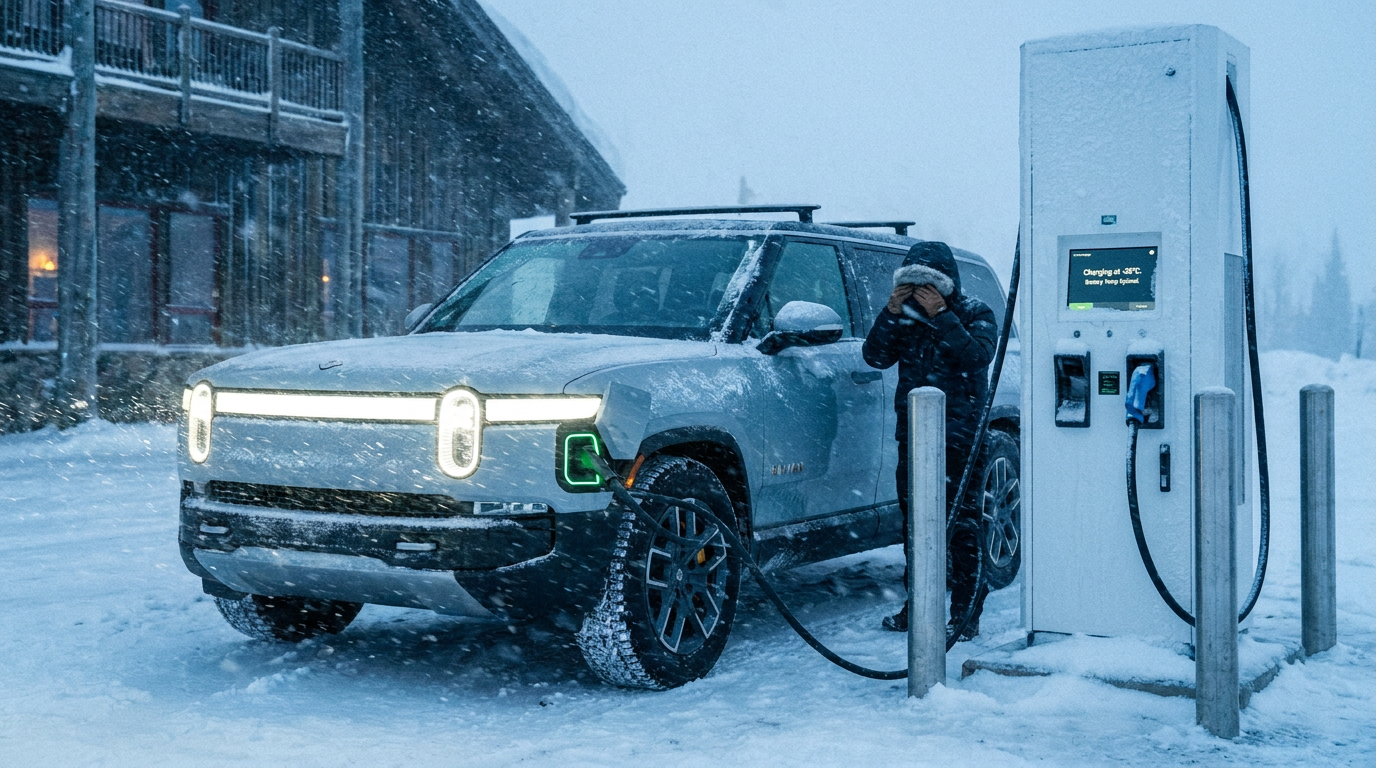
Beyond the economics, sodium-ion technology solves one of the most persistent and frustrating headaches for EV owners: severe cold-weather degradation. Lithium-ion batteries are notorious for losing significant range, sluggish performance, and drastically reduced charging speeds when the temperature drops below freezing, a major hurdle for adoption in northern climates.[1]
Sodium-ion cells, by contrast, actively thrive in freezing environments. CATL's new Naxtra battery line can operate effectively in extreme temperatures ranging from -40°C to 70°C. At -30°C, the discharge power of a sodium cell is nearly three times that of an equivalent lithium iron phosphate (LFP) cell, and it can retain up to 90% of its total capacity, making it an absolute game-changer for drivers in Nordic countries and harsh winter regions.[1][4]
Safety is another critical factor accelerating the adoption of this new chemistry. Sodium is inherently less chemically reactive than lithium, which drastically lowers the risk of thermal runaway—the dangerous, self-sustaining chain reaction that causes severe battery fires. Recent rigorous safety tests, including deep penetration and crush tests on fully charged sodium cells, have resulted in zero smoke and zero fire, offering peace of mind for both drivers and home energy storage users.[2][8]
Despite these incredible breakthroughs, engineers are quick to point out that sodium-ion is not a universal silver bullet, and it will not replace lithium in premium, long-range vehicles anytime soon. The fundamental physics of the larger, heavier sodium ion means these batteries inherently possess a lower energy density than their lithium counterparts.[2][3]
Currently, top-tier mass-produced sodium-ion cells achieve an energy density of approximately 175 Wh/kg. While this is highly competitive with mid-range LFP batteries and represents a massive leap from early prototypes, it still significantly trails the 250+ Wh/kg offered by the high-nickel lithium-ion packs utilized in long-range luxury electric vehicles.[1][3][5]

Because they store less energy per pound of material, sodium-ion battery packs must be physically larger and heavier to achieve the exact same driving range. This unavoidable weight penalty restricts their use in high-performance vehicles where space, weight distribution, and aerodynamics are at an absolute premium.[2]
Instead of a zero-sum competition where one chemistry destroys the other, the industry is rapidly settling into a complementary, dual-chemistry ecosystem. Lithium-ion will continue to do the heavy lifting for performance cars, luxury SUVs, and long-haul trucks, where maximizing range within a tight footprint is the primary engineering metric.[1][2]
Meanwhile, sodium-ion is perfectly positioned to dominate the massive global market for affordable city cars, commercial delivery fleets, and two-wheelers. Furthermore, its low cost, high safety, and temperature resilience make it the undisputed ideal candidate for massive, grid-scale energy storage systems, where physical size and weight are completely irrelevant but price and long-term stability are paramount.[1][6][7]

As 2026 progresses, the rapid scaling of sodium-ion manufacturing facilities across Asia, Europe, and the United States signals a permanent, structural shift in the energy transition. By successfully decoupling the electric revolution from the strict constraints of lithium mining, the automotive and energy industries have unlocked a much more resilient, affordable, and globally accessible path forward.[4][6]
How we got here
2023–2024
Major battery manufacturers announce breakthroughs in sodium-ion energy density, crossing the 160 Wh/kg threshold.
Early 2025
CATL launches its Naxtra product line, proving sodium cells can pass strict EV safety standards.
Late 2025
Large-scale commercial agreements are signed for massive sodium-ion grid storage projects.
Mid 2026
The first mass-produced passenger EVs powered by sodium-ion batteries arrive at dealerships.
Viewpoints in depth
Battery Innovators
Focus on the speed of commercialization and the unlocking of the affordable EV market.
For battery manufacturers like CATL and BYD, as well as automakers like Changan, sodium-ion represents the ultimate democratization of the electric vehicle. They argue that the obsession with 400-mile ranges has artificially inflated EV prices and excluded millions of buyers. By utilizing a chemistry that is 30% to 50% cheaper and immune to cold-weather degradation, these innovators believe they can finally produce a profitable, entry-level city car. They point to the successful rollout of the Changan Nevo A06 as proof that consumers are ready to trade maximum range for affordability and winter reliability.
Market Analysts
Focus on the geopolitical decoupling from lithium and the massive potential for grid storage.
Financial and energy analysts view the rise of sodium-ion through the lens of supply chain security. Lithium extraction is geographically concentrated and subject to extreme price volatility, creating a bottleneck for the global energy transition. Analysts argue that sodium's sheer abundance—harvestable from seawater anywhere in the world—eliminates this geopolitical risk. Furthermore, they emphasize that sodium's true killer app isn't cars, but stationary grid storage. Because weight and size don't matter for a battery sitting in a field, sodium's low cost and high safety make it the perfect medium for storing wind and solar energy at a massive scale.
Performance Realists
Focus on the physical limitations of sodium, arguing that lithium's energy density ensures it will remain the gold standard for long-range transport.
While acknowledging the cost benefits, performance-focused engineers and lithium advocates caution against overhyping sodium's capabilities. They point to the immutable laws of physics: a sodium ion is simply larger and heavier than a lithium ion. Because of this, sodium-ion packs will always carry a weight penalty. Realists argue that while 175 Wh/kg is impressive for city cars, it falls far short of the 250+ Wh/kg required for luxury SUVs, long-haul trucks, and performance vehicles. In their view, sodium will never replace lithium; it will merely take over the low-end market, leaving lithium as the undisputed king of premium electric mobility.
What we don't know
- How quickly Western automakers will adopt sodium-ion technology, as current mass production is heavily concentrated in China.
- Whether future chemical breakthroughs can push sodium's energy density past the 200 Wh/kg mark to compete with premium lithium cells.
- The long-term real-world degradation rates of mass-produced sodium cells over a 10-to-15-year vehicle lifespan.
Key terms
- Sodium-Ion Battery (SIB)
- A rechargeable battery that uses sodium ions as the charge carriers, offering a cheaper and more abundant alternative to lithium.
- Energy Density
- The amount of energy a battery can store relative to its weight or volume, usually measured in Watt-hours per kilogram (Wh/kg).
- Hard Carbon Anode
- A specialized carbon material used in sodium batteries because its internal structure can accommodate the larger physical size of sodium ions.
- Thermal Runaway
- A dangerous chain reaction within a battery cell that causes rapid overheating and potential fires, a risk that is significantly lower in sodium-ion chemistries.
- Dual Chemistry Strategy
- An automotive industry approach where automakers use both lithium and sodium batteries across different vehicle models based on price and performance needs.
Frequently asked
Can I buy a sodium-ion EV today?
Yes, the first mass-produced models, such as the Changan Nevo A06, began hitting dealerships in 2026, primarily in the Asian market.
Will sodium batteries replace lithium entirely?
No. Because lithium holds more energy per pound, it will remain the standard for long-range and premium EVs, while sodium will dominate affordable city vehicles and grid storage.
Are sodium batteries safer?
Generally, yes. Sodium is less chemically reactive than lithium, which significantly reduces the risk of thermal runaway and battery fires.
Why are they better in the cold?
The specific chemistry and hard-carbon anodes used in sodium-ion cells allow them to maintain up to 90% of their capacity even at -40°C, whereas lithium cells lose significant power.
Sources
Source coverage
8 outlets
3 viewpoints surfaced








[1]EleportBattery Innovators
Sodium Ion Vs Lithium Ion EV Batteries Differences Explained
Read on Eleport →[2]EvlithiumPerformance Realists
Sodium-Ion Battery vs Lithium-Ion Battery: Key Differences, Pros, Cons & Future
Read on Evlithium →[3]MDPIPerformance Realists
Beyond Lithium: Evaluating Sodium-Ion Batteries for the Next Generation of Electric Vehicles
Read on MDPI →[4]Powerload BlogBattery Innovators
2026: The Year of the Definitive Rise of Sodium-Ion Batteries
Read on Powerload Blog →[5]Latam MobilityBattery Innovators
BAIC and CATL Lead the Sodium Era with a Breakthrough that will Revolutionize Electric Vehicles
Read on Latam Mobility →[6]Frost & SullivanMarket Analysts
Sodium-Ion Battery Market in Electric Vehicles 2030
Read on Frost & Sullivan →[7]TechTargetMarket Analysts
How the sodium-ion battery can energize the enterprise
Read on TechTarget →[8]DiVAMarket Analysts
Cost Analysis of a Sodium-Ion Battery Pack for Electric Vehicles
Read on DiVA →
Every angle. Every day.
Get automotive stories with full source coverage and perspective breakdowns delivered to your inbox.