
Hub Motor vs. Mid-Drive: The Ultimate E-Bike Motor Comparison
Choosing between a hub motor and a mid-drive is the most consequential decision an e-bike buyer makes. Here is how the two technologies compare on hills, maintenance, and ride feel.
By Factlen Editorial Team
- Performance Cyclists
- Valuing natural ride feel, balance, and hill-climbing torque.
- Urban Commuters
- Prioritizing affordability, low maintenance, and effortless riding.
- Value & Utility Shoppers
- Focusing on long-term durability, repairability, and cost-effectiveness.
What's not represented
- · Traditional analog cyclists who feel e-bikes of any motor type disrupt trail etiquette.
- · City planners designing bike lanes for the heavier, faster e-bikes.
Why this matters
The motor dictates an e-bike's price, performance, and maintenance schedule. Choosing the wrong system means either overpaying for technology you don't need or struggling on hills with a motor that can't handle them.
Key points
- Hub motors are affordable, low-maintenance, and ideal for flat urban commuting.
- Mid-drive motors leverage the bike's gears, making them vastly superior for climbing steep hills.
- Hub motors reduce wear on the chain, while mid-drives accelerate drivetrain wear.
- Mid-drives offer a more natural, bionic ride feel thanks to advanced torque sensors.
The electric bicycle revolution has transformed urban commutes and weekend trail rides alike, bringing unprecedented mobility to millions. But beneath the sleek frames and high-capacity battery packs lies a fundamental engineering divide. The choice between a hub motor and a mid-drive motor is the single most consequential decision an e-bike buyer makes, dictating how the bike feels, climbs, and costs. It is not merely a matter of one technology being objectively superior to the other; rather, it is a choice between two entirely different mechanical philosophies designed to solve the exact same problem: getting a rider up the road with significantly less physical effort.[1][3]
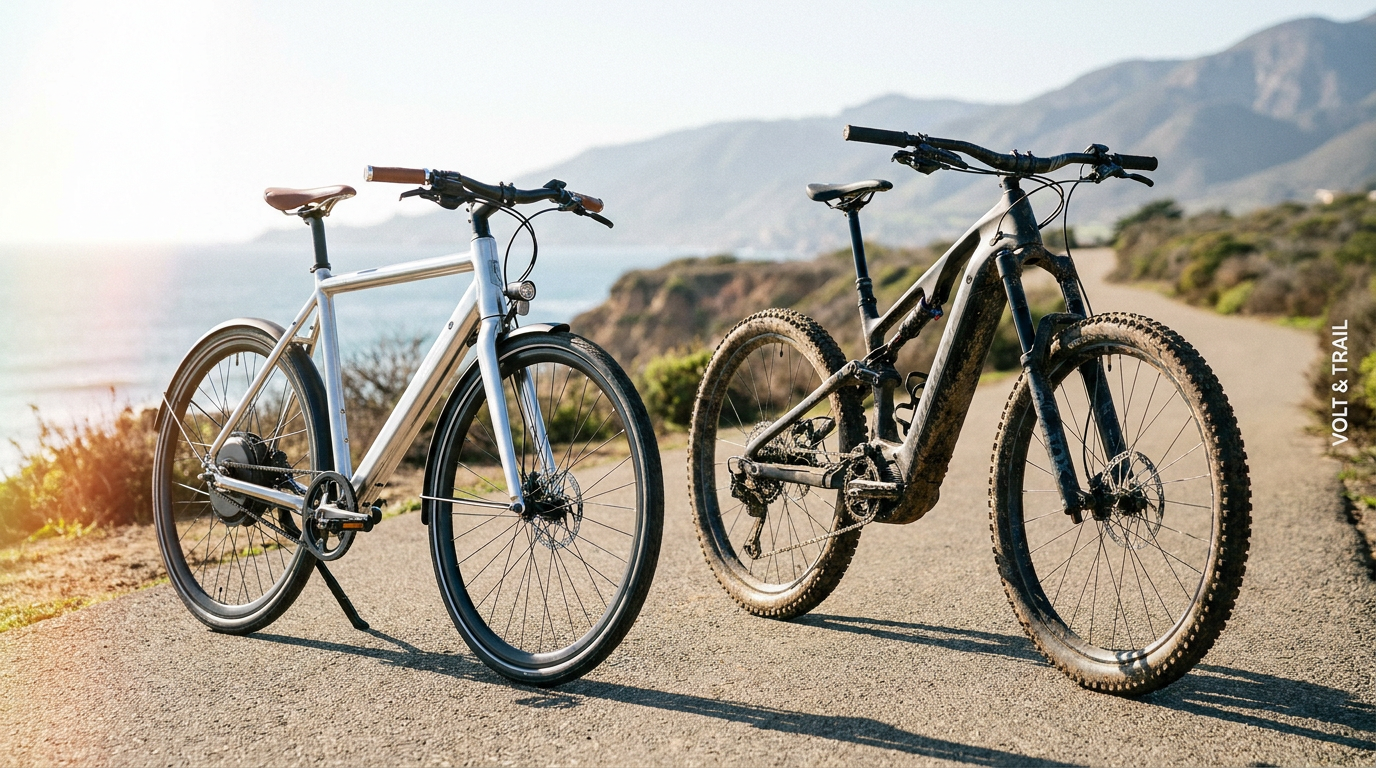
Hub motors represent the straightforward, brute-force approach to electric assistance. Housed entirely within the center of the front or rear wheel, these motors drive the axle directly, operating completely independently of the bicycle's chain and mechanical gears. When the motor engages, it provides a distinct sensation of being pushed from behind, delivering raw power straight to the pavement. This mechanical simplicity is the hub motor's greatest asset, allowing manufacturers to keep production costs low and making it the dominant choice for budget-friendly e-bikes and entry-level commuters who prioritize value over high-end performance.[2][4][8]
The case for the hub motor is built on affordability, low maintenance, and effortless cruising. Because the motor bypasses the drivetrain entirely, it places zero additional stress on the chain, cassette, or derailleur. In fact, by taking over the propulsion duties, a hub motor actually extends the lifespan of these traditional bicycle components. Furthermore, hub motors frequently feature a throttle, allowing riders to cruise without pedaling at all—a massive advantage for commuters who want to arrive at the office without breaking a sweat, or riders with limited mobility who need reliable, on-demand power.[3][5][7]
The case against the hub motor centers on its limitations when the road tilts upward. Because a hub motor cannot utilize the bicycle's gears, it must rely entirely on its own raw torque to climb hills. A hub motor producing 50 Newton-meters of torque delivers exactly that amount, regardless of the incline. On steep gradients, the motor is forced to work harder at lower speeds, which rapidly drains the battery and can lead to overheating. Additionally, placing a heavy motor inside the rear wheel shifts the bike's center of gravity backward, which can compromise handling on loose or technical terrain.[2][3][5]

Mid-drive motors take a mechanically sophisticated approach, sitting low and central at the bike's bottom bracket, right between the pedals. Instead of driving the wheel directly, a mid-drive motor applies its power to the chain, working in tandem with the bicycle's existing cassette and derailleur. This integration with the drivetrain is the mid-drive's defining superpower, allowing the motor to leverage mechanical advantage in the exact same way a rider's legs do. It is a system designed for synergy, blending human and electric power into a single, cohesive force.[4][5][8]
The case for the mid-drive is rooted in supreme hill-climbing ability, natural ride feel, and optimal weight distribution. Just as a driver shifts a car into a lower gear to pull a heavy load, a mid-drive motor uses the bike's lower gears to multiply its torque. This allows a mid-drive system to conquer 15 to 20 percent gradients with ease, keeping the motor spinning in its most efficient RPM range while the mechanical gears do the heavy lifting. By placing the heaviest component dead-center and low to the ground, mid-drives also preserve the bike's natural balance, making them the undisputed standard for electric mountain bikes.[3][4][6]
The case for the mid-drive is rooted in supreme hill-climbing ability, natural ride feel, and optimal weight distribution.
Furthermore, mid-drives almost universally employ advanced torque sensors rather than the basic cadence sensors found on most budget hub motors. A torque sensor measures exactly how much physical force the rider is applying to the pedals and amplifies it proportionally in real-time. Pedal lightly, and the motor provides a gentle assist; stand up and mash the pedals, and the motor surges with power. This creates a seamless, bionic sensation where the bike simply feels like an extension of the rider's own strength, rather than a motorized scooter that happens to have pedals attached.[1][7][8]
The case against the mid-drive focuses on cost, complexity, and accelerated wear and tear. Because the motor channels all of its power through the standard bicycle chain and cassette, these components experience significantly more stress than they would on an unpowered bike. Riders who neglect to shift gears properly, or who constantly ride in high gears under heavy loads, can wear out a drivetrain in as little as 1,500 miles. Mid-drive systems also require the rider to actively participate in gear shifting to prevent the motor from bogging down, making them slightly less intuitive for absolute beginners.[3][5][7]
The evidence in the efficiency debate heavily favors the mid-drive, provided the terrain is varied. Because the mid-drive motor can operate at its optimal speed regardless of how fast the bike is traveling, it uses battery power far more efficiently on hilly routes. Real-world testing consistently shows that a mid-drive e-bike will extract significantly more range from a 500-watt-hour battery than a hub-motor bike navigating the same steep inclines. However, on perfectly flat pavement where gear multiplication is unnecessary, the efficiency gap narrows considerably, and a hub motor can match the mid-drive mile for mile.[2][5]

Maintenance presents a fascinating trade-off between the two systems. While mid-drives chew through chains and cassettes at an accelerated rate, fixing a flat tire on a mid-drive bike is exactly the same as on a traditional bicycle. Hub motors, conversely, preserve the chain but make rear-wheel maintenance a headache. Changing a flat tire on a rear-hub e-bike requires disconnecting heavy-duty motor cables and wrestling with a heavy, motorized wheel assembly, a task that many casual riders find daunting to perform on the side of the road without professional assistance.[3][7]
Ultimately, the hub motor fits well when the rider prioritizes budget, simplicity, and relaxed urban commuting. It is the ideal choice for relatively flat cities, cargo bikes that rely heavily on throttles, and riders who want a sweat-free journey without worrying about constantly shifting gears. It does not fit well when the daily route involves long, steep climbs, or when the rider intends to tackle technical off-road mountain bike trails where weight distribution and instantaneous torque response are critical for safety and performance.[2][3][8]

The mid-drive motor fits well when the rider demands premium performance, natural cycling dynamics, and the ability to flatten severe hills. It is the mandatory choice for serious electric mountain biking, heavily loaded touring in varied topography, and cyclists who want their e-bike to feel exactly like a traditional bicycle, only faster. It does not fit well when the budget is strictly capped, when the rider refuses to learn proper gear-shifting technique, or when the primary goal is to twist a throttle and cruise effortlessly down a flat beach boardwalk.[4][5][6]
There is no single winner in the motor wars; there is only the right tool for the specific terrain and the specific rider. As the e-bike market continues to mature in 2026, the dividing line remains clear. Buyers must honestly assess their local topography and riding style, recognizing that overpaying for a mid-drive on flat city streets is just as frustrating as struggling up a mountain with an overmatched hub motor. By matching the technology to the terrain, riders can ensure their investment delivers years of reliable, joyful cycling.[1][2][3]
How we got here
1895
The first electric bicycle patent is filed by Ogden Bolton Jr., featuring a rudimentary battery-powered rear hub motor.
2010s
Companies like Bosch and Yamaha popularize the modern mid-drive motor, shifting the focus toward natural pedal-assist for premium bikes.
2020
The global e-bike boom accelerates, with hub motors dominating the budget commuter market and mid-drives capturing the premium and mountain bike segments.
2026
Automatic mid-drive motors with electronic continuously variable transmissions (e-CVT) begin blurring the lines between the two systems.
Viewpoints in depth
Commuter & Budget Advocates
Prioritizing affordability, low maintenance, and effortless riding.
For riders navigating flat city grids, the hub motor is celebrated as the ultimate utilitarian tool. Advocates emphasize that bypassing the bicycle's drivetrain not only reduces the initial purchase price but also slashes ongoing maintenance costs. The ability to rely on a throttle when tired, combined with the sheer simplicity of a direct-drive system, makes hub motors the preferred choice for those who view their e-bike primarily as a car replacement rather than a piece of sporting equipment.
Performance & Trail Enthusiasts
Valuing natural ride feel, balance, and hill-climbing torque.
Mountain bikers and long-distance tourers argue that a mid-drive motor is non-negotiable. By leveraging the bike's mechanical gears, mid-drives offer a dynamic, responsive experience that mimics traditional cycling. Enthusiasts point to the superior weight distribution—keeping the center of gravity low and centered—as critical for handling technical descents. For this camp, the accelerated wear on chains and cassettes is a small price to pay for the ability to conquer 20% gradients without overheating the system.
E-Bike Mechanics
Focusing on long-term durability and repairability.
From a maintenance perspective, mechanics see clear trade-offs in both systems. Mid-drives are notorious for chewing through drivetrains, requiring frequent chain and cassette replacements if riders fail to shift properly. However, mechanics praise mid-drives for keeping the wheels standard, making flat tire repairs simple. Conversely, while hub motors preserve the chain, repairing a rear flat on a hub-motor bike involves wrestling with heavy motorized wheels and delicate power cables, a common frustration in repair shops.
What we don't know
- Whether the rapidly falling manufacturing costs of mid-drive motors will eventually make hub motors obsolete in the budget category.
- How quickly electronic continuously variable transmissions (e-CVT) will replace traditional geared mid-drives in the commuter market.
- The long-term durability of newer lightweight mid-drive systems compared to the proven, heavy-duty hub motors.
Key terms
- Hub Motor
- An electric motor housed directly inside the center of the front or rear wheel, pushing or pulling the bike independently of the gears.
- Mid-Drive Motor
- A motor positioned between the pedals at the bottom bracket, applying power directly to the bike's chain and utilizing the mechanical gears.
- Torque (Nm)
- The rotational force produced by the motor, measured in Newton-meters, which determines the bike's accelerating power and hill-climbing ability.
- Cadence Sensor
- A basic sensor that measures whether the pedals are turning, delivering a fixed amount of power regardless of how hard the rider pushes.
- Torque Sensor
- An advanced sensor that measures how hard the rider is pedaling, delivering proportional motor assistance for a natural, bionic ride feel.
Frequently asked
Can I ride a mid-drive e-bike with a dead battery?
Yes. When the battery dies, a mid-drive e-bike pedals exactly like a traditional bicycle, utilizing the standard gears. However, it will feel significantly heavier due to the weight of the motor and battery.
Do hub motors wear out the chain faster?
No, they actually reduce chain wear. Because a hub motor drives the wheel directly, the chain only handles the force of your own pedaling, sparing the drivetrain from the motor's torque.
Which motor type is better for steep hills?
Mid-drive motors are vastly superior for steep hills. They use the bike's mechanical gears to multiply their torque, allowing them to climb 15% to 20% gradients efficiently without overheating.
Can I get a throttle on a mid-drive e-bike?
While some mid-drives offer throttles, they are much more common on hub-motor e-bikes. Mid-drives are generally designed to amplify pedaling effort rather than provide a scooter-like ride.
Sources
Source coverage
8 outlets
3 viewpoints surfaced








[1]Factlen Editorial TeamValue & Utility Shoppers
Synthesis by Factlen editorial team
Read on Factlen Editorial Team →[2]Zeus E-BikesUrban Commuters
Mid-Drive vs Hub Motor at a Glance
Read on Zeus E-Bikes →[3]Bike Yard OnlineValue & Utility Shoppers
Hub Motor vs Mid-Drive E-Bikes - A Complete Comparison
Read on Bike Yard Online →[4]Gazelle BikesPerformance Cyclists
Hub Drive vs Mid Drive Motor Overview
Read on Gazelle Bikes →[5]EveloPerformance Cyclists
Mid-Drive vs Hub Motor eBike Comparison
Read on Evelo →[6]Ebike-MTBPerformance Cyclists
The best eMTB motor of 2025
Read on Ebike-MTB →[7]VelectriXUrban Commuters
Hub Motor vs. Mid Drive Motor: Which One Is Right for You?
Read on VelectriX →[8]DecathlonUrban Commuters
Hub vs mid-drive motor — this friendly guide helps you match motor type
Read on Decathlon →


Every angle. Every day.
Get shopping stories with full source coverage and perspective breakdowns delivered to your inbox.