
The Evidence Behind 'Nature Prescriptions' for Mental Health
A growing body of clinical research suggests that spending just 120 minutes a week in green spaces can significantly lower cortisol levels and improve mental well-being. Here is the evidence behind the global push for 'green prescribing'.
By Factlen Editorial Team
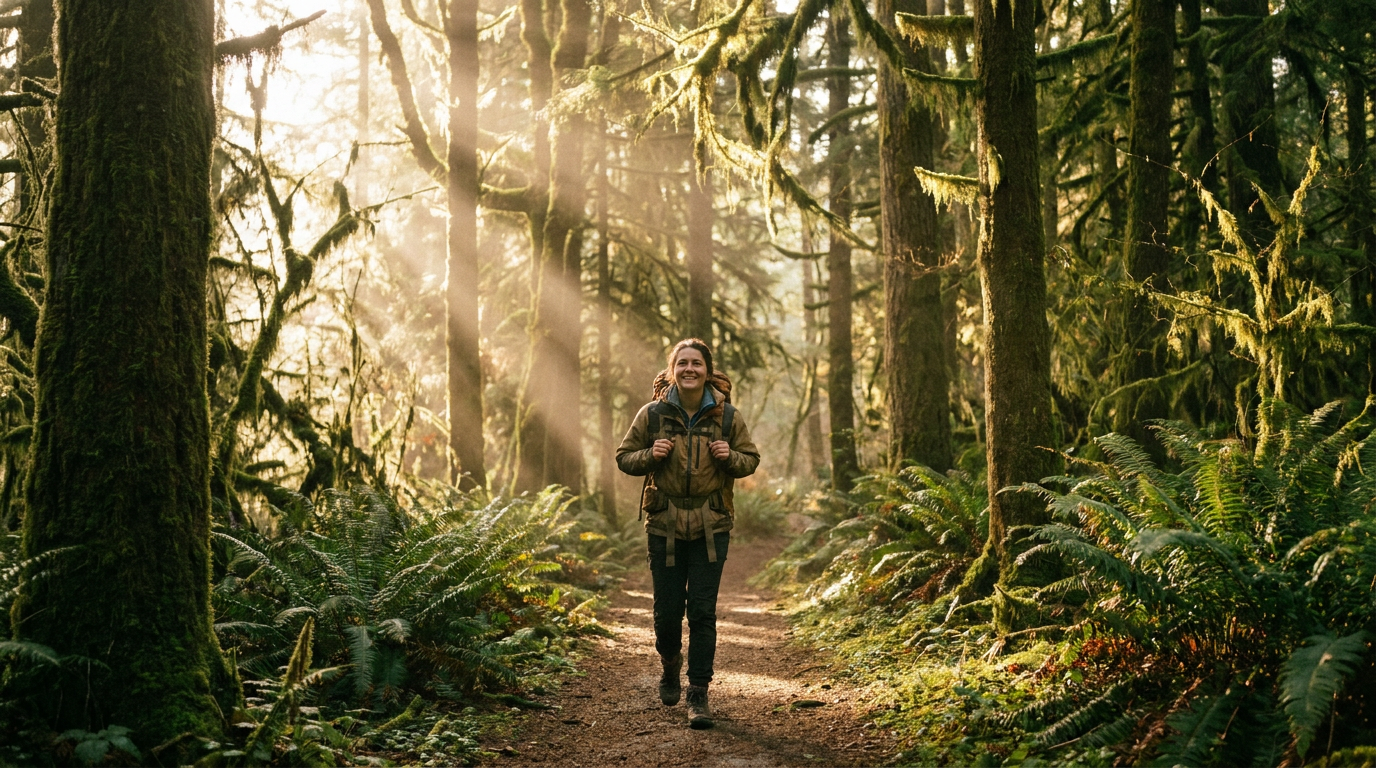
- Clinical Researchers
- Focuses on quantifying the physiological and neurological impacts of nature exposure through measurable metrics like cortisol levels and fMRI scans.
- Public Health Officials
- Views green prescribing as a scalable, cost-effective population-level intervention to reduce the burden on traditional healthcare systems.
- Urban Planners
- Emphasizes the need for equitable access to green infrastructure in densely populated cities to support community mental health.
What's not represented
- · Patients with severe mobility restrictions
- · Indigenous communities with traditional ecological knowledge
Why this matters
Understanding the exact 'dose' of nature required to trigger physiological benefits allows individuals to manage their mental health with a free, accessible, and scientifically backed tool.
Key points
- Spending 120 minutes a week in nature is clinically associated with significant improvements in mental well-being.
- The 120-minute threshold can be met in a single weekend trip or broken into shorter daily walks.
- Nature exposure rapidly lowers cortisol levels and shifts the body into a 'rest and digest' state.
- Attention Restoration Theory explains how natural environments help the brain recover from screen-induced cognitive fatigue.
- Healthcare systems in the UK and US are increasingly adopting formal 'green prescriptions' for patients.
For decades, the idea that a walk in the woods could cure a sour mood was relegated to the realm of folk wisdom and poetic intuition. Today, it is becoming a formalized medical intervention. Across the globe, healthcare providers are increasingly issuing "nature prescriptions"—formal directives for patients to spend targeted amounts of time in green spaces to combat anxiety, depression, and chronic stress. This shift from anecdotal advice to clinical protocol represents a growing recognition of environmental exposure as a potent, measurable tool in mental health treatment.[1][4]
The momentum behind green prescribing is driven by a robust and expanding body of empirical evidence. Researchers have moved beyond simply asking people how they feel after a hike, instead utilizing biometric tracking, functional MRI scans, and large-scale epidemiological data to quantify the neurological and physiological changes triggered by natural environments. The resulting data paints a compelling picture of a biological imperative: human nervous systems are fundamentally calibrated to respond to natural stimuli, and depriving them of it carries a measurable psychological cost.[2][3]
One of the most significant breakthroughs in this field came with the effort to establish a specific "dose-response" curve for nature exposure. Just as a pharmaceutical drug requires a specific dosage to be effective, researchers sought to determine the minimum amount of time required to trigger measurable mental health benefits. A landmark study analyzing data from nearly 20,000 participants identified a clear threshold: 120 minutes per week.[2]

According to the data, individuals who spent at least two hours a week in green spaces reported significantly higher levels of psychological well-being and lower levels of mental distress compared to those who spent no time in nature. Crucially, the research indicated that it did not matter how this 120-minute dose was accumulated. A single, two-hour weekend hike yielded the same statistical benefits as shorter, 15-to-20-minute daily walks through a local park, offering flexibility for those with demanding schedules.[2][5]
The physiological mechanisms underlying these benefits are largely tied to the body's stress response systems. When a person enters a natural environment, researchers consistently observe a rapid decrease in salivary cortisol, the primary hormone associated with stress. This hormonal shift is accompanied by a transition in the autonomic nervous system, moving from the "fight or flight" sympathetic state—often chronically activated by modern, high-stress urban living—to the "rest and digest" parasympathetic state.[3][6]
Harvard Medical School researchers have documented how this parasympathetic activation cascades through the body, leading to lowered blood pressure, reduced heart rate, and decreased muscle tension. These physiological changes are not merely side effects; they are foundational to alleviating the physical symptoms of anxiety and depression. By forcing the body out of a state of chronic hyperarousal, nature exposure provides the biological baseline necessary for psychological recovery.[6]
These physiological changes are not merely side effects; they are foundational to alleviating the physical symptoms of anxiety and depression.
Beyond stress reduction, nature exposure offers profound cognitive benefits, primarily explained by Attention Restoration Theory (ART). Developed by environmental psychologists, ART posits that modern urban environments and digital screens demand "directed attention"—a type of intense, top-down focus that requires significant cognitive effort to filter out distractions. Over time, this constant demand leads to directed attention fatigue, characterized by irritability, brain fog, and a reduced capacity to manage emotions.[7]

Natural environments, by contrast, engage what psychologists call "soft fascination." The rustling of leaves, the movement of water, or the patterns of clouds capture our attention effortlessly, without requiring the cognitive strain of directed focus. This state of soft fascination allows the brain's directed attention mechanisms to rest and replenish. Studies show that after spending time in nature, individuals perform significantly better on cognitive tasks requiring sustained focus and exhibit greater emotional regulation.[3][7]
Armed with this evidence, public health systems are beginning to integrate nature exposure into standard care. In the United Kingdom, the National Health Service (NHS) has pioneered "green social prescribing" initiatives. General practitioners are now actively referring patients experiencing anxiety, depression, and social isolation to community-based nature activities, ranging from guided woodland walks to community gardening projects, effectively treating nature as a therapeutic intervention alongside or in place of traditional pharmaceuticals.[5]
Similar initiatives are gaining traction in the United States, where organizations are building platforms that allow physicians to seamlessly prescribe park visits in patient electronic health records. These prescriptions often include specific locations, activities, and durations, tailored to the patient's physical abilities and geographic access. By formalizing the recommendation, doctors signal to patients that time in nature is not a luxury or a leisure activity, but a medical necessity.[4]
As green prescribing expands, a critical debate has emerged regarding the type of nature required to achieve these benefits. Does a manicured urban park offer the same psychological relief as a wild, untamed forest? While deep wilderness experiences often yield the most dramatic reductions in stress markers, the evidence strongly suggests that urban green spaces are highly effective. The key factor appears to be the presence of a natural canopy and a temporary reprieve from the sensory overload of traffic and concrete.[2][7]

This finding is crucial for urban planners and public health officials, as the majority of the global population resides in cities. Ensuring equitable access to urban parks, tree-lined streets, and community gardens is increasingly viewed not just as an aesthetic or environmental priority, but as a fundamental public health imperative. The psychological resilience of a city's population is directly tied to the accessibility of its green infrastructure.[3][5]
Despite the robust evidence, researchers acknowledge certain limitations and areas requiring further study. The dose-response curve, for instance, appears to plateau; spending five hours in nature does not necessarily provide exponentially more benefits than spending two. Furthermore, individual differences in upbringing, cultural background, and personal safety concerns can significantly influence how a person responds to a natural environment. For some, a dense forest may induce anxiety rather than alleviate it.[1][2]
Ultimately, the synthesis of this research points to a powerful, accessible tool for mental health management. While nature prescriptions are not a replacement for psychiatric care or medication in severe cases of mental illness, they represent a highly effective, low-risk, and cost-free adjunct therapy. By understanding the science of how green spaces heal the brain, individuals are empowered to take active, evidence-based steps toward improving their own psychological well-being.[1][4][6]
How we got here
1989
Environmental psychologists introduce Attention Restoration Theory (ART) to explain nature's cognitive benefits.
2019
A landmark study in Nature Scientific Reports establishes the 120-minute weekly threshold for optimal well-being.
2021
The UK's National Health Service (NHS) launches a multi-million-pound pilot program for green social prescribing.
2023
Park prescription platforms gain widespread adoption among US physicians and healthcare networks.
Viewpoints in depth
Clinical Researchers
Scientists focused on quantifying the exact biological mechanisms of nature exposure.
For clinical researchers, the value of nature exposure lies in its measurable physiological impact. This camp focuses on data derived from functional MRI scans, heart rate variability monitors, and salivary cortisol tests. They argue that nature is not merely a pleasant backdrop, but an active biological catalyst that forces the autonomic nervous system out of chronic hyperarousal. Their primary goal is to establish precise dose-response curves—determining exactly how many minutes of exposure are required to achieve specific reductions in stress biomarkers, much like testing the efficacy of a pharmaceutical compound.
Public Health Officials
Healthcare administrators utilizing green prescribing as a population-level intervention.
Public health officials view green prescribing through the lens of scalability and preventative care. Facing a global surge in anxiety and depression, this camp advocates for nature prescriptions as a low-cost, low-risk adjunct therapy that can alleviate the burden on overstretched psychiatric services. They emphasize the integration of green prescribing into standard electronic health records and advocate for community-based programs, arguing that formalizing the prescription helps legitimize the treatment in the eyes of patients who might otherwise dismiss it as mere leisure.
Urban Planners
City designers focused on the equitable distribution and accessibility of green spaces.
For urban planners, the clinical evidence supporting nature prescriptions translates directly into an infrastructure mandate. This perspective argues that if 120 minutes of nature exposure is a medical necessity, then access to safe, high-quality green spaces is a fundamental public health right. They focus on the disparities in park access across different socioeconomic neighborhoods, advocating for the integration of natural canopies, community gardens, and accessible urban parks into city zoning laws to ensure that the psychological benefits of nature are available to all residents, not just those with the means to travel to wilderness areas.
What we don't know
- The exact biological mechanism that triggers the parasympathetic nervous system upon entering a green space.
- Whether highly immersive virtual reality nature experiences can provide the same neurological benefits as physical presence.
- How individual differences in cultural background and personal safety concerns alter the stress-reduction benefits of nature.
Key terms
- Green Prescribing
- The practice of healthcare professionals formally recommending that patients spend specific amounts of time in nature to improve their physical or mental health.
- Attention Restoration Theory (ART)
- A psychological framework suggesting that exposure to natural environments allows the brain to recover from the cognitive fatigue caused by modern, high-focus tasks.
- Directed Attention Fatigue
- A state of mental exhaustion caused by prolonged periods of intense focus, often associated with screen time and urban navigation.
- Parasympathetic Nervous System
- The part of the autonomic nervous system responsible for the body's 'rest and digest' state, which lowers heart rate and promotes relaxation.
- Soft Fascination
- A state of effortless attention triggered by natural stimuli, such as watching clouds or listening to water, which allows the brain to rest.
Frequently asked
Do I have to exercise in nature to get the benefits?
No. While exercise provides its own benefits, the psychological and cortisol-lowering effects of nature exposure occur even if you are simply sitting quietly in a green space.
Does the 120 minutes need to be done all at once?
Research shows that the benefits are the same whether the 120 minutes are accumulated in a single two-hour weekend block or broken up into shorter daily intervals.
Do urban parks count, or does it have to be wilderness?
Urban parks are highly effective. While deep wilderness can offer profound benefits, the presence of a natural tree canopy and a break from urban noise is sufficient to trigger the parasympathetic nervous system.
Are indoor plants or virtual reality nature effective?
While indoor plants and nature sounds can offer mild stress relief, clinical studies show they do not trigger the same magnitude of physiological recovery as physical immersion in an outdoor green space.
Sources
Source coverage
7 outlets
3 viewpoints surfaced







[1]Factlen Editorial TeamUrban Planners
Synthesis by Factlen editorial team
Read on Factlen Editorial Team →[2]Nature Scientific ReportsClinical Researchers
Spending at least 120 minutes a week in nature is associated with good health and wellbeing
Read on Nature Scientific Reports →[3]American Psychological AssociationUrban Planners
Nurtured by nature: Psychological research is advancing our understanding of how time in nature can improve our mental health
Read on American Psychological Association →[4]The Washington PostPublic Health Officials
Why doctors are increasingly prescribing nature walks
Read on The Washington Post →[5]The GuardianPublic Health Officials
Green prescribing: how nature is being used to treat mental health
Read on The Guardian →[6]Harvard Health PublishingClinical Researchers
Sour mood getting you down? Get back to nature
Read on Harvard Health Publishing →[7]Journal of Environmental PsychologyClinical Researchers
Attention Restoration Theory and exposure to natural environments: A review
Read on Journal of Environmental Psychology →

More in health
See all 8 stories →Metabolic Health
Muscle as an Organ of Longevity: The Science of Myokines and Metabolic Health
0 sources

Clinical Evidence
The Evidence for Exercise as a First-Line Mental Health Treatment
0 sources

Diabetes Research
FDA Approves First Disease-Modifying Therapy for Newly Diagnosed Stage 3 Type 1 Diabetes in Youth
0 sources

Longevity Science
The Science of 'Exercise Snacks': How 1-Minute Bursts of Movement Can Transform Longevity
0 sources

Every angle. Every day.
Get health stories with full source coverage and perspective breakdowns delivered to your inbox.