
E-Bike Motors Compared: Mid-Drive vs. Hub Motor
The placement of an electric bicycle's motor fundamentally changes its performance, maintenance, and cost. Understanding the mechanical trade-offs between mid-drive and hub motors is the most critical decision for buyers in 2026.
By Factlen Editorial Team
- Urban Commuters
- Prioritize simplicity, low maintenance, and cost-effectiveness for flat city riding.
- Off-Road Enthusiasts
- Value gear leverage, high torque, and centered weight distribution for steep trails.
- E-Bike Technicians
- Focus on the long-term mechanical reliability and drivetrain wear of different motor systems.
What's not represented
- · Traditional analog cyclists who argue that both motor types fundamentally alter trail access and bicycle infrastructure.
- · City planners evaluating how the differing speed and acceleration profiles of hub vs. mid-drive bikes impact pedestrian safety in mixed-use zones.
Why this matters
Choosing the wrong e-bike motor for your local terrain can lead to burnt-out electronics, stranded commutes, or hundreds of dollars in unnecessary maintenance. Matching the motor architecture to your specific riding style ensures a reliable, cost-effective investment.
Key points
- Mid-drive motors leverage the bicycle's existing gears, making them highly efficient for steep hills and heavy cargo.
- Hub motors operate independently of the chain, offering a simpler, lower-maintenance ride ideal for flat urban commuting.
- Mid-drives provide a more natural, bicycle-like feel by using torque sensors to instantly match the rider's physical effort.
- Hub motors are generally more affordable and often include a throttle, but they add unsprung weight that can negatively impact off-road handling.
- The choice between systems should be dictated by the rider's local terrain and maintenance tolerance, rather than raw wattage.
The electric bicycle market has matured significantly by 2026, transitioning from a niche hobbyist pursuit to a primary mode of transportation and recreation for millions. As buyers navigate an increasingly crowded landscape of brands and models, one fundamental engineering decision dictates the entire riding experience: the placement of the motor.[6]
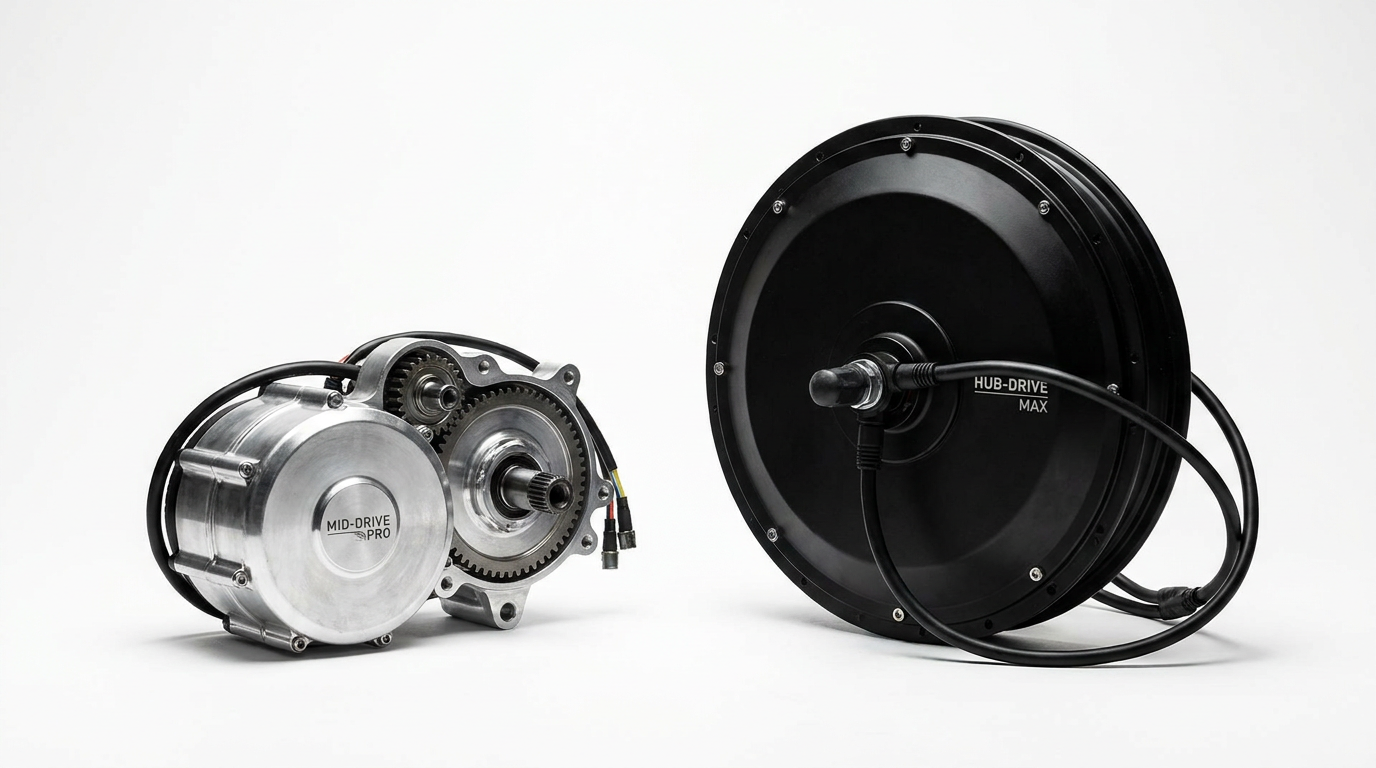
Every electric bicycle on the market utilizes one of two primary propulsion systems. The motor is either housed within the center of the wheel—known as a hub motor—or integrated into the frame at the pedals, known as a mid-drive motor. This single architectural choice influences everything from how the bike climbs hills to how often it requires maintenance, making it the most critical factor for prospective buyers to understand.[1][4]
A mid-drive motor sits at the bottom bracket, directly powering the front chainring rather than the wheel itself. Because the motor's output travels through the bicycle's chain and rear cassette, it actively leverages the bike's existing gearing system. When a rider shifts into a lower gear to tackle a steep incline, the motor also benefits from that mechanical advantage, allowing it to spin at a highly efficient, high-RPM rate while delivering massive torque to the rear wheel.[2][3][5]

This mechanical synergy makes mid-drive systems the undisputed champions of steep, technical terrain. On grades steeper than eight to ten percent, the physical advantages of gear multiplication become glaringly apparent. A mid-drive motor can crawl up a mountainside without overheating or draining the battery excessively, simply because it is not fighting the raw physics of a dead-weight climb.[1][2][3]
Beyond raw climbing power, mid-drives are celebrated for their highly natural ride feel. These systems almost universally employ sophisticated torque sensors that measure exactly how much physical force the rider is applying to the pedals. The motor then amplifies that specific effort in real-time, creating a seamless sensation of superhuman leg strength rather than the feeling of being pushed by an external machine.[4][5][6]
Furthermore, placing the heaviest component of the e-bike low and perfectly centered in the frame dramatically improves the bicycle's handling. For mountain bikers navigating loose dirt, sharp corners, and technical descents, this balanced weight distribution is non-negotiable. It keeps the bike agile and prevents the rear wheel from feeling anchored to the ground during jumps or drops.[2][3][5]

However, the mid-drive's greatest strength—its integration with the bicycle's drivetrain—is also its primary vulnerability. Bicycle chains, cassettes, and derailleurs were originally engineered to handle the relatively low wattage of human legs. Pumping hundreds of watts of continuous electric motor power through these same components accelerates wear and tear significantly, requiring riders to replace chains and gears far more frequently than they would on a traditional bicycle.[1][3][6]
However, the mid-drive's greatest strength—its integration with the bicycle's drivetrain—is also its primary vulnerability.
If a chain snaps on a remote trail, a mid-drive e-bike immediately loses both human and electric propulsion, leaving the rider stranded unless they carry the tools for a trailside repair. Additionally, mid-drive systems are inherently more complex to manufacture and require bespoke frame designs, which makes them substantially more expensive at the point of purchase.[3][4]
Hub motors offer a starkly different engineering philosophy, prioritizing simplicity, durability, and cost-effectiveness. Housed entirely within the hub of the front or rear wheel, these motors apply rotational force directly to the pavement. Because they operate completely independently of the bicycle's chain and gears, they place zero additional stress on the traditional drivetrain components.[1][3][5]
This independence makes hub motors incredibly reliable and virtually maintenance-free over the long term. If a rider breaks a chain on a hub-motor e-bike, they can simply rely on the electric throttle to cruise home without pedaling at all. For daily commuters who view their e-bike as a utilitarian vehicle rather than a piece of sporting equipment, this fail-safe reliability is a massive selling point.[2][3][6]
Hub motors are also significantly cheaper to produce and can be laced into standard bicycle wheels, allowing manufacturers to keep the overall cost of the e-bike remarkably low. They are frequently paired with basic cadence sensors, which simply detect whether the pedals are turning and deliver a fixed amount of power. While this lacks the nuanced, natural feel of a torque sensor, it allows riders to cruise effortlessly without exerting any real physical effort.[1][4][5]
The primary drawback of the hub motor becomes evident the moment the road tilts sharply upward. Because the motor cannot utilize the bicycle's gears, it must rely entirely on brute electrical force to overcome gravity. On sustained, steep climbs, a hub motor will bog down, operate inefficiently, drain the battery rapidly, and potentially overheat if pushed too hard for too long.[1][2][3]

Hub motors also introduce significant unsprung weight to the rear wheel. This rear-heavy bias can make the bicycle feel cumbersome to lift, awkward to maneuver at low speeds, and less responsive over potholes or trail obstacles. For high-speed urban commuting on flat pavement, this weight penalty is negligible, but for aggressive off-road riding, it severely compromises the bike's suspension dynamics.[2][3][4]
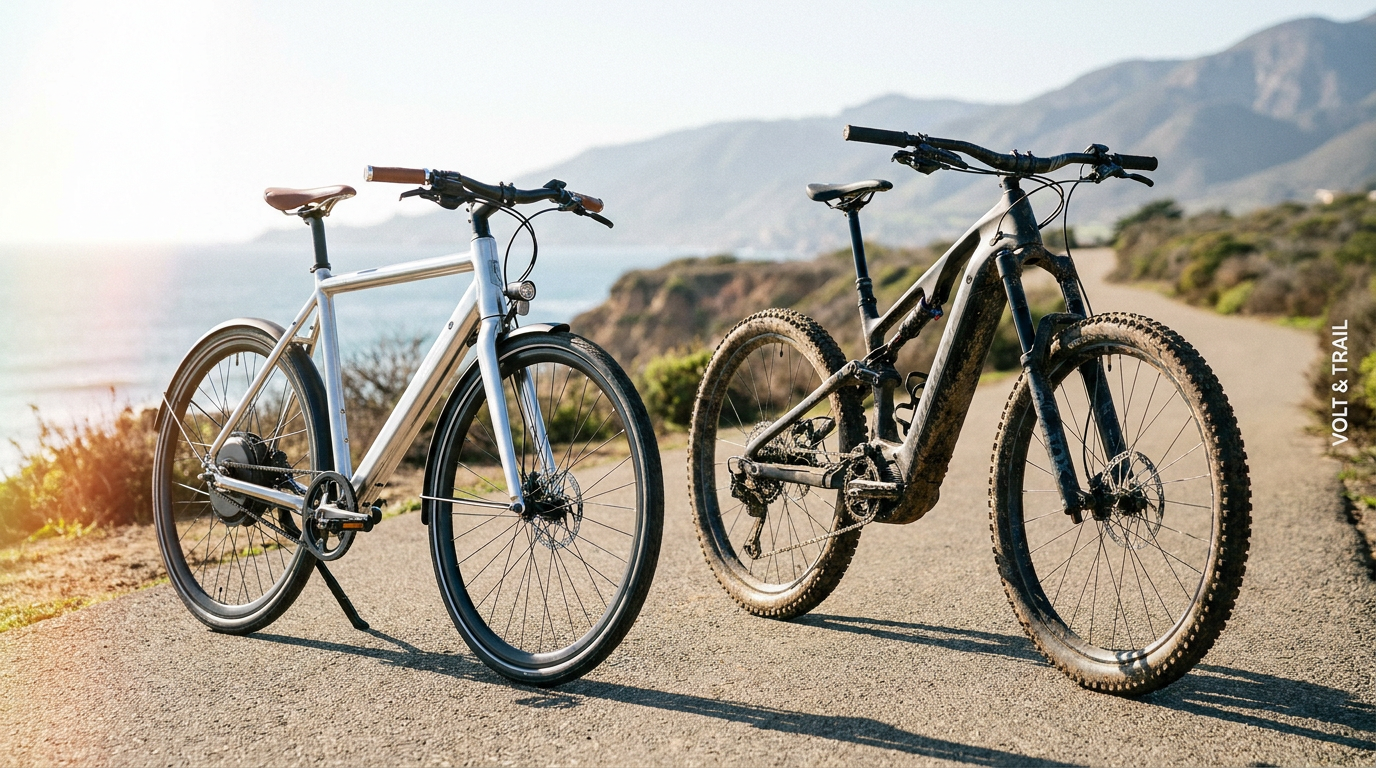
Ultimately, the choice between the two systems should be dictated by geography and intended use rather than a simple comparison of wattage or price. Riders who live in hilly areas, frequently haul heavy cargo, or demand the dynamic handling of a premium mountain bike will find the extra cost and maintenance of a mid-drive system entirely justified. The gear leverage and natural pedal response simply cannot be replicated by a wheel-based motor.[1][5][6]
Conversely, for the vast majority of urban commuters navigating relatively flat city grids, a hub motor represents the most pragmatic investment. It provides sweat-free transportation, requires minimal upkeep, offers the convenience of a throttle, and leaves hundreds of dollars in the buyer's pocket. In the modern e-bike landscape, there is no universal winner—only the right engineering solution for a specific rider's terrain.[1][2][4]

How we got here
Early 2000s
Hub motors dominate the early e-bike conversion market due to their simplicity and ability to fit standard bicycle frames.
2014
Bosch introduces its first major mid-drive e-bike system, shifting the premium market toward center-mounted motors.
2020
The pandemic e-bike boom sees a massive influx of affordable, direct-to-consumer hub motor bikes for urban commuters.
2026
Both motor technologies reach maturity, with high-power hub motors dominating budget categories and refined mid-drives ruling the off-road markets.
Viewpoints in depth
Urban Commuters
Hub motors provide a sweat-free, throttle-heavy ride perfect for flat city grids.
For riders navigating paved, relatively flat urban environments, the mechanical simplicity of a hub motor is a massive advantage. Because the motor operates independently of the bicycle's chain, it requires virtually no maintenance and allows riders to use a throttle to get home even if the drivetrain fails. Commuters prioritize this reliability and the lower upfront cost over the dynamic handling required for mountain biking.
Off-Road Enthusiasts
Mid-drives are non-negotiable for trails, utilizing gear leverage for steep, technical climbs.
Mountain bikers and trail riders require a motor that can multiply torque without overheating. By running power through the bicycle's cassette, a mid-drive motor can spin efficiently even when the bike is crawling up a 15-percent grade. Furthermore, keeping the heavy motor centered at the bottom bracket ensures the rear suspension remains active and the bike handles predictably over jumps and drops.
E-Bike Technicians
Mechanics note the stark difference in long-term drivetrain wear between the two systems.
From a maintenance perspective, mid-drive motors place immense strain on components originally designed for human legs. Technicians frequently see mid-drive owners replacing stretched chains and worn cassettes multiple times a season. Conversely, direct-drive hub motors bypass the drivetrain entirely, allowing the bicycle's mechanical components to last significantly longer, even under heavy daily use.
What we don't know
- How upcoming solid-state battery technologies might shift the weight-distribution penalties currently associated with heavy rear-hub motors.
- Whether continuous improvements in internal geared hub motors will eventually allow wheel-based systems to match the climbing efficiency of mid-drives.
- The long-term impact of right-to-repair legislation on the proprietary, closed-ecosystem designs of premium mid-drive motors.
Key terms
- Mid-Drive Motor
- An electric motor positioned at the center of the bicycle frame, directly powering the pedals and utilizing the bike's existing gears.
- Hub Motor
- An electric motor housed entirely within the center of the front or rear wheel, driving the wheel directly without using the bike's chain.
- Torque Sensor
- A device that measures how hard the rider is pedaling and delivers proportional motor assistance, creating a natural ride feel.
- Cadence Sensor
- A basic sensor that detects whether the pedals are turning, delivering a fixed amount of power regardless of how hard the rider pushes.
- Unsprung Weight
- The mass of the bicycle components not supported by the suspension, such as a heavy rear hub motor, which can negatively impact handling on rough terrain.
Frequently asked
Can I ride a hub motor e-bike up steep hills?
Yes, but it relies on raw wattage rather than gear leverage. This drains the battery faster and can cause the motor to overheat on sustained, steep inclines.
What happens if my chain breaks on an e-bike?
On a mid-drive, you lose both pedal and motor power. On a hub motor, the motor operates independently of the chain, allowing you to use the throttle to get home.
Which motor type feels more like a traditional bicycle?
Mid-drive motors feel much more natural because they typically use torque sensors that instantly match your pedaling effort, whereas hub motors often use cadence sensors that provide a more sudden push.
Are mid-drive e-bikes more expensive?
Generally, yes. The motors themselves are more complex to manufacture, and they require specialized bicycle frames to house the bottom-bracket motor, raising the overall price.
Sources
Source coverage
6 outlets
3 viewpoints surfaced





[1]Zeus eBikesUrban Commuters
Mid-Drive vs Hub Motor at a Glance
Read on Zeus eBikes →[2]Hi Power CyclesOff-Road Enthusiasts
Mid-Drive vs. Hub Motor: Which Is Better in 2026?
Read on Hi Power Cycles →[3]Ebike GenerationOff-Road Enthusiasts
Mid-Drive vs Hub Motor: The Fundamental Choice
Read on Ebike Generation →[4]Cycle VoltaUrban Commuters
Making Sense of Ebike Motors
Read on Cycle Volta →[5]Ebikes.orgE-Bike Technicians
Mid-Drive vs Hub-Drive Electric Bike Motors
Read on Ebikes.org →[6]Factlen Editorial TeamE-Bike Technicians
Synthesis by Factlen editorial team
Read on Factlen Editorial Team →
Every angle. Every day.
Get shopping stories with full source coverage and perspective breakdowns delivered to your inbox.