
AI Tutors Are Drastically Improving University Pass Rates, But Long-Term Retention Questions Remain
New experimental data reveals that institutionally sanctioned AI teaching assistants are doubling learning speeds and boosting pass rates in foundational courses. However, researchers caution that heavy reliance on the technology may not improve long-term memory consolidation.
By Factlen Editorial Team

- Educational Technologists
- Advocates who view AI as the solution to the long-standing problem of scaling personalized, 1:1 instruction.
- University Faculty
- Educators focused on workload reduction, shifting from grading to high-value mentoring, and academic integrity.
- Pedagogical Skeptics
- Researchers concerned about the illusion of competence, long-term memory retention limits, and critical thinking atrophy.
What's not represented
- · First-generation students without home internet access
- · Administrators managing university IT budgets
Why this matters
As universities integrate AI directly into their curricula, students who leverage these 24/7 virtual tutors are gaining a massive competitive advantage in mastering difficult subjects. Understanding the evidence behind AI's effectiveness—and its limitations—is crucial for students aiming to maximize their tuition investment and for educators redesigning the modern classroom.
Key points
- 92% of university students now use AI tools, prompting institutions to deploy official AI teaching assistants.
- A randomized controlled trial found students using AI tutors learned twice as much in less time compared to traditional classrooms.
- Foundational math courses using adaptive AI courseware saw pass rates jump from 57% to 79%.
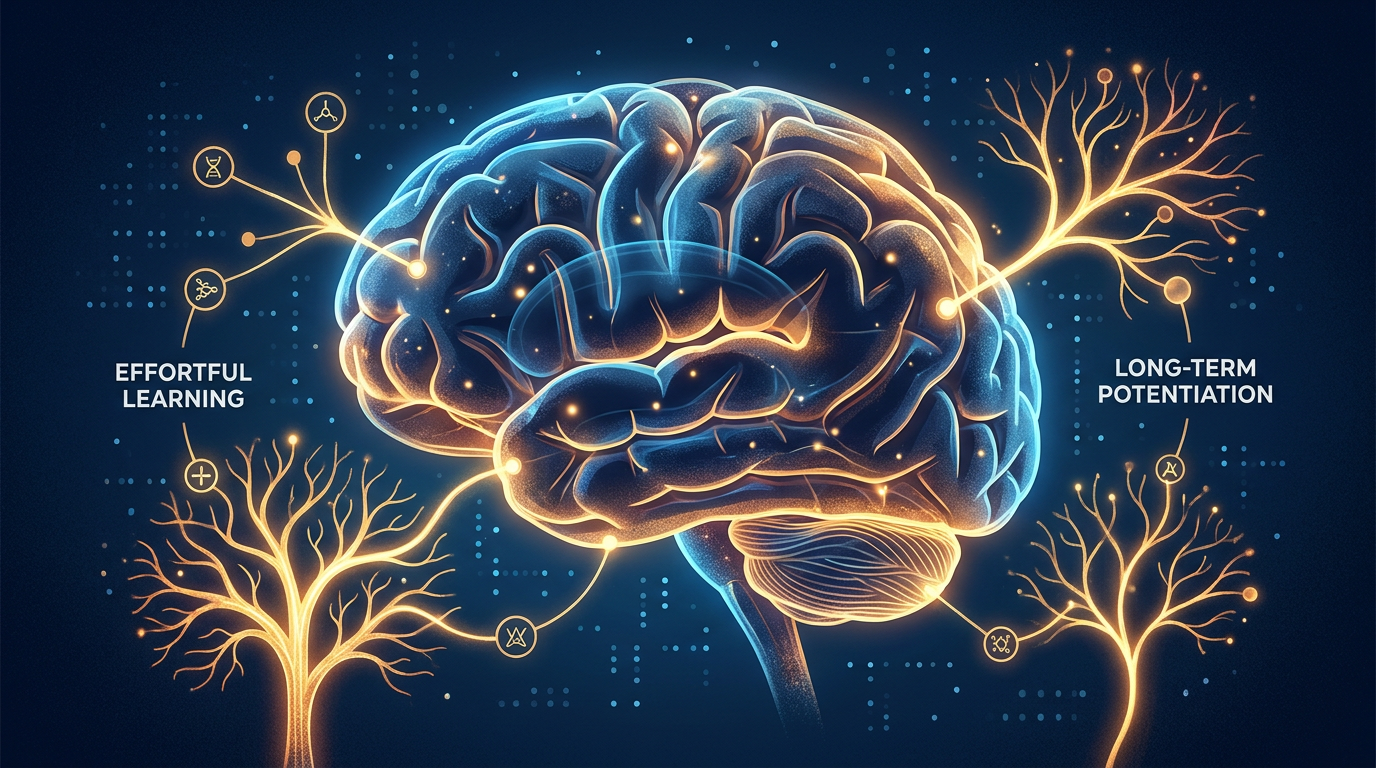
- While short-term knowledge acquisition is high, medical studies indicate AI may not significantly improve long-term memory retention.
By the spring of 2026, the narrative surrounding artificial intelligence in higher education has fundamentally shifted. Moving past the initial panic over automated essay writing, universities are now deploying AI as integrated, institutionally sanctioned teaching assistants. According to the 2025 Higher Education Policy Institute survey, 92% of university students now utilize AI tools in their studies, marking the steepest single-year behavioral shift ever recorded in the sector. Rather than replacing human instructors, these systems are being designed to solve one of academia's most intractable problems: the inability to provide personalized, one-on-one tutoring in massive foundational courses. The early empirical data from these deployments suggests a profound impact on student success, with major universities reporting double-digit increases in pass rates and significant reductions in course withdrawals.[3][6]
The most prominent proof of concept comes from Harvard University's introduction to computer science, CS50. Facing the logistical impossibility of providing individualized support to thousands of on-campus and online students, the faculty developed the "CS50 Duck," an AI-powered virtual rubber duck. Engineered with strict pedagogical guardrails, the bot is explicitly programmed not to provide direct answers. Instead, it reviews student code, explains error messages, and asks guiding questions to lead learners to their own solutions. The intervention successfully approximated a 1:1 teacher-to-student ratio. Following the rollout, the course saw students asking human teaching assistants significantly fewer routine questions—dropping from an average of 0.89 to 0.28 per student—while attendance at traditional office hours fell from 51% to 30% as students opted for the immediate, 24/7 availability of the AI tutor.[2][5]
Beyond operational efficiency, rigorous experimental data indicates that these systems are actively accelerating knowledge acquisition. A landmark randomized controlled trial published in Scientific Reports evaluated the efficacy of AI tutoring against traditional active-learning classroom environments in a university physics course. The results were striking: students utilizing the AI tutor achieved substantially higher post-test scores, learning more than twice as much as their classroom peers. Furthermore, they achieved these gains in less time, with the AI group recording a median time-on-task of 49 minutes compared to 60 minutes for the in-class cohort. The study recorded an effect size between 0.73 and 1.3 standard deviations—a remarkable outcome in educational research, where any intervention exceeding a 0.4 effect size is typically considered highly significant.[1][6]

These controlled experimental gains are translating into systemic improvements at the institutional level, particularly in historically difficult "gateway" courses that often derail degree progress. At Arizona State University, the integration of adaptive, AI-driven courseware in foundational mathematics classes resulted in pass rates surging from 57% to 79%. Concurrently, the course withdrawal rate plummeted by 47%. By providing immediate intervention the moment a student struggles with a concept—rather than waiting for a failed midterm exam weeks later—AI tutors prevent the compounding confusion that typically leads to course abandonment. Educational analysts note that this capability is particularly transformative for first-generation and non-traditional adult learners, who often lack the resources to hire private human tutors.[5][7]

At Arizona State University, the integration of adaptive, AI-driven courseware in foundational mathematics classes resulted in pass rates surging from 57% to 79%.
The integration of AI teaching assistants is also reshaping the daily realities of university faculty, addressing a growing crisis of educator burnout. By automating routine inquiries, providing initial feedback on assignments, and generating practice assessments, AI systems are drastically reducing administrative overhead. Pilot programs tracking faculty workload have reported that AI assistants can reduce grading and administrative time by up to 78%, elevating instructor satisfaction scores significantly. Rather than rendering professors obsolete, this automation frees them to focus on higher-order pedagogical tasks. Instructors are reallocating their time toward complex mentoring, facilitating deep-dive classroom discussions, and supporting students who require nuanced emotional or academic interventions that machines cannot provide.[2][5]
However, the evidence pack surrounding AI tutoring is not uniformly flawless, and researchers are transparent about the technology's current limitations. A recent study published by the National Institutes of Health examined the use of a DeepSeek-based AI teaching assistant in medical education, specifically for teaching anesthesiology theories. While the experimental group using the AI assistant achieved significantly higher theoretical test scores immediately after the course, follow-up testing revealed no significant difference in knowledge retention one month later. The findings suggest that while AI excels at driving short-term knowledge acquisition and immediate engagement, its impact on long-term memory consolidation and the deep encoding of complex clinical skills remains unproven.[4][7]
Broader meta-analyses echo these constraints, indicating that the outsized benefits of AI tutoring often diminish during longer interventions lasting a full semester or more. Pedagogical researchers warn of the "illusion of competence," where students lean so heavily on the AI's step-by-step guidance that their independent critical thinking muscles atrophy. If a student relies on an AI assistant to break down every complex problem, they may struggle when forced to perform in unassisted environments, such as secure examinations or real-world professional scenarios. Consequently, the design of the AI's prompt architecture—ensuring it acts as a Socratic guide rather than a crutch—is emerging as the most critical variable in its educational efficacy.[6][7]

Despite the overwhelming adoption by the student body, institutional governance is struggling to keep pace with the technological reality. A 2025 UNESCO survey revealed that while adoption is nearly universal among students, more than a third of higher education institutions still operate without clear, formalized frameworks for AI usage. As the market for AI in education scales toward a projected $7.5 billion, the focus is shifting from whether to allow these tools to how to integrate them equitably. Universities that successfully deploy AI teaching assistants are not merely improving their pass rates; they are fundamentally redefining the architecture of higher education, transitioning from a model of scarce, scheduled support to one of abundant, personalized, and continuous learning.[5][6]
How we got here
2023
Harvard University pilots the 'CS50 Duck,' an AI-powered virtual rubber duck, to approximate a 1:1 teacher-to-student ratio.
2024
Global student AI usage reaches 66%, primarily through unauthorized third-party chatbots.
June 2025
Scientific Reports publishes a landmark randomized controlled trial showing AI tutoring outperforms traditional active learning.
Spring 2026
University adoption hits 92%, with institutions shifting from banning AI to integrating custom pedagogical bots.
Viewpoints in depth
Educational Technologists
Advocates who view AI as the solution to the long-standing problem of scaling personalized, 1:1 instruction.
This camp points to the "two sigma problem" identified by educational psychologist Benjamin Bloom in 1984, which found that 1:1 tutored students performed two standard deviations better than classroom students. Technologists argue that large language models finally make this level of intervention economically viable for every student. By providing immediate, 24/7 feedback, they believe AI eliminates the friction of waiting for office hours, thereby preventing students from abandoning difficult STEM courses.
Pedagogical Skeptics
Researchers and educators concerned about the degradation of independent problem-solving skills and long-term retention.
Skeptics do not deny the short-term test score bumps, but they question the durability of AI-assisted learning. Citing studies like the NIH anesthesiology trial, they argue that heavy reliance on AI creates an "illusion of competence." When an AI breaks down a complex problem into easily digestible steps, the student feels they understand the material, but they bypass the productive struggle required to encode information into long-term memory. They advocate for strict limits on AI intervention to preserve cognitive endurance.
What we don't know
- Whether the short-term test score gains produced by AI tutors will translate into higher graduation rates over a four-year degree cycle.
- How the 'illusion of competence' affects students when they transition from AI-assisted coursework to unassisted professional environments.
Key terms
- Pedagogical Guardrails
- Programmed constraints on an AI system that prevent it from giving direct answers, forcing it to act as a Socratic guide.
- Effect Size
- A statistical metric used in educational research to measure the magnitude of a teaching intervention's impact on student learning.
- Adaptive Courseware
- Digital learning platforms that use algorithms to adjust the difficulty and type of content based on a student's real-time performance.
- Illusion of Competence
- A cognitive bias where a student believes they have mastered a topic because they followed guided steps, but cannot replicate the solution independently.
Frequently asked
Does using an AI tutor count as cheating?
Not when implemented as an institutional teaching assistant. Systems like Harvard's CS50 bot are programmed with pedagogical guardrails to guide students to answers rather than doing the work for them.
Do AI tutors improve long-term memory?
The evidence is mixed. While AI significantly boosts short-term test scores and immediate comprehension, some medical education studies show no significant improvement in knowledge retention one month later.
Will AI replace human university professors?
No. Current data shows AI reduces administrative and grading workloads, allowing human professors to reallocate their time toward complex mentoring and high-level classroom discussions.
Sources
Source coverage
7 outlets
3 viewpoints surfaced







[1]Scientific ReportsEducational Technologists
AI tutoring outperforms active learning in physics: a randomized controlled trial
Read on Scientific Reports →[2]Harvard UniversityEducational Technologists
Teaching CS50 with AI: Leveraging Generative Artificial Intelligence in Computer Science Education
Read on Harvard University →[3]Higher Education Policy InstituteUniversity Faculty
HEPI/Kortext Student AI Survey 2025
Read on Higher Education Policy Institute →[4]National Institutes of HealthPedagogical Skeptics
Application of a DeepSeek-based AI teaching assistant in teaching anesthesiology theories
Read on National Institutes of Health →[5]CampusMindEducational Technologists
How AI Teaching Assistants are Reshaping Higher Education
Read on CampusMind →[6]AzumoUniversity Faculty
AI Impact on Student Performance and Learning 2026
Read on Azumo →[7]Factlen Editorial TeamPedagogical Skeptics
Synthesis by Factlen editorial team
Read on Factlen Editorial Team →
Every angle. Every day.
Get education stories with full source coverage and perspective breakdowns delivered to your inbox.