
Zverev and Andreeva Surge in Global Tennis Standings as Grass Season Begins
Historic French Open victories by Alexander Zverev and 19-year-old Mirra Andreeva have radically reshaped the ATP and WTA rankings, intensifying the race to the year-end championships.
By Factlen Editorial Team
- Next-Gen Optimists
- Fans and analysts who view the rise of young stars like Sinner, Alcaraz, Andreeva, and Cobolli as a refreshing and necessary changing of the guard.
- Veteran Loyalists
- Observers who believe established champions like Djokovic and Sabalenka will ultimately rely on their experience to dominate the back half of the season.
- Rankings Analysts
- Statisticians focused on the mathematical race to the year-end finals and the specific point thresholds required to qualify.
What's not represented
- · Tournament Organizers
- · Grass-Court Specialists
Why this matters
The mid-season rankings pivot dictates seeding for Wimbledon and sets the stage for the year-end finals in Turin and Riyadh. For fans, the emergence of new Grand Slam champions signals a thrilling, unpredictable changing of the guard in global tennis.
Key points
- Alexander Zverev moved to No. 3 in the world and No. 2 in the Race to Turin after winning his first Grand Slam.
- Jannik Sinner and Aryna Sabalenka maintained their respective World No. 1 rankings following the clay-court season.
- Flavio Cobolli made his Top 10 debut after a surprise run to the Roland Garros final.
- Novak Djokovic dropped to No. 13 in the Race to Turin, putting his year-end finals qualification in jeopardy.
- 19-year-old Mirra Andreeva surged up the WTA rankings after becoming the youngest French Open winner since 1992.
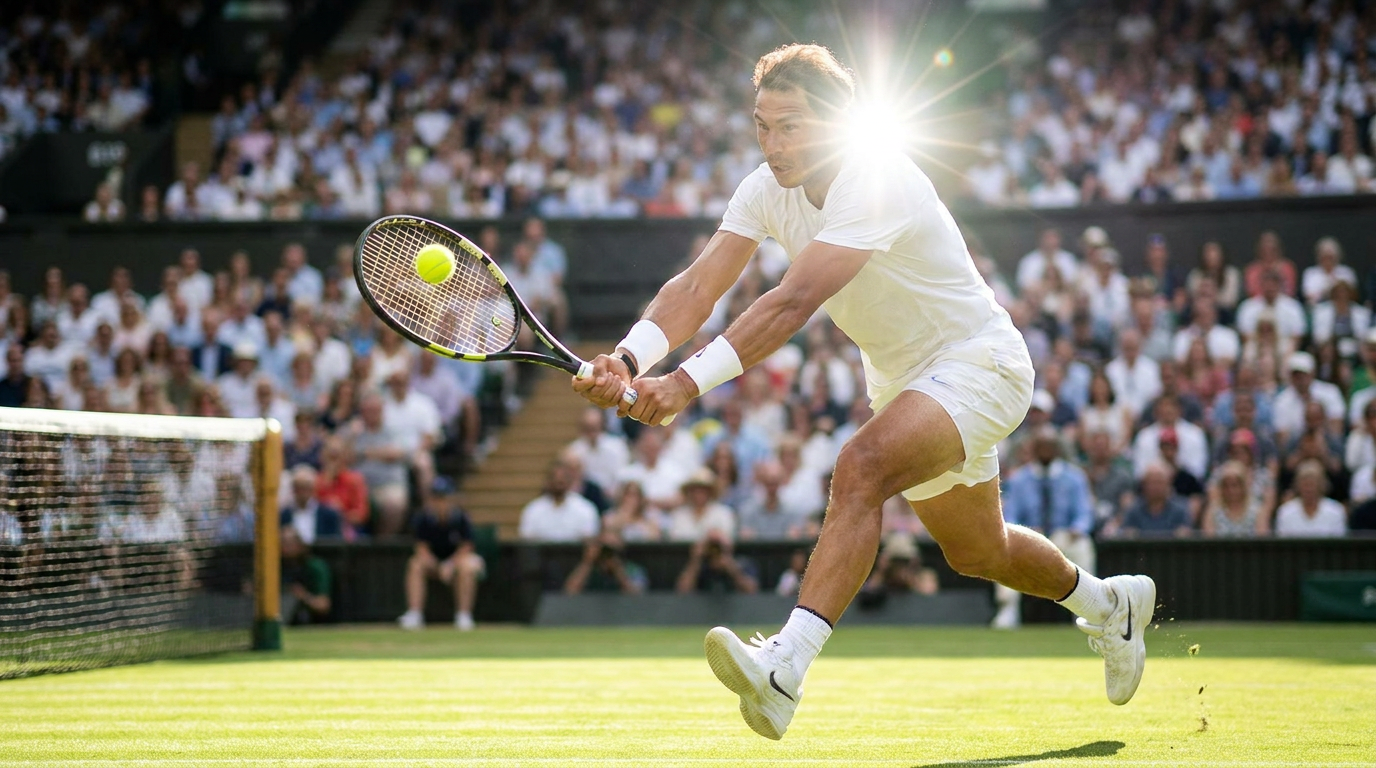
The dust has settled on the 2026 clay-court season, and the transition to the manicured lawns of the grass swing brings a radically reshaped standings picture across both the ATP and WTA tours. Following a historic and unpredictable French Open, the race to the year-end championships has tightened, with breakthrough stars vaulting up the leaderboards and established legends fighting to secure their positions.[1][2]
On the men's side, Italy's Jannik Sinner remains comfortably perched at World No. 1. Despite an early exit in Paris, Sinner's dominant hard-court run earlier in the year leaves him with a commanding 13,500 points in the rolling 52-week ATP Rankings. He also leads the calendar-year "Race to Turin," which determines the eight players who will compete in the season-ending ATP Finals.[2][3]
But the biggest mover of the month is Alexander Zverev. By capturing his elusive maiden Grand Slam title at Roland Garros—becoming the first German man to win the event in the Open Era—the 29-year-old secured 2,000 vital ranking points. That haul solidified his grip on World No. 3 overall with 7,305 points, trailing only Sinner and Spain's Carlos Alcaraz.[1][3]
More importantly for the season narrative, Zverev's Parisian triumph vaulted him past Alcaraz into second place in the live ATP Race to Turin. With 5,040 race points, Zverev has effectively guaranteed his spot at the marquee November event, turning the remainder of his season into a battle for the year-end No. 1 crown.[1][2]

The standings also reflect a stunning breakthrough for Italy's Flavio Cobolli. After a dream run to the Roland Garros final, where he ultimately fell to Zverev, Cobolli crashed the ATP Top 10 for the first time in his career. He now sits at World No. 10 with 3,540 points and has surged to an incredible fourth place in the Race to Turin, placing him ahead of stalwarts like Daniil Medvedev and Casper Ruud.[1][3][4]
Conversely, the mid-season standings reveal unfamiliar jeopardy for Novak Djokovic. Following a shocking third-round loss to João Fonseca on the Parisian clay, the Serbian legend has dropped to World No. 7. More alarmingly for his year-end prospects, Djokovic currently sits at No. 13 in the Race to Turin with just 1,510 points.[1][3]
Conversely, the mid-season standings reveal unfamiliar jeopardy for Novak Djokovic.
Because only the top eight players in the calendar-year race automatically qualify for the ATP Finals, Djokovic faces a steep climb. However, the rules offer a lifeline: if a current-year Grand Slam winner finishes between 9th and 20th in the Race, they claim the final qualification spot. Without a 2026 major title yet, Djokovic will need a dominant performance during the grass and North American hard-court swings to ensure he makes the trip to Italy.[1][7]
The women's tour is experiencing its own seismic shifts. Aryna Sabalenka retains the World No. 1 ranking with 9,090 points, but her margin for error is rapidly shrinking. Kazakhstan's Elena Rybakina sits firmly in second place with 8,143 points, setting up a high-stakes battle for the top spot as the tour moves toward Wimbledon.[5][6]

The most electrifying update to the WTA standings belongs to 19-year-old Mirra Andreeva. The teenager rocketed up the rankings after capturing her maiden Grand Slam title in Paris, becoming the youngest French Open champion since Monica Seles in 1992. Her victory, alongside a finals appearance by qualifier Maja Chwalińska, underscores a period of thrilling volatility on the women's circuit.[6]
With established stars like Iga Świątek (No. 3) and Coco Gauff (No. 7) looking to bounce back from early exits on the clay, the WTA Top 10 is more competitive than it has been in years. The points available over the next month will be critical in shaping the Race to Riyadh for the WTA Finals.[5][6]

As players trade their clay-stained socks for the pristine whites of Queen's Club, Halle, and Eastbourne, the tactical landscape changes completely. Grass-court tennis rewards aggressive serving, quick reflexes, and short points—a stark contrast to the grueling baseline rallies of the spring.[2]
How we got here
Jan 2026
Jannik Sinner and Aryna Sabalenka establish early leads in the standings with strong Australian Open performances.
May 2026
Top contenders battle injuries heading into the clay swing, opening the door for new challengers.
Jun 8, 2026
Alexander Zverev and Mirra Andreeva capture historic Roland Garros titles, shaking up the global rankings.
Jun 14, 2026
The tours pivot to the grass-court season with the Race to Turin and Riyadh wide open.
Viewpoints in depth
Next-Gen Optimists
Fans and analysts who view the rise of young stars as a refreshing changing of the guard.
For years, tennis has been defined by the dominance of a select few legends. Observers in this camp argue that the 2026 season represents the definitive arrival of the next generation. The fact that a 19-year-old like Mirra Andreeva can win a Grand Slam, and a rising star like Flavio Cobolli can crash the Top 10, suggests that the depth of talent on both tours has never been stronger. They view the current unpredictability not as a lack of dominant champions, but as a thrilling era where any player in the Top 20 is capable of winning a major tournament.
Veteran Loyalists
Observers who believe established champions will ultimately rely on their experience to dominate the back half of the season.
Despite the current standings shakeup, this camp cautions against writing off the sport's most proven winners. They point out that Novak Djokovic has historically used mid-season adversity as fuel, and that his game is tailor-made for the upcoming grass and hard-court swings. Similarly, they argue that Aryna Sabalenka's raw power will allow her to fend off challengers like Elena Rybakina. For these fans, the true test of greatness is not a single hot streak on clay, but the ability to sustain excellence across the grueling 11-month calendar and peak at the year-end championships.
What we don't know
- Whether Novak Djokovic will recover his form in time to qualify for the ATP Finals in Turin.
- If Elena Rybakina can overtake Aryna Sabalenka for the World No. 1 ranking during the grass-court swing.
- How breakthrough stars like Flavio Cobolli and Mirra Andreeva will adapt their games to the faster grass surfaces.
Key terms
- ATP Race to Turin
- A calendar-year points race that starts fresh every January and determines the eight players who qualify for the season-ending ATP Finals.
- WTA Rankings
- The rolling 52-week points system that determines entry and seeding for women's professional tennis tournaments.
- Grand Slam
- The four most prestigious annual tennis tournaments (Australian Open, French Open, Wimbledon, US Open), offering 2,000 ranking points to the winner.
- Open Era
- The period in tennis history beginning in 1968 when professional players were allowed to compete alongside amateurs in Grand Slam tournaments.
Frequently asked
How does a player qualify for the ATP Finals?
The top eight players in the calendar-year ATP Race qualify. However, a current-year Grand Slam winner finishing between 9th and 20th can claim the eighth and final spot.
Who is currently World No. 1 in men's tennis?
Italy's Jannik Sinner holds the No. 1 spot with 13,500 points as of mid-June 2026.
Is Novak Djokovic going to miss the ATP Finals?
Djokovic is currently 13th in the Race to Turin. He will need a strong performance during the grass and hard-court seasons, or a Wimbledon/US Open title, to secure his spot.
Who is the youngest French Open winner?
In 2026, 19-year-old Mirra Andreeva became the youngest French Open singles champion since Monica Seles in 1992.
Sources
Source coverage
7 outlets
3 viewpoints surfaced







[1]Tennis365Veteran Loyalists
ATP Rankings Race To Turin: Zverev overtakes Alcaraz, Djokovic drops to 13th, Cobolli jumps to 4th
Read on Tennis365 →[2]TennisUpToDateNext-Gen Optimists
ATP Race Update: Alexander Zverev closes gap to Sinner, Cobolli & Mensik shake up ATP Finals picture
Read on TennisUpToDate →[3]Las Vegas SunRankings Analysts
ATP Rankings: Singles Through June 8
Read on Las Vegas Sun →[4]TennisNow
ATP Rankings After RG: Cobolli Cracks Top 10, Arnaldi and Berrettini Surge
Read on TennisNow →[5]FlashscoreRankings Analysts
WTA Singles Rankings (08.06.2026)
Read on Flashscore →[6]Sports CentreNext-Gen Optimists
Official WTA Rankings 2026 Women's Singles tennis
Read on Sports Centre →[7]WikipediaRankings Analysts
2026 ATP Finals
Read on Wikipedia →

More in sports
See all 10 stories →Norwegian Method
The Science of the Norwegian Method: How Double Threshold Training is Rewriting Running Records
0 sources

Injury
Global Volleyball Injury Report: Key Stars Return for the 2026 Nations League
0 sources
Longevity Science
The Science of the Snatch: How Olympic Weightlifting Became a Longevity Protocol
0 sources

Standings
Brazil and Japan Set the Pace as Expanded Men's Volleyball Nations League Opens
0 sources
Every angle. Every day.
Get sports stories with full source coverage and perspective breakdowns delivered to your inbox.