
Beyond the Gavel: How Problem-Solving Courts Are Replacing Prison with Rehabilitation
Specialized courts are transforming the justice system by mandating intensive treatment for addiction and mental illness instead of relying on incarceration.
By Factlen Editorial Team
- Judicial Reformers
- Advocates who believe the adversarial system is fundamentally broken for non-violent offenders.
- Fiscal Conservatives
- Stakeholders focused on the massive taxpayer burden of mass incarceration.
- Veterans Advocates
- Emphasize the moral obligation to provide specialized, trauma-informed care to service members.
- Civil Libertarians
- Legal watchdogs concerned about the coercive nature of court-mandated healthcare.
What's not represented
- · Victims' Rights Advocates
- · Underfunded Public Defenders
Why this matters
Problem-solving courts represent one of the most successful shifts in the history of the American justice system, proving that treating the root causes of crime—like addiction and trauma—is vastly more effective and cheaper than a cycle of endless incarceration.
Key points
- Problem-solving courts divert individuals from prison into intensive, court-monitored treatment programs.
- Veterans Treatment Courts have reduced recidivism to 14%, compared to up to 46% in traditional courts.
- The collaborative model replaces the adversarial prosecutor-defense dynamic with a team focused on rehabilitation.
- These programs save taxpayers thousands of dollars per participant by reducing incarceration and emergency service costs.
For decades, the American criminal justice system has operated as a revolving door. Individuals struggling with addiction or severe mental illness are arrested, incarcerated, released, and inevitably rearrested when the underlying drivers of their behavior remain untreated. Traditional courts are designed to answer a single question: Did the defendant break the law? They are fundamentally ill-equipped to ask why the law was broken, or how to prevent it from happening again.[7]
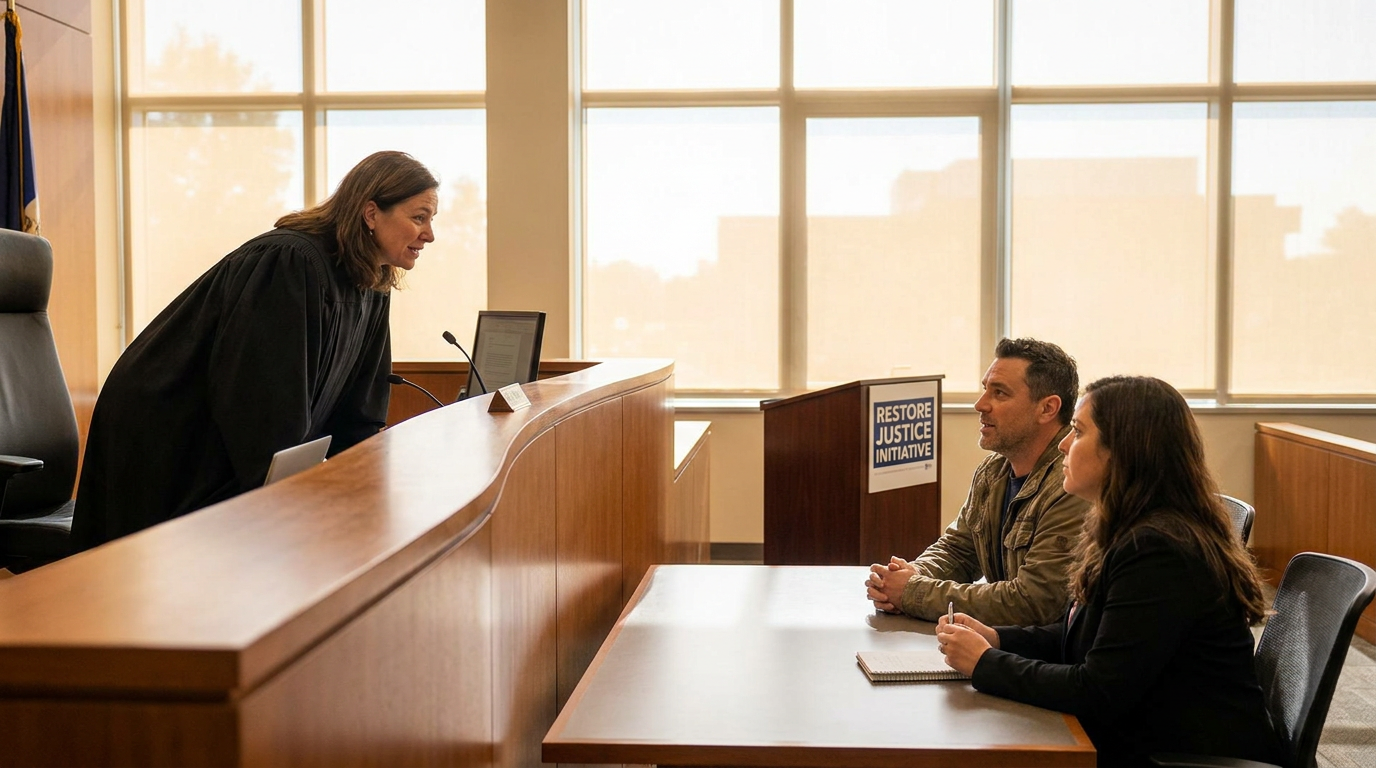
But a quiet revolution has been reshaping the judiciary. "Problem-solving courts" represent a paradigm shift from punitive sentencing to supervised rehabilitation. Rather than simply handing down jail time, these specialized dockets leverage the coercive power of the justice system to mandate treatment, monitor progress, and ultimately dismiss charges for those who successfully complete the rigorous programs.[3]
The concept is not entirely new, but its widespread adoption is. The first drug court launched in Dade County, Florida, in 1989, at the height of the crack cocaine epidemic, born out of judicial frustration with overflowing dockets and unchanged behaviors. Since then, the model has exploded into a nationwide network of over 3,000 specialized courts, branching out to address mental health, domestic violence, and the unique struggles of military veterans.[1][3]
The mechanism of a problem-solving court flips the traditional adversarial model on its head. In a standard courtroom, the prosecutor and defense attorney are locked in combat. In a problem-solving court, they form a collaborative team alongside the judge, social workers, probation officers, and treatment providers. The judge steps down from the role of detached arbiter to become an active, engaged figure in the participant's recovery, often speaking directly to the defendant about their clinical progress rather than just their legal standing.[3][7]

However, these programs are not a "get out of jail free" card. Participants must voluntarily opt-in, often pleading guilty with the stipulation that their sentence will be deferred or expunged upon graduation. The regimen is grueling. It typically involves frequent, randomized drug testing, mandatory counseling sessions, curfews, and weekly check-ins with the judge.[2][5]
Accountability is immediate. While traditional probation might take months to process a violation, problem-solving courts use a system of rapid, graduated sanctions and rewards. A missed counseling session might result in a weekend in jail or community service, while consecutive clean drug screens are met with public praise from the bench, reduced supervision, or even small rewards like gift cards.[6]
One of the most successful iterations of this model is the Veterans Treatment Court (VTC). Military veterans are disproportionately represented in the justice system, with an estimated 60 percent of incarcerated veterans struggling with a substance use disorder. Many of these challenges are inextricably linked to the trauma of combat, including post-traumatic stress disorder (PTSD) and traumatic brain injuries.[5][8]
One of the most successful iterations of this model is the Veterans Treatment Court (VTC).
VTCs recognize that treating a combat veteran like any other civilian defendant ignores the root cause of their criminality. These courts integrate the Department of Veterans Affairs healthcare networks directly into the judicial process. Furthermore, they utilize a unique peer mentorship model, pairing the defendant with a fellow veteran who has successfully navigated similar transitions, providing a level of cultural competence and camaraderie that standard probation officers cannot offer.[5][8]
The evidence supporting Veterans Treatment Courts is striking. Studies indicate that while veterans processed through traditional courts have recidivism rates ranging from 23 to 46 percent, only 14 percent of veterans who participate in VTCs reoffend. Furthermore, nearly 90 percent of veterans with co-occurring PTSD experience no new arrests while actively involved in the treatment court.[5]

Mental Health Courts (MHCs) operate on a similar premise, addressing the tragic reality that American jails and prisons have become the nation's largest de facto mental health facilities. MHCs divert individuals with severe, persistent mental illnesses—such as schizophrenia or bipolar disorder—away from incarceration and into community-based psychiatric care.[4]
The outcomes for Mental Health Courts demonstrate significant public safety benefits. A meta-analysis of MHCs revealed a substantial reduction in recidivism, with participants showing significantly fewer new arrests and less time spent incarcerated compared to matched control groups. In one Allegheny County, Pennsylvania study, researchers found that the program dramatically reduced jail time, which in turn offset the costs of the intensive community treatment services provided to the participants.[2][4]
Beyond the human impact, the economic argument for problem-solving courts has garnered bipartisan support. Incarceration is extraordinarily expensive, often costing taxpayers upwards of $30,000 to $40,000 per inmate annually. By contrast, drug courts save an average of $1,392 per participant in direct operational costs compared to traditional court processing. When factoring in broader societal savings—such as reduced victimization, lower emergency room usage, and increased employment—the savings can exceed $12,000 per participant.[6][7]

Despite their documented successes, problem-solving courts are not without limitations and uncertainties. Graduation rates vary widely, generally hovering between 50 and 75 percent. Those who fail to complete the program are often remanded to serve their original, sometimes lengthy, sentences.[3][7]
Furthermore, some civil libertarians and legal scholars express concern over the coercive nature of court-mandated treatment. Because the programs require strict adherence to complex rules, participants are sometimes penalized for "technical violations"—such as missing an appointment due to lack of transportation—rather than for committing new crimes. This strict monitoring can paradoxically lead to higher rates of probation violations for participants compared to those in the traditional system, even as their rate of new criminal offenses drops.[2][3]
Expansion also faces logistical hurdles. Establishing a problem-solving court requires significant upfront investment and unprecedented coordination between overloaded district attorneys, public defenders, and underfunded community health providers. In many rural jurisdictions, the specialized treatment facilities required to make the model work simply do not exist.[4][7]

Nevertheless, the trajectory of the American justice system is increasingly leaning toward this therapeutic jurisprudence. By addressing the underlying pathologies that drive criminal behavior, problem-solving courts offer a rare synthesis of compassion and accountability. They represent a fundamental acknowledgment that while the law must protect the public, the most effective way to ensure long-term safety is often to heal the offender.[7]
How we got here
1989
The first drug court is established in Dade County, Florida, in response to the crack cocaine epidemic.
1993
The Midtown Community Court launches in New York City, expanding the model to address neighborhood-level offenses.
1999
King County, Washington, establishes one of the nation's first specialized Mental Health Courts.
2008
The first Veterans Treatment Court is created to address the unique trauma and substance use challenges of returning service members.
2026
Over 3,000 problem-solving courts now operate across the United States, representing a major shift in judicial philosophy.
Viewpoints in depth
Judicial Reformers
Advocates who believe the adversarial system is fundamentally broken for non-violent offenders.
Reformers argue that traditional courts are designed only to establish facts and dispense punishment, completely ignoring why a crime occurred. By shifting to a collaborative model, problem-solving courts address the underlying pathologies—addiction, trauma, and mental illness. They point to the overwhelming evidence that treating these root causes is the only proven way to break the cycle of generational incarceration and truly rehabilitate individuals.
Fiscal Conservatives
Stakeholders focused on the massive taxpayer burden of mass incarceration.
For fiscal conservatives, the appeal of problem-solving courts is strictly mathematical. Housing an inmate costs tens of thousands of dollars annually, and when that inmate inevitably reoffends, the financial burden compounds. By keeping non-violent offenders in the community, employed, and paying taxes—while simultaneously reducing the burden on emergency rooms and police departments—these courts offer a rare government program that demonstrably pays for itself.
Civil Libertarians
Legal watchdogs concerned about the coercive nature of court-mandated healthcare.
While supportive of diversion programs, civil libertarians warn that problem-solving courts blur the line between justice and medicine. They argue that the threat of prison makes it impossible for defendants to give truly informed consent to medical treatment. Furthermore, they highlight that the intense surveillance and strict rules of these programs often result in participants being incarcerated for minor 'technical violations'—like missing a bus to a therapy session—rather than for committing new crimes.
What we don't know
- Whether the high success rates of these courts can be maintained as the model scales to under-resourced rural jurisdictions.
- The long-term, decade-out recidivism rates for graduates compared to those who simply age out of the traditional criminal justice system.
- How the integration of artificial intelligence in risk-assessment tools will alter who is deemed eligible for these diversion programs.
Key terms
- Problem-Solving Courts
- Specialized judicial dockets that use court authority to mandate treatment and rehabilitation rather than solely relying on incarceration.
- Recidivism
- The tendency of a convicted criminal to reoffend and re-enter the justice system.
- Veterans Treatment Court (VTC)
- A specialized court designed to handle cases involving military veterans, focusing on trauma, PTSD, and substance use linked to their service.
- Technical Violation
- A breach of probation or program rules (like missing a meeting or failing a drug test) that is not in itself a new criminal offense.
- Co-occurring Disorders
- The simultaneous presence of a substance use disorder and a mental health condition, such as addiction alongside PTSD.
Frequently asked
Do participants get a free pass for their crimes?
No. Participants must adhere to strict, grueling regimens including frequent drug testing, mandatory counseling, and weekly judicial check-ins. Failure to comply results in rapid sanctions or serving their original sentence.
Who is eligible for problem-solving courts?
Eligibility varies by jurisdiction, but courts typically target individuals whose non-violent offenses are directly linked to underlying issues like substance use disorder or severe mental illness.
What happens if someone fails the program?
If a participant repeatedly violates the program's rules or commits a new crime, they are terminated from the court and typically remanded to serve their original jail or prison sentence.
How do these courts save taxpayers money?
They reduce the staggering costs of incarceration. By keeping individuals in the community, working, and out of jail, the courts save thousands per participant, even after accounting for the cost of treatment.
Sources
Source coverage
8 outlets
4 viewpoints surfaced






[1]U.S. Department of JusticeFiscal Conservatives
Problem-Solving Courts and Community Justice
Read on U.S. Department of Justice →[2]Office of Justice ProgramsCivil Libertarians
Practice Profile: Problem-Solving Courts
Read on Office of Justice Programs →[3]Illinois Criminal Justice Information AuthorityJudicial Reformers
An Overview of Problem-Solving Courts and Implications for Practice
Read on Illinois Criminal Justice Information Authority →[4]Psychiatric TimesJudicial Reformers
Mental Health Courts Blooming Everywhere
Read on Psychiatric Times →[5]American Addiction CentersVeterans Advocates
Veterans Treatment Court: How It Works & Statistics
Read on American Addiction Centers →[6]Duke University School of LawFiscal Conservatives
The Power of Problem-Solving Courts
Read on Duke University School of Law →[7]Factlen Editorial TeamCivil Libertarians
Synthesis by Factlen editorial team
Read on Factlen Editorial Team →[8]National ArchivesVeterans Advocates
Veterans Treatment Courts
Read on National Archives →
Every angle. Every day.
Get law justice stories with full source coverage and perspective breakdowns delivered to your inbox.