
World Test Championship Standings: Australia Dominates as Race for Second Spot Intensifies
New Zealand's recent defeat to England has shaken up the 2025-2027 World Test Championship table, allowing South Africa and Sri Lanka to climb into the top three. With Australia holding a commanding lead, the battle for the second spot in the 2027 final is wide open.
By Factlen Editorial Team
- The Chasing Pack
- South Africa, Sri Lanka, and New Zealand view every remaining match as a knockout fixture.
- Australian Confidence
- The reigning champions are focused on maintaining their commanding lead.
- Indian Rebound Hopes
- Despite sitting in sixth place, India believes they have the firepower to mount a late-cycle comeback.
What's not represented
- · Lower-ranked teams focusing on rebuilding rather than final qualification
- · Associate nations excluded from the WTC cycle entirely
Why this matters
The World Test Championship final is the pinnacle of red-ball cricket. For teams like India, New Zealand, and South Africa, every match over the next year will dictate whether they get a shot at the ultimate prize in 2027, making every bilateral series a high-stakes affair.
Key points
- Australia leads the 2025-2027 World Test Championship with an 87.50% points percentage.
- New Zealand dropped from second to fourth after a 115-run defeat to England at Lord's.
- South Africa and Sri Lanka have climbed into the second and third spots, respectively.
- India sits in sixth place but has crucial upcoming series to mount a comeback.
- The top two teams at the end of the cycle will advance to the 2027 WTC Final.
The 2025-2027 ICC World Test Championship is rapidly approaching its halfway mark, and the global standings are crystallizing into a fascinating two-tier race. Australia currently sits comfortably at the summit, dictating the pace of the tournament, while a chaotic, multi-team scramble unfolds below them for the coveted second spot in the 2027 final. The International Cricket Council's percentage-based ranking system ensures that every single session of red-ball cricket carries immense weight, transforming traditional bilateral series into high-stakes knockout fixtures. With several top-tier teams separated by razor-thin margins, the race to join Australia at the pinnacle of the sport has never been more fiercely contested.[4][6]
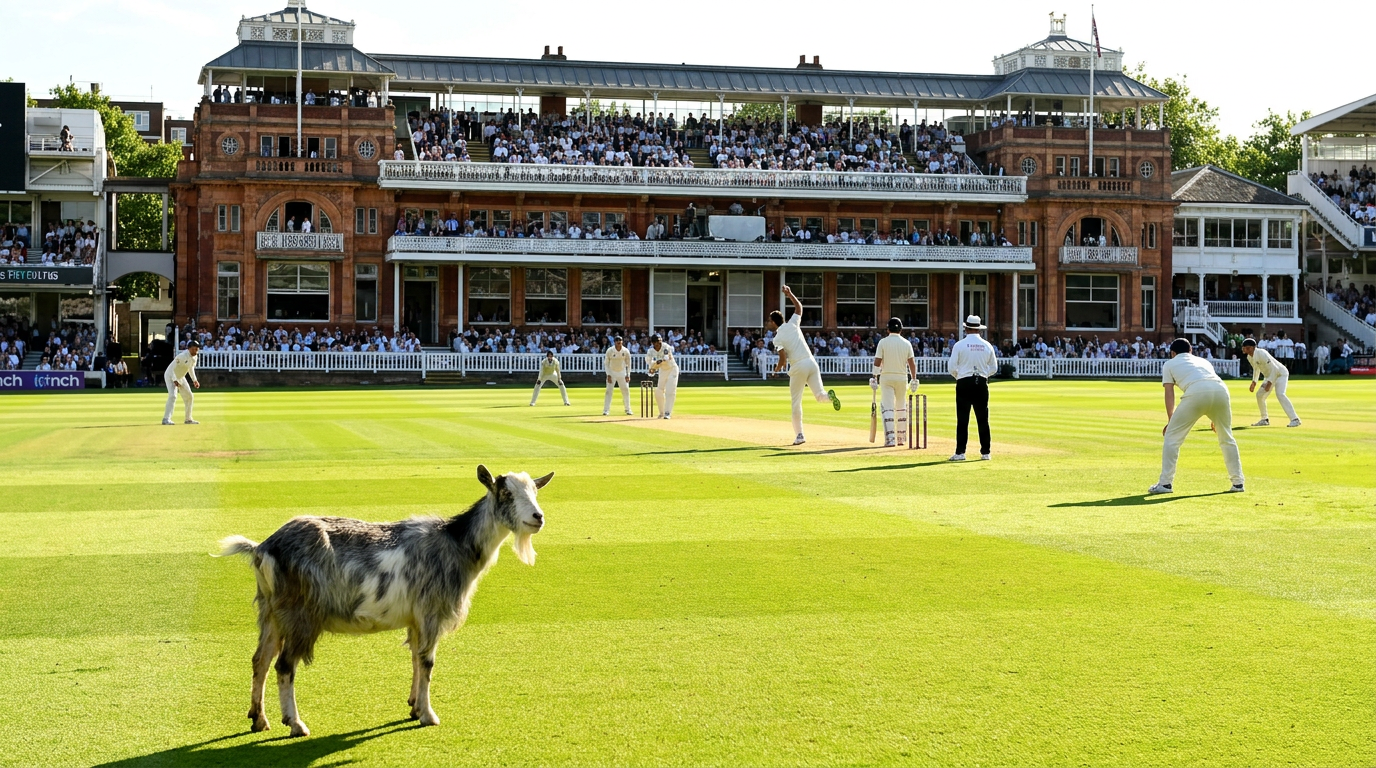
The most recent catalyst for significant movement in the table was England's emphatic 115-run victory over New Zealand in the first Test at Lord's. The result provided a much-needed morale boost for an England side that had been languishing in seventh place after a difficult start to their campaign, highlighted by a heavy Ashes defeat. However, the outcome had severe ramifications for the Black Caps' championship aspirations. England's bowlers, spearheaded by a resurgent pace attack, dismantled the New Zealand batting lineup in both innings, exposing vulnerabilities that other chasing teams will undoubtedly look to exploit in the coming months. The victory showcased the disruptive potential of teams lower in the standings to play spoiler against the frontrunners.[1][5]
New Zealand's defeat at Lord's caused them to slip from second to fourth in the WTC standings, with their points percentage dropping to a precarious 58.33%. The inaugural WTC champions now find themselves in a highly vulnerable position, knowing that further slip-ups could prove fatal to their hopes of reaching another final. With the second Test looming at The Oval, the pressure is mounting on the Kiwi leadership to engineer a rapid tactical turnaround. They must regain their footing and secure crucial points to avoid falling further behind the leading pack in an increasingly crowded middle tier. The margins for error have vanished, turning their remaining fixtures into virtual must-win scenarios.[1][5]

Benefitting directly from New Zealand's stumble are South Africa and Sri Lanka, who now occupy the second and third spots, respectively. South Africa boasts a robust 75.00% points percentage, positioning themselves as the prime challengers to Australia's dominance. The Proteas have capitalized on their early home fixtures, utilizing their formidable pace attack to secure vital victories. They are now looking to build an unassailable lead before embarking on tougher away tours later in the cycle, knowing that banking points early is the most reliable strategy in the WTC format.[1][4]
Sri Lanka, sitting comfortably at 66.67%, has quietly strung together a series of crucial victories to remain firmly in the hunt for a finals berth. Often overlooked in favor of the traditional powerhouse nations, the Sri Lankan side has demonstrated remarkable resilience and tactical acumen. Their upcoming fixtures will severely test whether they have the squad depth and away-condition prowess to sustain a push for the final over the grueling two-year cycle. Nevertheless, their current placement highlights the unpredictable and highly competitive nature of the modern Test championship.[4]
Sri Lanka, sitting comfortably at 66.67%, has quietly strung together a series of crucial victories to remain firmly in the hunt for a finals berth.
Meanwhile, the Australian juggernaut rolls on largely unchallenged at the top of the leaderboard. Following a dominant 4-1 Ashes victory over England earlier in the cycle, the reigning champions boast an imposing 87.50% points percentage. Having won seven of their first eight matches, they are heavily favored to secure one of the two spots in the 2027 final. Their well-rounded squad, featuring a potent mix of seasoned veterans and emerging talent, has allowed them to dictate the pace of the tournament and absorb the occasional setback without jeopardizing their overall standing.[4][6]

Further down the table, the situation remains highly precarious for India. Currently sitting in sixth place with a points percentage of 48.15%, the two-time WTC finalists have suffered from an uncharacteristically inconsistent start to the cycle. Their campaign has included four wins, four losses, and a solitary draw, resulting in a surprising dip below Bangladesh—who currently hold a 58.33% win rate—in the global standings. The Indian side has struggled to maintain sustained momentum, dropping crucial points in matches they were historically expected to dominate. This unexpected slump has sparked intense debate among analysts regarding squad rotation, batting stability, and the team's strategic approach to the longer format.[3]
However, India's destiny remains entirely in their own hands, and the squad retains a deep well of optimism. With high-stakes series against Sri Lanka and New Zealand on the horizon, a string of decisive victories could rapidly propel them back into the top tier of the standings. The WTC's percentage-based system means that late-cycle surges are entirely possible, provided a team can find peak form at the right moment. The Indian management is acutely aware that a flawless home season could completely erase their early-cycle struggles.[2][3]

The underlying mechanics of the WTC format, which ranks teams by the percentage of points won rather than total accumulated points, ensures that every match result is absolutely critical. A single draw, a weather-affected abandonment, or a penalty for slow over-rates can drastically alter the landscape and abruptly end a team's hopes of reaching the final. This mathematical reality forces captains to pursue victories aggressively, often leading to bold declarations and thrilling final-day run chases that have revitalized the longest format of the game.[1][4]
As the championship cycle heads into the crucial late-2026 window, the battle lines are clearly drawn across the cricketing globe. While Australia looks to mathematically book their ticket to the final as early as possible, the multi-team dogfight for the second spot guarantees that the coming months of Test cricket will be contested with unprecedented intensity. Fans can expect a thrilling conclusion to the cycle, as every boundary, wicket, and weather forecast plays a decisive role in shaping the ultimate showdown in 2027.[5][6]
How we got here
June 2025
The 2025-2027 World Test Championship cycle officially begins with Sri Lanka hosting Bangladesh.
January 2026
Australia solidifies their top spot with a commanding 4-1 Ashes series victory over England.
May 2026
Bangladesh overtakes India in the standings following a strong run of form in their bilateral series.
June 2026
England defeats New Zealand by 115 runs at Lord's, shaking up the top four and dropping the Black Caps to fourth place.
Viewpoints in depth
Australian Confidence
The reigning champions are focused on maintaining their commanding lead.
From the Australian perspective, the current cycle is unfolding perfectly. Sitting atop the table with an 87.50% win rate, the focus is entirely on maintaining their elite standards and avoiding complacency. Australian analysts emphasize that their balanced bowling attack and deep batting lineup make them uniquely equipped to handle the grueling two-year format. Their primary goal is to mathematically secure their spot in the 2027 final as early as possible, allowing them to rest key fast bowlers and manage workloads ahead of the ultimate title defense.
The Chasing Pack
South Africa, Sri Lanka, and New Zealand view every remaining match as a knockout fixture.
For the teams clustered between second and fifth place, the WTC has become a high-wire act. South Africa and Sri Lanka recognize that their current top-three placements are fragile, heavily dependent on maximizing points during favorable home series. Meanwhile, New Zealand's recent slip to fourth has triggered a sense of urgency within their camp. This collective viewpoint argues that the percentage-based system punishes conservative play, forcing teams to take aggressive risks—such as bold declarations or attacking field placements—to force results and avoid the devastating points penalty of a drawn match.
Indian Optimism
Despite sitting in sixth place, India believes they have the firepower to mount a late-cycle comeback.
The Indian camp remains publicly unfazed by their current sixth-place standing. Their perspective is rooted in the knowledge that they have historically performed exceptionally well in the latter halves of WTC cycles. Analysts following the team point to their upcoming home series and favorable matchups against direct rivals like New Zealand and Sri Lanka as the perfect launchpad for a comeback. The prevailing belief is that if their top-order batting can find consistency, their world-class spin attack will guarantee enough victories to vault them back into the top two before the cycle concludes.
What we don't know
- Whether South Africa or Sri Lanka can maintain their high win percentages during tougher away tours later in the cycle.
- If India can string together enough consecutive victories in their upcoming series to re-enter the top two.
- How potential over-rate penalties might alter the tight margins between the chasing teams as the pressure mounts.
Key terms
- World Test Championship (WTC)
- A two-year league competition for Test cricket, culminating in a final between the top two teams.
- Points Percentage (PCT)
- The metric used to rank teams in the WTC, calculated by dividing the points won by the total points available to that team.
- Over-rate Penalty
- A deduction of WTC points applied to a team if they fail to bowl their required number of overs within the allotted time.
- Test Cricket
- The longest format of the sport, with matches scheduled to last up to five days.
Frequently asked
How are the WTC standings calculated?
Teams are ranked by the percentage of points they have won out of the total points available from their contested matches, rather than raw points.
Who qualifies for the WTC Final?
The top two teams in the standings at the end of the two-year cycle will compete in the final in 2027.
Why did New Zealand drop in the standings?
New Zealand fell from second to fourth place after suffering a heavy 115-run defeat to England in the first Test at Lord's.
Can India still reach the final from sixth place?
Yes. Because the standings are percentage-based, a strong run of victories in their upcoming series could rapidly propel India back into the top two.
Sources
Source coverage
6 outlets
3 viewpoints surfaced






[1]ICC CricketThe Chasing Pack
New Zealand drop in WTC Standings after loss to England
Read on ICC Cricket →[2]The Economic TimesIndian Rebound Hopes
Harry Brook climbs to top of ICC Test batting rankings
Read on The Economic Times →[3]India TimesIndian Rebound Hopes
WTC standings: Bangladesh overtake India after series sweep over Pakistan
Read on India Times →[4]The Indian ExpressAustralian Confidence
ICC WTC 2025-2027 Updated Standings: Australia take commanding lead
Read on The Indian Express →[5]Outlook IndiaThe Chasing Pack
ENG Vs NZ, 2nd Test: Live Streaming Info
Read on Outlook India →[6]Cricket AustraliaAustralian Confidence
Australia's path to the 2027 World Test Championship final
Read on Cricket Australia →

More in sports
See all 8 stories →Standings
State of the Heavyweights: The Global Title Race Across Boxing and MMA in June 2026
0 sources

Injury
U.S. Open Injury Report: Brooks Koepka Cleared to Play Shinnecock, Collin Morikawa Returns
0 sources

Standings
Cameron Young Leads FedExCup Standings as Golf World Descends on Shinnecock Hills for the U.S. Open
0 sources

Injury
Super Rugby Pacific Semi-Finals: Massive Boosts as Barrett, McKenzie, and Newell Return from Injury
0 sources

Every angle. Every day.
Get sports stories with full source coverage and perspective breakdowns delivered to your inbox.