
Why Enterprises Are Abandoning Massive AI for Small Language Models
In 2026, the 'bigger is better' era of AI is giving way to Small Language Models (SLMs) as businesses prioritize cost, privacy, and speed over raw parameter count.
By Factlen Editorial Team
- Pragmatic Enterprise Adopters
- Argues that AI must deliver measurable ROI, prioritizing cost efficiency and data privacy over raw capability.
- Open-Weight Ecosystem
- Focuses on the democratization of AI through accessible, customizable models that run locally.
- Hardware & Cloud Providers
- Advocates for optimized edge computing and hybrid architectures that blend local and cloud resources.
What's not represented
- · Frontier AI Researchers focused on AGI
- · Regulatory bodies monitoring AI compliance
Why this matters
For businesses, this shift means AI is finally becoming affordable and secure enough to deploy across everyday workflows without sending sensitive data to the cloud. For consumers, it means faster, on-device AI features that don't compromise personal privacy.
Key points
- Enterprises are shifting from massive Large Language Models to Small Language Models (SLMs) to cut costs and improve speed.
- Modern SLMs typically range from 1 billion to 14 billion parameters, allowing them to run on local hardware.
- Through knowledge distillation and curated training data, SLMs can match or beat frontier models on specific, narrow tasks.
- Local deployment of SLMs ensures that sensitive corporate data never leaves the company's firewall, solving major privacy concerns.
- A 'Hybrid Router' approach is becoming standard, using SLMs for routine tasks and escalating only complex queries to larger cloud models.
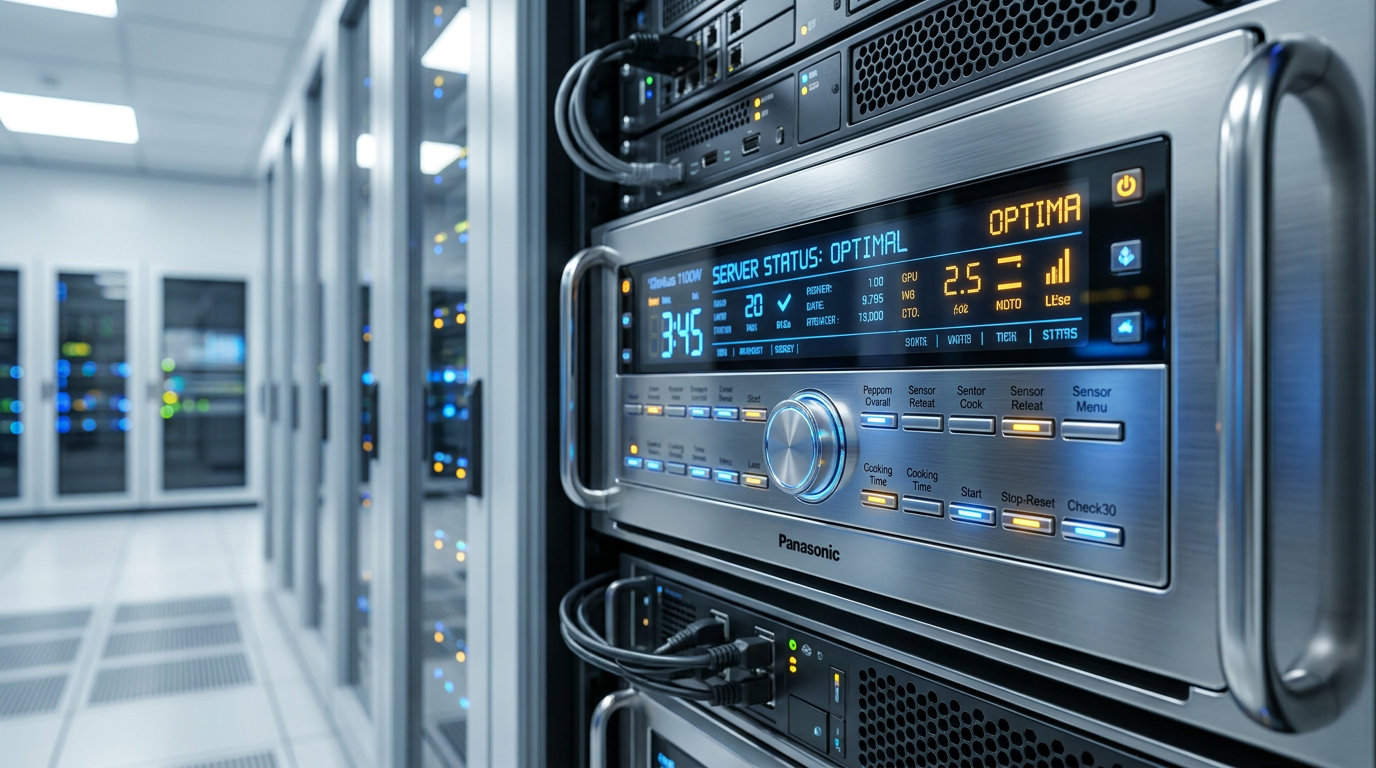
The generative AI boom of the early 2020s was defined by a single, expensive mantra: bigger is better. Tech giants raced to build Large Language Models (LLMs) with hundreds of billions—and eventually trillions—of parameters, assuming that sheer scale was the only path to enterprise utility. But as we navigate the technology landscape of 2026, the initial euphoria has collided with a stark reality check.[3][5]
Chief Information Officers quickly discovered that using a trillion-parameter model to summarize a 200-word internal email or extract a billing code is the computational equivalent of using a commercial jetliner to cross the street. It is undeniably impressive, but it is also slow, prohibitively expensive, and massive overkill for daily corporate workflows.[4]
In response, a quiet revolution has taken hold inside corporate data centers. Enterprises are rapidly pivoting away from massive, generalized cloud AI toward Small Language Models (SLMs). These compact, highly focused AI systems are redefining the economics and logistics of enterprise technology, offering a pragmatic path from flashy boardroom experiments to sustainable, everyday production.[3][6]
To understand the shift, one must look at the underlying architecture. Parameters act as the decision-making nodes within a neural network. While frontier models operate with over a trillion parameters, modern SLMs typically range from 500 million to 14 billion parameters. Despite this massive reduction in size, these compact models are achieving 90 percent or better of the performance of their larger counterparts on specific, well-defined business tasks.[2][6]

This outsized capability stems from two major breakthroughs in how artificial intelligence is trained: knowledge distillation and curated data. In knowledge distillation, a smaller "student" model is trained to mimic the outputs and reasoning patterns of a massive "teacher" model. It learns the core intelligence and logic pathways without inheriting the computational bloat required to generate them from scratch.[6]
Furthermore, AI researchers have largely abandoned the practice of scraping the entire, noisy internet to train these specialized models. Instead, SLMs are trained on highly curated, "textbook-quality" data. A 3-billion parameter model trained exclusively on clean, domain-specific information will consistently outperform a 70-billion parameter model trained on chaotic web data when applied to a narrow enterprise task.[1][4]
The financial implications of this architectural shift are staggering. With corporate financial scrutiny at an all-time high, enterprises can no longer justify the massive cloud computing bills associated with hyperscale GPU footprints. Because SLMs require significantly less computational power for both training and inference, organizations are reporting up to a 95 percent reduction in total AI operational costs.[2][6]
The financial implications of this architectural shift are staggering.
Beyond cost, the most critical driver of SLM adoption is data sovereignty. For highly regulated industries like healthcare, finance, and defense, sending sensitive intellectual property or patient records to a third-party cloud API is a non-starter. SLMs are small enough to be deployed locally on an organization's own on-premise servers, or even directly on edge devices like laptops and mobile phones.[3][8]
This local deployment guarantees that proprietary data never leaves the corporate firewall. It allows a hospital network to run an AI assistant that analyzes patient charts securely, or a bank to automate credit memo generation without risking a regulatory breach. In an era of strict data privacy laws, this localized control is not just a feature; it is a strict operational requirement.[2][8]

Speed is the third pillar of the SLM advantage. In frontline environments—such as manufacturing floors, dispatch centers, or high-frequency trading desks—AI must operate in milliseconds. Cloud-based LLMs often suffer from variable latency, sometimes taking seconds to respond due to network roundtrips. SLMs running on edge hardware consistently deliver sub-50-millisecond response times, enabling real-time decision-making where continuity matters most.[3][8]
The market has responded aggressively to this demand. Microsoft's Phi-3 and Phi-4 families have become enterprise staples, proving that models small enough to run on a smartphone can handle complex logic and coding tasks. Meta's Llama 3 series introduced highly capable 8-billion parameter models, while their 3.2 series pushed even further into lightweight 1-billion and 3-billion parameter variants optimized for multilingual dialogue and agentic retrieval.[4][7]
Rather than choosing entirely between small and large models, sophisticated enterprises in 2026 are adopting a "Hybrid Router" architecture. In this setup, a lightning-fast SLM acts as a gatekeeper. When an employee asks a routine question—like checking a vacation balance or summarizing a standard contract—the local SLM handles it instantly and cheaply.[4]

If the query is highly complex—such as asking the AI to predict financial growth based on nuanced market volatility—the router seamlessly escalates the prompt to a massive, cloud-hosted LLM. This tiered approach ensures that expensive compute cycles are reserved strictly for the "heavy lifting" that actually requires them, optimizing both performance and budget.[4]
The transition is not without friction. Deploying domain-specific SLMs requires fine-tuning, which traditionally demands specialized data scientists to curate datasets and adjust weights. To scale this, companies are increasingly investing in autonomous fine-tuning platforms that create "agentic flywheels," allowing models to continuously learn from daily enterprise workflows without constant human intervention.[5]
Ultimately, the narrative that bigger is always better has collapsed. The future of enterprise artificial intelligence is not about building a single omniscient oracle. It is about deploying fleets of specialized, right-sized models that respect corporate budgets, protect sensitive data, and operate at the speed of modern business.[1][9]
How we got here
Mid-2023
Microsoft Research publishes 'Textbooks Are All You Need,' proving that high-quality data can make small models highly capable.
April 2024
Microsoft releases the Phi-3 family, demonstrating that a 3.8-billion parameter model can rival much larger systems in reasoning.
Late 2024
Meta introduces Llama 3.2, featuring highly optimized 1B and 3B parameter models specifically designed for edge devices.
2025
Enterprise AI spending surges, but companies begin facing severe 'bill shock' from the high inference costs of massive cloud LLMs.
Early 2026
The 'Hybrid Router' architecture becomes the enterprise standard, seamlessly blending local SLMs with cloud LLMs to optimize costs.
Viewpoints in depth
Enterprise Pragmatists
Argues that AI must deliver measurable ROI, prioritizing cost and privacy over raw capability.
For corporate CIOs and financial officers, the AI hype cycle has ended, replaced by strict demands for operational reliability. This camp views massive frontier models as unsustainable for daily tasks due to exorbitant inference costs and data sovereignty risks. They champion SLMs because they can be deployed within existing corporate firewalls, ensuring compliance with regulations like HIPAA and GDPR while slashing cloud computing bills by up to 95 percent.
The Open-Weight Community
Focuses on the democratization of AI through accessible, customizable models.
Developers and open-source advocates see SLMs as the ultimate equalizer in the tech industry. By utilizing models like Meta's Llama 3.2 or Microsoft's Phi-3, organizations are no longer tethered to the expensive APIs of a few massive tech conglomerates. This camp emphasizes the power of domain adaptation—fine-tuning a small, open-weight model on proprietary data to achieve expert-level accuracy in niche fields without requiring a supercomputer.
Hybrid Architecture Proponents
Advocates for a tiered approach that utilizes both small and large models based on query complexity.
Rather than viewing SLMs and LLMs as mutually exclusive, systems architects argue for 'model routing.' In this view, the most efficient enterprise stack uses a lightning-fast SLM as the frontline interface to handle 80 percent of routine tasks locally. Only when a query requires deep, complex reasoning does the system escalate to a massive cloud-based LLM, perfectly balancing performance with cost-efficiency.
What we don't know
- How quickly hardware manufacturers will integrate dedicated neural processing units (NPUs) capable of running 14B parameter models natively on all standard corporate laptops.
- Whether the cost of fine-tuning and maintaining fleets of specialized SLMs will eventually offset the savings gained from reduced cloud inference costs.
- The extent to which future breakthroughs in model compression might blur the line entirely between 'small' and 'large' language models.
Key terms
- Parameter
- The internal variables or 'decision-making nodes' that a neural network uses to process information and generate text.
- Knowledge Distillation
- A training technique where a smaller 'student' AI model learns to mimic the behavior and outputs of a much larger 'teacher' model.
- Inference
- The process of a trained AI model actively running and generating a response to a user's prompt.
- Edge Computing
- Processing data locally on devices like laptops, smartphones, or local servers, rather than relying on a distant centralized cloud.
- Fine-Tuning
- The process of taking a pre-trained AI model and training it further on a specific, specialized dataset to make it an expert in a particular domain.
- Open-Weight Model
- An AI model where the core architecture and trained parameters are made publicly available for developers to download, modify, and run locally.
Frequently asked
What exactly is a Small Language Model?
An SLM is an AI model typically containing between 1 billion and 14 billion parameters, designed to run efficiently on local hardware while performing specific tasks with high accuracy.
Can an SLM really beat a massive model like GPT-4?
Yes, but only on narrow, specific tasks. When an SLM is fine-tuned on high-quality, domain-specific data, it can outperform larger models in accuracy for that specific function, while being much faster and cheaper.
Why are SLMs better for data privacy?
Because of their small size, SLMs can be hosted locally on a company's own servers or edge devices. This means sensitive corporate or customer data never has to be sent over the internet to a third-party cloud provider.
What is the 'Hybrid Router' approach?
It is an AI architecture where a system automatically directs simple, routine user queries to a fast, cheap local SLM, while escalating highly complex reasoning tasks to a larger, cloud-based LLM.
Sources
Source coverage
9 outlets
3 viewpoints surfaced







[1]Ortem TechnologiesOpen-Weight Ecosystem
Small Language Models for Enterprise 2026: When SLMs Beat GPT-4
Read on Ortem Technologies →[2]Ruh AIHardware & Cloud Providers
Small Language Models (SLMs): The Efficient Future of AI in 2026
Read on Ruh AI →[3]HCLTechPragmatic Enterprise Adopters
Small Language Models: Scaling Enterprise AI in 2026
Read on HCLTech →[4]AI CybertechOpen-Weight Ecosystem
SLMs vs LLMs: Choosing the Right Model for Enterprise AI in 2026
Read on AI Cybertech →[5]FutureCIOPragmatic Enterprise Adopters
Why SLMs are reshaping enterprise AI
Read on FutureCIO →[6]MediumOpen-Weight Ecosystem
Small Language Models: Your Next Path from AI Experimentation to Enterprise Production
Read on Medium →[7]Microsoft Azure BlogHardware & Cloud Providers
Introducing Phi-3: Redefining what's possible with SLMs
Read on Microsoft Azure Blog →[8]eDelta CorporationPragmatic Enterprise Adopters
The Future of Enterprise AI: Why Small Language Models (SLMs) are the Strategic Choice
Read on eDelta Corporation →[9]Factlen Editorial TeamPragmatic Enterprise Adopters
Synthesis by Factlen editorial team
Read on Factlen Editorial Team →
More in technology
See all 76 stories →AI Security
Evidence Pack: How Defensive AI is Outpacing the Automation of Cybercrime
8 sources

Web Trust
How Portable Social Graphs Are Finally Letting Users Own Their Online Networks
6 sources
Green Cloud
The Zero-Carbon Cloud: How Geothermal Energy and AI Are Decarbonizing Data Centers
9 sources

Quantum Hardware
The End of the Quantum Physics Experiment: How Logical Qubits Ushered in the Engineering Era
8 sources

Every angle. Every day.
Get technology stories with full source coverage and perspective breakdowns delivered to your inbox.