
Valve Imports 13 Tons of Steam Frame VR Headsets Ahead of Summer Launch
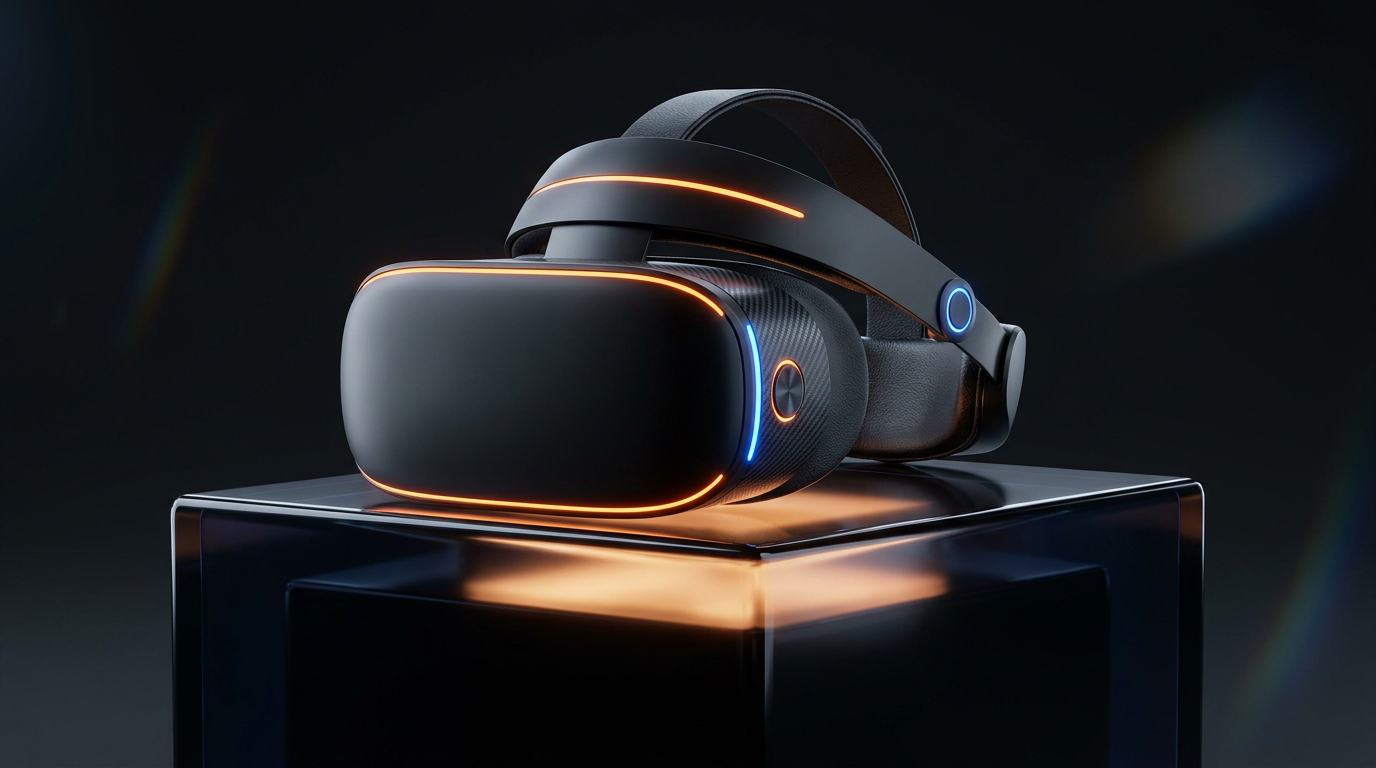
Customs records reveal Valve has imported massive quantities of its highly anticipated standalone VR headset, signaling an imminent release. The Steam Frame aims to challenge Meta's dominance by offering high-fidelity PC streaming and native SteamOS integration.
By Factlen Editorial Team
- PC VR Enthusiasts
- Gamers seeking a high-fidelity, open-ecosystem alternative to Meta's walled garden.
- Hardware Analysts
- Market watchers focused on supply chain logistics, component costs, and Valve's premium pricing strategy.
- Open-Source Advocates
- Technologists praising the Linux-based SteamOS, Proton compatibility layer, and sideloading capabilities.
What's not represented
- · Meta Executives
- · Mainstream Casual Gamers
- · VR Game Developers
Why this matters
Valve's massive hardware shipment signals the imminent arrival of the first true high-end competitor to Meta's VR dominance. For consumers, the Steam Frame promises to bridge the gap between frictionless standalone VR and the massive, high-fidelity library of traditional PC gaming.
Key points
- Valve imported 13 tons of its unreleased Steam Frame VR headsets to Los Angeles on June 10.
- The Steam Frame is a standalone headset powered by a Snapdragon 8 Gen 3 chip and 16GB of RAM.
- It runs SteamOS and uses the Proton compatibility layer to natively play Windows PC games.
- A dedicated 6GHz wireless adapter allows flawless, low-latency streaming from a host PC.
- Eye-tracking cameras enable foveated streaming, drastically reducing the bandwidth needed for high-end graphics.
- The massive shipment indicates Valve is preparing for an imminent summer launch.
On June 10, the German container ship Posen docked at the Port of Los Angeles after a two-week voyage from Shanghai, carrying a highly anticipated payload. According to customs records, Valve's distribution partner Ceva offloaded nearly 32 metric tons of "Virtual Reality Devices." [1] Once the weight of the shipping containers was subtracted, the net product weight came to approximately 13 tons—marking the first mass-production arrival of Valve's next-generation VR headset, the Steam Frame. [3][1][3]
The massive shipment signals that Valve is aggressively preparing for an imminent summer launch. [7] For years, the virtual reality industry has been dominated by Meta's Quest lineup, which captured the mainstream market through aggressive pricing and standalone convenience. [2] PC gamers and VR enthusiasts, however, have been waiting since 2019 for a true successor to the Valve Index. [4] The arrival of the Steam Frame, previously known by its internal codename "Deckard," represents Valve's ambitious bid to redefine high-end virtual reality. [1][1][2][4][7]
Unlike the Valve Index, which required a tethered connection to a powerful gaming PC and external tracking base stations, the Steam Frame is a standalone device. [5] It features built-in optical inside-out tracking using four high-resolution monochrome cameras, eliminating the need for external sensors. [6] This design allows users to simply put the headset on and immediately enter virtual reality, mirroring the frictionless experience that made the Meta Quest so popular. [2][2][5][6]
However, Valve is targeting a significantly higher performance tier. The Steam Frame is powered by a Qualcomm Snapdragon 8 Gen 3 chipset paired with 16 gigabytes of LPDDR5X RAM—double the memory found in the Quest 3. [4] It offers up to one terabyte of internal UFS storage, alongside a microSD card slot and support for the latest Wi-Fi 7 and Bluetooth 5.3 standards. [3] This robust internal hardware ensures the headset can handle demanding standalone applications without breaking a sweat. [2][2][3][4]

The true mechanism of Valve's strategy lies in its software ecosystem. The Steam Frame runs on SteamOS, the same Arch Linux-based operating system that powers the wildly successful Steam Deck handheld. [5] Because it runs SteamOS, the headset utilizes Proton, Valve's proprietary compatibility layer that translates Windows API calls into Linux on the fly. [5] This means the Steam Frame can natively run a vast library of traditional PC games that were never explicitly coded for Linux or VR. [2][2][5]
Valve is also addressing the reality of the standalone VR market, which is currently built around Android-based games developed for the Meta Quest. To bridge this gap, SteamOS includes a runtime environment called Lepton, based on the Android Open Source Project. [5] This compatibility layer allows the Steam Frame to run Android APK files, effectively inviting developers to port their existing Quest titles to the Steam store with minimal friction. [5][5]
While standalone play is a major selling point, Valve's core audience consists of PC gaming enthusiasts who want to leverage the power of their desktop graphics cards. To accommodate them, the Steam Frame is marketed as a "streaming-first" headset. [6] Valve has engineered a custom plug-and-play 6GHz wireless adapter that connects directly to a user's PC to facilitate this. [3][3][6]
While standalone play is a major selling point, Valve's core audience consists of PC gaming enthusiasts who want to leverage the power of their desktop graphics cards.
This wireless adapter utilizes a dual-radio setup designed to eliminate the latency and stuttering that often plague VR streaming over standard home Wi-Fi. [6] One radio is entirely dedicated to transmitting high-fidelity audio and visual data directly to the headset, while the second radio handles standard Wi-Fi connectivity. [6] By ensuring there is no competition for bandwidth, Valve claims to offer a tether-free PC VR experience that rivals the stability of a physical DisplayPort cable. [6][6]

Visually, the Steam Frame aims to push the boundaries of consumer VR optics. The headset features dual LCD panels delivering a resolution of 2160 by 2160 pixels per eye. [4] These displays are viewed through custom-designed thin pancake lenses, which provide edge-to-edge sharpness and a larger "sweet spot" than older Fresnel lenses. [6] The displays support variable refresh rates of 72, 80, 90, 120, and an experimental 144Hz mode, ensuring buttery-smooth motion for users sensitive to VR nausea. [4][4][6]
Perhaps the most critical innovation inside the headset is its integrated eye-tracking technology. Two internal cameras constantly monitor the user's gaze, enabling a feature Valve calls "Foveated Streaming." [3] Because human vision is only sharply focused in the very center of the visual field, the headset communicates with the host PC to render the exact spot the user is looking at in maximum resolution. [6][3][6]
The peripheral areas of the image are rendered at a lower resolution and compressed before being transmitted over the wireless link. [6] Valve claims this technique provides a tenfold improvement in effective bandwidth and image quality, allowing massive PC VR titles to stream flawlessly without overwhelming the wireless connection. [3] Crucially, this foveated streaming is applied at the encoder level, meaning it works automatically with every game in a user's Steam library without requiring developers to patch their software. [5][3][5][6]

The control scheme has also been entirely revamped. The new Steam Frame controllers, codenamed "Roy," feature a split gamepad layout that includes standard face buttons, D-pads, and triggers. [2] They utilize tunneling magnetoresistance (TMR) thumbsticks, which are highly resistant to the "stick drift" that plagues traditional potentiometers. [4] This comprehensive button layout allows the controllers to function as a standard gamepad, enabling users to play their entire library of traditional, flat-screen Steam games on a massive virtual theater screen. [6][2][4][6]
The headset is just one piece of a broader hardware ecosystem Valve is deploying this summer. Import records reveal that Valve has also been stockpiling a companion console called the Steam Machine. [3] Since late April, Valve has imported 141 metric tons of these Linux-based gaming PCs to its US warehouses, representing roughly 50,000 units. [7] The Steam Machine is designed to act as a dedicated base station for the Steam Frame, providing high-end PC VR capabilities to users who do not already own a powerful gaming rig. [3][3][7]

Valve originally announced this three-piece hardware lineup—the headset, the console, and a new Steam Controller—in November 2025, with an initial target of early 2026. [2] However, the launch was quietly delayed due to severe global shortages of RAM and solid-state storage, driven largely by the insatiable demand for AI data center components. [3] This supply chain crunch, dubbed "RAMageddon" by industry analysts, forced Valve to delay its pricing announcements to avoid selling the hardware at a massive loss. [7][2][3][7]
By importing 13 tons of headsets and 141 tons of consoles, Valve is signaling that it has finally secured the necessary components and is ready to flood the market. [8] The company has confirmed that the hardware will launch this summer, though exact pricing remains the final, closely guarded secret. [3] Industry estimates suggest the headset alone could cost anywhere from $500 to $1,200, positioning it as a premium enthusiast device rather than a direct competitor to the $500 Meta Quest 3. [4][3][4][8]
Ultimately, Valve is not trying to beat Meta at the entry-level hardware game. Instead, the Steam Frame is an attempt to build a frictionless, high-fidelity bridge to the massive library of games that already exists on Steam. [2] If the hardware delivers on its promises of flawless wireless streaming and seamless software compatibility, it could finally provide the premium, open-ecosystem VR experience that PC gamers have been demanding for half a decade. [1][1][2]
How we got here
January 2021
Data miners discover the codename "Deckard" hidden within SteamVR code updates.
November 2025
Valve officially announces the Steam Frame, Steam Machine, and new Steam Controller.
Early 2026
Global RAM and storage shortages force Valve to delay pricing announcements and the initial launch window.
April 2026
Valve begins importing massive quantities of the Steam Machine console to its US warehouses.
June 10, 2026
The German container ship Posen arrives in Los Angeles carrying 13 tons of Steam Frame headsets.
Viewpoints in depth
PC VR Enthusiasts' view
Gamers seeking a high-fidelity, open-ecosystem alternative to Meta's walled garden.
For PC gaming purists, the Steam Frame represents an escape hatch from the Meta ecosystem. Enthusiasts have long criticized Meta's closed storefront and its focus on low-fidelity mobile graphics. This camp values Valve's commitment to uncompressed, foveated streaming, which allows them to utilize their expensive desktop graphics cards without being tethered by a physical cable. The inclusion of SteamOS and native integration with their existing Steam libraries makes the hardware an immediate value proposition, regardless of the premium price tag.
Hardware Analysts' view
Market watchers focused on supply chain logistics, component costs, and Valve's premium pricing strategy.
Supply chain experts view Valve's massive import volumes as a calculated logistical maneuver in the face of the ongoing "RAMageddon" memory shortage. Analysts note that Valve is deliberately avoiding a price war with Meta's heavily subsidized Quest 3. By positioning the Steam Frame as a premium, high-margin enthusiast device, Valve can absorb the inflated costs of LPDDR5X RAM and Snapdragon 8 Gen 3 chips without taking the massive hardware losses that typically plague the console market.
Open-Source Advocates' view
Technologists praising the Linux-based SteamOS, Proton compatibility layer, and sideloading capabilities.
The open-source community champions the Steam Frame as a victory for user freedom in an increasingly locked-down hardware landscape. By utilizing Arch Linux and the Proton compatibility layer, Valve is proving that high-end gaming does not require a Microsoft Windows monopoly. Furthermore, the inclusion of the Lepton runtime environment—which allows users to freely sideload Android APKs—stands in stark contrast to the restrictive app store policies enforced by competitors like Apple and Meta.
What we don't know
- The exact retail price of the Steam Frame and its companion Steam Machine console.
- The specific summer 2026 release date for the hardware lineup.
- How the headset's battery life will perform under heavy standalone gaming loads.
Key terms
- Standalone VR
- A virtual reality headset that contains its own processor, storage, and battery, requiring no external computer or console to function.
- Foveated Rendering
- A graphics technique that uses eye-tracking to reduce the image quality in the peripheral vision, saving processing power without the user noticing.
- Inside-out Tracking
- A tracking method where the VR headset uses built-in cameras to map its position in a room, eliminating the need to set up external sensors.
- Proton
- A compatibility layer developed by Valve that allows games designed for Microsoft Windows to run natively on Linux-based operating systems.
- Pancake Lenses
- Thin, lightweight optical lenses used in modern VR headsets to reduce the bulk and weight of the device while improving image clarity.
Frequently asked
Does the Steam Frame require a PC to work?
No. The Steam Frame is a standalone headset with its own processor and battery, allowing it to play games natively without a computer.
Can I play my existing Steam library on it?
Yes. You can stream both VR and traditional flat-screen games from your PC, and the headset's SteamOS allows it to run many games natively in standalone mode.
How much will the Steam Frame cost?
Valve has not yet announced official pricing, though industry estimates range from $500 to $1,200 depending on the configuration.
What is foveated streaming?
It is a technique that uses internal eye-tracking cameras to render high-resolution graphics only where you are looking, saving massive amounts of processing power and wireless bandwidth.
Sources
Source coverage
8 outlets
3 viewpoints surfaced








[1]The VergePC VR Enthusiasts
Valve just imported 13 tons of VR headsets in one day
Read on The Verge →[2]EngadgetPC VR Enthusiasts
Valve made a triumphant return to the hardware market with the Steam Frame
Read on Engadget →[3]Road to VRPC VR Enthusiasts
According to recent import records, Valve seems to be gearing up for the imminent launch of Steam Frame
Read on Road to VR →[4]VR CompareOpen-Source Advocates
Steam Frame: Full Specification
Read on VR Compare →[5]WikipediaOpen-Source Advocates
Steam Frame
Read on Wikipedia →[6]SteamOpen-Source Advocates
Steam Frame: A streaming-first, wireless VR headset
Read on Steam →[7]Sumbawa NewsHardware Analysts
Valve Impor 13 Ton Headset VR dalam Sehari, Peluncuran Steam Frame Makin Dekat
Read on Sumbawa News →[8]IntellectiaHardware Analysts
Valve Imports 13 Tons of VR Headsets in a Single Day
Read on Intellectia →

More in technology
See all 5 stories →


Every angle. Every day.
Get technology stories with full source coverage and perspective breakdowns delivered to your inbox.