
How the AI Hardware Boom is Rewriting the Economics of Global Supply Chains
Surging demand for artificial intelligence infrastructure is driving record-breaking electronics exports in Singapore and pushing South Korean chipmakers to trillion-dollar valuations.

The generative artificial intelligence revolution is most often described in terms of software—chatbots, image generators, and autonomous agents. But beneath the code lies a massive, physical reality.
The global scramble to build AI infrastructure has triggered an unprecedented hardware buildout, fundamentally rewriting the economics of the semiconductor industry. According to industry analysts, this surge is propelling the global semiconductor market toward a $2 trillion valuation by 2027.
This physical buildout is creating massive economic windfalls across Asia, where the bulk of the world's electronics supply chain resides. The most immediate evidence emerged in mid-June 2026, when Singapore reported that its non-oil domestic exports surged 38.4% year-over-year in May.[1]
The scale of Singapore's export beat—the largest annual increase in two decades—was driven almost entirely by the AI hardware boom. Shipments of integrated circuits climbed 80.9%, while disk media products shot up 227.8%.
The destination of these components highlights the intensity of the global buildout. Singapore's electronics exports to the United States skyrocketed by 303% annually, while shipments to Taiwan—the epicenter of advanced chip manufacturing—rose 218.6%.[1]
Further north, the AI boom is single-handedly lifting the entire South Korean economy. Semiconductors now account for 37% of South Korea's total exports, up from 20% just a year ago. The surge has pushed the country's export prices to their highest level in 15 years.[3][6]
This export engine pushed South Korea's first-quarter GDP growth to 1.7% quarter-on-quarter, its fastest pace in five years, prompting the Bank of Korea to upgrade its full-year growth forecast to 2.6%.[3]
The financial markets reflect this concentrated wealth creation. South Korea's Kospi index shattered records in June 2026, hitting an all-time high of 8,880. The rally is heavily polarized, with chipmakers Samsung Electronics and SK Hynix both achieving trillion-dollar valuations and driving up to 70% of the index's growth.[3]
The societal impact in South Korea has been profound. Jobs at these semiconductor giants, long prized for stability, have been elevated to the ultimate status symbols. A new cultural phenomenon dubbed "Samjeon-nix"—a portmanteau of Samsung and SK Hynix—has emerged, reshaping everything from dating prospects to university admissions.[4]
For top South Korean students, university departments linked to SK Hynix are now fiercely competing with medical schools for the brightest minds. During the 2026 early admissions cycle, SK Hynix-linked contract engineering departments recorded an astonishing 30.98 applicants per seat.[4]
To understand why these companies are capturing so much value, one must look at the mechanics of the AI supply chain. Unlike traditional consumer electronics, AI requires specialized hardware—specifically, AI accelerators and High-Bandwidth Memory (HBM).
The supply chain for these components is highly fragmented and features severe bottlenecks. While American "fabless" companies design the chips, they rely on a complex web of international partners to physically build them.
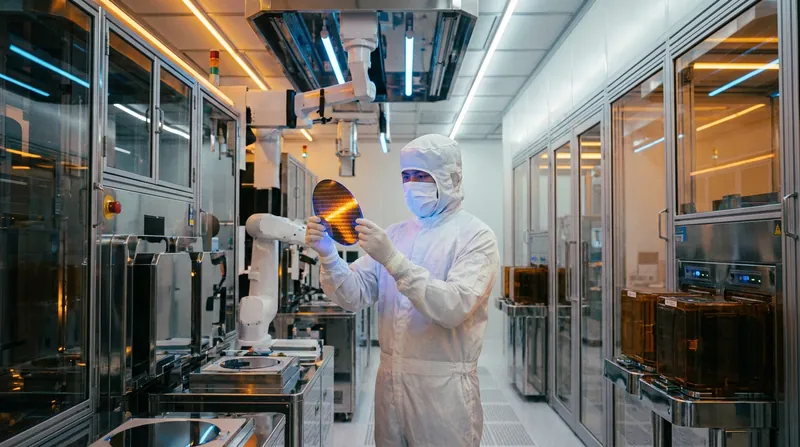
The designs are sent to foundries, which use $150 million Extreme Ultraviolet (EUV) lithography machines—produced exclusively by a single Dutch firm—to print microscopic patterns onto silicon wafers.
SK Hynix's trillion-dollar valuation stems from its dominance in the next crucial step: manufacturing the High-Bandwidth Memory that sits alongside the processor. These components must then be integrated using advanced packaging techniques, a process largely dominated by specialized firms in Asia.[3][4]
Moving these high-value, delicate components between design hubs, foundries, and packaging facilities has elevated the role of regional logistics networks. Hong Kong and the broader ASEAN region are increasingly acting as "super connectors," providing the smart logistics and express customs clearance necessary to keep the AI supply chain flowing.[5]
However, this hyper-concentrated boom carries significant macroeconomic risks. The Bank of Korea recently warned that the massive bonuses and wage growth within the semiconductor sector could stoke broader domestic inflation, complicating the central bank's interest rate policy.[2]
South Korea's bond market is already feeling the strain; government bonds have lost 7.5% in 2026 as investors price in potential rate hikes to cool the semiconductor-fueled inflation.[3]
Furthermore, the entire ecosystem remains highly sensitive to geopolitical tensions. The US Trade Representative's recent proposal of a 12.5% tariff on Singaporean goods could introduce a meaningful headwind to the city-state's export engine.
Despite these macroeconomic growing pains, the physical reality of the AI revolution is firmly established. As long as the world's largest technology companies continue to invest hundreds of billions in data center infrastructure, the Asian manufacturing hubs that supply the hardware will remain the primary economic beneficiaries of the AI age.
Key points
- Singapore's electronics exports surged by a record 38.4% in May 2026, driven by AI infrastructure demand.
- South Korea's Kospi index hit an all-time high, fueled by trillion-dollar valuations for chipmakers Samsung and SK Hynix.
- Semiconductors now account for 37% of South Korea's total exports, pushing Q1 GDP growth to a five-year high.
- The Bank of Korea warned that massive bonuses in the semiconductor sector could stoke broader domestic inflation.
What we don’t know
- Whether the massive capital expenditures by US tech giants on AI data centers will generate enough software revenue to sustain the hardware buying cycle.
- How the proposed 12.5% US tariff on Singaporean goods will ultimately impact the flow of electronics exports.
- Whether South Korea's central bank will actually hike interest rates to combat semiconductor-driven inflation.
How we got here
Late 2025
Explosive demand for generative AI triggers a massive wave of data center infrastructure investments by hyperscalers.
Q1 2026
South Korea posts its fastest quarterly GDP growth in five years, driven entirely by semiconductor exports.
May 2026
Singapore's non-oil domestic exports surge 38.4%, the largest annual increase in two decades.
June 2026
South Korea's Kospi index hits an all-time high of 8,880, while the Bank of Korea warns of inflation risks.
- Technology Sector Optimists
- View the AI hardware boom as a long-term structural shift that will create sustained wealth and technological advancement.
- Macroeconomic Realists
- Welcome the GDP growth but worry about inflation, wage polarization, and the macroeconomic distortions of a single hyper-dominant sector.
- Supply Chain Analysts
- Focus on the logistical bottlenecks, geopolitical risks, and the concentration of critical manufacturing in a few Asian nodes.
Perspectives this story doesn't cover
- Environmental Advocates
- Non-Tech Workers
Sources
Source coverage
6 outlets
3 viewpoints surfaced





- [1]BloombergMacroeconomic Realists
Singapore’s Electronics Exports Jump by Record on AI Demand Boom
Read on Bloomberg → - [2]BloombergMacroeconomic Realists
BOK Warns AI-Driven Bonus Windfalls May Stoke Broader Inflation
Read on Bloomberg → - [3]The GuardianTechnology Sector Optimists
Elon Musk on track to become world’s first trillionaire today as SpaceX lists on US stock market – business live
Read on The Guardian → - [4]The Star
AI boom reshapes South Korea's status ladder
Read on The Star → - [5]FedExSupply Chain Analysts
Hong Kong: The “super connector” for Asia's AI supply chain
Read on FedEx → - [6]Business KoreaMacroeconomic Realists
South Korea's Export Prices Hit 15-Year High on AI Semiconductor Demand
Read on Business Korea →
More in Technology
See all →Silicon Scaling
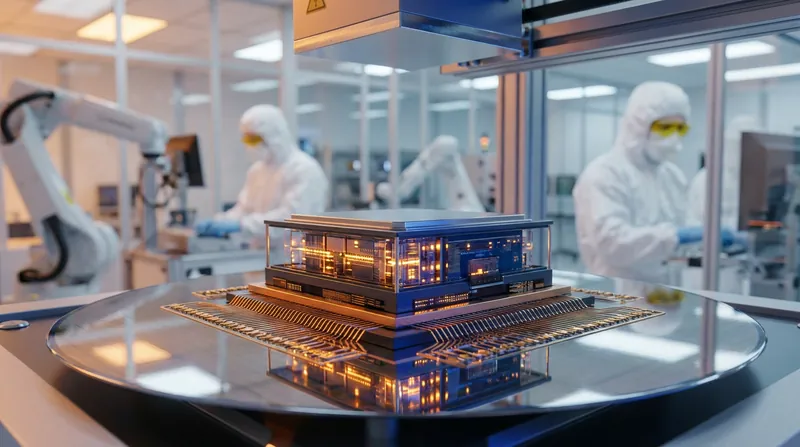
How IBM's 0.7-Nanometer 'Nanostack' Chip Breaks the Physical Limits of Silicon
2 sources
AI Supply Chain
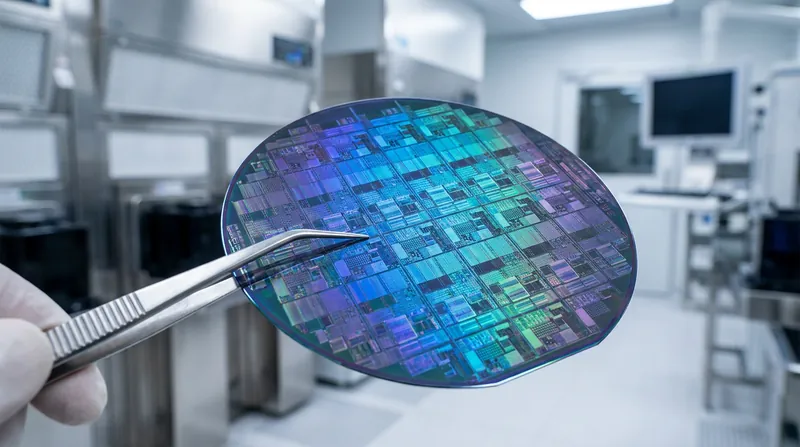
Samsung and SK Hynix Announce $518 Billion Chipmaking Hub to Meet Global AI Demand
2 sources
AI Export Controls
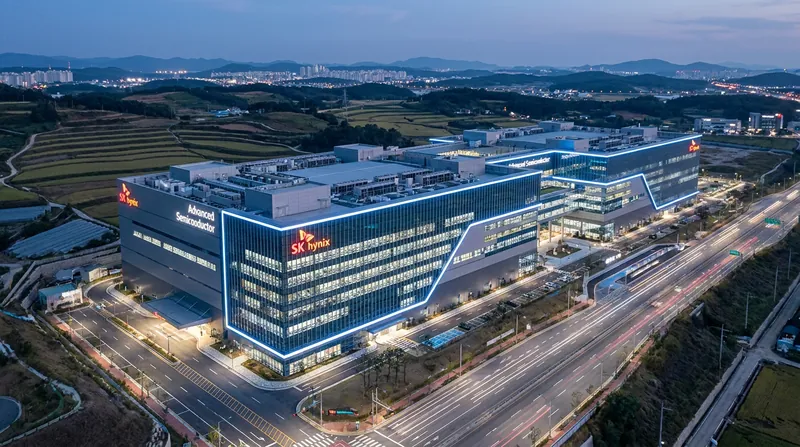
US Congress Introduces Bipartisan Bill to Close Cloud Computing Loophole in AI Chip Export Controls
5 sources
Advanced Packaging
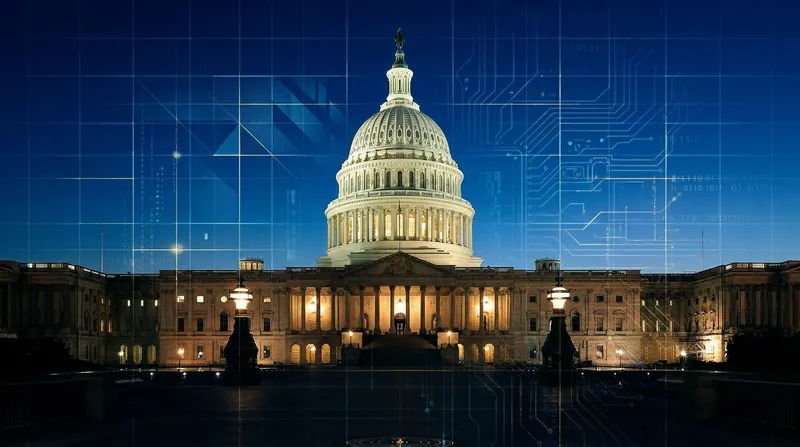
Intel Carves Out Advanced Packaging as Independent Division, Appointing Former SK Hynix CEO to Lead Effort
4 sources
Comments
Every angle. Every day.
Get Technology stories with full source coverage and perspective breakdowns, free every day.