
US and Iran Open High-Stakes Peace Talks in Switzerland Amid Senate Standoff Over School Bombing
Delegations from the U.S. and Iran have begun negotiations to solidify a 60-day ceasefire, but the summit is overshadowed by a domestic fight over the Pentagon's refusal to release a civilian harm report on a deadly strike in Minab.
By Factlen Editorial Team
- Diplomatic & Regional Observers
- Emphasizes the mechanics of the peace talks, the fragility of the ceasefire, and the geopolitical stakes in the Strait of Hormuz.
- Accountability & Oversight Advocates
- Focuses on the civilian toll of the conflict, specifically the Minab school bombing, and demands transparency from the Pentagon.
- Independent Verification Analysts
- Prioritizes forensic evidence and expert analysis to cut through political rhetoric regarding military strikes.
What's not represented
- · Families of the Minab school bombing victims
- · Lebanese civilians affected by ongoing Israeli strikes
- · Global shipping companies navigating the Strait of Hormuz
Why this matters
The outcome of these talks will determine whether the Middle East plunges back into a devastating regional war or stabilizes under a fragile truce. Furthermore, the domestic standoff over the Minab school bombing tests the limits of congressional oversight and the U.S. military's commitment to transparency regarding civilian casualties.
Key points
- U.S. and Iranian delegations have opened high-stakes peace talks in Switzerland to solidify a 60-day ceasefire.
- The summit is complicated by Iran's threat to blockade the Strait of Hormuz over ongoing Israeli strikes in Lebanon.
- The unresolved U.S. bombing of an Iranian girls' school in Minab hangs heavily over the diplomatic proceedings.
- The Senate Armed Services Committee is threatening to cut Defense Secretary Pete Hegseth's travel budget by 75% over unreleased civilian harm reports.
- President Trump recently dismissed questions about accountability for the Minab strike, stating that 'mistakes are made' in war.
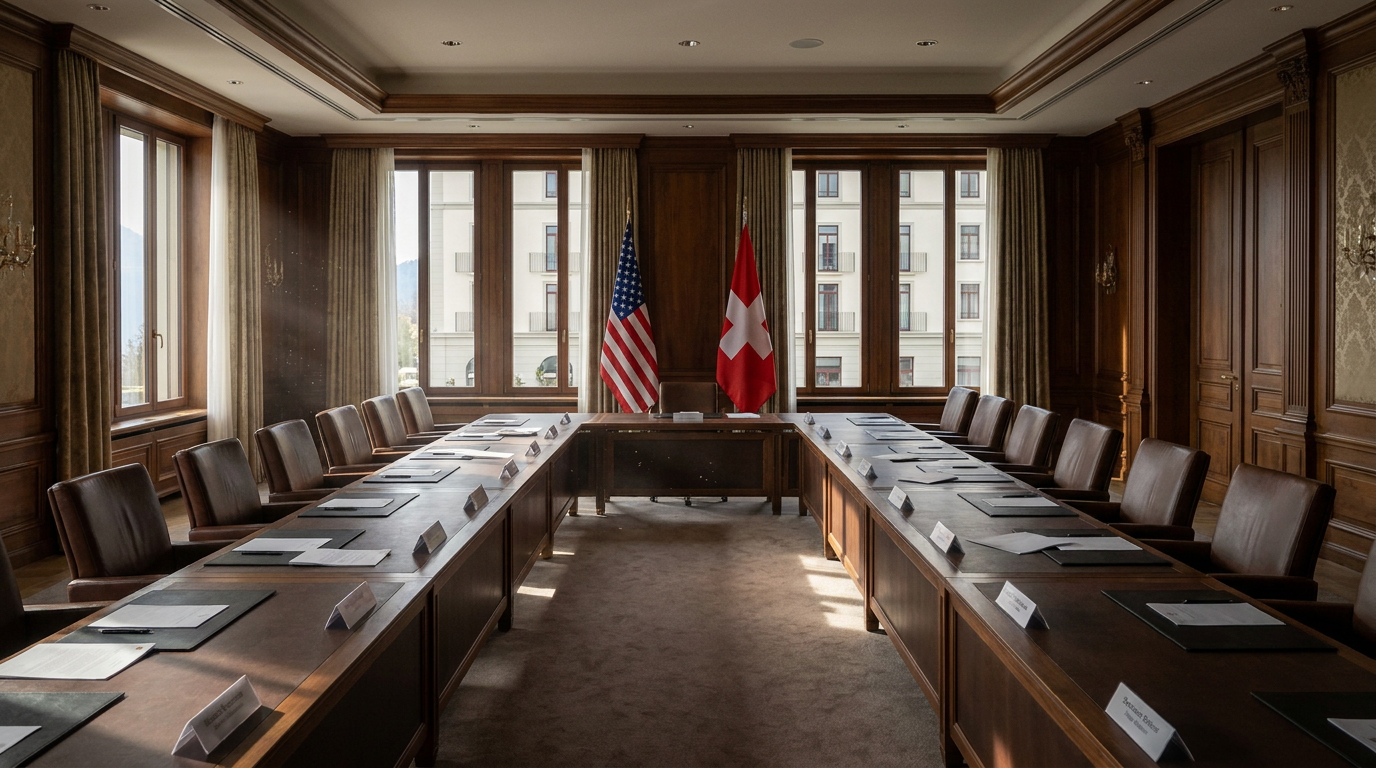
High-stakes peace negotiations between the United States and Iran have officially commenced at the secluded Bürgenstock Resort in Switzerland, launching what diplomats describe as the most consequential effort yet to stabilize the Middle East. The summit aims to solidify a fragile 60-day ceasefire and implement a multi-point memorandum of understanding to end the devastating war that erupted in late February. Held under intense security protocols, the meetings represent a critical juncture for global stability, as failure to reach a durable agreement could plunge the region back into full-scale conflict and trigger a severe global economic downturn.[1][5]
Vice President JD Vance is leading the American delegation, joined by President Donald Trump's son-in-law Jared Kushner and special envoy Steve Witkoff. They face an Iranian team headed by Parliament Speaker Mohammad Bagher Ghalibaf, alongside Iran's deputy oil minister and central bank governor. The presence of top financial officials underscores Tehran's primary objective: securing the unfreezing of overseas assets and the lifting of crippling international sanctions that have suffocated the Iranian economy. For the United States, the focus remains strictly on curbing Iran's nuclear ambitions and ensuring the free flow of global maritime trade.[5][6]
The diplomatic breakthrough relies heavily on the intervention of regional mediators. Qatar and Pakistan, whose flags flank those of Washington and Tehran at the summit, have been instrumental in bringing the warring parties to the negotiating table after months of bloodshed. Pakistani Prime Minister Shehbaz Sharif and military chief Field Marshal Asim Munir arrived in Lucerne on Sunday to participate directly in the negotiations, highlighting the immense pressure neighboring nations are exerting to prevent the conflict from spilling over their borders.[6]
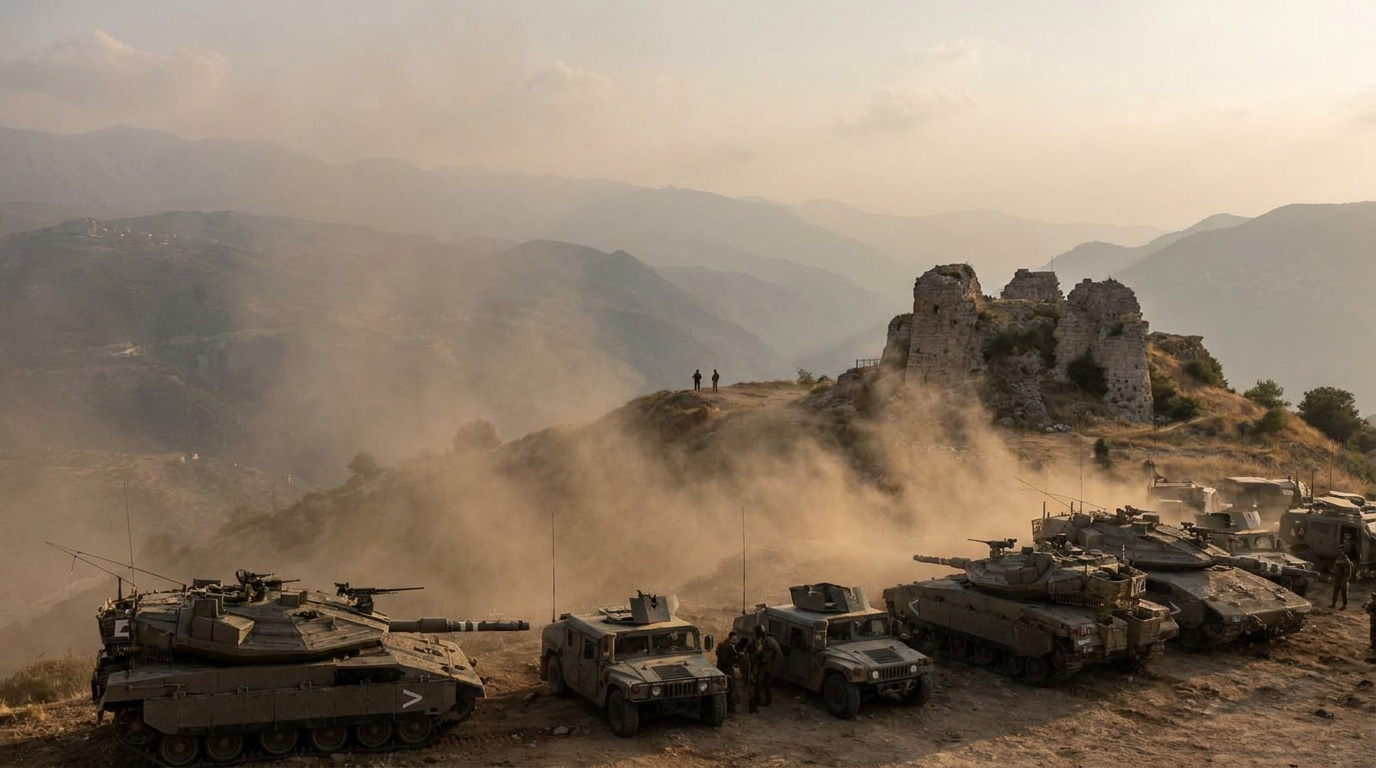
However, the talks are already being overshadowed by escalating realities on the ground. Over the weekend, Iran announced it had reimposed its blockade of the Strait of Hormuz—a critical global energy artery—in direct protest of ongoing Israeli military operations in Lebanon. While U.S. officials disputed the total closure, noting that 55 merchant ships successfully crossed the strait on Saturday, the threat alone has rattled global energy markets. Traders fear that a genuine blockade could cause oil prices to skyrocket, threatening a global recession just as the ceasefire offered a glimmer of economic hope.[1][5]

The first clause of the U.S.-Iran memorandum requires a comprehensive halt to hostilities on all fronts, explicitly including Lebanon, which Israel invaded in March. Vice President Vance acknowledged the immense complexity of this requirement upon arriving in Switzerland, stating that the U.S. delegation hopes to "make progress on the nuclear issue" and the "Lebanon ceasefire issue" during the tightly compressed summit. Bridging the gap between Iran's demands for an immediate Israeli withdrawal and Washington's commitments to its closest regional ally remains one of the summit's most daunting challenges.[5]
Beyond the immediate tactical disputes over maritime routes and proxy battles, a dark shadow looms over the diplomatic proceedings: the unresolved fallout from one of the deadliest civilian casualty incidents of the conflict. On February 28, the first day of the joint U.S. and Israeli air campaign known as Operation Epic Fury, a girls' elementary school in the southern Iranian town of Minab was struck by a powerful missile, instantly transforming a classroom into a war zone.[2][7]
Iranian officials report that the strike killed at least 165 people, the vast majority of them children under the age of 12, along with their teachers. The school was located in close proximity to a former Islamic Revolutionary Guard Corps naval base, which local officials and residents claim had been completely closed and abandoned for more than a decade. The sheer scale of the civilian death toll immediately made the Minab bombing a flashpoint for international outrage and demands for accountability.[2][4][7]
Iranian officials report that the strike killed at least 165 people, the vast majority of them children under the age of 12, along with their teachers.
In the immediate aftermath of the tragedy, President Trump suggested that Iran was responsible for bombing its own citizens, claiming that Iranian munitions "have no accuracy whatsoever." However, subsequent analysis of video footage, satellite imagery, and weapon debris by independent experts and multiple news organizations strongly indicated that the building was destroyed by a U.S.-made Tomahawk cruise missile. Military analysts noted that Iran does not possess Tomahawk missiles, directly contradicting the administration's initial narrative.[2][7]

The Minab bombing has since triggered a fierce domestic political crisis in Washington, pitting the Pentagon against a bipartisan coalition of deeply frustrated lawmakers. The Senate Armed Services Committee recently advanced a punitive provision in the 2027 National Defense Authorization Act that would slash Defense Secretary Pete Hegseth's travel budget by 75 percent. The unprecedented legislative maneuver reflects growing congressional anger over the Defense Department's repeated refusal to comply with basic oversight requests.[3][4]
The travel budget restriction is explicitly designed to force Hegseth to release the Pentagon's overdue civilian harm investigations into the Minab school strike, as well as unedited video footage of controversial U.S. military boat strikes off the coast of Latin America. Lawmakers from both parties have accused the Defense Department of stonewalling, arguing that the administration cannot unilaterally wage war and dismiss the collateral damage without answering to the American public and their elected representatives.[3][4]
Secretary Hegseth has drawn intense scrutiny for his broader approach to military operations and civilian casualties. Early in his tenure, he moved to severely reduce the Pentagon's civilian harm mitigation infrastructure, arguing that he was doing away with "stupid rules of engagement" in order to "unleash American power." A May report from the Defense Department's inspector general concluded that the U.S. military no longer possesses the personnel, tools, or infrastructure required to comply with federal statutes mandating a functioning civilian casualty policy.[2]

When pressed on the Minab investigation during a recent G7 press conference in France, President Trump dismissed the need for immediate accountability or transparency. "It's such a strange question to be asked at this state because you're talking about a long time ago, but nobody did that on purpose," Trump told reporters, adding that "mistakes are made" and "war is nasty." He deferred all further questions to Hegseth, noting only that the strike remains under active investigation by U.S. Central Command.[2][4]
For the families of the victims in Minab, the lack of transparency has compounded the devastating tragedy of losing their children. Critics and human rights advocates fear that the Pentagon may ultimately bury the investigation's findings under classified designations to shield the administration from political fallout as it attempts to finalize a peace deal. Advocates argue that sweeping the incident under the rug will only fuel long-term anti-American resentment in the region, undermining the very stability the current peace talks aim to achieve.[2]
Back in Switzerland, negotiators are working against a rapidly ticking clock. The interim ceasefire agreement provides a strict 60-day window for implementation, leaving diplomats with just 58 days to translate the memorandum into a durable regional reset. While both Washington and Tehran retain a strong mutual interest in preventing a return to full-scale war, the intertwined crises of the Strait of Hormuz blockade, the ongoing Lebanon invasion, and the unresolved demand for accountability threaten to unravel the fragile truce before the ink is even dry.[5][6]
How we got here
Feb 28, 2026
The U.S. and Israel launch Operation Epic Fury; a missile strikes a girls' school in Minab, Iran.
Mar 7, 2026
President Trump claims Iran was responsible for the school bombing, a statement later contradicted by weapons experts.
Mid-June 2026
The U.S. and Iran sign a memorandum of understanding establishing a 60-day ceasefire.
Jun 18, 2026
The U.S. Senate Armed Services Committee advances a bill to slash Defense Secretary Hegseth's travel budget over unreleased civilian harm reports.
Jun 21, 2026
Formal peace talks begin in Switzerland, complicated by Iran's threat to blockade the Strait of Hormuz.
Viewpoints in depth
The Diplomatic Push
Mediators and negotiators are prioritizing a pragmatic halt to hostilities and economic stabilization over past grievances.
For the U.S. and Iranian delegations, along with mediators from Qatar and Pakistan, the immediate priority is preventing a return to full-scale regional war. This camp argues that the 60-day ceasefire window is a rare opportunity to secure the Strait of Hormuz, unfreeze Iranian assets, and address nuclear concerns. From this perspective, while battlefield casualties are tragic, the focus must remain on forward-looking geopolitical stability rather than allowing the talks to collapse over demands for retroactive accountability.
The Demand for Accountability
Lawmakers and human rights advocates argue that a lasting peace cannot be built on a foundation of obscured civilian harm.
Bipartisan lawmakers in Washington and international human rights groups maintain that the Pentagon cannot simply sweep the Minab school bombing under the rug. By threatening to slash Defense Secretary Pete Hegseth's travel budget, the Senate Armed Services Committee is signaling that congressional oversight and adherence to civilian harm mitigation laws are non-negotiable. This camp warns that rolling back 'rules of engagement' without transparency damages U.S. moral authority and sets a dangerous precedent for future conflicts.
What we don't know
- Whether the Pentagon will ever publicly release the unredacted civilian harm investigation into the Minab school bombing.
- If the U.S. can successfully pressure Israel to halt operations in Lebanon to satisfy the terms of the ceasefire memorandum.
- How global energy markets will react if Iran fully enforces its threatened blockade of the Strait of Hormuz.
Key terms
- Strait of Hormuz
- A highly strategic waterway between the Persian Gulf and the Gulf of Oman through which a significant portion of the world's oil supply passes.
- Tomahawk Cruise Missile
- A long-range, all-weather, subsonic cruise missile primarily used by the United States Navy for land-attack warfare.
- National Defense Authorization Act (NDAA)
- An annual series of federal laws in the United States that specify the annual budget and expenditures of the U.S. Department of Defense.
- Rules of Engagement
- Internal rules or directives that define the circumstances, conditions, degree, and manner in which the military may use force.
Frequently asked
Why are the US and Iran holding talks in Switzerland?
Delegations are meeting at the Bürgenstock Resort to implement a multi-point memorandum of understanding aimed at ending the war that began in February and solidifying a 60-day ceasefire.
What happened at the school in Minab?
On the first day of the war, a girls' elementary school in southern Iran was struck by a missile, killing over 165 people. Evidence indicates a U.S. Tomahawk cruise missile was responsible, though the Pentagon's investigation remains unreleased.
Why is the Senate threatening Pete Hegseth's budget?
The Senate Armed Services Committee advanced a provision to cut the Defense Secretary's travel budget by 75% until he provides overdue civilian harm investigation reports to Congress.
Is the Strait of Hormuz currently closed?
Iran announced it had reimposed a blockade in protest of Israeli strikes in Lebanon, though U.S. officials stated that dozens of merchant ships were still successfully crossing the strait as of Saturday.
Sources
Source coverage
7 outlets
3 viewpoints surfaced







[1]Al JazeeraDiplomatic & Regional Observers
US-Iran delegations arrive as talks begin in Switzerland
Read on Al Jazeera →[2]The GuardianAccountability & Oversight Advocates
Four months after the horrific Iran school bombing, fears grow that Trump and Hegseth will bury the truth
Read on The Guardian →[3]The Washington PostAccountability & Oversight Advocates
Senate targets Hegseth's travel in standoff over apparent Iran school attack, boat strikes
Read on The Washington Post →[4]Defense NewsAccountability & Oversight Advocates
Senate lawmakers push to restrict Hegseth's travel spending over overdue civilian harm reports
Read on Defense News →[5]Channel News AsiaDiplomatic & Regional Observers
US, Iran begin peace talks in Switzerland overshadowed by Strait of Hormuz blockade
Read on Channel News Asia →[6]Radio Free Europe/Radio LibertyDiplomatic & Regional Observers
Delegations Gather For US-Iran Summit Amid Fragile Regional Truce
Read on Radio Free Europe/Radio Liberty →[7]FactCheck.orgIndependent Verification Analysts
Evidence Contradicts Trump's Claim on Iran School Bombing
Read on FactCheck.org →
More in news politics
See all 10 stories →NLRB Powers
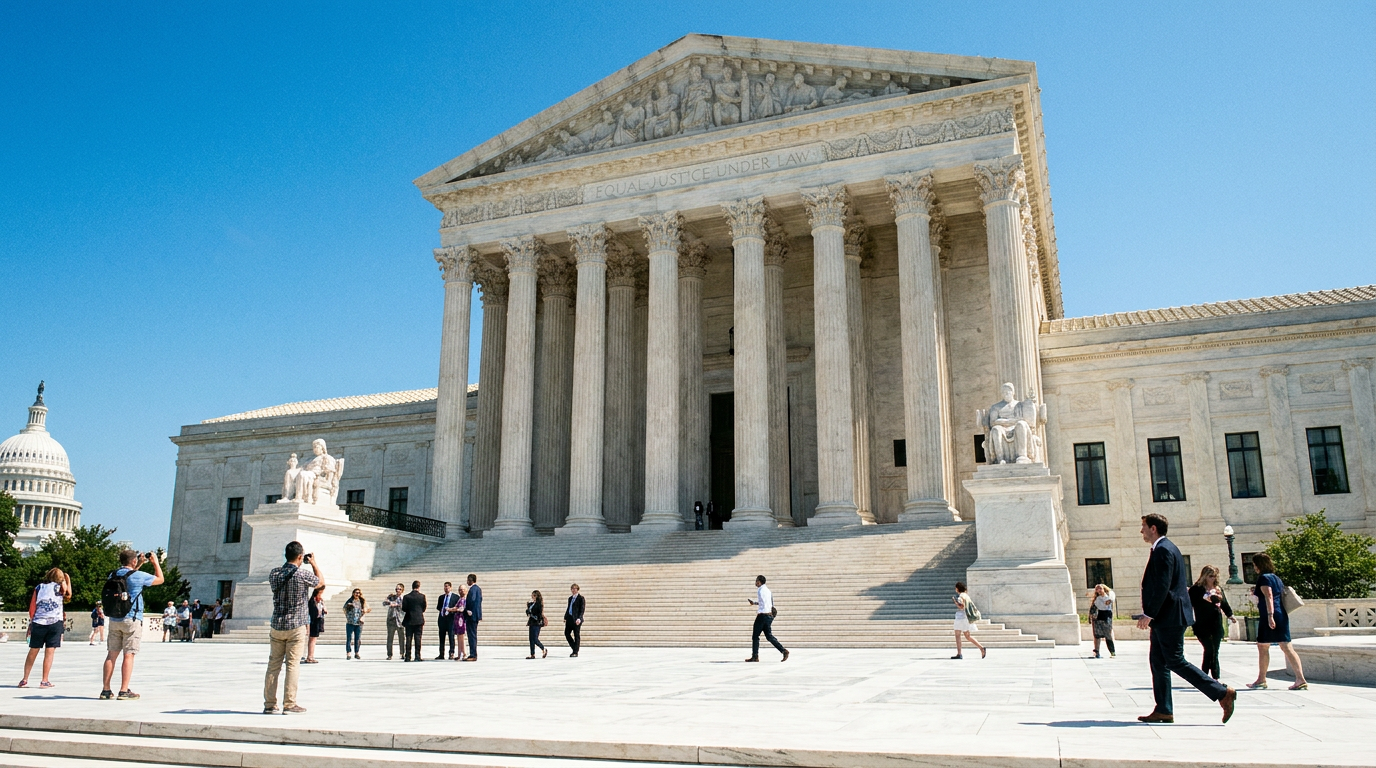
Supreme Court Declines Macy's Appeal, Leaving Expanded NLRB Penalties Intact
6 sources
Downing Street Crisis
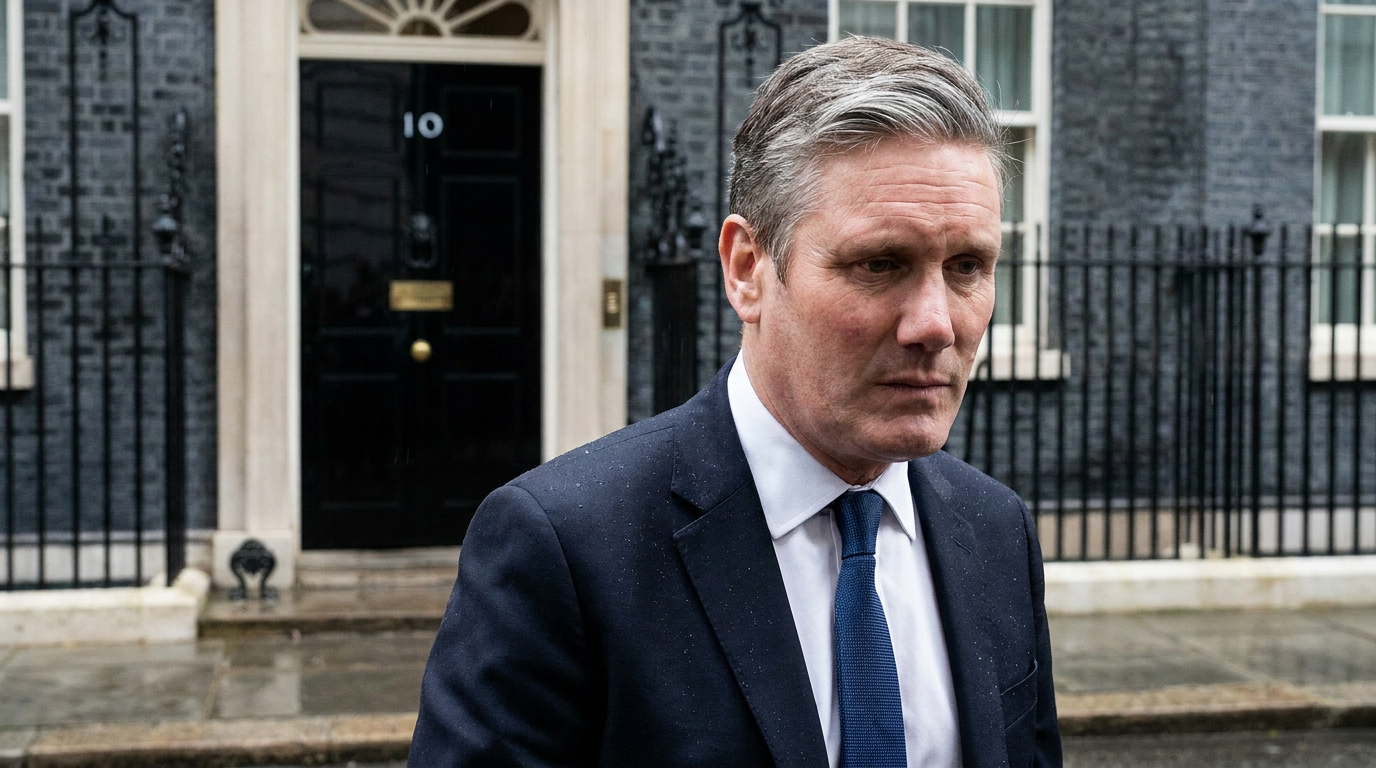
UK Prime Minister Keir Starmer on the Brink as Andy Burnham Mounts Leadership Threat
7 sources
Border Security
DHS Secretary Mullin Pledges Primary Border Wall Completion by 2027 Amid Pushback
6 sources
Digital Trust
Evidence Pack: Does Crowdsourced Fact-Checking Actually Stop Misinformation?
7 sources

Every angle. Every day.
Get news politics stories with full source coverage and perspective breakdowns delivered to your inbox.