
New AI Tool 'In the Weights' Reveals if You Exist Inside the Machine's Memory
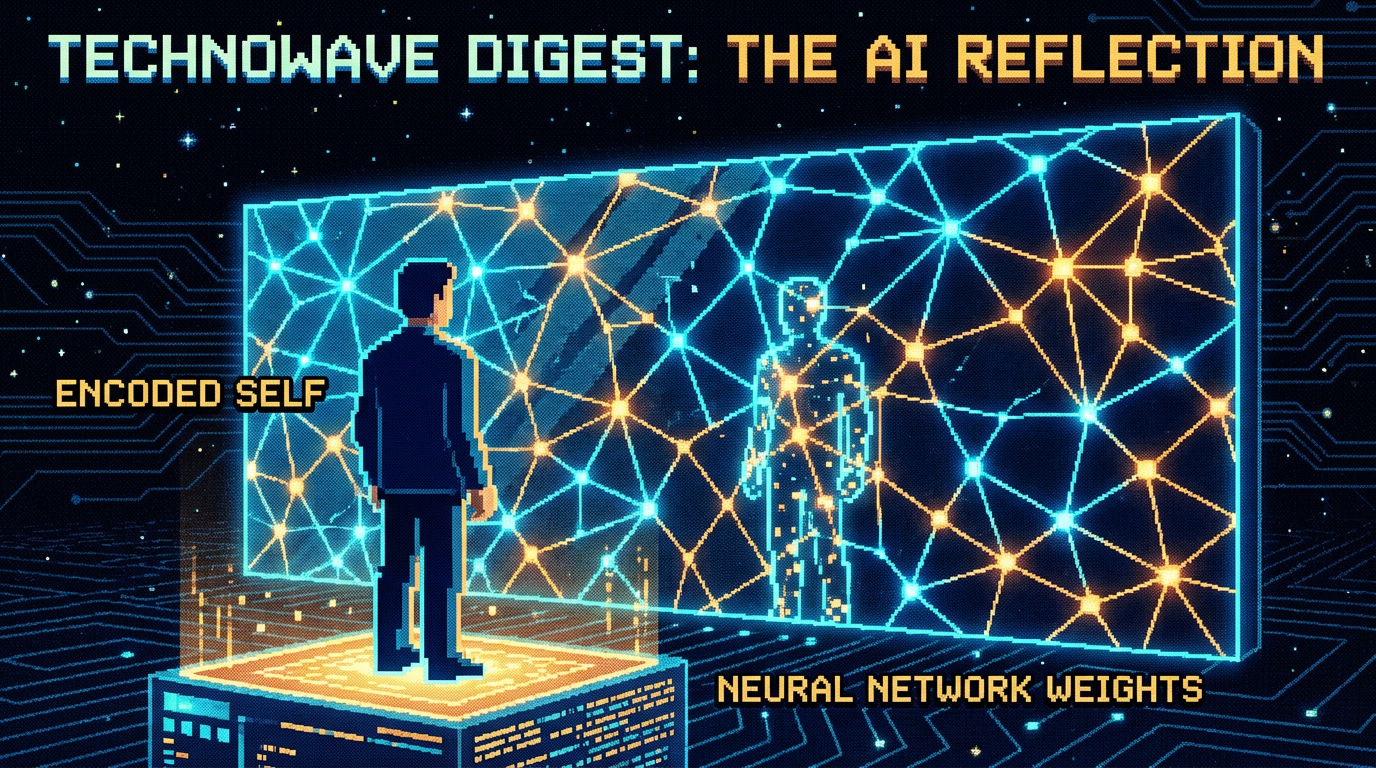
A new app created by former OpenAI engineers allows users to search whether their name and biography are permanently encoded into the internal parameters of leading AI models. The tool highlights a cultural shift from traditional web searches to measuring one's digital footprint inside artificial intelligence.
By Factlen Editorial Team
- Digital Footprint Analysts
- Focuses on the shift from traditional SEO to AI-native discoverability.
- AI Developers
- Views the tool as a clever visualization of model compression and training priorities.
- Privacy & Culture Observers
- Highlights the existential and privacy implications of permanent digital encoding.
What's not represented
- · SEO Professionals
- · Data Privacy Regulators
Why this matters
As internet traffic increasingly shifts from traditional search engines to AI chatbots, being 'in the weights' determines whether you are discoverable in the next generation of the web. For professionals, researchers, and creators, this tool provides the first quantifiable measure of their AI-native visibility.
Key points
- A new tool called 'In the Weights' measures if AI models can recall a person without using web search.
- The platform queries multiple models, including GPT-5.5, Claude 4.8, Gemini, Grok, and Llama.
- Users receive a 'strength score' up to 996, with actor Macaulay Culkin currently holding a top score of 988.
- Appearing in smaller, highly compressed models indicates a stronger level of global relevance.
- The tool highlights the shift from traditional SEO to AI-native discoverability for professionals.
Anyone who has Googled their own name recently knows the experience has changed. As traditional web search loses its monopoly on information, a new question has emerged: does artificial intelligence know who you are? [3] Former OpenAI employees Thomas Dimson and Joey Flynn have launched "In the Weights," a novel web tool that functions as an AI-centric vanity search. [1][4] The platform allows users to check if their identity and biography are permanently encoded into the neural networks of the world's leading AI models. [2][1][2][3][4]
The tool operates by simultaneously querying a diverse roster of frontier and open-source models, including OpenAI's GPT-5.5, Anthropic's Claude Opus 4.8, Google's Gemini, xAI's Grok, and Meta's Llama series. [4] Instead of relying on external web searches or browsing capabilities, the site forces the models to rely entirely on their internal memory. [2][3] It asks each system to identify a specific person and provide a short description, testing whether the individual's existence was deemed significant enough during the training process to be baked into the AI's core architecture. [3][6][2][3][4][6]
The project's name refers to the billions of numerical parameters—or "weights"—that form an artificial intelligence's brain. [5][6] When an AI model is trained on vast datasets, it adjusts these weights to encode relationships, facts, and language patterns. [6] If a model can recall a person accurately without looking them up on the internet, that individual is officially "in the weights." [1][2] Dimson notes that this metric serves as a unique mirror for the modern era, reflecting whose lives and legacies have been immortalized in the foundational technology of the future. [6][1][2][5][6]
To quantify this digital footprint, the platform aggregates the responses from the various models, clusters similar descriptions together, and assigns a unified "strength score." [3][4] The scoring system runs from zero up to a theoretical ceiling of 996. [4] According to the creators, the absolute highest scores are generally reserved for universally recognized historical figures like William Shakespeare and Wolfgang Amadeus Mozart, or massive contemporary pop stars like Taylor Swift. [2][4][2][3][4]

The platform's public leaderboard has already generated significant interest by revealing how current models prioritize modern celebrity. [5] As of late June 2026, actor Macaulay Culkin holds the top spot among living figures with a staggering strength score of 988. [1][5] He is followed closely by the late opera singer Luciano Pavarotti. [3][5] Meanwhile, a score of 641 is enough to place an individual in the top six percent of all searched names, highlighting just how exclusive the upper echelons of AI memory truly are. [3][5][1][3][5]
The platform's public leaderboard has already generated significant interest by revealing how current models prioritize modern celebrity.
One of the most revealing insights from the tool involves the size of the AI models being queried. [4] The creators emphasize that appearing in smaller, open-source models is actually a stronger indicator of global relevance than showing up in massive frontier models. [2] Because compact systems like Meta's 1-billion-parameter Llama model must compress knowledge far more aggressively, they filter out niche information. [2][4] Making the cut in a tiny model means the training data prioritized that individual's existence over millions of others. [4][2][4]
However, the tool also exposes the persistent flaws and limitations of modern language models. [2] The aggregated results frequently highlight AI "hallucinations," where models confidently invent biographical details or attribute false achievements to real people. [3][6] The creators warn that typos in a search query can drastically drag down a strength score, and individuals with common names often receive muddled or inaccurate descriptions as the models struggle to disambiguate them from others with the same moniker. [2][4][2][3][4][6]

Beyond its entertainment value, "In the Weights" visualizes a critical transition in the digital economy. [4] For researchers, journalists, founders, and creators, professional reach is increasingly dependent on AI-mediated discoverability. [4] As internet traffic continues to shift away from traditional search engine indexes and toward conversational interfaces, a model's ability to accurately recall an individual is becoming the new baseline for relevance. [4][6][4][6]
Ultimately, the retro-styled platform answers a growing cultural curiosity about our relationship with superhuman technology. [3][4] It bridges the gap between complex machine learning architecture and everyday vanity, offering a tangible way to measure digital legacy. [5] Whether it remains a passing curiosity or evolves into a standard metric for digital footprint analysis, the tool proves that the desire to know if we exist inside the machine is universally compelling. [3][3][4][5]
How we got here
Late 2022
The release of ChatGPT accelerates public interaction with Large Language Models, shifting how people search for information.
2024–2025
AI search engines begin to heavily cannibalize traditional web search traffic, raising questions about digital discoverability.
June 2026
Former OpenAI employees Thomas Dimson and Joey Flynn launch 'In the Weights' to measure how well AI models recall specific individuals.
Viewpoints in depth
Digital Footprint Analysts
Focuses on the shift from traditional SEO to AI-native discoverability.
For professionals whose careers rely on public visibility, traditional search engine optimization is rapidly losing ground to AI recall. Analysts view tools like 'In the Weights' as the first step toward a new industry of LLM optimization. If an individual or brand is not encoded into the foundational weights of a model, they effectively do not exist in the conversational interfaces that are increasingly replacing Google Search.
AI Developers
Views the tool as a clever visualization of model compression and training priorities.
From an engineering perspective, the platform is a fascinating probe into how different models allocate their limited parameter budgets. Developers note that the tool's most valuable insight isn't the high scores of celebrities, but rather how smaller, heavily compressed models like the 1-billion-parameter Llama decide what knowledge is essential. It provides a rare, user-friendly window into the opaque data curation processes of major AI labs.
Privacy & Culture Observers
Highlights the existential and privacy implications of permanent digital encoding.
Cultural critics point out the eerie reality of digital immortality that the tool exposes. Being 'in the weights' means an individual's data has been scraped, processed, and permanently baked into a proprietary system without their explicit consent. Observers argue that while the vanity search aspect is entertaining, it underscores a profound lack of control over how human identities are remembered, summarized, and sometimes hallucinated by corporate AI systems.
What we don't know
- It remains unclear exactly how the proprietary algorithm mathematically converts the clustered raw model responses into a single numerical strength score.
- It is unknown how quickly the strength scores will fluctuate as AI labs release new, updated models with different training data priorities.
Key terms
- Weights
- The billions of numerical parameters inside an artificial neural network that determine how the model processes information and generates responses.
- Large Language Model (LLM)
- An advanced AI system trained on vast amounts of text data to understand and generate human-like language.
- Hallucination
- A phenomenon where an AI model confidently generates false, invented, or illogical information.
- Vanity Search
- The practice of searching for one's own name on the internet to see what information is publicly available.
- Parameters
- The internal variables that an AI model learns during training, which dictate its behavior and knowledge capacity.
Frequently asked
What does it mean to be 'in the weights'?
It means an AI model has permanently encoded your name and biographical details into its internal parameters during training, allowing it to remember you without needing to search the internet.
How is the strength score calculated?
The tool queries multiple AI models simultaneously, clusters their descriptions of you, and assigns a score up to 996 based on how confidently and consistently the models recall your identity.
Why do smaller models matter more?
Smaller AI models have less storage capacity and compress knowledge more aggressively. If you appear in a compact model like Meta's 1-billion-parameter Llama, it indicates a higher level of global relevance.
Can the tool show incorrect information?
Yes. The creators note that the tool frequently exposes AI 'hallucinations,' where models confidently invent biographical details or confuse people with similar names.
Sources
Source coverage
6 outlets
3 viewpoints surfaced






[1]TechCrunchDigital Footprint Analysts
In the Weights is your new AI-centric vanity search
Read on TechCrunch →[2]The DecoderAI Developers
Website 'In the Weights' shows whether AI models know who you are
Read on The Decoder →[3]Bitcoin WorldPrivacy & Culture Observers
In the Weights: A New AI-Centric Vanity Search Measures How Well LLMs Remember You
Read on Bitcoin World →[4]AI WeeklyDigital Footprint Analysts
In the Weights Scores How Strongly AI Models Know Who You Are
Read on AI Weekly →[5]Content BufferDigital Footprint Analysts
In The Weights: AI Models Recall Celebs' Existence
Read on Content Buffer →[6]ZaminAI Developers
What does AI know about you?
Read on Zamin →



Every angle. Every day.
Get technology stories with full source coverage and perspective breakdowns delivered to your inbox.