
U.S. House Passes Bipartisan Bill Imposing Strict Timelines and Binding Arbitration on First Union Contracts
The House of Representatives has passed the Faster Labor Contracts Act, a major overhaul of federal labor law that would force employers and newly formed unions into binding arbitration if they cannot reach a first agreement within 120 days.
By Factlen Editorial Team
- Labor Advocates
- Unions and their supporters argue the bill closes a loophole that allows companies to kill unions by stalling.
- Management & Employers
- Business groups warn the bill strips companies of their rights and imposes government-mandated costs.
What's not represented
- · Federal mediators who would have to handle the increased caseload
- · Non-unionized workers who might be affected by industry wage shifts
Why this matters
If enacted, this legislation would fundamentally rewrite the balance of power in the American workplace. By guaranteeing that newly unionized workers secure a contract within months rather than years, it removes the primary tactic employers use to defang successful union drives: endless delay.
Key points
- The U.S. House passed the Faster Labor Contracts Act (H.R. 5408) by a 230-193 vote.
- The bill mandates that employers begin bargaining within 10 days of a union's certification.
- If no agreement is reached within 90 days, the dispute enters a 30-day mandatory mediation period.
- Failure to reach a deal after mediation triggers binding arbitration by a three-person panel.
- The arbitration panel would impose a two-year contract, overriding the employer's ability to hold out.
- The bill now heads to the Senate, where it faces an uncertain path despite bipartisan support.
The U.S. House of Representatives has passed a sweeping overhaul of federal labor law, advancing a bipartisan measure that would fundamentally alter how employers and newly formed unions negotiate their first contracts. The Faster Labor Contracts Act, which cleared the chamber in a highly watched floor vote, aims to eliminate the protracted delays that often follow successful unionization drives. By imposing a strict, calendar-driven countdown that culminates in binding arbitration, the legislation seeks to strip companies of their ability to stall negotiations indefinitely. If enacted into law, the measure would represent the most significant shift in private-sector collective bargaining dynamics in nearly a century, transferring substantial leverage from corporate management to newly organized workers.[1][2]
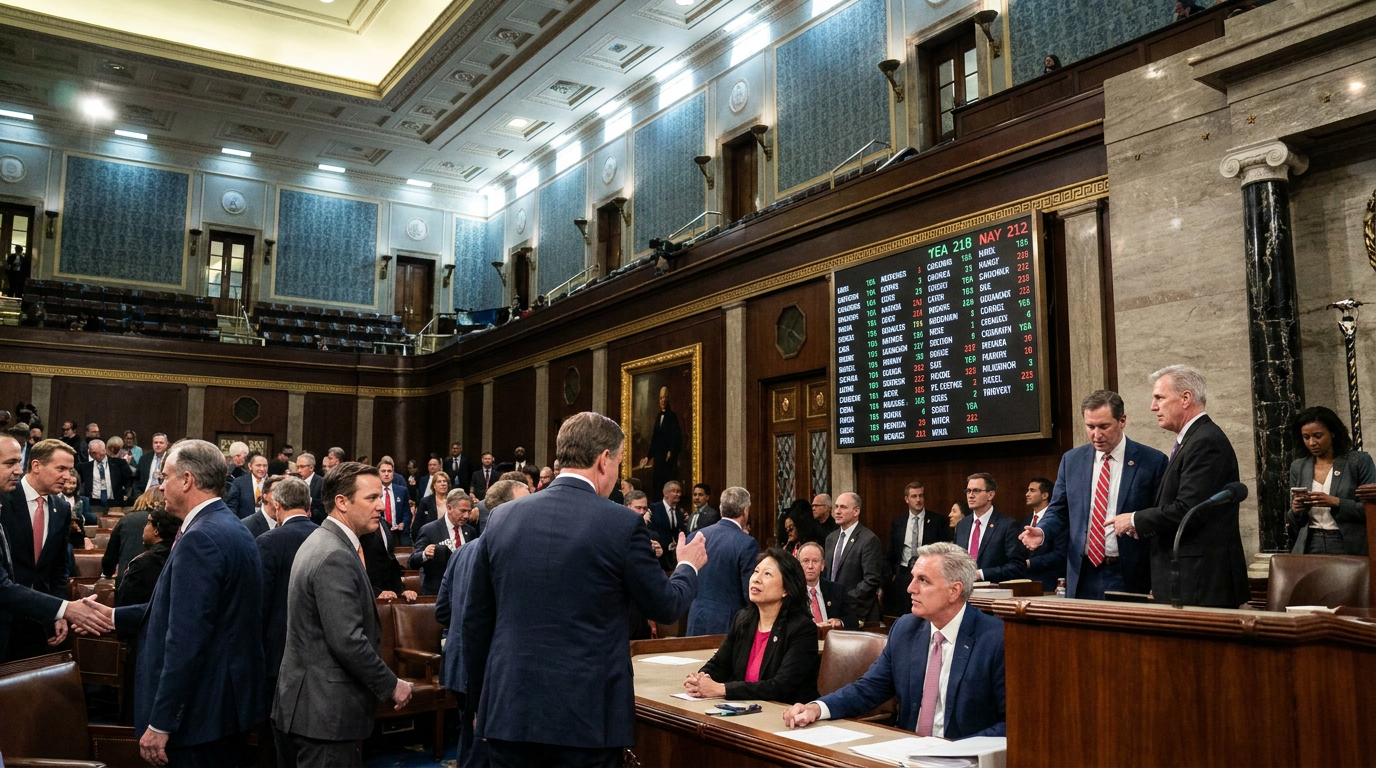
The Faster Labor Contracts Act, formally designated as H.R. 5408, passed the House on June 9 by a vote of 230 to 193. The final tally revealed a notable fracture within the Republican conference, as 20 GOP lawmakers joined all voting Democrats to push the measure through the chamber. The bill's path to the floor was highly unusual; it bypassed the standard committee markup process entirely after a discharge petition, spearheaded by Representative Donald Norcross of New Jersey, successfully secured the 218 signatures required to force a direct floor vote. This procedural maneuver highlighted the intense grassroots pressure and bipartisan populist momentum driving the legislation forward, catching many traditional business lobbying groups off guard.[3][4][5][6]
At the heart of the legislation is a dramatic amendment to Section 8(d) of the National Labor Relations Act (NLRA). Under the current legal framework, employers and unions are required to bargain in "good faith," but the law explicitly does not compel either party to agree to a proposal or make a concession. This open-ended system has allowed first-contract negotiations to drag on for months or even years. The new bill replaces this open-ended framework with a rigid, multi-step escalation process. Employers would be legally mandated to commence bargaining within exactly 10 days of receiving a written request from a newly certified or recognized union, establishing an immediate ticking clock the moment an election is certified.[2][6]

Once the initial 10-day window closes and bargaining begins, the parties are granted exactly 90 days to reach a comprehensive collective bargaining agreement. If they fail to secure a deal within that three-month timeframe, the legislation dictates that either side can unilaterally trigger mandatory intervention by the federal government. The Federal Mediation and Conciliation Service (FMCS) would be brought in to oversee the negotiations, initiating a mandatory 30-day mediation period. During this phase, federal mediators would actively work to bridge the gap between labor and management, attempting to resolve outstanding disputes over wages, benefits, and workplace protections before the final, most severe provision of the law is activated.[1][4][5]
The most consequential and controversial provision of the Faster Labor Contracts Act activates if the 30-day FMCS mediation period expires without a signed agreement. At that point, the dispute is automatically referred to a three-person arbitration panel for binding resolution. This panel would consist of one representative chosen by the labor union, one representative chosen by corporate management, and a mutually agreed-upon neutral arbitrator. This triumvirate would be granted the extraordinary legal authority to draft and impose a binding, two-year collective bargaining agreement on both parties, effectively ending the negotiation process by government fiat and locking in the terms of employment.[3][5][6]
The most consequential and controversial provision of the Faster Labor Contracts Act activates if the 30-day FMCS mediation period expires without a signed agreement.
When drafting the imposed contract, the arbitration panel would not be operating in a vacuum. The legislation requires the arbitrators to weigh several specific statutory factors, including the employer's current financial status, the size and type of the business operations, the local cost of living for the employees, and the wages and benefits offered by comparable employers within the same industry. By mandating these criteria, the bill attempts to ensure that the imposed contracts are economically viable while still providing a living wage. However, management-side attorneys warn that a panel of outside arbitrators can never fully grasp the intricate financial realities and operational nuances of a specific company, making the imposed terms inherently risky for the business.[2][5][6]
Proponents of the legislation argue that this drastic change is absolutely necessary to close a glaring loophole in American labor law that allows companies to effectively nullify democratic union elections. According to data cited by lawmakers during the floor debate, it currently takes an average of 461 to 465 days for a newly certified union to ratify its first contract with an employer. In many high-profile organizing campaigns at massive corporations, employers have intentionally dragged out negotiations for years. This stalling tactic often leads to high worker turnover, eroding the union's initial momentum and leaving the remaining workers disillusioned with the collective bargaining process.[1][2][5]

Business groups, chambers of commerce, and management-side law firms have sounded the alarm over the bill's passage, warning that the legislation strips companies of their fundamental strategic flexibility. Critics argue that the threat of binding arbitration removes a union's incentive to compromise during the initial 90-day window, as labor leaders might simply wait out the clock in hopes of securing a more favorable deal from the government-appointed panel. Furthermore, employers warn that being forced into a two-year contract with government-mandated labor costs could threaten the viability of businesses operating on thin margins, fundamentally violating the free-market principles that have historically underpinned American labor relations.[3][4][5]
The legislation now moves to the United States Senate, where its future remains highly uncertain despite the bipartisan momentum generated in the House. A companion bill, S. 844, was introduced earlier in the legislative session by Senator Josh Hawley, a Republican from Missouri, alongside a coalition of progressive Democrats. This unusual alliance reflects a growing realignment within American politics, where populist conservatives are increasingly willing to support private-sector union leverage as a mechanism to boost working-class wages and challenge the consolidated power of large multinational corporations. However, traditional business-aligned Republicans in the Senate are expected to mount a fierce filibuster against any mandate involving binding arbitration.[1][3][6]
The ultimate fate of the Faster Labor Contracts Act may hinge on the White House, where the administration's position remains a complex wildcard. While the executive branch has historically maintained close ties with corporate leadership and clashed frequently with federal employee unions, the populist wing of the Republican party has spent recent years aggressively courting private-sector union voters in key swing states. If the bill manages to clear the Senate's 60-vote threshold, the decision to sign or veto the legislation will force a definitive showdown between the pro-business establishment and the working-class populist factions, setting the trajectory for American labor relations for decades to come.[1][4][5]

Legal analysts are already preparing for the massive logistical hurdles that would accompany the bill's implementation if it becomes law. The Federal Mediation and Conciliation Service, which currently handles disputes on a voluntary or ad-hoc basis, would suddenly face a mandatory influx of cases from every stalled first-contract negotiation in the country. Questions remain about whether the agency has the staffing and funding required to facilitate hundreds of simultaneous 30-day mediation windows. Additionally, the process of selecting mutually agreeable neutral arbitrators for the binding panels could spark its own wave of secondary litigation, as both labor and management fight to secure favorable umpires for the high-stakes final rulings.[2][3][6]
How we got here
March 2025
Senator Josh Hawley introduces the companion bill (S. 844) in the Senate.
Early 2026
Representative Donald Norcross files a discharge petition to bypass committee blockades in the House.
June 9, 2026
The discharge petition succeeds, and the House passes the bill 230-193.
Viewpoints in depth
Labor Advocates
Unions and their supporters argue the bill closes a loophole that allows companies to kill unions by stalling.
Labor advocates point out that winning a union election is currently only half the battle. Because federal law does not penalize employers for failing to reach an agreement, companies routinely hire specialized law firms to drag out first-contract negotiations for years. By the time a contract is signed, the original workers who voted for the union may have quit or lost faith in the process. Supporters argue that binding arbitration is the only way to ensure that a democratic vote to unionize actually results in a collective bargaining agreement.
Employer & Business Groups
Management advocates warn the bill strips companies of their rights and imposes government-mandated costs.
Business groups and management-side attorneys argue the legislation fundamentally violates the core premise of the National Labor Relations Act: that the government should facilitate bargaining, not dictate the terms of employment. They warn that forcing companies into binding arbitration removes their ability to hold the line on costs or operational flexibility. Critics argue that a three-person panel of arbitrators lacks the intimate knowledge of a company's specific financial realities, and that imposing a two-year contract could threaten the viability of businesses operating on thin margins.
Populist Conservatives
A growing faction of Republicans is breaking with traditional business lobbies to support private-sector labor.
The 20 Republican votes in the House and Senator Josh Hawley's sponsorship of the Senate companion bill highlight a significant realignment on the political right. Populist conservatives are increasingly willing to support private-sector union leverage as a way to boost working-class wages and challenge the power of large multinational corporations. This faction differentiates between public-sector unions—which they often oppose—and private-sector industrial and service workers, whom they view as a core constituency.
What we don't know
- Whether the Senate will take up the companion bill (S. 844) or if traditional business-aligned Republicans will block it.
- How President Trump would respond if the legislation reaches his desk, given the split between populist and establishment Republicans.
- How the Federal Mediation and Conciliation Service would handle the massive influx of mandatory mediation cases if the bill becomes law.
Key terms
- Binding Arbitration
- A process where a neutral third party hears both sides of a dispute and imposes a legally enforceable decision that neither side can reject.
- Discharge Petition
- A parliamentary procedure in the House of Representatives that brings a bill out of committee and directly to the floor if a majority of members sign it.
- National Labor Relations Act (NLRA)
- The foundational 1935 U.S. labor law that guarantees private-sector employees the right to unionize and engage in collective bargaining.
- Federal Mediation and Conciliation Service (FMCS)
- An independent U.S. government agency that provides mediation services to help resolve labor disputes.
Frequently asked
How long does it currently take to get a first union contract?
Under current law, it takes an average of 461 to 465 days for a newly certified union to reach a first contract with an employer.
What happens if an employer refuses the arbitration panel's contract?
Under the proposed law, the arbitration panel's decision is legally binding. Refusing to comply would constitute a violation of federal law, subject to enforcement by the courts.
Does this bill apply to all unions?
The bill amends the National Labor Relations Act, which covers most private-sector employees. It does not apply to public-sector workers, agricultural laborers, or workers covered by the Railway Labor Act.
Sources
Source coverage
6 outlets
2 viewpoints surfaced






[1]OnLaborLabor Advocates
House passes strict timeline bill for first union contracts
Read on OnLabor →[2]Franczek P.C.Management & Employers
House Passes the Faster Labor Contracts Act
Read on Franczek P.C. →[3]Center for Workplace ComplianceManagement & Employers
House Passes Faster Labor Contracts Act
Read on Center for Workplace Compliance →[4]Faegre DrinkerManagement & Employers
US House Passes Faster Labor Contracts Act
Read on Faegre Drinker →[5]Fox RothschildManagement & Employers
House Passes the Faster Labor Contracts Act: What Employers Need to Know
Read on Fox Rothschild →[6]Duane MorrisManagement & Employers
House Passes Faster Labor Contracts Act
Read on Duane Morris →
More in news politics
See all 7 stories →Middle East Diplomacy
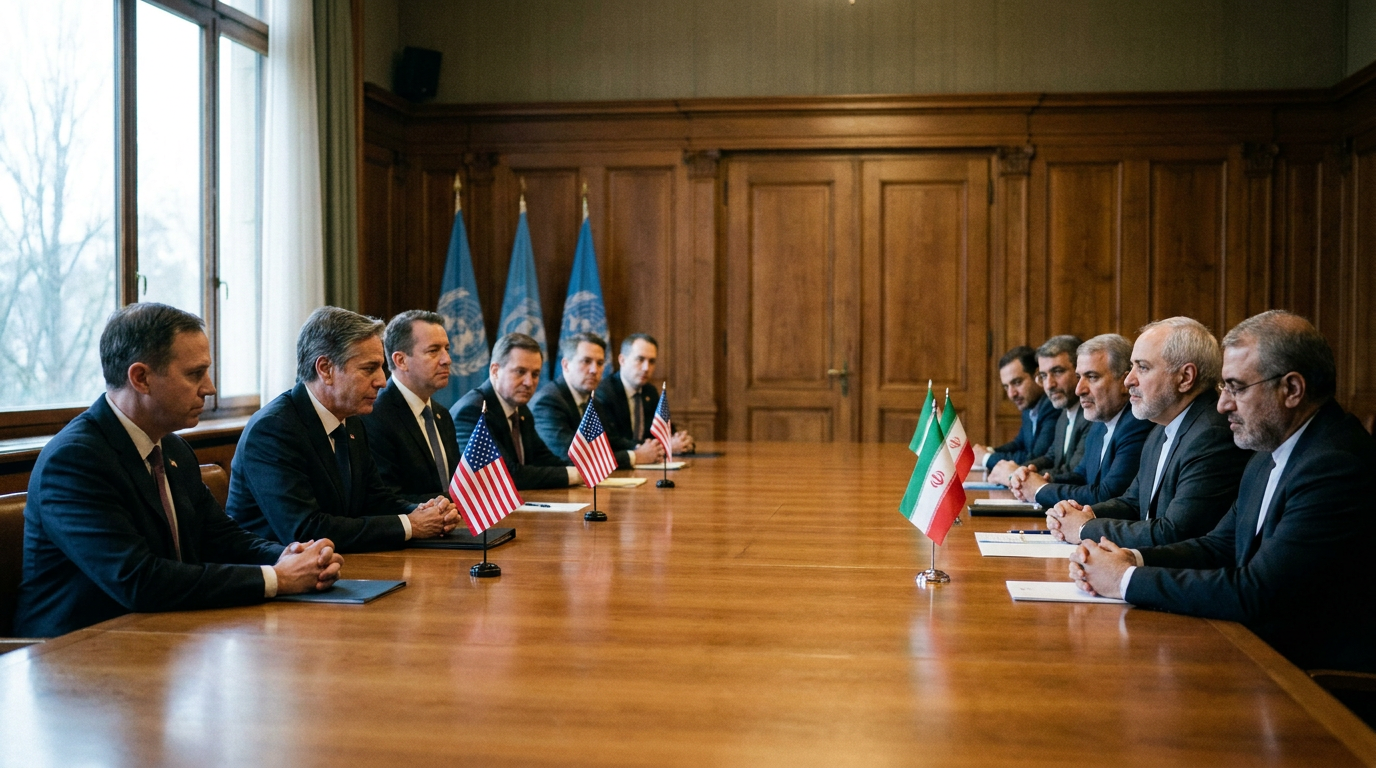
U.S. and Iran Open Historic Peace Talks in Switzerland With 60-Day De-Escalation Roadmap
6 sources

Climate Diplomacy
UN Climate Talks End in Gridlock as Agencies Warn of Accelerating El Niño Shocks
8 sources

Middle East Peace
US and Iran Open High-Stakes Peace Talks in Switzerland Amid Dispute Over Strait of Hormuz
7 sources

Climate Diplomacy
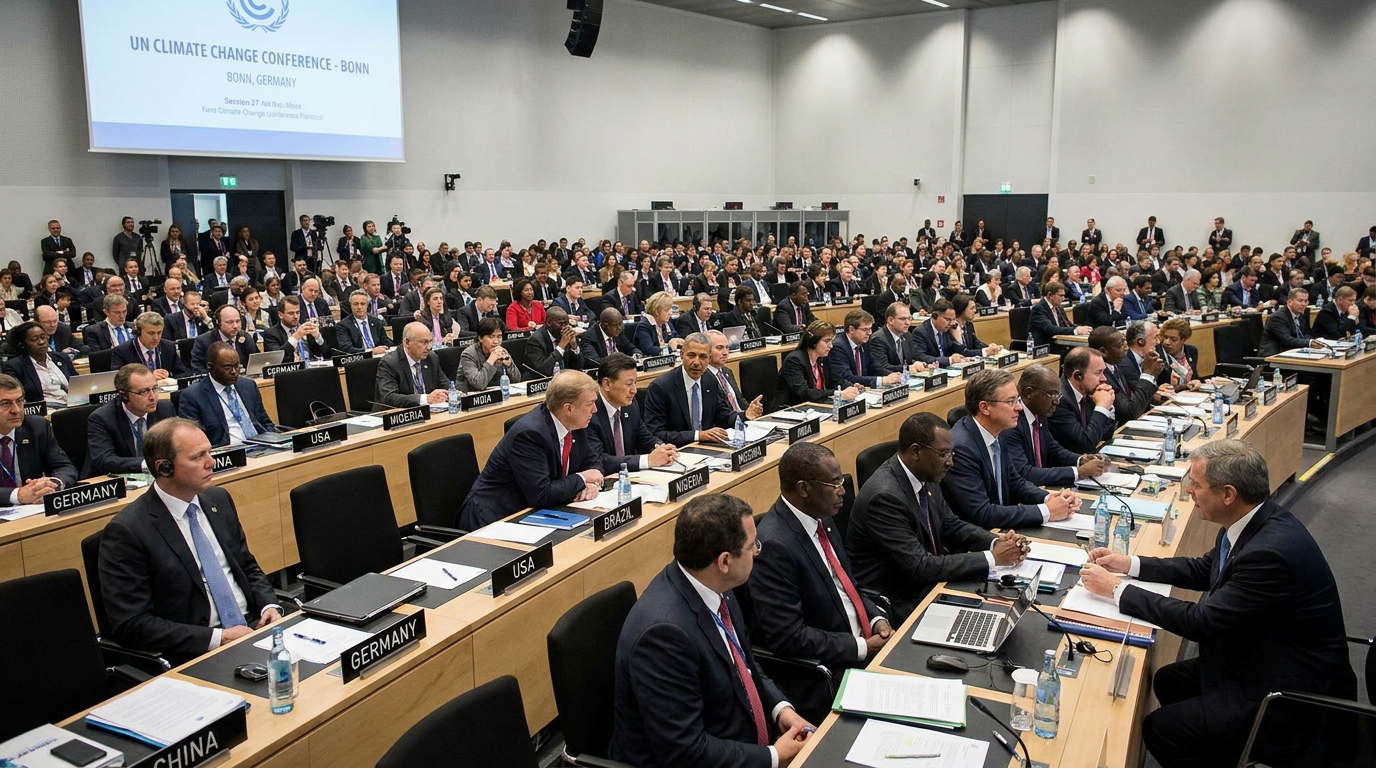
UN Climate Talks in Bonn End in Gridlock, Pushing Major Disputes to COP31
7 sources
Every angle. Every day.
Get news politics stories with full source coverage and perspective breakdowns delivered to your inbox.