
UN Climate Talks in Bonn End in Gridlock, Pushing Major Disputes to COP31
Mid-year UN climate negotiations collapsed into a stalemate over adaptation finance and emissions cuts, forcing diplomats to delay key decisions until the COP31 summit in Turkey.
By Factlen Editorial Team
- Independent Climate Analysts
- Journalists and researchers tracking the technical progress and geopolitical roadblocks of the UN climate process.
- Climate Justice Advocates
- Organizations demanding wealthy nations fulfill their financial promises to protect vulnerable communities from climate impacts.
- Multilateral Process Defenders
- UN officials and legal observers urging compromise and adherence to the Paris Agreement framework.
What's not represented
- · Indigenous communities whose lands are directly impacted by delayed adaptation funding.
- · Private sector renewable energy investors waiting for clear policy signals.
Why this matters
The failure to reach consensus in Bonn severely delays the global timeline for funding climate adaptation and cutting emissions. This gridlock pushes an immense political burden onto the upcoming COP31 summit, threatening the international community's ability to meet the 1.5°C warming limit as extreme weather events accelerate.
Key points
- The UN climate talks in Bonn concluded without agreements on key issues, invoking 'Rule 16' to delay decisions.
- A major divide emerged between developing nations demanding adaptation finance and wealthy nations pushing for emissions cuts.
- UN Climate Chief Simon Stiell condemned 'you-first-ism' and stalling tactics that threaten the 1.5°C warming limit.
- Fossil fuel-producing nations were accused of attacking climate science and blocking the mitigation work programme.
- The gridlock places immense pressure on the upcoming COP31 summit in Turkey to resolve the backlog of technical disputes.
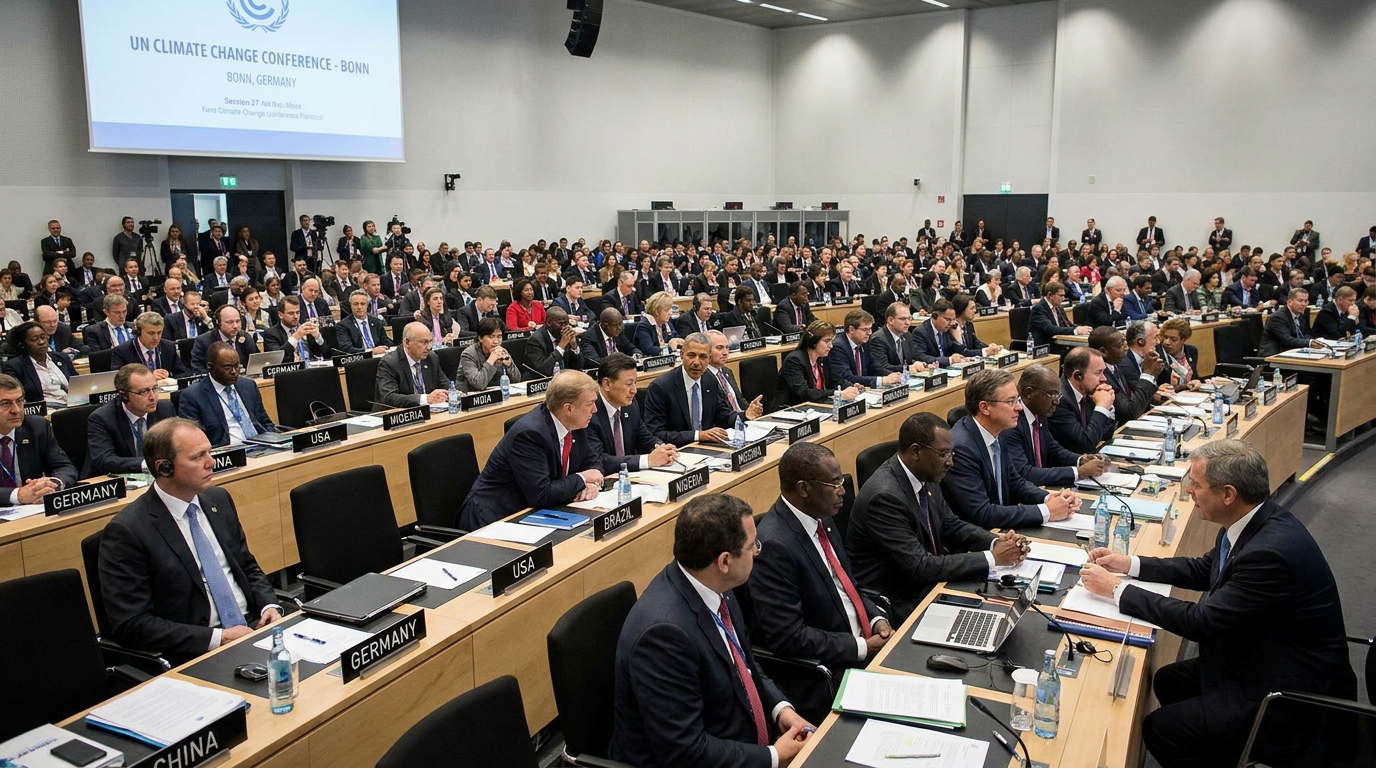
Two weeks of high-stakes United Nations climate negotiations in Bonn, Germany, have collapsed into a bitter stalemate, leaving the global diplomatic effort to curb greenhouse gas emissions severely delayed. The mid-year summit, officially known as the 64th Subsidiary Bodies sessions (SB64), was intended to lay the technical groundwork for the upcoming COP31 conference in Antalya, Turkey. Instead, negotiators found themselves paralyzed by deep divisions over finance and fossil fuels, ultimately invoking "Rule 16" across multiple key tracks—a procedural maneuver that admits defeat and punts unresolved issues to the next summit. The gridlock underscores a fragile moment for the Paris Agreement, as the window to limit global warming to 1.5 degrees Celsius rapidly closes amid record-breaking global temperatures and an escalating energy crisis.[1][2]
At the heart of the impasse is a fundamental standoff between developing nations and wealthy, industrialized countries. Developing and climate-vulnerable states arrived in Bonn demanding concrete assurances on adaptation finance, arguing that richer nations are attempting to water down or walk back commitments made just six months ago at COP30 in Belém, Brazil, to triple adaptation funding. In contrast, developed nations prioritized advancing the mitigation work programme, pushing for faster, more aggressive timelines to cut global emissions. This dynamic created a paralyzing cycle where neither side was willing to concede ground without guarantees from the other, effectively freezing progress on both the financial support required to survive climate impacts and the policy mechanisms needed to prevent them.[1][4]
The pervasive deadlock drew sharp rebukes from United Nations leadership. UN Climate Change Executive Secretary Simon Stiell delivered a blunt assessment as the talks concluded, condemning what he described as a pervasive culture of "you-first-ism" inside the negotiating rooms. Stiell warned that groups were refusing to deliver on their own commitments or allow the process to move forward unless other coalitions acted first. He characterized the diplomatic maneuvering as "side-stepping and stalling," cautioning that such tactics are a recipe for failure when all negotiating tracks need to be moving in the fast lane. Stiell reminded delegates that the global economy and vulnerable populations cannot afford to reopen previous decisions or cherry-pick existing targets while deadly heatwaves and El Niño-driven floods ravage communities worldwide.[1][5][7]

The negotiations did not occur in a vacuum; they were heavily overshadowed by a volatile geopolitical landscape that has fractured international cooperation. Notably, the United States did not send a federal government delegation to the Bonn talks, a glaring absence that shifted the diplomatic center of gravity. The ongoing military conflict involving the U.S., Israel, and Iran has sent shockwaves through global energy markets, sparking a fossil fuel cost crisis that has forced many nations to prioritize short-term energy security over long-term climate goals. This geopolitical friction permeated the halls of the World Conference Center, fueling concerns among diplomats that military conflicts and economic rivalries are actively sidelining the multilateral climate agenda just as it enters its most critical implementation phase.[3][5]
The negotiations did not occur in a vacuum; they were heavily overshadowed by a volatile geopolitical landscape that has fractured international cooperation.
Beyond the finance dispute, the Bonn summit was marred by what several European and developing nations described as "coordinated attacks" on climate science by fossil fuel interests. Negotiators reported intense pushback from a coalition of fossil fuel-producing nations who sought to challenge the feasibility of the 1.5-degree target and question the role of the Intergovernmental Panel on Climate Change (IPCC) in upcoming assessments. This resistance effectively blocked any meaningful advancement on the mitigation work programme, which has struggled to define its scope since its inception at COP27. Environmental advocates and civil society observers expressed alarm that these tactics are designed to systematically erode the scientific foundation of the UN framework. By casting doubt on established emission trajectories, these nations are providing diplomatic cover for economies reluctant to transition away from oil, gas, and coal, further entrenching the gridlock.[1][2][4]
The practical consequence of this diplomatic trench warfare is the widespread application of Rule 16. By invoking this procedural fallback on at least three major areas of climate action—including the Global Goal on Adaptation and the mitigation work programme—negotiators have essentially wiped the slate clean for those tracks, meaning no formal conclusions were adopted. All the technical text, which remains heavily bracketed and fiercely disputed, will simply be forwarded to COP31. This places an immense, perhaps unprecedented, technical and political burden on the upcoming summit in Turkey. Rather than arriving in Antalya with a streamlined agenda ready for high-level political sign-off, world leaders will be forced to untangle the very same technical disputes that paralyzed the mid-year talks. Climate diplomats warn that this drastically reduces the time available for ambitious new agreements, effectively shrinking the window for meaningful climate action in 2026.[1][2]

Despite the overarching gloom, the Bonn talks did yield a few narrow avenues of progress, most notably regarding the socioeconomic impacts of decarbonization. Negotiators made tangible headway on operationalizing the "Belém-Antalya Mechanism" for a Just Transition. This framework is designed to support workers and communities whose livelihoods are threatened by the shift away from fossil fuels, ensuring that the global economic transformation does not leave vulnerable populations behind. Delegates successfully approved the terms of reference for reviewing the just transition work programme, a move praised by civil society groups as a vital step toward building the domestic political support necessary to implement rapid climate action without triggering social backlash.[2][6]
Another glimmer of momentum emerged outside the formal negotiating tracks, driven by the upcoming COP31 hosts. Turkey and Australia championed a new global electrification goal, proposing a target to ramp up the share of final energy consumption provided by electricity to 35 percent by 2035, up from the current level of roughly 20 percent. This initiative, part of the broader Global Climate Action Agenda, seeks to accelerate the deployment of heat pumps, electric vehicles, and clean industrial technologies. While analysts welcomed the specific, quantifiable target, they cautioned that an electrification goal alone cannot substitute for a binding, global plan to phase out fossil fuel extraction, which remains the central, unresolved conflict of the UN process.[2][6]

The collapse in Bonn transforms COP31 into a make-or-break moment for international climate diplomacy. When nations convene in Antalya this November, they will face a daunting backlog of unresolved mandates, from finalizing the architecture of adaptation finance to defending the scientific consensus against coordinated skepticism. The presidencies of Turkey and Australia will need to deploy immense diplomatic leverage to bridge the trust deficit between the Global North and South, particularly regarding the unfulfilled promises of COP30. If the "you-first-ism" that derailed the June meetings persists into the winter, the UN framework risks losing its credibility as the primary vehicle for averting catastrophic planetary warming. With global temperatures continuing to shatter records and extreme weather events multiplying, vulnerable nations are left to face an escalating crisis without the unified, fully funded global response they were promised.[2][4][6]
How we got here
Nov 2025
At COP30 in Belém, Brazil, nations agreed to triple adaptation finance for vulnerable countries.
Early 2026
Geopolitical tensions and the US-Iran conflict disrupt global energy markets, shifting focus to short-term energy security.
June 8, 2026
SB64 climate talks open in Bonn with a plea from UN Chief Simon Stiell to accelerate climate action.
June 18, 2026
Talks conclude in gridlock, invoking Rule 16 to delay decisions to the next summit.
Nov 2026
COP31 is scheduled to take place in Antalya, Turkey, where the delayed mandates must be resolved.
Viewpoints in depth
Developing and Vulnerable Nations
Advocates for prioritizing adaptation finance and holding wealthy countries accountable for past promises.
For the G77 and climate-vulnerable island states, the Bonn talks were an exercise in frustration. These nations argue that they are already bearing the brunt of a crisis they did not cause, pointing to deadly floods and heatwaves currently ravaging the Global South. Their primary demand is the fulfillment of the COP30 agreement to triple adaptation finance. They view the reluctance of wealthy nations to formalize these funding streams as a profound breach of trust, arguing that it is hypocritical for the developed world to demand faster emissions cuts while withholding the capital necessary for poorer nations to survive the transition.
Developed Nations
Industrialized countries pushing for an urgent focus on the mitigation work programme and global emissions cuts.
Wealthy nations, including the European Union bloc, approached the Bonn summit with a mandate to accelerate the mitigation work programme. They argue that without immediate, drastic cuts to global greenhouse gas emissions, no amount of adaptation finance will be sufficient to manage the resulting climate chaos. These countries expressed deep frustration with what they perceive as stalling tactics by developing and fossil-fuel-producing nations. They maintain that the 1.5°C target must remain the non-negotiable anchor of the UN process, and they view attempts to delay mitigation talks as a dangerous distraction from the core goal of the Paris Agreement.
Fossil Fuel Producers
Nations heavily reliant on oil and gas revenues resisting rapid phase-out timelines and questioning climate models.
A coalition of fossil fuel-producing nations utilized the Bonn talks to push back against aggressive decarbonization timelines. Leveraging the current geopolitical instability and the energy crisis sparked by the US-Iran conflict, these nations argue that a rapid phase-out of fossil fuels is economically unfeasible and threatens global energy security. During the negotiations, they repeatedly challenged the scientific consensus presented by the IPCC and sought to dilute language regarding the 1.5°C limit. Observers note that this bloc effectively used procedural rules to block the mitigation work programme, protecting their domestic economic interests under the guise of demanding more equitable transition timelines.
What we don't know
- Whether wealthy nations will formally commit to tripling adaptation finance before COP31 begins.
- How the absence of a US federal delegation will impact the long-term diplomatic leverage of the UN climate framework.
- If the proposed 35% global electrification target will be officially adopted into the COP31 binding agreements.
Key terms
- Rule 16
- A UN procedural rule invoked when negotiators cannot reach an agreement, automatically forwarding the unresolved issue to the next session.
- Global Goal on Adaptation (GGA)
- A framework designed to build resilience and reduce vulnerability to climate change impacts, heavily debated over its funding mechanisms.
- Mitigation Work Programme
- A UN initiative focused on urgently scaling up global efforts to cut greenhouse gas emissions before 2030.
- Belém-Antalya Mechanism
- A framework aimed at ensuring a 'just transition,' protecting workers and communities as economies shift away from fossil fuels.
Frequently asked
Why did the Bonn climate talks fail to reach an agreement?
The talks stalled due to a standoff between developing nations demanding promised adaptation finance and wealthy nations pushing for faster emissions cuts, leading to a breakdown in trust.
What does 'Rule 16' mean for the climate process?
Invoking Rule 16 means negotiators could not agree on a text, so the unresolved issues are wiped from the current agenda and pushed to the next summit, delaying critical action.
How did geopolitical conflicts affect the negotiations?
The absence of a US federal delegation and the energy market shocks from the US-Iran conflict shifted focus toward short-term energy security, emboldening fossil fuel interests to push back against climate targets.
What is the proposed 35% electrification target?
Championed by COP31 hosts Turkey and Australia, it is a goal to increase the share of global energy consumption provided by electricity to 35% by 2035, up from roughly 20% today.
Sources
Source coverage
7 outlets
3 viewpoints surfaced







[1]Climate Home NewsIndependent Climate Analysts
Bonn climate talks end in “gridlock” on adaptation and emissions-cutting
Read on Climate Home News →[2]Carbon BriefIndependent Climate Analysts
Bonn climate talks: Key outcomes from the June 2026 UN climate conference
Read on Carbon Brief →[3]Inside Climate NewsIndependent Climate Analysts
Geopolitics and Fossil Fuels Cast a Long Shadow Over Bonn Climate Talks
Read on Inside Climate News →[4]Union of Concerned ScientistsClimate Justice Advocates
U.N. June Climate Meetings Conclude in Stalemate
Read on Union of Concerned Scientists →[5]UN Climate ChangeMultilateral Process Defenders
UN Climate Chief: “Tackling climate crisis is the hardest – but most important – thing humanity has ever tried to do together. We have no choice.”
Read on UN Climate Change →[6]Climate Action Network EuropeClimate Justice Advocates
Bonn climate talks expose political tests ahead of COP31
Read on Climate Action Network Europe →[7]JURISTMultilateral Process Defenders
UN climate chief urges countries to accelerate action to implement climate commitments
Read on JURIST →
More in news politics
See all 9 stories →Middle East Diplomacy
U.S. and Iran Open Historic Peace Talks in Switzerland with 60-Day Roadmap
6 sources
US-Iran Relations
Historic US-Iran Peace Talks Open in Switzerland with 60-Day Roadmap Amid Lebanon Tensions
8 sources
Middle East Diplomacy
U.S. and Iran Open Historic Peace Talks in Switzerland with 60-Day Roadmap
6 sources
Middle East Diplomacy
U.S. and Iran Open Historic Peace Talks in Switzerland With 60-Day De-Escalation Roadmap
6 sources
Every angle. Every day.
Get news politics stories with full source coverage and perspective breakdowns delivered to your inbox.