
Historic US-Iran Peace Talks Open in Switzerland with 60-Day Roadmap Amid Lebanon Tensions
U.S. Vice President JD Vance and Iranian officials have launched direct negotiations in Switzerland to finalize a 14-point peace framework. The talks aim to secure a long-term nuclear agreement and reopen the Strait of Hormuz, though ongoing Israeli military operations in Lebanon threaten to derail the fragile truce.
By Factlen Editorial Team
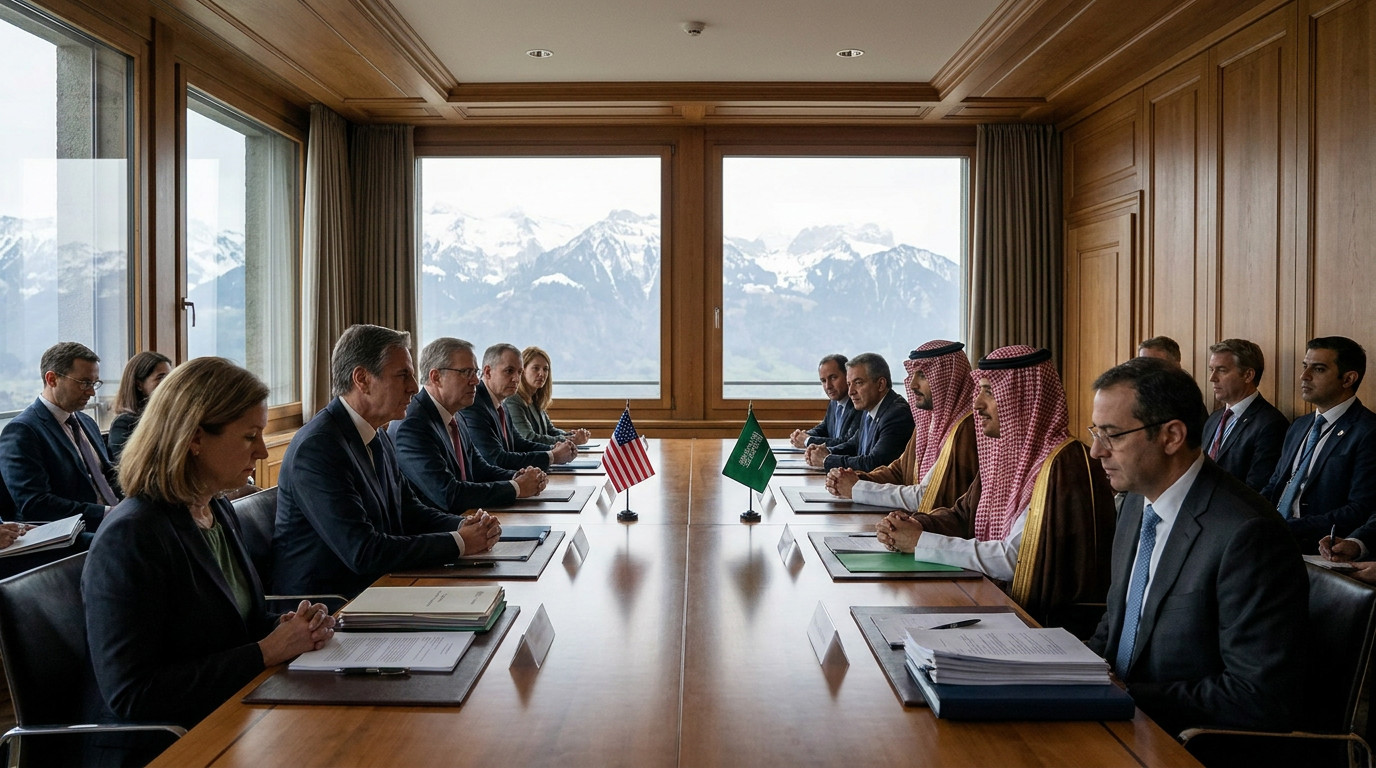
- U.S. Negotiators & Mediators
- Focused on securing a historic diplomatic breakthrough, stabilizing oil markets, and ending the regional war.
- Iranian Leadership
- Demanding verifiable sanctions relief and an immediate halt to Israeli military operations in Lebanon.
- Israeli Security Establishment
- Prioritizing the neutralization of proxy threats on its borders, unbound by the U.S.-brokered truce.
What's not represented
- · Lebanese Civilians
- · Global Shipping Companies
Why this matters
The 60-day sprint to finalize this 14-point memorandum could end a multi-front regional conflict and stabilize global energy markets by reopening the Strait of Hormuz. However, if the truce collapses over ongoing violence in Lebanon, the Middle East risks plunging back into a broader war with immediate consequences for global shipping and oil prices.
Key points
- U.S. and Iranian delegations met face-to-face in Switzerland to begin a 60-day negotiation sprint.
- The talks aim to finalize a 14-point peace framework that includes nuclear inspections and sanctions relief.
- Ongoing Israeli military operations against Hezbollah in Lebanon threaten to derail the fragile agreement.
- Iran claims it has closed the Strait of Hormuz over the Lebanon fighting, contradicting U.S. assertions.
- President Trump demanded a 'ceasefire on all fronts' to protect the diplomatic breakthrough and stabilize markets.
U.S. Vice President JD Vance and senior Iranian officials convened in the same room at the Bürgenstock resort in Switzerland on Sunday, marking a rare face-to-face diplomatic encounter between the two nations. The summit kicks off a 60-day sprint to finalize a comprehensive peace agreement aimed at ending months of regional conflict.[3]
The negotiations follow a 14-point Memorandum of Understanding signed electronically last week by U.S. President Donald Trump and Iranian President Masoud Pezeshkian. Mediated heavily by Pakistan and Qatar, the framework outlines a phased approach to de-escalation, sanctions relief, and the reopening of vital global shipping lanes.[5][6]
Vance, who told reporters he would remain in Switzerland for a short period before leaving technical teams to continue the work, is joined by U.S. envoys Jared Kushner and Steve Witkoff. The Iranian delegation is led by Parliament Speaker Mohammad Bagher Ghalibaf and Foreign Minister Abbas Araghchi, with Pakistani Prime Minister Shehbaz Sharif also present to facilitate the high-stakes talks.[2][3]
At the core of the proposed settlement is the fate of Iran's nuclear program. The initial U.S. goal is to secure the return of International Atomic Energy Agency (IAEA) inspectors to Iranian nuclear sites—including Fordo and Natanz—for the first time since the war escalated earlier this year.[6]

In exchange for verifiable nuclear compliance, the United States has signaled a willingness to unfreeze billions of dollars in Iranian assets held in Qatar, which would be earmarked for humanitarian purchases. Furthermore, the agreement dangles the prospect of a $300 billion regional reconstruction fund once a final understanding is reached.[6]
Furthermore, the agreement dangles the prospect of a $300 billion regional reconstruction fund once a final understanding is reached.
However, the diplomatic breakthrough is already being severely tested by ongoing violence in the Levant. Israel, which is not a party to the U.S.-Iran memorandum, has continued military operations against Hezbollah in southern Lebanon, viewing the Iran-backed militia as an existential threat on its northern border.[4][7]
Israeli President Isaac Herzog publicly criticized the situation on Sunday, stating that Iran-backed proxies are actively sabotaging the prospects for regional peace even as the delegations meet in Switzerland.[1]
While reports indicate that Israel has directed its military to limit its actions in Lebanon to prevent a wider collapse of the truce, the persistent cross-border tensions remain a massive sticking point for the negotiators in Europe.[4]

Iranian officials have explicitly linked the two theaters of conflict. Foreign Minister Araghchi and other Iranian leaders have warned that any continued Israeli military presence or strikes inside Lebanon constitute a direct violation of the emerging agreement, threatening to walk away if the bombings do not cease.[2][7]
This friction has spilled over into the strategic Strait of Hormuz. Iranian state media claimed over the weekend that Tehran had closed the waterway in response to the Lebanon fighting, while U.S. officials maintain that the strait remains open and that the agreement guarantees toll-free commercial passage for the next 60 days.[2][7]
Attempting to salvage the fragile truce, President Trump took to social media to demand a complete ceasefire on all fronts, including Lebanon, Hezbollah, and Israel. Trump emphasized that global markets were reacting positively to the diplomatic efforts, with oil prices dropping in anticipation of a stabilized Middle East.[5]

Back in the United States, the administration's diplomatic pivot has drawn domestic skepticism. Critics and commentators have mocked the enforceability of the memorandum, questioning whether the White House's reputation for dealmaking can truly untangle decades of entrenched geopolitical hostility without a binding enforcement mechanism.[8]
How we got here
Feb 2026
Regional conflict escalates following joint U.S.-Israeli strikes on Iranian targets.
Mid-June 2026
U.S. President Donald Trump and Iranian President Masoud Pezeshkian electronically sign a 14-point Memorandum of Understanding.
June 21, 2026
Direct technical negotiations begin in Bürgenstock, Switzerland, launching a 60-day roadmap.
Viewpoints in depth
The U.S. and Mediators' View
Washington and mediating nations view the talks as a historic opportunity to stabilize the region and global markets.
For the U.S. administration, the 14-point memorandum represents a massive diplomatic victory that could end a multi-front war and secure vital global shipping lanes. Mediators like Pakistan and Qatar echo this optimism, framing the 60-day roadmap as a necessary cooling-off period to untangle decades of hostility. Their primary focus is on verifiable nuclear compliance and ensuring that the Strait of Hormuz remains open to stabilize global energy prices.
Iran's View
Tehran insists that any final settlement is contingent upon verifiable sanctions relief and an end to Israeli strikes in Lebanon.
Iranian leadership approaches the 60-day roadmap with deep caution, emphasizing that the current framework is merely an interim step, not a final peace treaty. Officials have made it clear that they expect the unfreezing of billions in assets and the lifting of the U.S. maritime blockade before fully committing to nuclear concessions. Crucially, Iran views the ongoing Israeli military operations against Hezbollah in Lebanon as a direct violation of the ceasefire, threatening to collapse the talks if the strikes continue.
Israel's View
Israel prioritizes neutralizing threats on its northern border and does not consider itself bound by the U.S.-Iran agreement.
The Israeli security establishment views the U.S.-Iran diplomatic track with profound skepticism. Because Israel is not a signatory to the memorandum, officials argue they are not bound by its terms, particularly regarding operations in Lebanon. For Jerusalem, the heavily armed Hezbollah militia represents an immediate, existential threat that cannot be ignored for the sake of a broader geopolitical truce. Consequently, Israel continues its military campaign to secure its northern border, despite pressure from Washington to halt the strikes.
What we don't know
- Whether Israel will fully halt its military operations in Lebanon to preserve the broader U.S.-Iran truce.
- If Iran will actually allow IAEA inspectors unfettered access to its nuclear sites.
- How quickly global shipping companies will resume normal operations through the Strait of Hormuz given the conflicting claims.
Key terms
- Strait of Hormuz
- A vital shipping chokepoint between the Persian Gulf and the Gulf of Oman, through which a significant portion of the world's oil passes.
- IAEA
- The International Atomic Energy Agency, the UN watchdog responsible for monitoring and verifying nuclear programs.
- Memorandum of Understanding (MoU)
- A formal, non-binding agreement between two or more parties outlining the framework for future negotiations.
Frequently asked
What is the 60-day roadmap?
It is a two-month period for U.S. and Iranian technical teams to negotiate the final details of a comprehensive peace settlement, including nuclear compliance and sanctions relief.
Why is Israel continuing strikes in Lebanon?
Israel is not a signatory to the U.S.-Iran agreement and considers the Iran-backed Hezbollah militia in Lebanon an active, existential threat to its northern border.
Is the Strait of Hormuz open to shipping?
There are conflicting reports; Iran claims it closed the strait in response to the Lebanon fighting, while the U.S. insists the agreement guarantees open, toll-free passage.
Sources
Source coverage
8 outlets
3 viewpoints surfaced







[1]Fox NewsIsraeli Security Establishment
Iran-backed proxies sabotaging Lebanon peace as JD Vance leads US delegation to Switzerland, Herzog says
Read on Fox News →[2]Al JazeeraIranian Leadership
US-Iran talks in Switzerland: Is Lebanon top of agenda; who is attending?
Read on Al Jazeera →[3]CBS NewsU.S. Negotiators & Mediators
Live Updates: JD Vance appeared directly with Iranian officials as U.S.-Iran peace talks begin
Read on CBS News →[4]The New York TimesIsraeli Security Establishment
Israel directs its military to limit its actions in Lebanon, though tensions persist.
Read on The New York Times →[5]India TodayU.S. Negotiators & Mediators
Trump urges Middle East to honour Iran deal, expects ceasefire on all fronts
Read on India Today →[6]NDTVIranian Leadership
Inside the Reported US-Iran Agreement: Sanctions, Hormuz And The 60-Day Roadmap
Read on NDTV →[7]The Times of IsraelIsraeli Security Establishment
US-Iran Talks Begin Sunday In Switzerland As Tehran Closes The Strait Over Lebanon Fighting
Read on The Times of Israel →Bill Maher mocks Trump over Iran, asks what happened to 'The Art of the Deal'
Read on Fox News (Opinion) →
More in news politics
See all 10 stories →Tech Regulation
UK and Canada Advance Sweeping Social Media Bans for Under-16s, Accelerating Global Trend
8 sources

US-Iran Peace Deal
U.S. and Iran Begin 60-Day Peace Sprint in Switzerland as GOP Hawks Revolt Over Deal
10 sources
Middle East Diplomacy
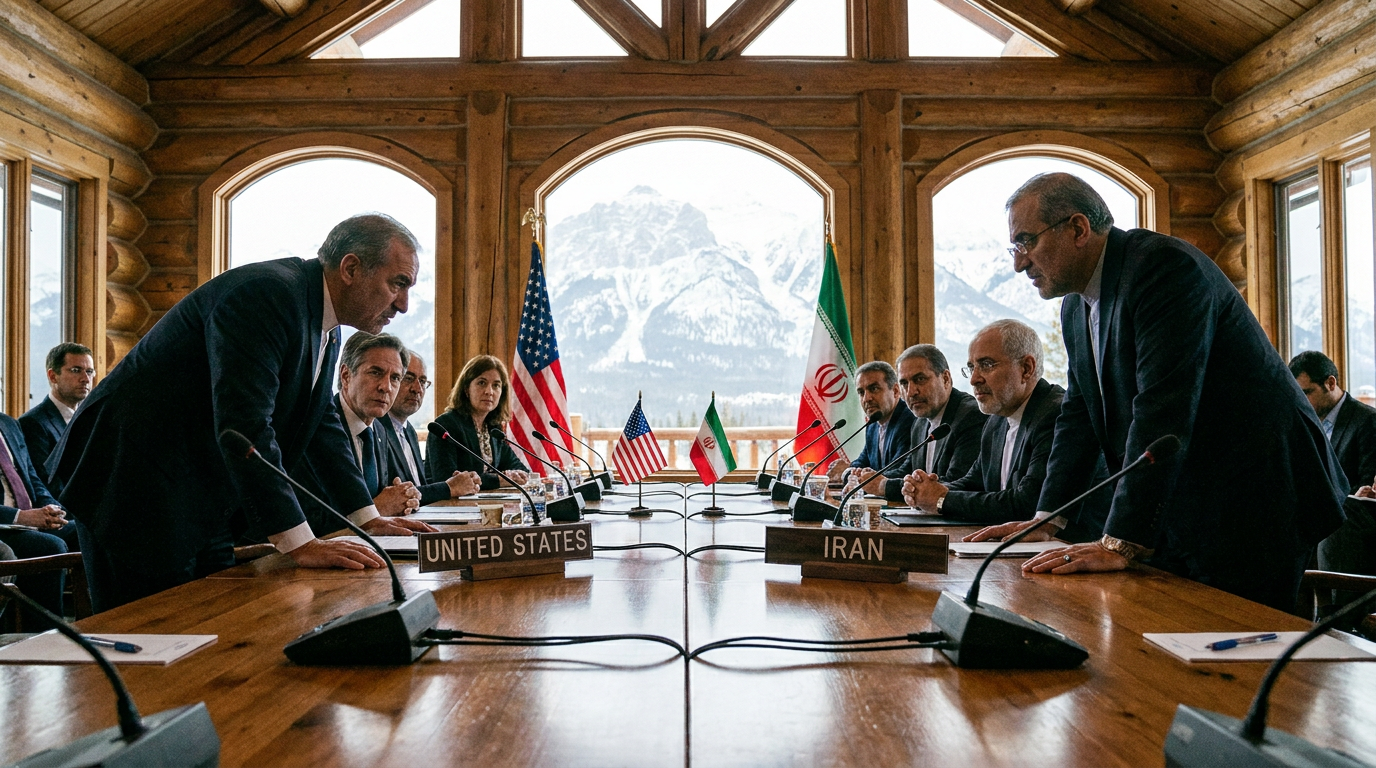
Historic US-Iran Peace Negotiations Open in Switzerland Amid Fragile Lebanon Ceasefire
8 sources
Middle East Diplomacy
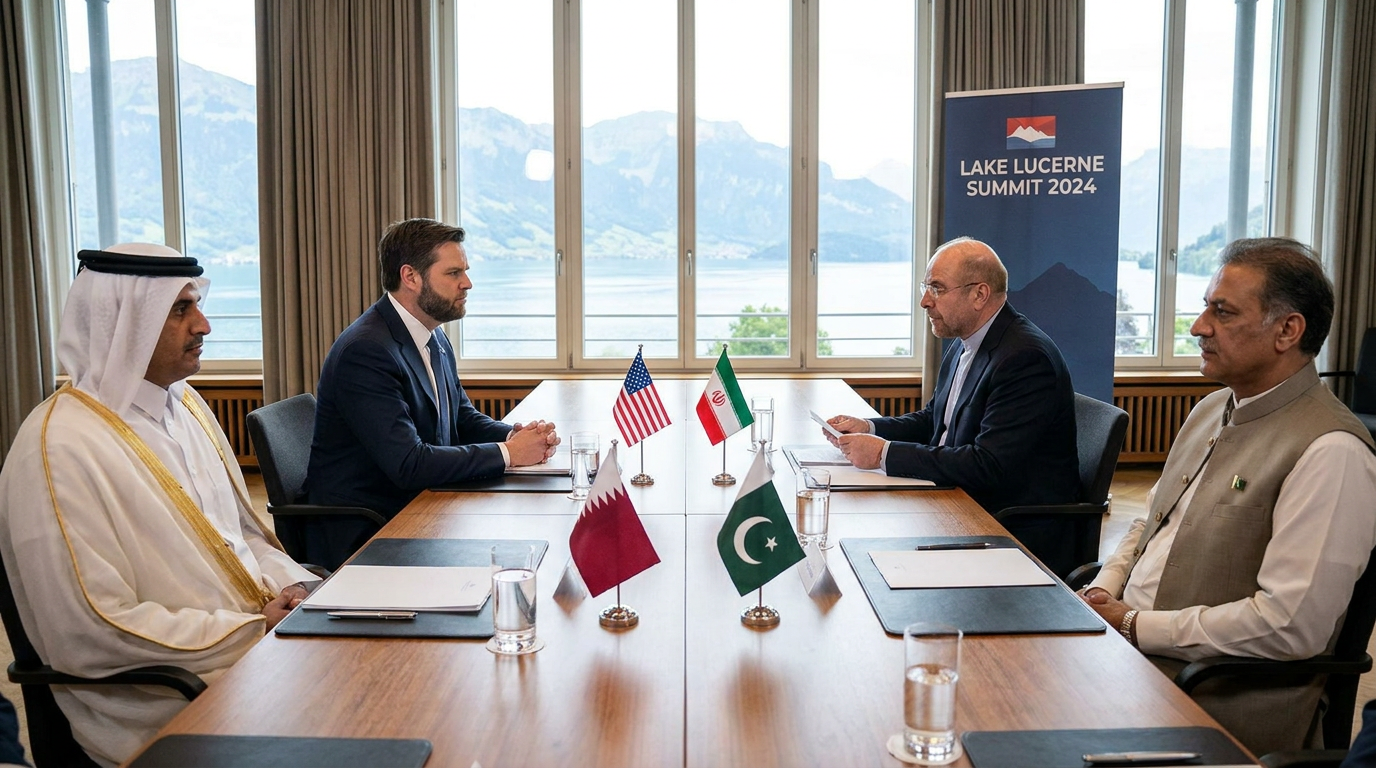
U.S. and Iran Open Historic Peace Talks in Switzerland with 60-Day Roadmap
8 sources
Every angle. Every day.
Get news politics stories with full source coverage and perspective breakdowns delivered to your inbox.