
Neighborhoods Reclaimed: How Community Land Trusts and Co-ops Are Rewriting the Rules of Real Estate
Across the United States, community land trusts and cooperatively owned markets are reaching unprecedented milestones this summer, successfully removing property from speculative markets to secure permanently affordable housing and eradicate food deserts.
By Factlen Editorial Team
- Community Organizers & Residents
- View land and food access as fundamental rights that must be protected from speculative markets.
- Institutional Investors & Banks
- See community ownership as a scalable, stabilizing investment that builds a reliable middle class.
- Urban Policy Experts
- Support the model but emphasize the need for sustained public funding and technical assistance to survive market pressures.
What's not represented
- · Traditional real estate developers
- · Corporate grocery chain executives
Why this matters
As housing costs and corporate consolidation price residents out of their own neighborhoods, community-owned models offer a proven way to permanently secure affordable homes and essential services. These milestones prove that neighborhoods can successfully build wealth and stability without relying on speculative developers.
Key points
- Community Land Trusts (CLTs) are separating land ownership from home ownership to cap resale prices and prevent displacement.
- The East New York CLT is making history by purchasing a commercial property off the private market to serve as a community hub.
- The Fort Worth CLT recently celebrated its first homeowner and received a $1.1 million expansion grant from JPMorganChase.
- In Charlotte, the community-owned Three Sisters Market secured $1.5 million to end a 30-year food desert.
In the summer of 2026, a quiet but profound revolution in American real estate is reaching a historic tipping point. Across the country, neighborhoods facing the dual threats of rapid gentrification and corporate neglect are successfully buying back their own blocks. Through the strategic use of Community Land Trusts (CLTs) and cooperatively owned commercial spaces, residents are actively removing property from the speculative market. This grassroots approach is securing permanently affordable housing for working-class families and eradicating decades-old food deserts that traditional grocery chains have long ignored. By shifting the focus from corporate profit to neighborhood stability, these communities are proving that alternative models of ownership can thrive even in the most competitive urban environments.[7]
The primary mechanism driving this systemic shift is the Community Land Trust, an innovative legal and financial model that separates the ownership of land from the physical structures built upon it. Under this framework, a nonprofit trust—governed directly by community members and local stakeholders—retains ownership of the land in perpetuity. Meanwhile, residents purchase the homes sitting on that land at significantly below-market prices. When a homeowner eventually decides to sell, a pre-determined resale formula ensures they walk away with a fair return on their built equity, while the home's price remains artificially capped for the next low-to-moderate-income buyer. This effectively breaks the cycle of displacement.[7]
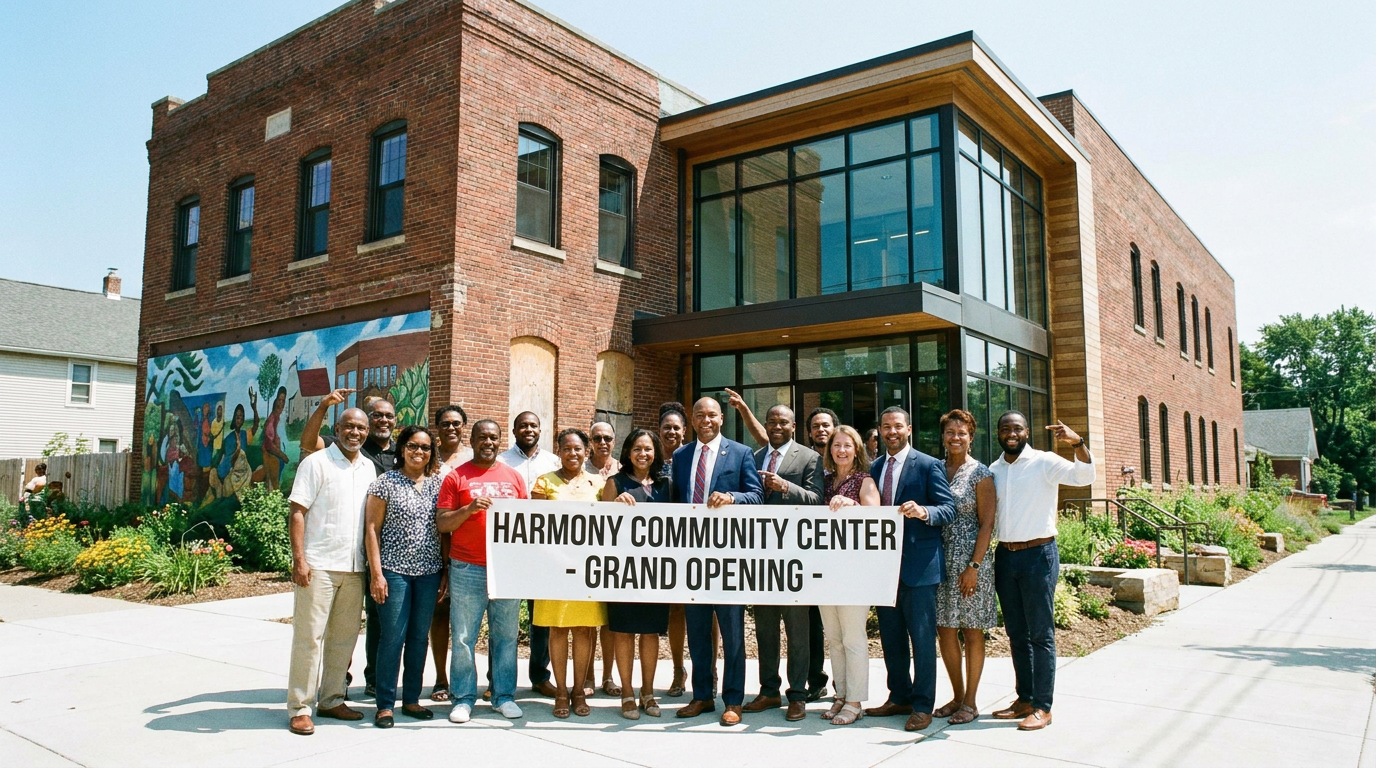
This July, the East New York Community Land Trust is set to make history by becoming the first CLT in New York City to purchase a commercial property directly off the private market. The organization is in the process of transforming a vacant, two-story brick building into the "East Brooklyn Liberation Center." Once completed, this hub will serve as a permanent headquarters for the nonprofit while providing deeply affordable office space for other local businesses and community organizations. It represents a vital anchor in a neighborhood that is currently facing intense gentrification pressures and a wave of speculative buying approaching from western Brooklyn.[1]

"Removing land from the speculative market is building power in the neighborhood," noted Boris Santos, the president of the East New York CLT, emphasizing the broader political and economic goals of the movement. The nonprofit previously made waves in the city's housing sector when it successfully acquired a 20-unit multifamily apartment building, converting it into a shared-equity housing cooperative. By taking these properties off the open market, the trust ensures that long-term residents of East New York and Brownsville—neighborhoods where Black and Hispanic residents make up over 80 percent of the population—are not priced out of the communities they helped build.[1]
This momentum extends far beyond the coastal cities, taking root in the heart of Texas. The Fort Worth Community Land Trust recently celebrated a major operational milestone by handing the keys to its very first land trust homeowner, Ashley Guinn. A single mother and banking professional, Guinn purchased her newly developed home in the historic Morningside neighborhood. The purchase was made possible through a strategic combination of the CLT's permanently affordable pricing structure and targeted down payment assistance provided by the City of Fort Worth's Homebuyer Assistance Program, illustrating how municipal partnerships can accelerate community ownership.[2]
"For families who are living paycheck to paycheck but trying their best to succeed, sometimes all it takes is a little push to make a difference," Guinn said of the achievement, noting that the program helps break generational cycles of renting. To further accelerate this model, financial giant JPMorganChase recently announced a $1.1 million philanthropic grant to the Fort Worth CLT. This funding is specifically aimed at expanding opportunities for smaller, community-based developers to acquire land and rehabilitate deteriorated housing stock across the city's established neighborhoods, scaling the impact far beyond a single home.[2]
To further accelerate this model, financial giant JPMorganChase recently announced a $1.1 million philanthropic grant to the Fort Worth CLT.
Meanwhile, in Richmond, Virginia, the Maggie Walker Community Land Trust is marking its 10th anniversary in 2026 with a robust, rapidly expanding portfolio. The organization currently boasts a pipeline of over 150 permanently affordable homes in various stages of predevelopment and construction across the region. By specifically targeting households earning between 80 and 115 percent of the area median income, the trust is ensuring that essential workers—including public school educators, healthcare professionals, and municipal employees—can actually afford to live in the communities they serve, rather than facing extreme super-commutes from cheaper suburbs.[4]

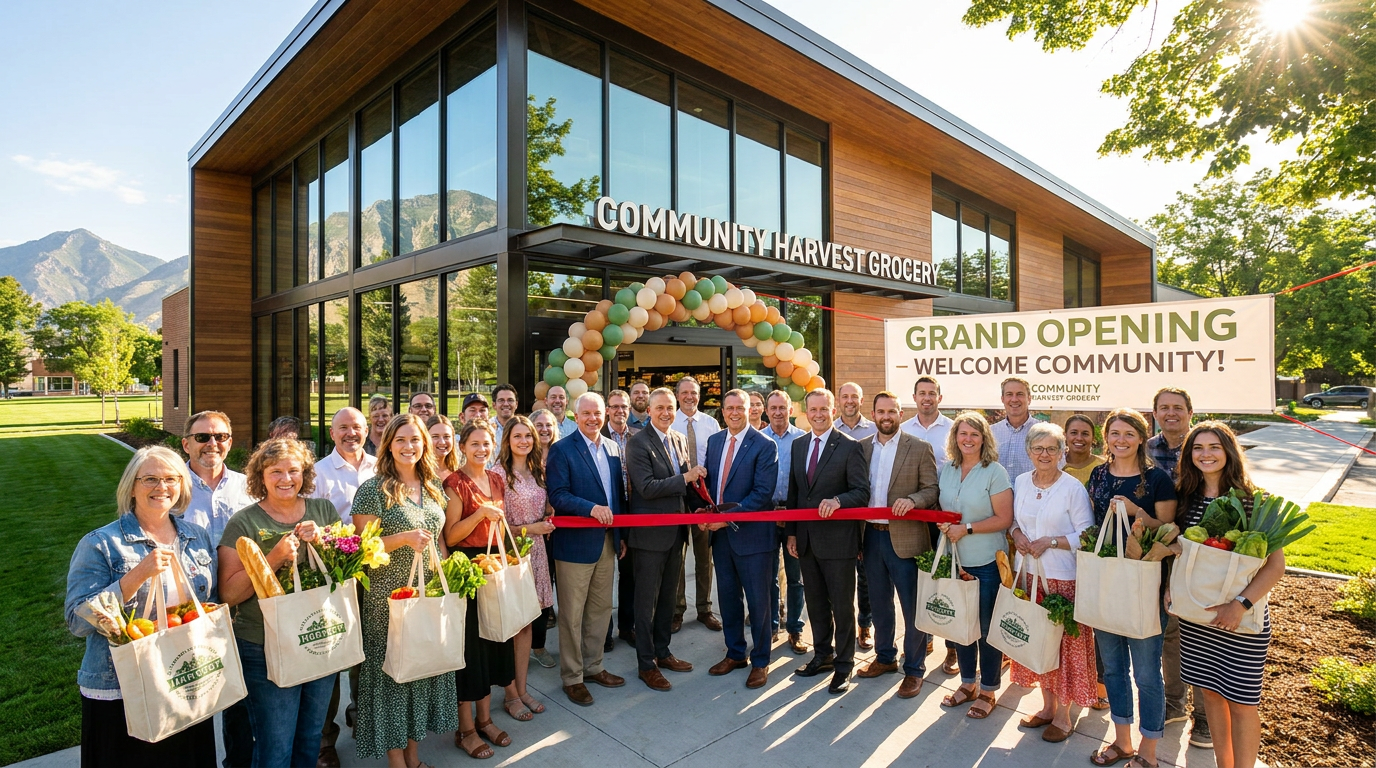
But the community ownership model is no longer limited strictly to residential housing; it is increasingly being deployed to solve systemic commercial failures, most notably the persistence of urban food deserts. In Charlotte, North Carolina, the West Boulevard neighborhood has lacked a reliable, full-service grocery store for more than 30 years, forcing residents to rely on convenience stores or long transit rides for fresh produce. That stark reality is finally changing with the development of the Three Sisters Market, an ambitious community-owned food cooperative slated to open its doors following a massive, multi-year organizing and fundraising push.[3]
In April 2026, the Three Sisters Market received a transformative $1.5 million donation from Wells Fargo, a massive capital injection that brings the long-awaited project within sight of breaking ground. "I do not know if this community understands how unlevel the playing field has been," said Janiqua Jackson, the market's general manager, emphasizing the historical lack of access to affordable, nutritious food in the corridor. The bank's contribution stands as one of the largest single commitments to the project to date, signaling a growing willingness among traditional financial institutions to back cooperative community infrastructure.[3]
Operating a community-owned grocery store is notoriously difficult, as the profit margins in the traditional grocery business are already razor-thin. Past attempts in cities like Oakland and Dallas have struggled or shuttered entirely when they failed to secure ongoing capital or deeply integrate with residents' specific cultural and economic needs. Food systems researchers note that food deserts are rarely natural phenomena; they are often the result of intentional corporate disinvestment. This makes the survival of non-profit markets an uphill battle against broader economic currents, requiring flawless execution and unwavering local loyalty.[5]

However, when these cooperatives do succeed, they act as powerful, self-sustaining engines for local economic development. The most successful models prioritize social justice and basic access over niche organic trends, focusing heavily on providing fresh produce at affordable prices while anchoring wealth within the community itself. By committing to hiring locally, paying living wages, and offering robust SNAP matching programs for low-income shoppers, these stores quickly become vital, beloved neighborhood assets rather than extractive outside entities that siphon profits out of the local economy.[5][6]
The integration of community-owned markets into designated opportunity zones has also proven highly effective in recent years. In places like Erie, Pennsylvania, and Fredericksburg, Virginia, modern food co-ops are serving as dynamic gathering spaces that actively bridge socioeconomic divides. They provide not just a place to buy groceries, but comprehensive nutrition education, community cooking classes, and a reliable, fair-priced market for local regional farmers. This holistic approach ensures that food dollars continue circulating within the regional economy, multiplying the financial impact of every purchase.[6]
What unites these disparate projects—from commercial spaces in Brooklyn to cooperative grocery stores in Charlotte—is a fundamental, structural shift in how urban development is financed and governed in 2026. Rather than passively waiting for outside corporate developers to revitalize their neighborhoods on extractive terms, residents are proactively leveraging philanthropic grants, municipal partnerships, and the collective pooling of their own resources to build their own infrastructure. They are proving that communities possess the expertise to manage complex real estate portfolios when given access to the right capital.[7]
As the community land trust and cooperative commercial movements continue to scale up across the nation, they offer a proven, sustainable blueprint for truly equitable urban growth. By permanently removing land from the volatile speculative market, these initiatives guarantee that the very people who fought through decades of disinvestment to improve their neighborhoods will actually be there to enjoy the fruits of their labor for generations to come, safe from the threat of displacement.[7]
How we got here
2015
The modern Community Land Trust movement begins gaining significant traction in major urban centers.
2024
East New York CLT purchases a 20-unit apartment building, converting it to a shared-equity cooperative.
April 2026
Wells Fargo donates $1.5 million to the Three Sisters Market in Charlotte to end a 30-year food desert.
May 2026
Fort Worth CLT celebrates its first homeowner and receives a $1.1 million expansion grant from JPMorganChase.
July 2026
East New York CLT is scheduled to become the first in NYC to purchase a commercial property off the private market.
Viewpoints in depth
Community Organizers
Advocates who view land and food access as fundamental human rights rather than commodities.
For local organizers, the speculative real estate market is the primary driver of displacement and urban decay. They argue that traditional development models extract wealth from working-class neighborhoods, whereas CLTs and co-ops anchor it locally. By removing land from the private market entirely, they believe communities can permanently protect themselves against the boom-and-bust cycles of gentrification, ensuring that long-term residents aren't punished for their neighborhood's eventual revitalization.
Institutional Backers
Banks and philanthropic organizations that see community ownership as a scalable, stabilizing investment.
Financial institutions like JPMorganChase and Wells Fargo are increasingly viewing CLTs and co-ops not as radical experiments, but as highly effective vehicles for community stabilization. These backers argue that providing upfront capital to community-owned projects mitigates the long-term risks of urban poverty and blight. By funding down-payment assistance and commercial development, they see a pathway to fostering a stable, home-owning middle class that can reliably participate in the broader economy.
Urban Policy Experts
Researchers who support the model but caution about the immense operational challenges.
While celebrating these milestones, policy experts and food systems researchers warn that community ownership is not a silver bullet that can survive on goodwill alone. They point to the high failure rate of independent grocery stores and the intense capital requirements of real estate acquisition. This camp argues that for CLTs and co-ops to truly scale, they require sustained municipal funding, favorable zoning policies, and robust technical assistance to compete against heavily capitalized corporate developers.
What we don't know
- Whether municipal governments will alter zoning laws at scale to prioritize community land trusts over private developers.
- How community-owned grocery stores will manage long-term supply chain inflation compared to massive corporate chains.
Key terms
- Community Land Trust (CLT)
- A nonprofit organization that retains ownership of land to ensure the housing or commercial spaces built on it remain permanently affordable.
- Food Desert
- An urban or rural area where residents have severely limited access to affordable, nutritious food, often due to a lack of grocery stores.
- Shared-Equity Housing
- A homeownership model where the buyer purchases the home at a below-market price and agrees to limit their return on investment when selling, keeping it affordable for the next buyer.
- Speculative Market
- A real estate environment where properties are bought and sold primarily for financial gain and investment returns, often driving up prices and displacing long-term residents.
Frequently asked
What is a Community Land Trust (CLT)?
A CLT is a nonprofit organization that buys and holds land permanently, allowing residents to purchase the homes on that land at affordable prices while agreeing to resale restrictions.
How do CLTs prevent gentrification?
By removing land from the private market and capping the resale price of homes, CLTs ensure that housing remains affordable for low-to-moderate-income buyers, even if the surrounding neighborhood becomes wealthy.
Why are community-owned grocery stores necessary?
They are built to serve areas abandoned by corporate supermarket chains, providing fresh, affordable food while keeping profits and jobs within the local community.
Sources
Source coverage
7 outlets
3 viewpoints surfaced







[1]New Economy ProjectCommunity Organizers & Residents
New York City's growing community land trust movement will hit a new milestone
Read on New Economy Project →[2]JPMorganChaseInstitutional Investors & Banks
Fort Worth Community Land Trust celebrates first homeowner, expands access to affordable homeownership
Read on JPMorganChase →[3]West Boulevard Neighborhood CoalitionCommunity Organizers & Residents
Three Sisters Market receives a $1.5 million boost from Wells Fargo
Read on West Boulevard Neighborhood Coalition →[4]Virginia Housing AllianceUrban Policy Experts
Member Spotlight: Maggie Walker Community Land Trust
Read on Virginia Housing Alliance →[5]The GuardianUrban Policy Experts
The sheer difficulty of keeping a community grocery store going
Read on The Guardian →[6]ForbesUrban Policy Experts
How Community-Owned Grocery Stores Are Revitalizing Opportunity Zones
Read on Forbes →[7]Factlen Editorial TeamCommunity Organizers & Residents
Synthesis by Factlen editorial team
Read on Factlen Editorial Team →
Every angle. Every day.
Get community stories with full source coverage and perspective breakdowns delivered to your inbox.