
The 2026 Boom in Community Solar: How Renters Are Finally Accessing Renewable Energy
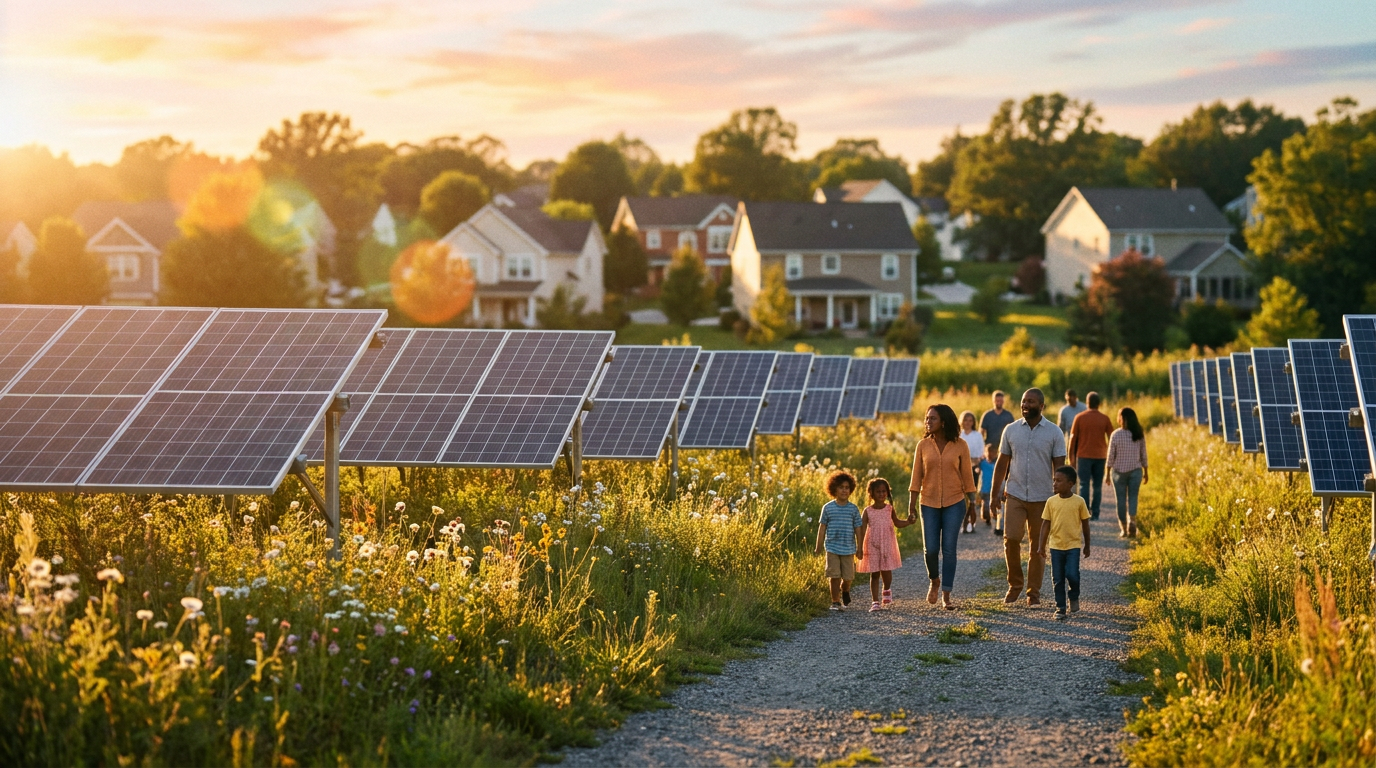
A wave of new community solar programs launching in 2026 is allowing renters, condo owners, and low-income households to save on electricity bills without installing rooftop panels.
By Factlen Editorial Team
- Clean Energy Advocates
- Argue that community solar is essential for environmental justice and equitable access to the green transition.
- Utility Regulators
- Focus on balancing the growth of renewable programs with grid reliability and protecting non-participating ratepayers.
- Local Municipalities & Utilities
- View community solar as a practical tool to lower residents' living costs while meeting climate goals.
What's not represented
- · Traditional fossil fuel providers
- · Landlords of multi-family housing
Why this matters
For decades, the financial benefits of solar energy were locked behind homeownership and high upfront costs. The rapid expansion of community solar means anyone who pays an electric bill can now lower their monthly expenses while supporting the green transition.
Key points
- New community solar programs allow renters to save on electricity without installing panels.
- California finalized its Community Renewable Energy Program to expand low-income access.
- Syracuse launched a city-backed initiative to connect residents with local solar credits.
- Oman introduced its first community solar station, highlighting the model's global reach.
For years, the financial and environmental benefits of solar energy have been largely restricted to a specific demographic: homeowners with suitable, unshaded roofs and the capital to afford upfront installation costs. This structural barrier has historically locked renters, condo owners, and low-income households out of the renewable energy transition. But in 2026, a rapidly expanding model known as "community solar" is dismantling that barrier, allowing residents to subscribe to local solar farms and receive direct credits on their utility bills without ever installing a single panel.[1]
The mechanism driving this shift is called Virtual Net Metering (VNM). Instead of generating power on their own property, customers subscribe to a portion of a shared, off-site solar array. As that facility generates electricity and feeds it into the local grid, the utility calculates the subscriber's share and applies a proportional financial credit directly to their monthly electric bill. The result is a seamless reduction in household energy expenses, typically yielding savings of 10 to 15 percent, with no home modifications required.[1][4]
This summer, California took a major step to standardize and expand this model. In June 2026, the California Public Utilities Commission (CPUC) finalized the implementation details of its Community Renewable Energy (CRE) Program. The decision establishes a comprehensive framework designed to deliver bill relief to underserved communities while maintaining strict cost protections for non-participating ratepayers.[2]

A key feature of California's updated approach is its focus on equity and streamlined oversight. The CPUC mandated that investor-owned utilities submit clear implementation and marketing plans, while also transitioning funding for low-income solar programs to Public Purpose Program surcharges beginning July 1, 2026. By tying the CRE Program to existing pricing structures, regulators ensured that the growth of competitive community solar balances affordability with grid reliability.[2]
Municipalities across the country are also taking direct action to connect their residents with shared solar assets. In New York, Syracuse Mayor Sharon Owens recently launched "Syracuse Community Solar," a city-backed initiative aimed at expanding equitable access to clean energy. Partnering with the regional clean energy hub EnergySmart CNY and an official provider, the city is rolling out a comprehensive outreach campaign to educate residents about the no-cost access to local solar credits.[3]
The Syracuse program specifically targets households that have historically faced barriers to renewable energy adoption. By utilizing direct mail, digital marketing, and community-based outreach, the city hopes to empower residents to respond to climate change practically while simultaneously reducing their monthly living expenses. Local leaders view the initiative as a crucial intersection of climate leadership and economic affordability.[3]
The Syracuse program specifically targets households that have historically faced barriers to renewable energy adoption.
In states where community solar is already established, demand is rapidly outpacing supply, prompting regulatory expansions. Rhode Island's Community Remote Net Metering (CRNM) program, which allows residents to subscribe to local solar farms without credit checks or upfront costs, successfully filled its initial 275-megawatt capacity cap. In response, the state's Public Utilities Commission is currently developing CRNM v2, an expansion expected to launch in the 2026–2027 timeframe that will add approximately 40 megawatts of new capacity to the grid.[4]

The Midwest has also embraced the model through innovative utility partnerships. In Nebraska, the Lincoln Electric System (LES) continues to expand its community solar offerings, which began with a 5-megawatt facility that was the first utility-scale solar installation in the state. The LES program allows customers—both renters and homeowners—to purchase "virtual half panels" or full panels, receiving energy credits every month for the 20-year lifespan of the program.[5]
This virtual ownership model provides a tangible sense of participation for residents who want to support clean energy but cannot alter their physical dwellings. By integrating the credits directly into the billing system, LES rewards subscribers exactly as if the panels were sitting on their own roofs, effectively reducing the amount of fossil-fuel energy they need to purchase from the utility.[5]
The community solar boom is not limited to the United States; it is gaining traction globally as a tool for energy democratization. In June 2026, the Authority for Public Services Regulation in Oman launched the 'Imtidad' program, marking the introduction of the country's first community solar power station. The Al Wadi Al Kabir facility serves as a pilot for a nationwide rollout, allowing Omani citizens and organizations to benefit from solar energy without installing rooftop systems.[6]

Oman's initiative mirrors the structural goals seen in North America: connecting shared solar stations to the public grid and providing subscribers with direct bill credits based on the energy generated. Regulators in Oman emphasize that the program represents an advanced national model for expanding solar adoption, maximizing the use of existing land assets, and allowing communities to directly share in the economic and environmental benefits of renewable generation.[6]
Beyond individual savings, the proliferation of community solar provides significant systemic benefits to the broader electrical grid. By generating power locally and distributing it within the community, these mid-sized solar farms reduce the strain on long-distance transmission lines and minimize energy loss during transit. This distributed generation model builds local grid resilience, making communities less vulnerable to large-scale outages.[1]
As 2026 progresses, the alignment of regulatory support, municipal ambition, and consumer demand is shifting renewable energy from a luxury product to a standard utility option. By decoupling solar access from property ownership, community solar programs are fundamentally rewriting the economics of clean energy, ensuring that the financial and environmental rewards of the green transition are available to everyone, regardless of their housing status.[1]
How we got here
2016
Lincoln Electric System launches Nebraska's first utility-scale community solar facility.
2022
California passes AB 2316, directing the development of a new community solar framework.
March 2026
Syracuse launches its city-backed community solar initiative to expand equitable access.
June 2026
California CPUC finalizes the Community Renewable Energy Program; Oman launches its first community solar station.
Viewpoints in depth
Clean Energy Advocates
Advocates argue that community solar is essential for environmental justice and democratizing access to renewable energy.
For years, clean energy advocates have pointed out the inherent inequity in traditional solar subsidies, which disproportionately benefited wealthy homeowners. They view community solar as the great equalizer, allowing low-to-moderate-income families and renters to finally participate in the green transition. By removing the need for credit checks and upfront capital, advocates argue these programs are the most effective way to ensure the financial benefits of renewable energy reach the communities most vulnerable to fluctuating fossil fuel prices.
Utility Regulators
Regulators focus on grid stability, cost-shifting prevention, and ensuring non-participants aren't burdened.
While supportive of renewable expansion, public utility commissions are primarily tasked with protecting the broader ratepayer base. Regulators emphasize that community solar programs must be structured so that the credits paid to subscribers do not exceed the actual wholesale value of the electricity generated. If credits are set too high, the utility must recover those lost revenues by raising rates on non-participating customers. Consequently, regulators focus heavily on designing sustainable pricing models, like California's Renewable Market Adjusting Tariff, to balance growth with fiscal responsibility.
Local Municipalities
Cities view community solar as a practical tool to lower residents' living costs while meeting climate goals.
For mayors and city councils, community solar represents a rare policy win that addresses both economic and environmental concerns simultaneously. Municipalities are increasingly acting as facilitators, using city resources to educate residents and vet solar providers. By driving enrollment in these programs, local governments can make tangible progress on their municipal climate action plans while providing direct, measurable financial relief to their constituents during periods of high inflation.
What we don't know
- Whether the supply of new community solar farms can scale fast enough to meet the surging demand from renters.
- How future changes in federal renewable energy tax credits might impact the long-term pricing of community solar subscriptions.
Key terms
- Community Solar
- A shared solar array that allows multiple customers to subscribe to its power output and receive utility bill credits.
- Virtual Net Metering (VNM)
- A billing mechanism that credits a customer's electric bill for the energy produced by an off-site renewable energy project.
- Distributed Generation
- Electricity generated from many small energy sources located near the point of consumption, rather than a centralized power plant.
Frequently asked
Do I need to own my home to participate in community solar?
No. Community solar is specifically designed for renters, condo owners, and anyone who cannot install rooftop panels.
Are there upfront costs to join a community solar program?
Most modern programs require no upfront installation costs or credit checks, allowing subscribers to simply pay a discounted rate for the energy credits.
What happens if I move to a new apartment?
As long as you move within the same utility service territory, your community solar subscription and bill credits typically transfer with you to your new address.
Sources
Source coverage
6 outlets
3 viewpoints surfaced






[1]Factlen Editorial TeamClean Energy Advocates
Synthesis by Factlen editorial team
Read on Factlen Editorial Team →[2]California Public Utilities CommissionUtility Regulators
CPUC Updates Existing Community Solar Programs and Finalizes Implementation Details of the Community Renewable Energy Program
Read on California Public Utilities Commission →[3]EnergySmart CNYClean Energy Advocates
City of Syracuse Launches Community Solar Initiative to Expand Equitable Access to Clean Energy
Read on EnergySmart CNY →[4]NuWatt EnergyLocal Municipalities & Utilities
RI Community Solar (CRNM) Guide 2026: Save 10-15% Without Rooftop Panels
Read on NuWatt Energy →[5]Lincoln Electric SystemLocal Municipalities & Utilities
Community Solar 2026
Read on Lincoln Electric System →[6]Energetica India MagazineLocal Municipalities & Utilities
Oman to Launch First Community Solar Power Station Under 'Imtidad' Programme
Read on Energetica India Magazine →
Every angle. Every day.
Get community stories with full source coverage and perspective breakdowns delivered to your inbox.