
How Smart Airbag Vests Are Revolutionizing Motorcycle Safety
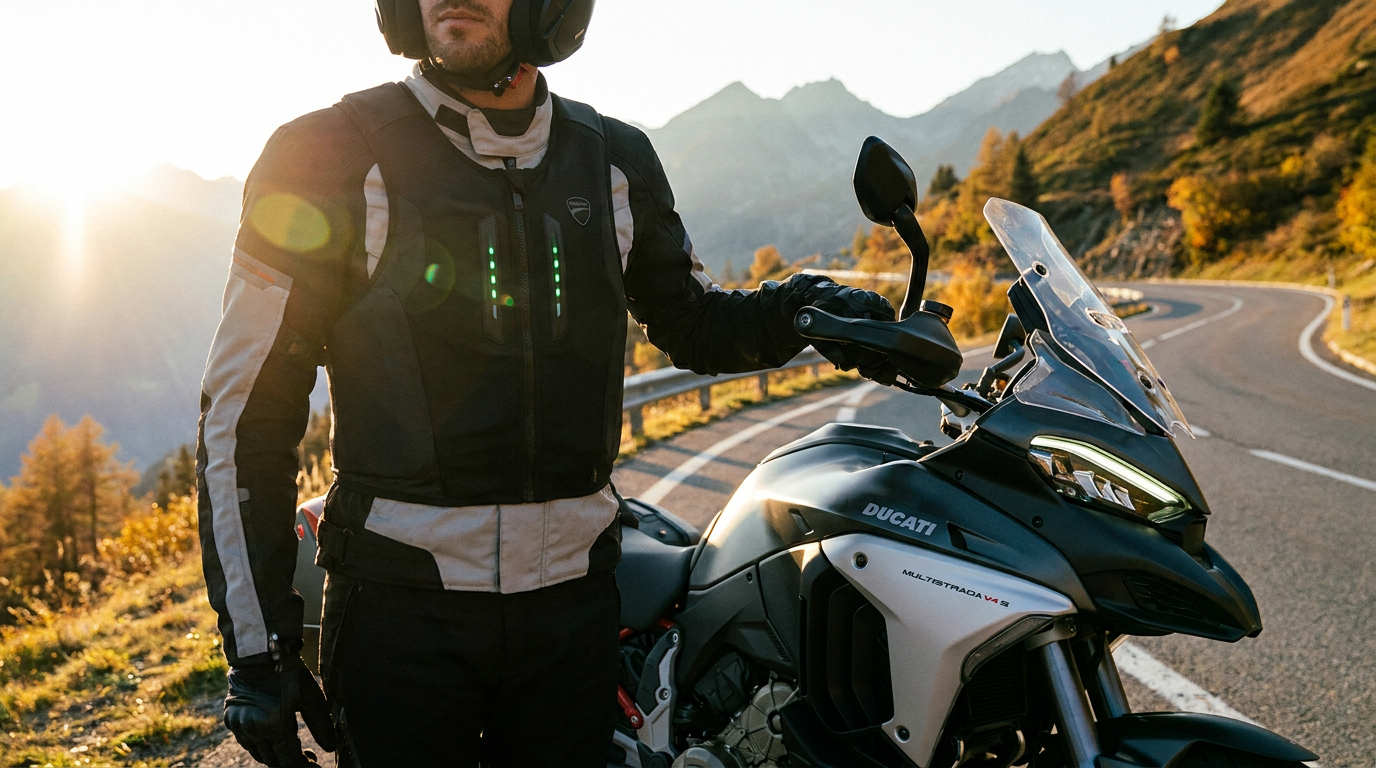
Once reserved for professional MotoGP racers, wearable airbag technology has become accessible to everyday riders. These smart vests use AI and micro-sensors to detect a crash and deploy a protective shield in milliseconds.
By Factlen Editorial Team
- Safety Technologists
- Advocates for electronic systems argue that AI and predictive algorithms offer superior, faster protection.
- Mechanical Purists
- Riders who prefer tethered systems value absolute reliability over complex electronics.
- Safety Advocates
- View airbag vests as the most critical safety leap since the full-face helmet, urging widespread adoption.
- Subscription Critics
- Oppose the 'software as a service' model for life-saving safety equipment.
What's not represented
- · Emergency Medical Technicians (EMTs) treating crash victims
- · Motorcycle insurance actuaries calculating risk premiums
Why this matters
Understanding the difference between mechanical tethers and AI-driven electronic vests is crucial for any rider looking to upgrade their safety gear. This technology represents the most significant reduction in blunt force trauma and spinal injuries since the invention of the full-face helmet.
Key points
- Wearable airbag vests have transitioned from professional racing gear to mainstream consumer safety equipment.
- Electronic systems use AI and sensors to detect a crash and deploy in under 60 milliseconds.
- Mechanical systems use a physical tether to the motorcycle and require no batteries or software.
- A fully inflated vest can offer the impact absorption equivalent of up to 18 traditional back protectors.
- The industry is currently debating the ethics of subscription-based models for life-saving safety algorithms.
For decades, motorcycle safety gear relied on passive resistance—thick leather and foam armor designed to absorb impact after the rider hit the ground. But a quiet revolution has transformed the industry. Wearable airbag vests, once exclusive to the elite racers of the MotoGP World Championship, have become mainstream consumer products in 2026.[7]
These vests represent a shift from passive armor to active safety. Rather than just cushioning a blow, modern electronic airbag systems anticipate the crash before the rider even leaves the motorcycle. Using a complex array of gyroscopes, accelerometers, and GPS, the vests monitor the rider's movements up to a thousand times per second.[2][7]
When the system's algorithm detects the unmistakable physics of a crash—such as a sudden deceleration or an abnormal rotational force—it triggers a high-pressure argon or CO2 canister. Within 20 to 60 milliseconds, the vest inflates, creating a rigid shield around the rider's chest, back, ribs, and collarbones.[2][3]
To put that speed into perspective, a human blink takes about 300 milliseconds. By the time a crashing rider registers that they are falling, the airbag has already fully deployed and stabilized their neck and spine. This rapid deployment drastically reduces blunt force trauma and prevents dangerous whiplash.[5][7]

The market is currently divided into two primary deployment mechanisms: mechanical and electronic. Mechanical systems, like the widely used Helite Turtle 2, rely on a physical tether connected from the rider's vest to the motorcycle frame. If the rider is thrown from the bike, the tether pulls a pin, triggering the gas cartridge.[4][6]
Mechanical vests are prized for their simplicity and reliability. They require no batteries, are immune to software glitches, and have no subscription fees. However, their deployment time is slightly longer—typically 80 to 100 milliseconds—because the rider must physically separate from the motorcycle before the inflation sequence begins.[5]
Electronic systems, such as the Alpinestars Tech-Air and the Dainese Smart Jacket, represent the cutting edge of the industry. Because they require no physical connection to the bike, they can deploy even if the rider is rear-ended while stopped at a traffic light—a scenario where a mechanical tether might not experience enough tension to pull the pin.[1][5]
Electronic systems, such as the Alpinestars Tech-Air and the Dainese Smart Jacket, represent the cutting edge of the industry.
The engineering behind these electronic bladders is remarkably sophisticated. Dainese, for example, utilizes patented microfilament technology inside its D-air bladders. Unlike a standard balloon, which compresses in one area and bulges in another when squeezed, the microfilaments ensure the airbag inflates to a high pressure while maintaining a flat, even, and crushproof structure.[1]

This structural integrity is crucial. Manufacturers claim that a fully inflated smart vest can offer the equivalent impact absorption of seven to eighteen traditional back protectors, depending on the model. The bladders are specifically shaped to cover the most vulnerable areas, including the trapezius muscles, which helps lock the helmet in place and prevent collarbone fractures.[3][7]
The 'brain' of these electronic systems is driven by artificial intelligence. Companies like French tech firm In&motion supply the algorithmic brains for several gear brands, including Klim and RST. These systems continuously collect anonymized telemetry data from tens of thousands of riders globally.[2]
As more riders log miles, the AI learns to better distinguish between the normal vibrations of a bumpy road and the chaotic forces of a high-side crash. This machine-learning approach allows the algorithms to be refined and updated over the air via smartphone apps, meaning the vest theoretically gets smarter and safer the longer you own it.[2][5]
However, this connected ecosystem has sparked a debate within the motorcycling community regarding subscription models. Some vests, like the Klim Ai-1, require riders to either purchase the electronic brain outright for a high fee or lease it via a monthly subscription.[3][6]
Proponents of the subscription model argue that it lowers the initial purchase price of the vest and guarantees that riders always have access to the latest algorithm updates and hardware warranties. Critics, however, express discomfort with the idea of safety gear functioning as a 'software as a service,' fearing that a lapsed credit card could theoretically leave a rider unprotected.[7]

Another layer of complexity involves the specific riding environment. The physics of a crash on a paved race track are vastly different from a low-speed tip-over on a dirt trail. To address this, modern electronic vests offer selectable algorithms—such as Street, Track, and Off-Road modes.[2][4]
In Off-Road mode, the algorithm is desensitized to accommodate the jumps, slides, and sudden jolts inherent to trail riding, preventing false deployments. Alpinestars recently released the Tech-Air Off-Road, the first consumer-level system specifically tuned for the rigors of dual-sport and adventure riding.[4]

Despite these advancements, uncertainties remain. No airbag system can guarantee survival in a catastrophic collision, and riders must still wear abrasion-resistant outer layers to protect against road rash. Furthermore, electronic vests require diligent battery management; a dead battery renders the high-tech shield completely inert.[7]
Yet, the consensus among safety experts and professional riders is clear: the integration of smart airbags is the most significant leap in motorcycle safety since the invention of the full-face helmet. As the technology becomes lighter, more breathable, and more affordable, it is rapidly transitioning from a luxury accessory to an essential piece of everyday riding gear.[5][7]
How we got here
1994
The concept of a wearable motorcycle airbag is first conceived by Dainese founder Lino Dainese after observing scuba diving buoyancy compensators.
2007
The first prototype electronic airbag systems are introduced into the professional MotoGP racing circuit.
2018
Airbag technology becomes mandatory for all professional riders competing in the MotoGP World Championship.
2021
Consumer-focused electronic vests hit the mainstream market, offering untethered protection for everyday street riders.
2024
The first off-road specific electronic algorithms are released, allowing adventure riders to use airbags on dirt trails without false deployments.
Viewpoints in depth
Safety Technologists
Advocates for electronic systems argue that AI and predictive algorithms offer superior, faster protection.
For engineers at companies like Dainese and In&motion, the future of motorcycle safety lies in predictive artificial intelligence. They argue that mechanical tethers are inherently limited because they require the rider to separate from the bike—a fatal flaw in rear-end collisions where the rider might be crushed against the handlebars. By utilizing gyroscopes and accelerometers that calculate movement 1,000 times per second, electronic systems can deploy the airbag before the rider even begins to fall. Furthermore, technologists emphasize that connected systems benefit from 'swarm intelligence,' where the crash data from tens of thousands of riders continuously refines the algorithm for everyone.
Mechanical Purists
Riders who prefer tethered systems value absolute reliability over complex electronics.
Traditionalists and mechanical purists argue that safety equipment should never rely on a charged battery or a software update. Mechanical vests, which use a physical lanyard tethered to the motorcycle frame, offer a fail-safe mechanism: if the rider is ejected, the pin is pulled, and the CO2 cartridge fires. These riders point out that mechanical systems are immune to software glitches, false deployments from aggressive riding, and dead batteries. Additionally, mechanical vests are universally compatible with any motorcycle and require zero ongoing subscription fees, making them a highly practical choice for everyday commuters and long-distance tourers.
Subscription Skeptics
Critics of the 'software as a service' model argue that life-saving gear should not require a monthly fee.
The introduction of subscription-based airbag algorithms has sparked significant pushback within the motorcycling community. Critics argue that holding life-saving hardware behind a paywall sets a dangerous precedent for consumer safety gear. While manufacturers claim the subscription model lowers the initial barrier to entry and funds continuous algorithm improvements, skeptics worry about the ethical implications of a declined credit card resulting in an inactive airbag. They argue that once a rider purchases a physical piece of safety equipment, it should function fully and autonomously without requiring a tether to a corporate billing server.
What we don't know
- Whether subscription-based safety models will become the industry standard or face regulatory pushback.
- How long the internal lithium-ion batteries in electronic vests will maintain their charge capacity after years of extreme temperature exposure.
- Whether future motorcycle designs will integrate directly with wearable gear to share telemetry data in real-time.
Key terms
- Microfilaments
- Internal threads used in high-end airbags to prevent the bladder from bulging like a balloon, ensuring it inflates into a flat, high-pressure shield.
- High-side crash
- A violent motorcycle accident where the rear tire loses and then suddenly regains traction, violently catapulting the rider over the handlebars.
- Low-side crash
- A crash where the motorcycle's tires lose grip and the bike slides out from under the rider, causing them to fall onto the side.
- Algorithm
- The complex set of mathematical rules used by the vest's computer brain to analyze sensor data and decide whether a crash is occurring.
- Tether
- A physical lanyard connecting a mechanical airbag vest to the motorcycle, which triggers inflation when pulled forcefully during an ejection.
Frequently asked
Can I wear an airbag vest under my current motorcycle jacket?
It depends on the jacket. Electronic vests can be worn underneath, but the jacket must have enough stretch or extra room (usually about 4cm of clearance) to allow the airbag to fully inflate without crushing the rider.
What happens if I forget to turn off the vest when I get off the bike?
Modern electronic vests use GPS and accelerometers to detect when you are walking rather than riding. They generally will not deploy if you trip and fall while walking, though most manufacturers recommend turning them off when not riding.
Can the airbag be reused after it deploys in a crash?
Yes, most systems are reusable. Mechanical vests simply require the rider to screw in a new CO2 cartridge. Some electronic vests allow user-replaced cartridges, while others must be sent back to the manufacturer for inspection and repacking.
Will an airbag vest protect me from road rash?
No. Airbag vests are designed exclusively to absorb blunt force impact and stabilize the neck. Riders must still wear abrasion-resistant jackets made of leather or reinforced textiles over or under the vest.
Sources
Source coverage
7 outlets
4 viewpoints surfaced







[1]DaineseSafety Technologists
The Dainese D-air System Explained
Read on Dainese →[2]New AtlasSafety Technologists
Review: In&Motion motorcycle airbag vest with road/track/trail modes
Read on New Atlas →[3]Motorcycle.comSubscription Critics
Klim Ai-1 Airbag Vest Review
Read on Motorcycle.com →[4]RoadRUNNERSafety Advocates
Best Motorcycle Airbag Vests of 2026
Read on RoadRUNNER →[5]Sunpark AirbagMechanical Purists
The 8 Best Motorcycle Airbag Systems of 2026
Read on Sunpark Airbag →[6]BikeSureMechanical Purists
10 of the best motorcycle airbag vests and jackets
Read on BikeSure →[7]Factlen Editorial TeamSafety Advocates
Synthesis by Factlen editorial team
Read on Factlen Editorial Team →

More in shopping
See all 6 stories →Footwear Tech
Trail Runners vs. Hiking Boots: The Modern Backpacking Footwear Debate
7 sources

Display Tech
OLED vs. Mini-LED Gaming Monitors: Choosing Your Next Display in 2026
7 sources

Nursery Gear
Smart Bassinets vs. Traditional Sleepers: The 2026 Trade-Off Analysis
8 sources

E-Bike Tech
The 2026 Guide to Buying an E-Bike: Motors, Batteries, and Classes Explained
9 sources
Every angle. Every day.
Get shopping stories with full source coverage and perspective breakdowns delivered to your inbox.